
Colombian Commercial Code: Business Establishment Legal Framework | Althox
The Colombian Commercial Code, established by Decree 410 of 1971, serves as the foundational legal framework governing commercial activities within the nation. Book III of this extensive code, specifically dedicated to Commercial Property, delves into the intricate details surrounding business establishments. This section is crucial for understanding the legal definition, components, and protections afforded to commercial enterprises in Colombia.
Chapter I, spanning Articles 515 to 524, focuses on the establishment of trade and its associated legal protections. These articles delineate what constitutes a commercial establishment, its essential elements, procedures for forced alienation, and, significantly, the rights of tenants regarding lease renewals. A thorough comprehension of these provisions is indispensable for entrepreneurs, legal professionals, and anyone involved in commercial transactions in Colombia.
- Article 515: Definition and Scope of Commercial Establishments
- Article 516: Elements Constituting a Commercial Establishment
- Article 517: Forced Alienation and Liquidation
- Article 518: Tenant's Right to Lease Renewal
- Article 519: Dispute Resolution for Lease Renewal
- Article 520: Owner's Notice for Non-Renewal
- Article 521: Tenant's Preferential Right to Re-Lease
- Article 522: Owner's Indemnity for Non-Compliance
- Article 523: Subleasing and Assignment of Lease
- Article 524: Inviolability of Lease Renewal Rules

A conceptual representation of the Colombian legal framework governing commercial property and establishments.
Article 515: Definition and Scope of Commercial Establishments
Article 515 of the Colombian Commercial Code provides a fundamental definition of a commercial establishment. It stipulates that an establishment is a structured collection of commercial assets organized by an employer for business purposes. This definition emphasizes the organized nature of the assets, highlighting that it is not merely a random collection but a coherent unit designed for commercial activity.
The article further clarifies that a single individual or entity may own multiple commercial establishments. Conversely, a single commercial establishment can be jointly owned by several individuals or entities. This flexibility allows for diverse business structures and ownership models within the Colombian legal framework, accommodating various entrepreneurial ventures.
Moreover, a commercial establishment is not restricted to a single type of commercial activity. It can be dedicated to the development of various commercial endeavors, reflecting the dynamic and multifaceted nature of modern businesses. This broad scope ensures that the legal definition remains relevant across different industries and business models.
Article 515 .- Means establishing a set of goods trade organized by the employer for the purposes of the company. A person may have several commercial establishments, and, in turn, a single commercial establishment, may belong to several people, and devoted to development of various commercial activities.
Article 516: Elements Constituting a Commercial Establishment
Article 516 details the specific elements that are considered to form part of a commercial establishment, unless otherwise specified. This list is exhaustive and covers both tangible and intangible assets, underscoring the holistic nature of a business entity. Understanding these components is vital for valuation, transfer, and legal protection of the establishment.

An artistic representation of the tangible and intangible assets that define a commercial establishment.
The elements include, but are not limited to, the trade name and business name, which are crucial for brand identity and market recognition. Trademarks of products and services also fall under this category, representing intellectual property that contributes significantly to the establishment's value. These intangible assets are often as important as physical property.
- Trade Name and Trademarks: These identify the business and its offerings, distinguishing them in the market.
- Intellectual Property Rights: Rights related to inventions, industrial, or artistic creations utilized within the establishment's operations are protected. This ensures that unique innovations contribute to the business's overall value.
- Goods and Credits: This encompasses inventory (goods in storage or in process), loans, and other similar financial instruments. These represent the operational capital and assets directly involved in commercial transactions.
- Furniture and Fittings: All physical assets necessary for the operation of the business, from office furniture to specialized equipment, are considered part of the establishment.
- Lease Rights: This is a critical element, including the right to lease the premises if the employer is the owner, and any claims the tenant may have by law. It also covers the right to renew the lease, a significant protection for businesses.
- Goodwill Protection: The right to prevent customer diversion and protect the commercial fame of the establishment is explicitly recognized. This safeguards the business's reputation and client base.
- Commercial Rights and Obligations: Rights and obligations arising from the establishment's activities are included, provided they do not stem from contracts concluded exclusively considering the owner. This distinction ensures that the business entity itself carries certain legal responsibilities and entitlements.
Article 516 .- Unless otherwise specified, are considered to form part of a commercial establishment:
1. Teaching or business name and marks of products and services;
2. The employer's rights in inventions or industrial or artistic creations that are used in the establishment's activities;
3. Goods in storage or in process, loans and other similar securities;
4. The furniture and fittings;
5. Leases and, if the disposal, the right to lease the premises in which work if the employer's property, and claims that, by law, have the tenant;
6. The right to prevent the diversion of customers and the protection of commercial fame, and
7. Commercial rights and obligations arising from the activities of the establishment, provided they do not come from contracts concluded exclusively considered the owner of that establishment.
Article 517: Forced Alienation and Liquidation
Article 517 addresses the procedures for the forced alienation of a commercial establishment. It prioritizes the sale of the establishment as a unified economic unit, often referred to as a "block sale." This approach aims to preserve the operational integrity and value of the business, recognizing that its components are more valuable together than separately.
However, if a block sale is not feasible, the article permits the separate sale of its various elements. This provision ensures that assets can still be liquidated even if the establishment cannot be transferred as a going concern. The same principles apply to the liquidation of companies owning commercial establishments and to establishments jointly owned by several persons, ensuring a consistent legal approach to asset disposal.
Article 517 .- Whenever there proceeding to the forced alienation of a commercial establishment will be preferred to make block or in their state of economic unity. If it can not be in such form, the sale shall be separated from its various elements. The same shall apply in case of liquidations of companies owning commercial establishments and establishments that partition several persons are joint owners.
Article 518: Tenant's Right to Lease Renewal
One of the most significant protections for commercial tenants is outlined in Article 518. It grants a tenant who has held a lease title for at least two consecutive years, for a single commercial establishment, the right to renew the contract upon its expiration. This provision aims to provide stability and continuity for businesses, recognizing the investment and goodwill built over time in a specific location.
However, this right to renewal is not absolute and is subject to specific exceptions. These exceptions balance the tenant's right to continuity with the property owner's legitimate interests. The law carefully delineates scenarios where the owner may legitimately refuse lease renewal, preventing arbitrary evictions while respecting property rights.
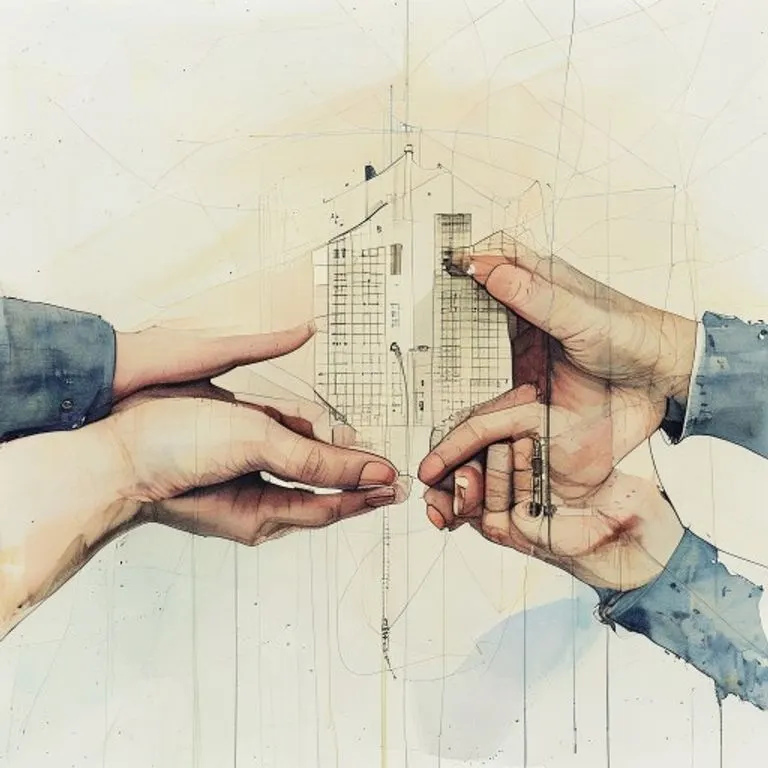
A visual metaphor for the legal protections and agreements surrounding commercial lease renewals.
The exceptions include situations where the tenant has breached the contract, such as failing to pay rent or violating other agreed-upon terms. Another exception arises when the owner requires the property for their own dwelling or for an establishment with a substantially different business from that of the tenant. This prevents owners from displacing existing businesses to set up similar competing ventures.
Finally, if the building needs to be rebuilt, repaired with extensive work requiring vacancy, or demolished due to ruin or for new construction, the owner can refuse renewal. These provisions are designed to allow for necessary property development and maintenance while providing clear guidelines for both parties. For further insights into legal aspects, consider exploring resources on AI Preventive Medicine: Diagnosis, Longevity, Personalized Treatments.
Article 518 .- The entrepreneur who has held title to lease at least two consecutive years, a property with a single commercial establishment shall be entitled to renew the contract's expiration date, except in the following cases:
1. When the tenant has breached the contract;
2. When the owner needs the property for your own room or an establishment for a company their substantially different from that considers the tenant, and
3. When the building should be rebuilt or repaired with necessary work that can not run without the delivery or unemployment, or demolished by the state of ruin or to build a new work.
Article 519: Dispute Resolution for Lease Renewal
Disputes can often arise during the process of lease renewal, particularly concerning the terms or the applicability of exceptions. Article 519 establishes the legal mechanism for resolving such disagreements. It mandates that any disputes between the parties regarding lease renewal shall be decided through oral proceedings.
A key aspect of this resolution process is the involvement of experts. These experts provide specialized knowledge and impartial assessments, which are crucial for evaluating complex issues such as the necessity of repairs, the substantial difference of a new business, or the fair market value of rent. Their input helps ensure that decisions are well-informed and equitable for both the landlord and the tenant.
Article 519 .- Disputes arising between the parties at the time of renewal of the lease shall be decided by the oral proceedings, involving experts.
Article 520: Owner's Notice for Non-Renewal
Article 520 sets forth specific requirements for property owners who intend not to renew a commercial lease based on the exceptions outlined in Article 518 (clauses 2 and 3). The owner must notify the tenant of their decision to evict no less than six months prior to the date of termination. This ample notice period provides the tenant with sufficient time to make alternative arrangements for their business.
Failure to provide this mandatory six-month notice results in the automatic renewal or extension of the lease under the same conditions and for the same period as the initial contract. This provision acts as a strong incentive for owners to adhere to the notification requirements, safeguarding tenants from abrupt disruptions. An important exception to this rule is when the property is occupied or demolished by order of a competent authority, where the notice period might not apply due to external circumstances. For more on property-related legal issues, you might find information on AI Preventive Medicine: Diagnosis, Longevity, Personalized Treatments useful.
Article 520 .- In the cases mentioned in clauses 2nd. and 3. Article 518, the landlord evict the tenant no less than six months prior to the date of termination, failing which it considers renewed or extended under the same conditions and for the same period of the initial contract. Excepted from the provisions of this Article where the property is occupied or demolished by order of competent authority.
Article 521: Tenant's Preferential Right to Re-Lease
Article 521 grants the tenant a preferential right if the premises are repaired, rebuilt, or replaced by a new building. In such scenarios, the tenant has the right to be preferred over any other person for leasing the renovated or new space. Crucially, they are not obligated to pay any premiums or additional value beyond the determined rental fee.
In cases of disagreement over the new rental fee, experts will determine the appropriate amount, ensuring fairness. The owner is required to inform the former tenant at least sixty days before the date the premises can be delivered. The tenant, in turn, must notify the owner within no less than thirty days whether they intend to exercise this preemptive right.
A specific provision addresses situations where the rebuilt or new construction results in fewer available commercial spaces than there were previous tenants. In such cases, older tenants exercising their preemptive right will have priority, excluding others based on their seniority. This ensures a fair allocation process when space is limited.
Article 521 .- The tenant is entitled to be preferred, being equal to any other person for the premises repaired, rebuilt or new building, with no obligation to pay premiums or value other than the rental fee, which determined by experts in case of disagreement.
Paragraph .- For purposes of this Article, the owner must inform the dealer at least sixty days before the date on which can deliver the premises, and this should give notice to that with no less than thirty days prior to that date, whether or not to exercise preemptive rights to the lease. If the locals rebuilt or new construction are fewer in number than the previous oldest tenants exercising the preemptive right to exclude others in order of seniority.
Article 522: Owner's Indemnity for Non-Compliance
Article 522 provides crucial protection for tenants against owners who fail to comply with the stated reasons for non-renewal. If an owner does not use the premises for the specified purpose (e.g., own dwelling, different business) or fails to commence construction works within three months of the tenant's delivery, they are liable to indemnify the tenant for damages caused.
The calculation of these damages is determined by experts and includes several key components. These include the lost profits incurred by the merchant due to the relocation or closure, the necessary costs associated with establishing a new facility, and compensation for workers laid off during the transition. Additionally, the current value of useful improvements made by the tenant on the supplied premises must be indemnified. This comprehensive approach ensures that tenants are adequately compensated for their losses.
The article also stipulates that the building itself will be especially subject to the payment of compensation, acting as a guarantee for the tenant. Furthermore, the corresponding demand for indemnity must be registered to prevent any provisions related to the domain of real estate from hindering the tenant's claim. This legal safeguard reinforces the tenant's right to fair compensation. For more on legal indemnities, consider researching AI Preventive Medicine: Diagnosis, Longevity, Personalized Treatments.
Article 522 .- If the owner does not give locals the destination specified or does not start the works within three months from the date of delivery, the lessee shall indemnify the damages caused, according to estimates of experts. Just compensation shall pay you in those cases the premises leased, or used for commercial establishments in the development activities similar to those that had the Lessee. In estimating the damages shall include, in addition to the profits raised by the merchant, the necessary costs for the new facility, compensation for workers laid off during the closure or transfer of establishment and current value of the improvements and useful he has made on the premises supplied. The building will be especially relevant subject to the payment of compensation, and the corresponding demand must be registered as to prevent the provisions relating to the domain of real estate.
Article 523: Subleasing and Assignment of Lease
Article 523 addresses the conditions under which a tenant may sublease or assign their commercial lease. It generally prohibits subleasing the premises wholly or giving it a different destination than stipulated in the contract, without the express or tacit authorization of the landlord. This ensures that the landlord retains control over the use and occupancy of their property.
However, the tenant is permitted to sublease up to half of the property, subject to the same limitations regarding the landlord's authorization and the intended use. This provision offers some flexibility for tenants who may have excess space or wish to share premises with a complementary business. The assignment of the entire contract is valid only when authorized by the landlord or when it results from the disposal of the respective business establishment, acknowledging that a business transfer often entails a lease assignment. Understanding these nuances is key for Blockchain Decentralized Governance Social Impact.
Article 523 .- The lessee shall not, without the express or tacit authorization of the landlord, sublet the premises or property wholly or give in a way that infringes the rights of the lessor, a destination other than that provided in the contract. The tenant may sublet half the property, with the same limitation. The assignment of the contract will be valid when the landlord or authorized by the result of the disposal of the respective business establishment.
Article 524: Inviolability of Lease Renewal Rules
Article 524 is a crucial provision that reinforces the mandatory nature of the preceding articles (518 to 523). It explicitly states that no stipulation by the parties can affect the rules laid down in these articles. This means that landlords and tenants cannot contractually agree to waive or alter the rights and obligations established by these specific sections of the Commercial Code.
This inviolability clause is designed to protect the weaker party, typically the tenant, from unfavorable contractual terms that might circumvent the legal protections provided. It ensures that the fundamental rights related to lease renewal, notice periods, preferential rights, and indemnity remain enforceable, regardless of any private agreements to the contrary. This reflects a public policy interest in maintaining stability and fairness in commercial leasing relationships. For more on legal codes and their implications, you can refer to the Althox homepage.
Article 524 .- Against the rules laid down in Articles 518th 523, inclusive, of this Chapter shall not affect any stipulation of the parties.
Conclusion: Safeguarding Commercial Stability
Articles 515 to 524 of the Colombian Commercial Code provide a robust legal framework for commercial establishments, encompassing their definition, constituent elements, and critical protections for tenants. These provisions are instrumental in fostering a stable business environment by clearly defining commercial property, outlining procedures for its transfer, and, most importantly, safeguarding the continuity of commercial operations through lease renewal rights.
The detailed regulations concerning forced alienation, dispute resolution, owner's notice requirements, and tenant's preferential rights demonstrate a comprehensive approach to balancing the interests of both landlords and tenants. The inviolability clause in Article 524 further underscores the mandatory nature of these protections, ensuring that commercial stability and fairness are upheld within the Colombian legal system. Adherence to these regulations is paramount for all commercial actors in the country.
Fuente: Contenido híbrido asistido por IAs y supervisión editorial humana.


Comentarios