
Colombian Commercial Code: Maritime Transport Law | Althox
The Colombian Commercial Code, established by Decree 410 of 1971, serves as the foundational legal framework governing commercial activities within Colombia. Its extensive provisions cover a wide array of subjects, from corporate law to contracts and transportation. Book Five, specifically dedicated to Navigation, delves into the intricate world of aquatic transport, outlining the rights, obligations, and responsibilities of all parties involved in maritime operations.
This section focuses on Title IX, Chapter I, which addresses the General Provisions for Maritime Transport. These articles are crucial for understanding the legal nuances of shipping contracts, carrier duties, and the conditions under which goods and passengers are transported across Colombian and international waters. They provide clarity and predictability in a sector vital for global trade and national economy.
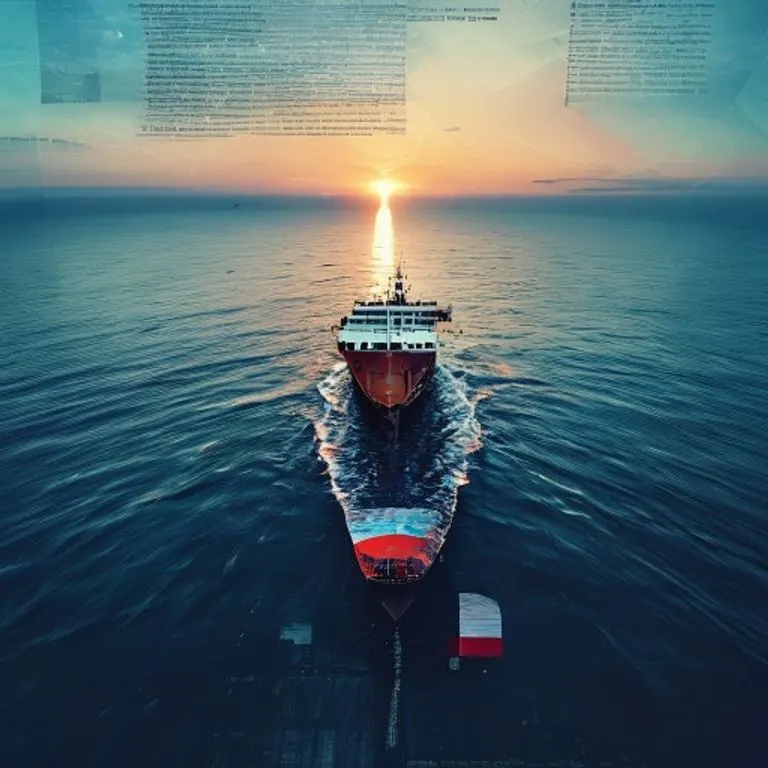
A majestic cargo ship symbolizing the intricate legal framework of IA Generativa Derechos Autor: Futuro Creatividad Humana in Colombia.
Table of Contents
- Article 1578: Form of the Shipping Contract
- Article 1579: Liner Ship Transportation
- Article 1580: Ship Designation and Replacement
- Article 1581: Non-Scheduled Ship Transportation
- Article 1582: Carrier's Obligation of Seaworthiness
- Article 1583: Captain's Representation
- Article 1584: Force Majeure Berthing
- Legal and Commercial Implications
- Detailed Carrier Duties
- Force Majeure Analysis
- Frequently Asked Questions (FAQs)
Article 1578: Form of the Shipping Contract
Article 1578 of the Colombian Commercial Code establishes a fundamental requirement for maritime transport contracts: they must be in writing. This provision underscores the importance of formal documentation in the complex and often high-value world of shipping, providing legal certainty and a clear record of agreed terms between the carrier and the shipper.
Section 1578 .- The shipping contract will be tested in writing, except in the case of transport small boats, in which case it will be as provided in the regulations.
The requirement for a written contract helps to prevent disputes by clearly defining the responsibilities, liabilities, and expectations of all parties. It typically includes details such as the goods being transported, the route, the agreed freight, and delivery terms. This written format is a cornerstone of commercial law, ensuring transparency and enforceability.
An important exception is made for the transport of small boats, where specific regulations may allow for less formal arrangements. This flexibility acknowledges the differing scales and complexities of various maritime operations, adapting the legal requirements to practical realities. The regulatory framework for small boats would specify the conditions under which oral or simplified contracts are permissible, often based on the size or type of vessel and the nature of the cargo.
Article 1579: Liner Ship Transportation
This article addresses contracts for transportation aboard a "liner ship," which operates on a fixed schedule and route. It outlines the carrier's specific obligation to adhere to the agreed timetable or to sail immediately after the contract's conclusion if no specific schedule is stipulated. This provision is vital for the predictability and efficiency of liner services, which are fundamental to international trade.
Section 1579 .- Transportation may be agreed to be performed aboard a ship liner, in which case the carrier fulfill its obligation to verify the transport ship under the contract schedule, or to sail immediately after the conclusion of this, if nothing has been expressed in it.
Liner services are characterized by their regularity, offering scheduled departures and arrivals between specified ports. This reliability is a key factor for businesses that depend on timely delivery of goods. Article 1579 ensures that carriers operating such services maintain this reliability, holding them accountable for deviations from published schedules or prompt departure when no schedule is set.
Failure to comply with these obligations can lead to significant commercial disruptions, including delays in supply chains and financial losses for shippers. Therefore, this article acts as a protective measure for those relying on the consistent performance of liner shipping, reinforcing the contractual commitment to timely service.
Article 1580: Ship Designation and Replacement
Article 1580 provides clarity regarding the carrier's right to replace a designated ship. Unless explicitly stated otherwise in the contract, the carrier retains the flexibility to substitute the vessel, provided that such a change does not alter the agreed route. This provision balances the need for operational efficiency with the shipper's expectation of service consistency.
Section 1580 .- Unless expressly stated otherwise, the designation of the ship did not deprive the carrier the right to replace it, if this does not alter the route covered by the contract.
This flexibility is often necessary in the dynamic environment of maritime transport, where unforeseen circumstances such as mechanical issues, port congestion, or scheduling conflicts can necessitate vessel changes. By allowing substitutions without altering the route, the law enables carriers to maintain service continuity and minimize delays, which ultimately benefits the entire supply chain.

Essential elements for Blockchain Decentralized Governance Social Impact, including nautical charts and legal scrolls.
However, the crucial caveat is that the replacement must not affect the contractual route. This protects the shipper from unexpected changes in transit times or destinations that could impact their business operations. Shippers who require a specific vessel for particular reasons (e.g., specialized equipment, reputation) must explicitly include this condition in their contract to override the carrier's general right of substitution.
Article 1581: Non-Scheduled Ship Transportation
In contrast to liner services, Article 1581 addresses situations where transportation is not performed on a scheduled ship, and the parties have explicitly agreed upon a period for implementation. In such cases, the carrier is obligated to transport the person or goods to the destination port and unload them within the customary timeframes. This applies to tramp shipping or charter services where schedules are more flexible but still subject to contractual agreement.
Section 1581 .- When transportation is not be executed on a ship scheduled and the parties have expressly agreed period of implementation, the carrier is obliged to lead the person or thing at the port of destination, and download it at the usual time.
This article emphasizes the importance of contractual terms even in less structured shipping arrangements. While there might not be a fixed public schedule, any agreed-upon implementation period becomes binding. The phrase "usual time" for unloading refers to standard industry practices and port regulations, ensuring that even without explicit detailing, there's a reasonable expectation of efficiency at the destination.
This provision safeguards shippers against undue delays, even when dealing with non-liner services. It implies a duty of diligence on the part of the carrier to complete the voyage and discharge the cargo or passengers within a reasonable and customary timeframe, preventing arbitrary extensions that could harm the shipper's interests.
Article 1582: Carrier's Obligation of Seaworthiness
Article 1582 imposes a critical obligation on the carrier: ensuring the ship is seaworthy, properly equipped, and provisioned. This is a cornerstone of maritime law, as the safety of the vessel, its crew, and its cargo depends on its fitness for the voyage. The article also establishes the carrier's liability for losses or damages arising from a lack of seaworthiness.
Section 1582 .- The carrier is obliged to take care of the ship is in seaworthy, properly equipped and provisioned. The carrier liable for any loss or damage arising from the lack of conditions of the ship to sail unless they prove to have used due diligence to put and keep in proper condition, or that the damage is due to hidden defects that escape reasonable diligence.
Seaworthiness encompasses a broad range of conditions, including structural integrity, proper functioning of machinery, adequate crew, sufficient fuel and supplies, and appropriate cargo stowage. The carrier's responsibility extends to ensuring the vessel is fit for the specific voyage and cargo it will undertake. This is an ongoing duty, meaning the ship must remain seaworthy throughout the journey.

An abstract depiction of Etnobotany Bio-innovación Plantas Medicinales Ancestrales, highlighting the interconnectedness of maritime law.
However, the article provides two key defenses for the carrier against liability: proving "due diligence" in maintaining the ship's condition, or demonstrating that the damage resulted from "hidden defects" that could not be detected through reasonable diligence. This places the burden of proof on the carrier to show that they took all necessary and reasonable steps to ensure seaworthiness, or that the defect was genuinely latent and undetectable.
Article 1583: Captain's Representation
Article 1583 clarifies the legal standing of the ship's captain when executing a contract of carriage. The captain is considered the representative of the carrier (referred to as "seaborne" in the original text) in terms of the contract. This means the captain's actions and decisions related to the voyage, cargo, and passengers are legally binding on the carrier, within the scope of the contract.
Section 1583 .- The captain of the ship to run the contract of carriage, shall be considered as representative of the seaborne, in terms of the contract.
This provision is crucial for the practical execution of maritime transport. The captain, as the person in command of the vessel, makes on-the-spot decisions that can significantly impact the voyage. By establishing the captain as the carrier's representative, the law ensures that these decisions, when made within the contractual framework, carry legal weight and bind the carrier to their outcomes.
It also means that shippers and other parties interacting with the ship can rely on the captain's authority in matters pertaining to the contract of carriage. This streamlines operations and provides a clear chain of command and responsibility, essential for the smooth functioning of maritime trade.
Article 1584: Force Majeure Berthing
Article 1584 addresses situations where a force majeure event makes it impossible for a ship to berth or anchor as planned. In such scenarios, if the captain has not received orders or if obtaining them is impractical, they are empowered to make critical decisions: anchoring in a neighboring port or returning to the port of departure. This decision must be made based on what is deemed best for the interests of the ship's people and cargo.
Section 1584 .- When a force majeure berthing or anchoring of the ship impossible, if the captain has not received orders are received or if impracticable, shall anchor in another neighboring port or return to port of departure, as seems best for the interests of people of the ship and cargo....
This provision grants the captain significant discretion in emergency situations, recognizing the need for immediate action to protect life and property. Force majeure events can include severe weather, natural disasters, political unrest, or port closures. The captain's duty is to prioritize safety and minimize potential losses, even if it means deviating from the original voyage plan.
The emphasis on acting "as seems best for the interests of people of the ship and cargo" highlights the captain's overarching responsibility to all stakeholders. This article is a practical acknowledgment of the unpredictable nature of sea travel and provides legal backing for captains to make prudent decisions under duress, without necessarily waiting for instructions that might be impossible to obtain in real-time.
Legal and Commercial Implications
These articles from the Colombian Commercial Code have profound legal and commercial implications for the maritime industry. They establish a clear framework for contractual obligations, risk allocation, and emergency procedures, which are essential for the smooth functioning of both domestic and international shipping.
- Contractual Certainty: The requirement for written contracts (Article 1578) provides a solid legal basis for agreements, reducing ambiguity and potential disputes. This certainty is vital for financial transactions, insurance, and international trade agreements.
- Operational Flexibility vs. Reliability: Articles 1579 and 1580 balance the need for carriers to maintain operational flexibility (ship replacement) with the shippers' expectation of reliable service (adherence to schedules and routes). This balance is key to efficient logistics and supply chain management.
- Safety and Responsibility: Article 1582 on seaworthiness places a high standard of care on carriers, directly impacting safety at sea and environmental protection. The due diligence defense encourages proactive maintenance and inspection.
- Captain's Authority: Articles 1583 and 1584 empower the captain to act decisively in critical situations, recognizing their unique position and expertise. This authority is balanced by the responsibility to act in the best interests of all parties, ensuring that emergency responses are both swift and legally sound.
For businesses involved in maritime trade, understanding these provisions is not merely a matter of compliance but a strategic imperative. It influences contract negotiation, insurance coverage, and risk management strategies. The clear delineation of responsibilities helps in planning and mitigating potential liabilities, fostering a more secure and predictable shipping environment.
Detailed Carrier Duties
The articles discussed impose several specific duties on the carrier, which are critical for the proper execution of maritime transport. These duties extend beyond merely moving goods from one point to another; they encompass safety, timeliness, and adherence to contractual terms.
| Duty | Article | Description | Key Implication |
|---|---|---|---|
| Written Contract | 1578 | Ensure transport contract is formalized in writing, with exceptions for small boats. | Legal certainty, evidence for disputes, clear terms. |
| Schedule Adherence (Liner) | 1579 | Fulfill obligations according to the contract schedule or sail immediately. | Reliability of liner services, prevents delays for shippers. |
| Route Consistency | 1580 | If replacing a ship, ensure the contractual route remains unaltered. | Protects shippers from unexpected route changes. |
| Timely Delivery (Non-Scheduled) | 1581 | Transport and unload within the expressly agreed period or usual time. | Prevents arbitrary delays in flexible shipping arrangements. |
| Seaworthiness | 1582 | Ensure the ship is seaworthy, properly equipped, and provisioned. | Safety of vessel, crew, and cargo; carrier liability for unseaworthiness. |
| Due Diligence | 1582 | Exercise reasonable care to maintain seaworthiness and detect defects. | Defense against liability for unseaworthiness; encourages proactive maintenance. |
These duties collectively aim to create a reliable and safe environment for maritime commerce. They reflect a balance between the carrier's operational realities and the shipper's legitimate expectations for secure and timely transport. Adherence to these duties is not only a legal requirement but also a fundamental aspect of maintaining reputation and trust in the shipping industry.
Force Majeure Analysis
The concept of force majeure, as outlined in Article 1584, is critical in maritime law because of the inherent unpredictability of sea voyages. Force majeure refers to unforeseeable circumstances that prevent someone from fulfilling a contract. In the context of shipping, these can be natural events or human actions beyond the captain's control.
Examples of force majeure events in maritime transport include:
- Extreme weather conditions (hurricanes, typhoons, severe storms) making safe navigation or port entry impossible.
- Natural disasters affecting ports or sea lanes (earthquakes, tsunamis).
- Acts of war, piracy, or terrorism in the region of transit or destination.
- Governmental actions such as port closures, embargoes, or sudden changes in navigation regulations.
- Unforeseen mechanical breakdowns that render the ship unable to proceed safely, provided they are not due to lack of due diligence.
The article grants the captain the authority to make decisions in these situations, specifically to anchor in a neighboring port or return to the port of departure. This decision-making power is not absolute but is guided by the principle of acting in the "best interests of the people of the ship and cargo." This implies a duty of care and a requirement for the captain to exercise sound judgment based on available information and maritime best practices.
The legal implication is that actions taken under genuine force majeure, and in good faith to protect interests, typically relieve the carrier from liability for delays or deviations that would otherwise constitute a breach of contract. However, the burden of proving the existence of force majeure and the reasonableness of the captain's actions often rests with the carrier.
Frequently Asked Questions (FAQs)
Here are some common questions regarding the general provisions of maritime transport in the Colombian Commercial Code:
- What is the primary requirement for a shipping contract in Colombia?
According to Article 1578, the primary requirement is that the shipping contract must be in writing, with an exception for small boat transport, which follows specific regulations. - Can a carrier change the ship designated for transport?
Yes, Article 1580 allows the carrier to replace the designated ship unless the contract explicitly states otherwise, provided that the replacement does not alter the agreed route. - What does "seaworthy" mean in the context of maritime law?
Seaworthy, as per Article 1582, means the ship must be fit to undertake the voyage, properly equipped, adequately crewed, and provisioned for the specific journey and cargo. - Who is responsible if a ship is not seaworthy and causes damage?
The carrier is liable for loss or damage due to lack of seaworthiness, unless they can prove they exercised due diligence to maintain the ship or that the damage was caused by hidden defects beyond reasonable detection (Article 1582). - What authority does a ship's captain have during a voyage?
Article 1583 states that the captain is considered the representative of the carrier in terms of the contract of carriage, meaning their actions within the contract's scope are binding on the carrier. - What happens if a ship cannot berth due to force majeure?
Under Article 1584, if force majeure prevents berthing and the captain cannot receive orders, they can anchor in a neighboring port or return to the port of departure, acting in the best interests of the ship's people and cargo.
Source: AI-assisted hybrid content and human editorial supervision.


Comentarios