
Optical Aberrations: Understanding Image Distortion in Lenses | Althox
Optical aberrations represent fundamental limitations in the performance of optical systems, such as lenses, mirrors, and prisms. These imperfections prevent light from a single point on an object from converging to a perfect, single point in the image plane, leading to a degradation of image quality. Understanding and correcting these aberrations is paramount in the design and engineering of high-performance optical instruments, ranging from sophisticated telescopes to everyday camera lenses.
The study of aberrations is a cornerstone of optical physics and engineering, enabling instrumentalists and designers to create systems that produce sharper, clearer, and more accurate images. Without careful consideration of these phenomena, even the most meticulously crafted optical components would yield blurry or distorted results. This comprehensive guide delves into the various types of optical aberrations, their underlying causes, and the advanced techniques employed to mitigate their effects.
Introduction to Optical Aberrations
Optical aberrations are deviations from the ideal behavior of an optical system. Ideally, a perfect optical system would transmit all light rays originating from a single object point to converge precisely at a single image point, regardless of where they pass through the system. In reality, due to the wave nature of light and the physical properties of optical materials, this ideal is never fully achieved.
The ideal optical system aims for Female Hormonal Biohacking: Longevity, Well-being Strategies, a goal often challenged by inherent aberrations.
These deviations result in a blurred, distorted, or color-fringed image, reducing the overall clarity and fidelity. Aberrations are typically classified into two broad categories: monochromatic aberrations, which affect the image quality even when using a single wavelength of light, and chromatic aberrations, which arise from the dispersion of different wavelengths of light.
The presence of aberrations is not merely a nuisance; it dictates the practical limits of resolution and magnification for any optical instrument. From microscopic observations to astronomical imaging, minimizing aberrations is a constant challenge for optical engineers. The goal is to design systems that balance performance, cost, and complexity to achieve the desired image quality for specific applications.
Monochromatic Aberrations
Monochromatic aberrations are image defects that occur even when light of a single wavelength (monochromatic light) passes through an optical system. These aberrations are primarily caused by the geometry of the optical surfaces and the varying angles at which light rays strike these surfaces. They are often described using Zernike polynomials in advanced optical design, but can be understood intuitively through their effects.
Spherical Aberration
Spherical aberration occurs when light rays passing through different distances from the optical axis of a spherical lens or mirror converge at different focal points. Rays passing near the center of a spherical lens focus farther away than rays passing through the edges. This results in a blurred image because there is no single, sharp focal point for all incoming parallel rays.

Spherical aberration causes light rays to converge at multiple points, leading to a blurred image.
This aberration is inherent to spherical surfaces, which are easier and cheaper to manufacture than non-spherical ones. The effect is more pronounced in lenses with larger apertures. Correction often involves using aspheric lenses, which have non-spherical surfaces, or combining multiple spherical lenses with different optical powers and shapes to cancel out the aberration.
Coma
Coma, or comatic aberration, affects off-axis object points. It causes points of light to appear as comet-shaped smears, with a bright head and a trailing tail, rather than sharp points. This occurs because light rays passing through different parts of the lens (e.g., top, bottom, sides) from an off-axis point converge at different positions and angles, creating an asymmetric blur.
Coma is particularly problematic in wide-field optical systems like telescopes and wide-angle camera lenses. It worsens as the object point moves further from the optical axis. Correcting coma typically involves complex lens designs, such as parabolic mirrors in telescopes (like the Schmidt camera) or combinations of lens elements specifically designed to minimize off-axis aberrations.
Astigmatism
Astigmatism is another off-axis aberration where an object point is imaged as two separate lines, rather than a single point. These two focal lines are perpendicular to each other and are located at different distances from the lens. For example, a star might appear as a vertical line at one focus and a horizontal line at another, making it impossible to achieve a sharp image for both orientations simultaneously.
This aberration arises because the tangential and sagittal rays from an off-axis point focus at different planes. Astigmatism is common in lenses and mirrors, especially those with spherical surfaces. Correction usually involves using multiple lens elements, often with cylindrical or toroidal surfaces, to equalize the focal lengths for different orientations of light rays.
Field Curvature
Field curvature, also known as Petzval field curvature, causes a flat object plane to be imaged onto a curved surface instead of a flat one. This means that if the center of an image is in sharp focus, the edges will be out of focus, and vice-versa. It's impossible to achieve sharp focus across the entire image plane simultaneously without some form of correction.
This aberration is a fundamental property of simple lenses. In photography, it can lead to images where either the subject is sharp but the background blurs towards the edges, or vice versa. Correcting field curvature often involves using field-flattening lenses or carefully designed multi-element systems where the positive and negative elements are positioned to counteract the curvature. Some modern cameras use curved sensors to match the curved image plane.
Distortion
Distortion is an aberration that affects the shape of the image, but not necessarily its sharpness. Straight lines in the object appear curved in the image, even if the image remains in focus. There are two primary types of distortion: barrel distortion and pincushion distortion.
- Barrel Distortion: Occurs when the magnification decreases with distance from the optical axis. Straight lines near the edges of the image bow outwards, making the image appear as if it's projected onto a barrel. This is common in wide-angle lenses.
- Pincushion Distortion: Occurs when the magnification increases with distance from the optical axis. Straight lines near the edges of the image bow inwards, making the image appear as if it's pinched in the middle. This is often seen in telephoto lenses.
Unlike other monochromatic aberrations, distortion does not blur the image; it merely reshapes it. Correction can be achieved through complex lens designs that balance positive and negative distortions or, increasingly, through digital image processing in software after the image has been captured. For specialized applications like photogrammetry, distortion correction is critical for accurate measurements.
Chromatic Aberrations
Chromatic aberrations are image defects caused by the dispersion of light, meaning that different wavelengths (colors) of light are refracted at slightly different angles when passing through a lens. Since the refractive index of a material varies with wavelength, a simple lens will focus different colors of light at different points, leading to color fringing or halos around objects.
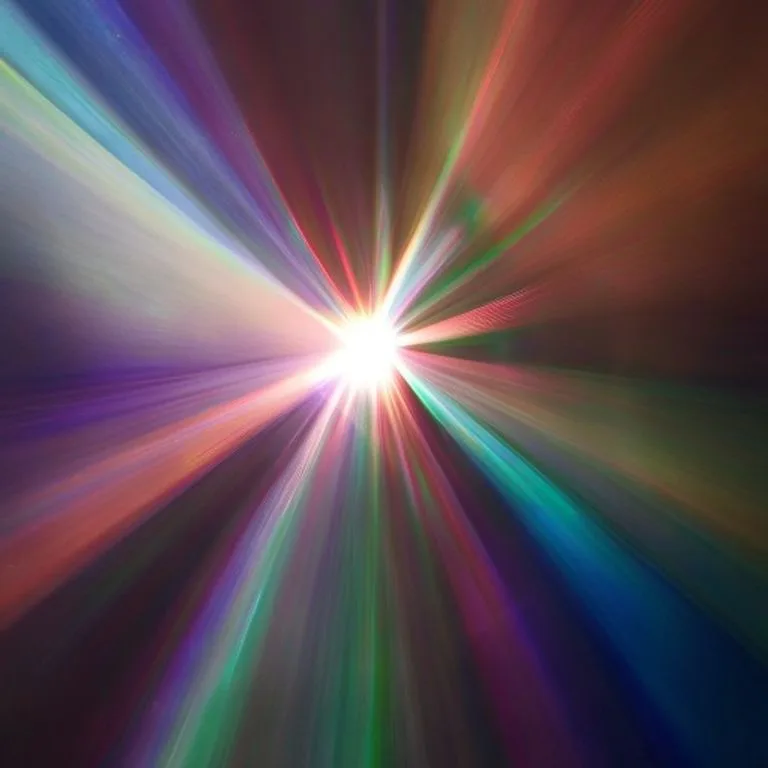
Chromatic aberration causes white light to split into its constituent colors, leading to color fringing.
These aberrations are particularly noticeable in high-contrast scenes or around bright objects. They are categorized into two main types: longitudinal (axial) chromatic aberration and lateral (transverse) chromatic aberration.
Longitudinal Chromatic Aberration
Longitudinal chromatic aberration (LCA), also known as axial chromatic aberration, occurs when different wavelengths of light focus at different distances along the optical axis. For instance, blue light, which is refracted more strongly, will focus closer to the lens than red light. This means that if an image is focused for one color, other colors will be out of focus, leading to a blurred or soft image with color halos.
LCA is typically corrected by using achromatic or apochromatic lens designs. An achromatic lens (achromat) combines two lens elements, usually one convex and one concave, made from different types of glass with different dispersive properties. This combination brings two different wavelengths (e.g., red and blue) to a common focus, significantly reducing LCA.
Apochromatic lenses (apochromats) take this correction a step further by bringing three different wavelengths to a common focus, resulting in even better color correction and sharper images. These lenses are more complex and expensive but are essential for high-precision applications like microscopy and high-end photography.
Lateral Chromatic Aberration
Lateral chromatic aberration (LCA), also known as transverse chromatic aberration, occurs when different wavelengths of light are magnified by different amounts. This causes different colors to focus at different positions in the image plane, leading to color fringes that increase in prominence towards the edges of the image, but do not necessarily affect the sharpness at the center.
Unlike longitudinal LCA, which blurs the entire image, lateral LCA primarily causes color separation at the image's periphery. For example, a white line near the edge of the field of view might appear with distinct red and blue edges. This aberration is particularly problematic in wide-angle lenses and zoom lenses.
Correction for lateral chromatic aberration often involves careful selection of glass types and lens element geometries within a multi-element design. Similar to distortion, lateral LCA can also be effectively corrected using digital post-processing techniques, which have become standard in modern camera systems and image editing software.
Impact and Applications
The presence of optical aberrations has a profound impact across various fields that rely on precise imaging. In Extraterrestrial Life Search: Astronomy, Philosophy, Existential Impact, aberrations in telescopes can limit the ability to resolve distant stars or fine details in nebulae. Early telescopes suffered greatly from spherical and chromatic aberrations, which spurred the development of more complex lens and mirror designs.
In Longitudinal Aberration: Understanding Optical System Imperfections | Althox, aberrations directly affect the resolution and clarity of magnified samples. High-quality microscope objectives are meticulously designed to minimize aberrations, allowing scientists to observe cellular structures and microorganisms with unprecedented detail. Medical imaging technologies, such as endoscopes and ophthalmic instruments, also demand high-fidelity optics with minimal aberrations to ensure accurate diagnoses and treatments.
For Decentralized Finance Governance Crypto Assets Future and cinematography, aberrations are a constant consideration for lens manufacturers. While some aberrations can be creatively used (e.g., certain types of bokeh), generally, photographers seek lenses that produce sharp, distortion-free, and color-accurate images. The pursuit of "perfect" lenses drives innovation in optical design and manufacturing processes.
Beyond these common applications, aberration control is crucial in areas like lithography for semiconductor manufacturing, where extreme precision is required to print microscopic circuits. Laser systems, optical communication, and virtual/augmented reality headsets also rely on sophisticated aberration correction to deliver high-quality visual experiences and functional performance.
Aberration Correction Techniques
Correcting optical aberrations involves a combination of clever optical design, advanced manufacturing processes, and sometimes, computational post-processing. The primary strategies include:
| Technique | Description | Primary Aberrations Corrected |
|---|---|---|
| Multi-element Lens Design | Combining several individual lens elements, often made from different glass types, to cancel out aberrations. Each element introduces its own aberrations, but when combined, they can be designed to largely offset each other. | Spherical, Coma, Astigmatism, Chromatic Aberrations |
| Aspheric Lenses | Lenses with non-spherical surfaces. Their complex curves allow for more precise control over the path of light rays, significantly reducing spherical aberration and other monochromatic defects with fewer elements. | Spherical Aberration, Coma, Distortion |
| Achromatic and Apochromatic Lenses | Specific multi-element designs using different glass types (e.g., crown and flint glass) to bring multiple wavelengths of light to a common focus, minimizing chromatic aberration. | Longitudinal and Lateral Chromatic Aberration |
| Low Dispersion (LD) Glass | Specialized glass types (e.g., Extra-low Dispersion, Fluorite) with reduced dispersion properties, which inherently minimize chromatic aberration. | Chromatic Aberrations |
| Adaptive Optics | Systems that use deformable mirrors and real-time wavefront sensors to correct for dynamic aberrations, especially those caused by atmospheric turbulence in astronomy or eye movements in ophthalmology. | Various dynamic aberrations (e.g., atmospheric distortion) |
| Computational Imaging/Post-processing | Software algorithms that analyze and correct for known lens aberrations after an image has been captured. This is common for distortion and lateral chromatic aberration in digital photography. | Distortion, Lateral Chromatic Aberration, sometimes Coma |
The choice of correction technique depends heavily on the specific application, desired performance, manufacturing constraints, and cost. High-end optical systems often employ a combination of these methods to achieve superior image quality. The continuous advancement in materials science and computational power further enhances the ability to design and correct for complex aberrations.
Future of Aberration Control
The field of optical aberration control is continuously evolving. Advances in metamaterials and diffractive optical elements (DOEs) offer new avenues for manipulating light at a microscopic level, potentially leading to ultra-thin, flat lenses that can correct aberrations more effectively than traditional refractive optics. These technologies could revolutionize everything from smartphone cameras to space telescopes.
Furthermore, the integration of artificial intelligence and machine learning into optical design software is accelerating the development of novel lens configurations. AI can explore vast design spaces and optimize complex multi-element systems for minimal aberrations, often discovering solutions that human designers might overlook. This computational approach promises to push the boundaries of what's optically possible.
The increasing demand for high-resolution imaging in fields like virtual reality, autonomous vehicles, and medical diagnostics ensures that research into understanding and mitigating optical aberrations will remain a critical area of innovation. The quest for perfect image fidelity continues, driven by both fundamental scientific curiosity and practical technological needs.
Fuente: Contenido híbrido asistido por IAs y supervisión editorial humana.


Comentarios