
Código Comercial Colombiano: Riesgos Navegación Marítima Abordaje
El comercio y el transporte marítimo son pilares fundamentales de la economía global, facilitando el intercambio de bienes y conectando continentes. Sin embargo, esta actividad inherente conlleva una serie de riesgos complejos, siendo los abordajes (colisiones entre naves) uno de los incidentes más graves y con mayores implicaciones legales y económicas. En Colombia, el marco normativo que rige estas eventualidades se encuentra detallado en el Código Comercial Colombiano, específicamente en el Decreto 410 de 1971.
Este compendio legal, de amplio espectro, dedica su Libro Quinto a la Navegación, estableciendo los principios y regulaciones aplicables al transporte acuático. Dentro de esta sección, la Parte Primera, titulada "De la Navegación Acuática", profundiza en los diversos aspectos que conciernen a las operaciones marítimas. Nuestro análisis se centrará en el Título VI, "De los Riesgos y Daños en la Navegación Marítima", y de manera más específica, en el Capítulo II: "Del Abordaje", que comprende los Artículos 1531 a 1539. Estas disposiciones son cruciales para entender la responsabilidad, las obligaciones y la gestión de daños tras un incidente de colisión en aguas colombianas.
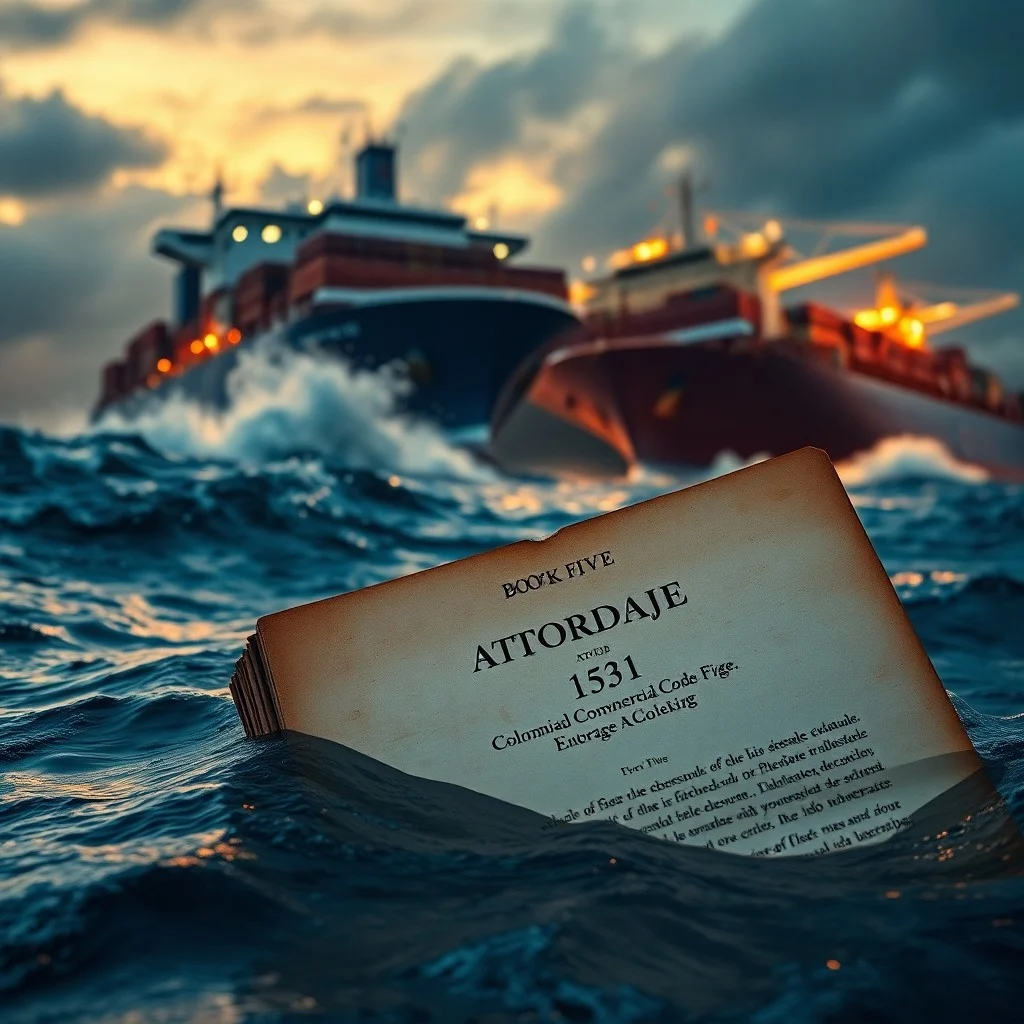
La inmensidad del océano y la niebla simbolizan los riesgos inherentes y las incógnitas de la navegación marítima, donde un abordaje puede ocurrir inesperadamente.
La comprensión de estos artículos es indispensable para armadores, capitanes, aseguradores y profesionales del derecho que operan dentro de la jurisdicción marítima colombiana. Este capítulo busca ofrecer claridad en el complejo escenario post-incidente, asegurando que las responsabilidades se asignen de forma justa y los daños se gestionen adecuadamente. Refleja una amalgama de tradiciones legales nacionales y convenciones marítimas internacionales, fomentando un entorno predecible y equitativo para todos los participantes en el comercio marítimo. A continuación, desglosaremos cada artículo, ofreciendo una visión profunda de su significado e implicaciones dentro del contexto más amplio del derecho marítimo colombiano.
Contexto Legal del Código Comercial Colombiano
El Código Comercial Colombiano, promulgado mediante el Decreto 410 de 1971, es una pieza legislativa fundamental que organiza y regula las actividades mercantiles en el país. Su estructura abarca desde los contratos comerciales hasta las sociedades, los títulos valores y, de manera muy particular, la navegación. La sección dedicada a la navegación es un testimonio de la importancia histórica y económica del transporte por agua para Colombia, un país con extensas costas en dos océanos y una significativa red fluvial.
El Libro Quinto del Código se enfoca exclusivamente en la navegación, dividiéndose en partes que abordan distintos aspectos del transporte marítimo y fluvial. La Parte Primera, "De la Navegación Acuática", establece las bases generales, mientras que el Título VI, "De los Riesgos y Daños en la Navegación Marítima", se sumerge en las complejidades de los accidentes y las responsabilidades que de ellos se derivan. Esta estructura refleja una cuidadosa consideración de los desafíos únicos que presenta el entorno marino, donde factores como el clima, el error humano y las fallas mecánicas pueden converger para crear situaciones peligrosas.
Capítulo II: El Abordaje Marítimo (Artículos 1531-1539)
El Capítulo II del Título VI está dedicado íntegramente al "Abordaje", término legal para referirse a la colisión entre dos o más naves. Este capítulo es de vital importancia, ya que establece las reglas para determinar la culpa, asignar responsabilidades y cuantificar los daños cuando se produce un contacto entre embarcaciones. El marco legal proporcionado no es meramente reactivo; también fomenta implícitamente medidas preventivas al delinear claramente las graves consecuencias de la negligencia o el incumplimiento de las regulaciones marítimas.
A continuación, exploraremos cada uno de los artículos que componen este capítulo, analizando sus implicaciones y cómo contribuyen a la seguridad y la justicia en el ámbito del transporte marítimo.
Artículo 1531: Fuerza Mayor y Causas Indeterminadas
La primera disposición del Capítulo II aborda escenarios donde la causa de un abordaje está más allá del control humano o no puede establecerse de manera concluyente. Este artículo es fundamental para comprender la asignación inicial de responsabilidad en situaciones ambiguas, enfatizando un principio de carga compartida en lugar de atribuir culpas donde no se pueden probar.
Artículo 1531.- El abordaje ocurrido por fuerza mayor o por causa que no sea posible determinar de un modo inequívoco, será soportado en los daños sufridos por quienes los hayan experimentado.
Este artículo estipula que si un abordaje ocurre debido a fuerza mayor (un evento irresistible e imprevisto) o por una causa que no puede determinarse de manera inequívoca, los daños sufridos son asumidos por cada nave involucrada. Esto significa que cada embarcación es responsable de sus propias pérdidas, y no existe derecho a reclamar compensación de la otra parte. Este principio evita litigios interminables en casos donde la culpa es genuinamente inasignable, promoviendo un enfoque pragmático ante incidentes marítimos inevitables.
Ejemplos de fuerza mayor en un contexto marítimo podrían incluir fenómenos meteorológicos extremos repentinos, como huracanes o tsunamis que imposibilitan la navegación, o fallas mecánicas imprevisibles no atribuibles a negligencia. La cláusula "no sea posible determinar de un modo inequívoco" subraya el alto estándar probatorio requerido para asignar culpa, asegurando que, en ausencia de evidencia clara, la norma sea la auto-responsabilidad por los daños. Esta postura legal minimiza disputas prolongadas cuando el verdadero origen del accidente permanece elusivo a pesar de una investigación exhaustiva.
Artículo 1532: Culpa de la Tripulación y Responsabilidad del Armador
A diferencia del Artículo 1531, esta disposición aborda situaciones donde el error humano o la negligencia contribuyen directamente a un abordaje marítimo. Define claramente la cadena de responsabilidad, extendiendo la obligación más allá de los miembros de la tripulación inmediatos al armador de la nave, reflejando el principio de responsabilidad vicaria común en el derecho marítimo.
Artículo 1532.- Si el abordaje ocurriere por culpa del capitán, del práctico o de otro miembro de la tripulación de una de las naves, éstos responderán solidariamente con el armador por el pago de los daños.
Cuando un abordaje es causado por la culpa del capitán, el práctico o cualquier otro miembro de la tripulación de una de las naves, estas personas son consideradas solidariamente responsables con el armador de la embarcación por el pago de los daños incurridos. Esta cláusula "solidariamente responsable" es crítica, ya que significa que la parte perjudicada puede buscar compensación de cualquiera o de todas las partes responsables.

Documentos legales y símbolos de justicia ilustran la complejidad de determinar la responsabilidad y los daños en el ámbito del derecho marítimo.
La responsabilidad del armador se deriva de su obligación última por la operación segura de su nave y las acciones de sus empleados, encarnando el principio de responsabilidad vicaria. Este artículo subraya la importancia de una formación adecuada, la adhesión a las reglas de navegación y una dotación competente de las naves. Cualquier desviación de estos estándares que conduzca a un abordaje puede acarrear consecuencias legales y financieras significativas tanto para el miembro de la tripulación culpable como para el armador. También implica un deber de diligencia por parte del armador para asegurar que su tripulación esté calificada y su nave sea apta para la navegación, enfatizando el papel del armador en el mantenimiento de los estándares de seguridad operativa.
Artículo 1533: Culpa Mutua y Principios de Igualdad de Responsabilidad
Los abordajes marítimos a menudo involucran escenarios complejos donde la culpa no puede atribuirse únicamente a una de las partes. El Artículo 1533 aborda estas situaciones de responsabilidad compartida, proporcionando un marco para cómo se asignan los daños cuando ambas naves contribuyen al incidente.
Artículo 1533.- Si el abordaje ocurriere por culpa mutua, responderán ambas naves solidariamente en el caso de que no fuere posible determinar la magnitud relativa de las culpas.
Esta disposición establece que si un abordaje ocurre por culpa mutua, y no es posible determinar la magnitud relativa de la culpa de cada parte, entonces ambas partes son consideradas igualmente responsables. Esto significa que los daños se distribuyen al 50% entre las naves involucradas. El desafío en tales casos a menudo radica en el análisis forense de la colisión para determinar el grado de culpa de cada embarcación. Si no se puede asignar un porcentaje preciso, el valor predeterminado es una división equitativa, lo que simplifica la resolución en escenarios de culpa ambigua.
El concepto de "culpa mutua" es una piedra angular de los principios del derecho marítimo, reconociendo que los accidentes en el mar rara vez son en blanco y negro. Fomenta una investigación exhaustiva para determinar la contribución de cada parte al incidente. Este principio a menudo se alinea con convenciones internacionales como la Convención de Bruselas de 1910 sobre Abordajes, que también aborda la culpa proporcional, buscando resultados equitativos.
Artículo 1534: Solidaridad y Responsabilidad Conjunta de las Naves
Basándose en el concepto de culpa mutua, el Artículo 1534 introduce el principio de solidaridad, o responsabilidad conjunta y solidaria, específicamente para los daños a terceros. Esta es una protección crucial para aquellos que sufren pérdidas pero no son directamente responsables de la colisión.
Artículo 1534.- En el caso a que se refiere el artículo anterior, las naves responderán solidariamente, respecto de terceros, por los daños.
En situaciones donde la culpa mutua conduce a daños, particularmente a terceros (por ejemplo, propietarios de carga, pasajeros u otras naves no directamente involucradas en la colisión pero afectadas por sus consecuencias), las naves implicadas son consideradas responsables en solidaridad. Esto significa que el tercero perjudicado puede reclamar el monto total de sus daños a cualquiera de las naves culpables, independientemente de su grado individual de culpa. La nave que paga el monto total tiene entonces un derecho de recurso contra la otra nave culpable por su parte de la responsabilidad, asegurando una compensación completa para la parte inocente.
Esta disposición garantiza que las partes inocentes no queden sin recurso debido a complejas disputas de responsabilidad entre las naves colisionadas. Agiliza el proceso de compensación para terceros, colocando la carga de la asignación interna en las naves que causaron el daño. Este principio es vital para mantener la confianza en el comercio marítimo y proteger a todos los interesados, reforzando la estabilidad del ecosistema de transporte.
Artículo 1535: Rol y Responsabilidad del Práctico (Piloto)
Los prácticos (pilotos) desempeñan un papel especializado y crítico en la navegación marítima, especialmente en aguas confinadas como puertos y ríos. El Artículo 1535 aclara cómo sus acciones impactan el régimen general de responsabilidad en caso de abordaje, distinguiendo entre su culpa personal y la responsabilidad última del armador de la nave.
Artículo 1535.- La culpa del práctico no modificará el régimen de responsabilidad por abordaje establecido en las disposiciones anteriores, pero el capitán o el armador tendrán derecho a la indemnización correspondiente por parte del práctico, o de la empresa a la cual éste pertenezca.
De manera crucial, la culpa de un práctico no altera el régimen de responsabilidad establecido por los artículos precedentes para el abordaje en sí. Esto significa que si la negligencia de un práctico causa una colisión, el armador de la nave sigue siendo el principal responsable ante el tercero perjudicado. Sin embargo, el artículo otorga al capitán o al armador de la nave el derecho a buscar compensación del práctico personalmente, o de la empresa de practicaje que lo emplea.

Un salvavidas en aguas turbulentas simboliza el deber de auxilio y la asistencia que las naves deben prestarse mutuamente tras un abordaje, incluso en condiciones adversas.
Esto establece un claro mecanismo de recurso interno, asegurando la rendición de cuentas a nivel individual. Esta distinción es importante porque los prácticos, aunque altamente calificados, suelen ser contratistas independientes o empleados de una autoridad de practicaje separada, no empleados directos del armador. La ley reconoce la responsabilidad última del armador por la operación de la nave, incluso cuando un práctico está a bordo, pero también proporciona un medio para que el armador recupere las pérdidas causadas por la negligencia específica del práctico. Este equilibrio asegura la rendición de cuentas en todos los niveles del mando marítimo.
Artículo 1536: Deber de Auxilio Post-Abordaje
Más allá de determinar la culpa y la responsabilidad por daños, el derecho marítimo pone un fuerte énfasis en los deberes humanitarios después de un accidente. El Artículo 1536 describe la obligación crítica de un capitán de prestar asistencia a otra nave, su tripulación y pasajeros después de un abordaje, siempre que pueda hacerlo sin peligro grave para su propia nave o para las personas a bordo.
Artículo 1536.- En caso de abordaje, el capitán de toda nave estará obligado, en cuanto pueda hacerlo sin grave peligro para su nave o para las personas que en ella se encuentren, a prestar auxilio a la otra nave, a su tripulación y a sus pasajeros. Estará obligado, si fuere posible, a dar a la otra nave noticia de la identificación de la suya, de su puerto de matrícula, y de sus lugares de procedencia y destino.
Esta disposición impone una obligación moral y legal a todo capitán involucrado en un abordaje de ofrecer ayuda. Este deber incluye el rescate de individuos, la prestación de asistencia médica y, en general, la mitigación de mayores daños. La salvedad "sin grave peligro para su nave o para las personas que en ella se encuentren" es crucial, reconociendo que la auto-preservación es también una preocupación legítima.
Además, el capitán está obligado a intercambiar detalles de identificación con la otra nave, incluyendo el nombre de su embarcación, puerto de matrícula y lugares de procedencia y destino. Esta información es vital para las investigaciones y procedimientos legales posteriores. El deber de prestar auxilio es un principio fundamental del derecho marítimo internacional, codificado en varias convenciones como la SOLAS (Seguridad de la Vida Humana en el Mar). El incumplimiento de este deber puede acarrear graves sanciones, incluidas acusaciones penales, independientemente de quién fue el culpable del abordaje en sí. Refleja los peligros inherentes del mar y la responsabilidad colectiva de los marinos de proteger la vida, reforzando un código de conducta universal en el mar.
Artículo 1537: Abordajes entre Naves del Mismo Propietario
Un escenario interesante y menos común abordado por el código es cuando ocurre un abordaje entre dos naves que son propiedad o están operadas por la misma entidad. El Artículo 1537 aclara que, incluso en tales casos, los principios de compensación siguen aplicándose, evitando que un propietario eluda la responsabilidad simplemente porque controla ambas embarcaciones.
Artículo 1537.- Dará lugar a las indemnizaciones previstas en este capítulo aun cuando el abordaje ocurriere entre naves pertenecientes al mismo armador o explotadas por el mismo armador.
Este artículo asegura que el derecho a la compensación, tal como se describe en el capítulo, surge incluso si el abordaje ocurre entre naves que pertenecen al mismo armador o son explotadas por él. Esto es particularmente relevante para fines de seguros y para proteger los intereses de terceros, como los propietarios de la carga, que podrían tener sus bienes en una de las naves colisionadas. La ficción legal aquí es que, a efectos de la responsabilidad por abordaje, las dos naves son tratadas como entidades distintas, incluso si están bajo propiedad común, para evitar conflictos de intereses y asegurar la protección de terceros.
Artículo 1538: Ampliación del Alcance: Incidentes sin Contacto Directo
Aunque el término "abordaje" implica un contacto físico directo, el derecho marítimo moderno, y a menudo los códigos comerciales, reconocen que los incidentes que causan daños pueden ocurrir sin una colisión directa. El Artículo 1538 del Código Comercial Colombiano aborda esta posibilidad, extendiendo la aplicación de las normas de responsabilidad a situaciones donde una nave causa daños a otra mediante maniobras incorrectas, estela excesiva, o cualquier otra acción que, sin contacto, provoca un perjuicio.
Artículo 1538.- Las disposiciones de este Capítulo se aplicarán también a los daños causados por una nave a otra, o a las personas o cosas a bordo de ésta, aun cuando no haya habido abordaje, si tales daños son consecuencia de una maniobra o de la inobservancia de los reglamentos.
Este artículo es crucial porque amplía el espectro de situaciones cubiertas por la normativa de abordaje, reconociendo que la responsabilidad no se limita estrictamente a los impactos físicos. Por ejemplo, si una nave realiza una maniobra peligrosa que obliga a otra a desviarse bruscamente y colisionar con un obstáculo, o si su estela causa daños significativos a una embarcación más pequeña, estas situaciones estarían bajo el paraguas de este artículo. La clave es que el daño sea una "consecuencia de una maniobra o de la inobservancia de los reglamentos", estableciendo un vínculo causal claro entre la acción (o inacción) y el perjuicio.
Esta extensión es vital para la protección de todos los actores en el entorno marítimo, ya que fomenta una navegación cuidadosa y el respeto por las normas, incluso cuando no hay riesgo inminente de contacto directo. Asegura que la negligencia o el comportamiento imprudente que cause daños sea sancionado, independientemente de si hubo un choque físico.
Artículo 1539: Prescripción de Acciones por Abordaje
Finalmente, el Código Comercial establece un límite de tiempo dentro del cual se pueden iniciar acciones legales relacionadas con los abordajes. Este principio de prescripción es común en el derecho para garantizar la seguridad jurídica y la resolución oportuna de disputas. El Artículo 1539 define este plazo para las acciones derivadas de un abordaje.
Artículo 1539.- Las acciones que nazcan del abordaje prescribirán en dos años, contados desde la fecha del siniestro.
Este artículo establece un plazo de prescripción de dos años para las acciones legales que surjan de un abordaje. Este período comienza a contarse desde la fecha en que ocurrió el siniestro. La prescripción es un mecanismo legal que extingue el derecho a reclamar judicialmente una vez transcurrido un determinado lapso, si el titular del derecho no lo ha ejercido. Su propósito es evitar que las situaciones jurídicas queden indefinidamente inciertas y fomentar la pronta resolución de los conflictos.
Para las partes involucradas en un abordaje, es fundamental tener en cuenta este plazo. El no iniciar una acción legal dentro de los dos años siguientes al incidente puede resultar en la pérdida del derecho a reclamar compensación o a hacer valer cualquier otra pretensión derivada del abordaje. Esto subraya la necesidad de una investigación rápida y la recopilación de pruebas, así como la consulta con expertos legales en derecho marítimo, para asegurar que los derechos se preserven y se ejerzan dentro del marco temporal establecido por la ley.
Implicaciones Prácticas y Contexto Moderno del Derecho Marítimo
Las disposiciones del Código Comercial Colombiano sobre abordaje no operan en un vacío. Están intrínsecamente ligadas a la práctica diaria de la navegación y a un contexto global de derecho marítimo. La aplicación de estos artículos tiene profundas implicaciones para:
- Armadores y Operadores de Naves: Deben asegurar que sus tripulaciones estén debidamente capacitadas y que sus naves cumplan con todas las normativas de seguridad y navegación. La responsabilidad solidaria del armador subraya la necesidad de una gestión de riesgos robusta.
- Compañías de Seguros: La claridad en la asignación de responsabilidades es vital para la suscripción de pólizas y la gestión de siniestros. La distinción entre fuerza mayor, culpa exclusiva y culpa mutua impacta directamente en la cobertura y el pago de indemnizaciones.
- Tripulaciones y Prácticos: La ley impone un alto grado de diligencia y profesionalismo. La posibilidad de responsabilidad personal para el práctico o los miembros de la tripulación en caso de culpa es un recordatorio constante de la seriedad de sus funciones.
- Terceros Afectados: Propietarios de carga, pasajeros y otras naves se benefician de la protección que ofrece la responsabilidad solidaria, garantizando que sus daños sean compensados incluso en escenarios de culpa compartida.
Además, el derecho marítimo colombiano interactúa con las convenciones internacionales. Aunque el Decreto 410 de 1971 es una ley nacional, Colombia es parte de varios tratados internacionales que buscan armonizar las leyes marítimas a nivel global. Esto incluye convenios sobre seguridad de la vida en el mar (SOLAS), prevención de abordajes (COLREGs) y responsabilidad por daños. La interpretación de los artículos del Código a menudo se realiza en consonancia con estos principios internacionales, buscando una coherencia que facilite el comercio y la justicia transfronterizos.
La constante evolución de la tecnología marítima, desde sistemas de navegación avanzados hasta la creciente automatización, plantea nuevos desafíos para la aplicación de estas normas. La identificación de la "culpa" en un entorno donde las decisiones son tomadas por algoritmos o sistemas autónomos es un área de desarrollo legal que requerirá futuras adaptaciones y clarificaciones. Sin embargo, los principios fundamentales de responsabilidad, diligencia y el deber de auxilio, consagrados en el Código Comercial Colombiano, seguirán siendo la base para la resolución de conflictos en el mar.
Conclusiones Clave sobre la Responsabilidad en Abordajes Marítimos
El análisis de los Artículos 1531 a 1539 del Código Comercial Colombiano revela un sistema legal robusto y detallado para abordar los incidentes de abordaje en la navegación marítima. Los puntos clave a recordar incluyen:
- Diferenciación de Causas: Se distingue claramente entre abordajes por fuerza mayor o causas indeterminadas (donde cada parte asume sus daños) y aquellos causados por culpa.
- Responsabilidad Solidaria: Tanto la tripulación culpable como el armador son solidariamente responsables por los daños, protegiendo a la parte perjudicada y asegurando la compensación.
- Culpa Mutua: En casos de culpa compartida, si no se puede determinar la magnitud relativa, la responsabilidad se divide equitativamente. Para terceros, la responsabilidad sigue siendo solidaria entre las naves culpables.
- Rol del Práctico: La culpa del práctico no exime al armador de su responsabilidad principal, pero permite al armador buscar indemnización del práctico o su empresa.
- Deber de Auxilio: Una obligación fundamental y humanitaria de prestar ayuda después de un abordaje, con sanciones por su incumplimiento.
- Alcance Ampliado: La normativa se aplica incluso a daños sin contacto directo, siempre que sean consecuencia de maniobras incorrectas o inobservancia de reglamentos.
- Prescripción: Las acciones derivadas de abordaje prescriben en dos años desde la fecha del siniestro, enfatizando la necesidad de actuar con diligencia.
Estas normativas son esenciales para mantener la seguridad, la equidad y la eficiencia en el vasto y a menudo impredecible entorno marítimo, proporcionando un marco legal claro para la resolución de conflictos y la protección de los intereses de todas las partes involucradas en el comercio y el transporte por agua.
Fuente: Contenido híbrido asistido por IAs y supervisión editorial humana.


Comentarios