
Spherical Aberration: Optical Distortion and Correction | Althox
Spherical aberration stands as a fundamental optical defect, inherent in lenses and mirrors with spherical surfaces, that significantly impacts image quality. This phenomenon occurs when light rays, particularly those striking the optical element far from its central axis, fail to converge at the same focal point as rays passing closer to the axis. The result is a blurred, indistinct image, a common challenge in the design and manufacturing of optical instruments ranging from simple eyeglasses to sophisticated telescopes and microscopes.
Understanding spherical aberration is crucial for anyone involved in optics, photography, astronomy, or even vision correction. It is classified as a monochromatic aberration, meaning it affects light of all wavelengths similarly, distinguishing it from chromatic aberration, which varies with color. Its presence can severely limit the resolving power and clarity of an optical system, necessitating various correction techniques to achieve optimal performance.
What is Spherical Aberration?
Spherical aberration is an optical distortion where light rays passing through a spherical lens or reflecting off a spherical mirror at different distances from the optical axis are focused at different points. This leads to a smudged or blurred image rather than a sharp, well-defined one. The effect is more pronounced with larger apertures and shorter focal lengths, making it a significant concern in high-power optical systems.
The core reason for this defect lies in the geometry of a spherical surface. A perfect spherical surface cannot bring all parallel incident rays to a single, sharp focus. Rays closer to the center (paraxial rays) converge further away, while rays closer to the edge (marginal rays) converge closer to the lens or mirror. This spread of focal points, known as the caustic, is the hallmark of spherical aberration.
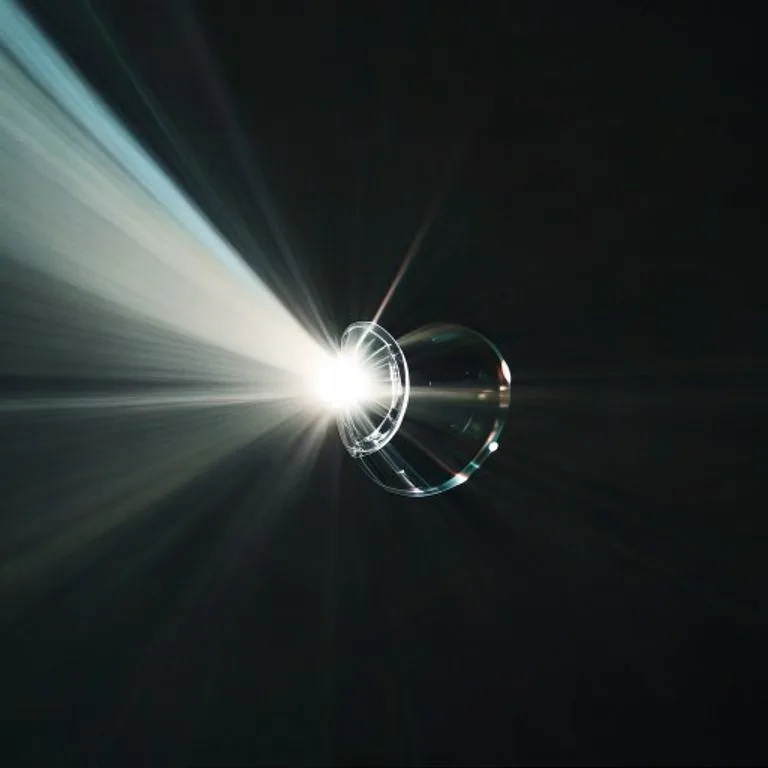
Understanding the divergent focal points that define Neuroarchitecture Longevity: Designing Brain Health Spaces, a critical challenge in optical system design.
The magnitude of spherical aberration is proportional to the fourth power of the lens or mirror's diameter and inversely proportional to the cube of its focal length. This mathematical relationship explains why wide-aperture, short-focal-length optics, such as those found in microscopes, are particularly susceptible to this defect. Conversely, long-focal-length systems, like many early telescopes, naturally exhibit less spherical aberration.
Historically, optical designers employed various strategies to minimize this effect, often by increasing the focal length of their instruments. However, modern optics demands compact, powerful systems, necessitating more sophisticated correction methods. The quest for perfect focus has driven significant advancements in lens and mirror manufacturing, leading to the development of complex optical designs.
Causes and Characteristics
The primary cause of spherical aberration is the use of spherical surfaces for lenses and mirrors. While spherical shapes are easy to manufacture, they do not provide the ideal geometry for perfect light convergence. This inherent limitation means that a single spherical lens or mirror cannot bring all incident parallel light rays to a single, sharp focal point. Instead, it creates a range of focal points, resulting in a blurred image.
Key characteristics of spherical aberration include:
- Monochromatic Nature: Unlike chromatic aberration, which separates light into its constituent colors, spherical aberration affects all wavelengths of light equally. This means the blurring is uniform across the color spectrum.
- Dependence on Aperture: The severity of spherical aberration increases significantly with the diameter of the optical element. Larger apertures allow more marginal rays to enter, exacerbating the problem.
- Dependence on Focal Length: Shorter focal lengths tend to produce more pronounced spherical aberration. This is because the curvature required for a short focal length with a given diameter is more extreme, leading to greater deviation of marginal rays.
- Caustic Formation: Instead of a single focal point, spherical aberration creates a complex region of concentrated light known as a caustic. The sharpest image is typically found at the "circle of least confusion," which is the narrowest point of this caustic.
- Third-Order Aberration: In optical theory, spherical aberration is classified as a third-order aberration, meaning its effects become more significant as the angle of incident rays increases relative to the optical axis.
These characteristics make spherical aberration a predictable and quantifiable defect, allowing optical engineers to design specific solutions. The challenge lies in balancing the desire for large apertures (for light gathering) and short focal lengths (for compact designs) with the need for aberration correction.
Impact on Optical Systems
The presence of spherical aberration has a profound impact on the performance of various optical systems, leading to degraded image quality and reduced functionality. Its effects are particularly noticeable in instruments that require high precision and clarity.
Consider the following examples:
- Telescopes: In astronomical telescopes, spherical aberration can make distant stars appear as fuzzy blobs instead of sharp points of light. The infamous initial flaw in the Hubble Space Telescope, where its primary mirror was ground to the wrong shape by a mere 2.2 micrometers, resulted in significant spherical aberration. This required a subsequent servicing mission to install corrective optics (COSTAR) to restore its intended clarity.
- Microscopes: High-magnification microscopes rely on precise focusing to reveal minute details. Spherical aberration in microscope objectives can severely limit their resolving power, making it difficult to distinguish fine structures in biological samples or materials.
- Cameras: In photographic lenses, spherical aberration contributes to a loss of sharpness, especially at wider apertures. While photographers sometimes use it creatively for a "soft focus" effect, for critical imaging, it is undesirable. Modern camera lenses often incorporate complex designs with aspheric elements to mitigate this.
- Eyeglasses and Contact Lenses: While less critical than in scientific instruments, spherical aberration can affect visual acuity, especially for individuals with larger pupils. Corrective lenses are designed to minimize this, though some residual aberration may remain.
- Projectors: In projection systems, spherical aberration can lead to blurred edges and an overall lack of image crispness, diminishing the quality of the projected display.
The impact of spherical aberration is not merely aesthetic; it directly affects the scientific data collected by instruments, the diagnostic capabilities of medical devices, and the overall user experience in consumer optics. Correcting it is paramount for achieving high-performance optical systems.
Correction Methods and Technologies
Over centuries, optical engineers have developed ingenious methods to counteract spherical aberration, evolving from simple design adjustments to advanced manufacturing techniques. These corrections are vital for achieving the sharp, high-fidelity images demanded by modern applications.
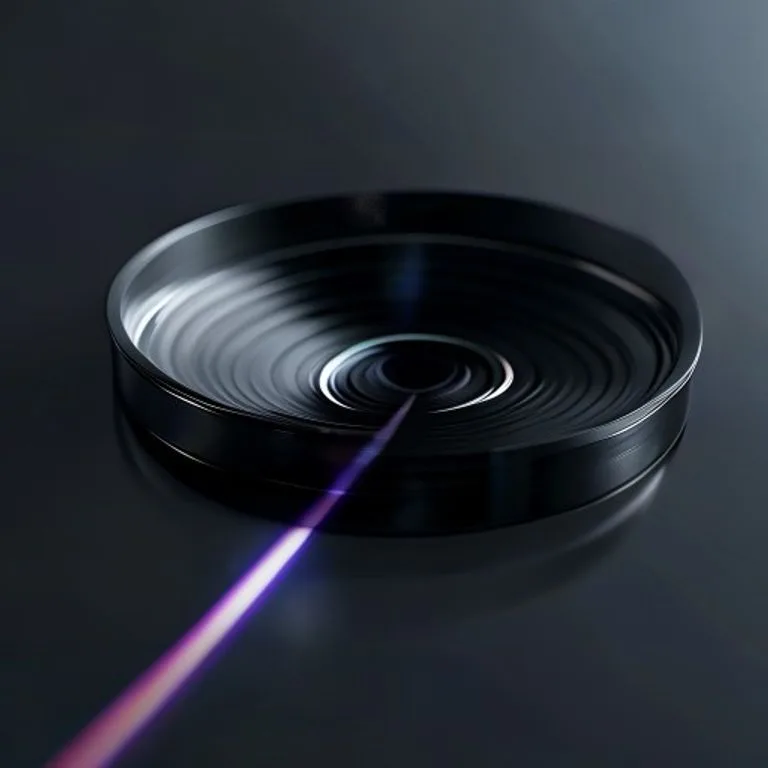
The intricate geometry of an Literary AI Dialogue: Márquez, Generative Technology, a key solution for correcting spherical aberration.
The most effective and widely used correction methods include:
Aspheric Lenses and Mirrors
Instead of a simple spherical curve, aspheric surfaces have a more complex, non-spherical profile that gradually changes curvature from the center to the edge. This allows them to precisely guide all incident parallel light rays to a single, sharp focal point. Aspheric elements are now common in high-quality camera lenses, telescopes, and even eyeglasses, significantly reducing spherical aberration and often simplifying optical designs by replacing multiple spherical elements with a single aspheric one.
Compound Lenses (Lens Systems)
By combining multiple spherical lenses made of different types of glass (with varying refractive indices and dispersions), designers can create lens systems that collectively minimize spherical aberration. This approach, often used in achromatic and apochromatic lenses, allows for a more controlled bending of light rays, bringing them closer to a common focus. While effective, these systems can be more complex and costly to manufacture than single aspheric elements.
Stopping Down (Reducing Aperture)
A simpler, though often less desirable, method is to reduce the effective aperture of the optical system by using a diaphragm or stop. This blocks the marginal rays, which contribute most to spherical aberration, allowing only the paraxial rays to pass through. While this improves sharpness, it also reduces the amount of light entering the system, leading to dimmer images and a decrease in resolving power due to diffraction. This trade-off makes it a last resort for critical applications.
Schmidt Corrector Plates
In specific telescope designs, such as the Schmidt camera and Schmidt-Cassegrain telescopes, a specially shaped aspheric lens called a Schmidt corrector plate is placed at the entrance pupil. This thin, non-spherical plate corrects the spherical aberration introduced by a spherical primary mirror, allowing for a wide field of view with excellent image quality. It's an elegant solution for large-aperture, wide-field instruments.
Maksutov and Schmidt-Cassegrain Designs
These catadioptric (combining mirrors and lenses) telescope designs utilize combinations of spherical mirrors and corrector lenses (like the Maksutov meniscus corrector or the Schmidt corrector) to achieve compact systems with minimal spherical aberration and a flat field of view. They are popular for amateur astronomy due to their portability and good optical performance.

An abstract depiction of how AI Preventive Medicine: Diagnosis, Longevity, Personalized Treatments fail to converge perfectly due to optical imperfections.
Adaptive Optics
For cutting-edge astronomical telescopes, adaptive optics systems use deformable mirrors whose shapes can be rapidly adjusted by computer-controlled actuators. These systems continuously measure wavefront distortions (including spherical aberration and atmospheric turbulence) and apply real-time corrections, dramatically improving image quality. This technology is particularly crucial for ground-based telescopes to achieve near space-telescope resolution.
The continuous innovation in materials science, computational modeling, and manufacturing processes allows for increasingly precise control over optical surfaces, making it possible to design and produce optics with virtually no spherical aberration. This ongoing development is critical for advancing fields from scientific research to consumer electronics.
Types of Spherical Aberration
While generally discussed as a single phenomenon, spherical aberration can manifest in different ways, primarily categorized by the direction of the focal shift relative to the paraxial focus. Understanding these types helps in designing appropriate corrective measures.
The two main types are:
- Positive Spherical Aberration: This is the most common type, where marginal rays (those passing through the outer edges of the lens or mirror) converge to a focal point *closer* to the optical element than the paraxial rays (those passing near the center). Most simple convex lenses and concave mirrors exhibit positive spherical aberration. The image appears blurred because the light isn't focused at a single point.
- Negative Spherical Aberration: In this case, the marginal rays converge to a focal point *further away* from the optical element than the paraxial rays. This type is typically found in concave lenses and convex mirrors. Negative spherical aberration can be used advantageously in optical design to compensate for positive spherical aberration from other elements within a system.
Optical designers often employ a combination of elements exhibiting both positive and negative spherical aberration to achieve a net cancellation, resulting in a system with significantly reduced overall aberration. This principle is fundamental to the design of complex multi-element lenses, where each component is carefully chosen and positioned to correct for the aberrations introduced by others.
Furthermore, the degree of spherical aberration can vary with the object's distance and the angle of incidence. While the primary focus is often on on-axis aberration (for objects directly in front of the lens), off-axis aberrations (like coma and astigmatism) also become significant for objects away from the optical axis. However, spherical aberration remains a distinct and fundamental challenge to overcome for achieving optimal image clarity.
Historical Context and Evolution
The problem of spherical aberration has plagued optical instrument makers since the invention of the telescope and microscope. Early designs, relying on simple spherical lenses, quickly encountered the limitations imposed by this defect, leading to blurry images and restricted magnification.
In the 17th century, scientists like Christiaan Huygens recognized the issue, proposing ways to minimize it by using very long focal length objectives in telescopes. While this reduced the aberration, it resulted in incredibly cumbersome instruments. Isaac Newton, frustrated by both spherical and chromatic aberration in refracting telescopes, famously turned to reflecting telescopes, believing that mirrors would inherently avoid chromatic issues. However, spherical mirrors still suffered from spherical aberration, requiring parabolic shapes for perfect focus, which were exceedingly difficult to grind accurately at the time.
The 18th and 19th centuries saw significant advancements in lens grinding and the development of achromatic doublets, which addressed chromatic aberration. However, spherical aberration remained a challenge. Mathematicians and physicists, including Carl Friedrich Gauss, contributed to the theoretical understanding of aberrations, laying the groundwork for more sophisticated lens designs.
The 20th century brought revolutionary changes with the advent of computer-aided design and precision manufacturing. The ability to calculate and produce complex aspheric surfaces transformed optical engineering. The initial flaw of the Hubble Space Telescope in 1990, caused by a precisely but incorrectly ground spherical mirror, served as a stark reminder of the critical importance of spherical aberration correction and the precision required in modern optics. Its successful correction through subsequent missions underscored the power of advanced optical solutions.
Today, the fight against spherical aberration continues with cutting-edge technologies like adaptive optics, which dynamically correct for real-time distortions, and the increasing use of diffractive optical elements. The evolution of correction methods reflects humanity's persistent drive to see further, clearer, and with greater detail, pushing the boundaries of scientific discovery and technological innovation.
Future Trends and Advancements
The field of optics is continuously evolving, and the pursuit of aberration-free imaging remains a central goal. Future trends in addressing spherical aberration are likely to focus on even more sophisticated manufacturing, computational optics, and novel materials.
Key areas of advancement include:
- Freeform Optics: Moving beyond simple aspheric shapes, freeform optics allows for even more complex, non-rotationally symmetric surfaces. These can correct multiple aberrations simultaneously, leading to lighter, more compact, and higher-performance optical systems for applications like virtual reality, augmented reality, and advanced scientific instrumentation.
- Metasurfaces and Metalenses: These are ultra-thin, flat optical components engineered at the nanoscale to manipulate light in unprecedented ways. Metalenses can be designed to correct spherical aberration and other distortions within a single, wafer-thin element, potentially revolutionizing camera lenses, medical imaging, and even space optics.
- Computational Imaging: Instead of relying solely on perfect hardware, computational imaging techniques use algorithms to correct aberrations in software after the image has been captured. This approach can compensate for residual aberrations or even deliberately introduced distortions, offering new flexibility in optical design.
- Advanced Manufacturing: Innovations in additive manufacturing (3D printing) and precision machining are making it possible to produce highly complex optical elements with greater accuracy and at lower costs. This will democratize access to advanced aberration-corrected optics.
- Active and Adaptive Optics Miniaturization: While adaptive optics is currently used in large telescopes, ongoing research aims to miniaturize these systems for use in smaller instruments, medical devices, and even consumer electronics, enabling dynamic, real-time aberration correction in everyday applications.
These advancements promise a future where optical systems are not only more powerful and precise but also more compact, versatile, and accessible, pushing the boundaries of what is visually possible.
Fuente: Contenido híbrido asistido por IAs y supervisión editorial humana.


Comentarios