
Persian Abacus: History, Influence, Challenges | Althox
The history of computational devices is as ancient as human civilization itself, with diverse cultures developing ingenious methods to manage numbers for critical activities such as trade, astronomy, and administration. Among these foundational innovations, the abacus stands as a profound testament to early human ingenuity in numerical computation. While instruments like the Chinese suanpan or the Roman abacus are extensively documented and physically preserved, the narrative surrounding the Persian and Iranian abacus presents a unique and fascinating challenge due to a notable scarcity of direct physical evidence.
During the era of the Achaemenid Persian Empire, approximately around 600 BCE, historical indications suggest that Iranians began utilizing some form of sophisticated calculating device. This period was characterized by a significant intellectual and cultural flourishing, where the exchange of knowledge between diverse civilizations was a common occurrence. The rich tapestry of Persian history points towards a highly sophisticated approach to mathematics and meticulous record-keeping, which were absolutely essential for effectively managing such a vast and complex empire.
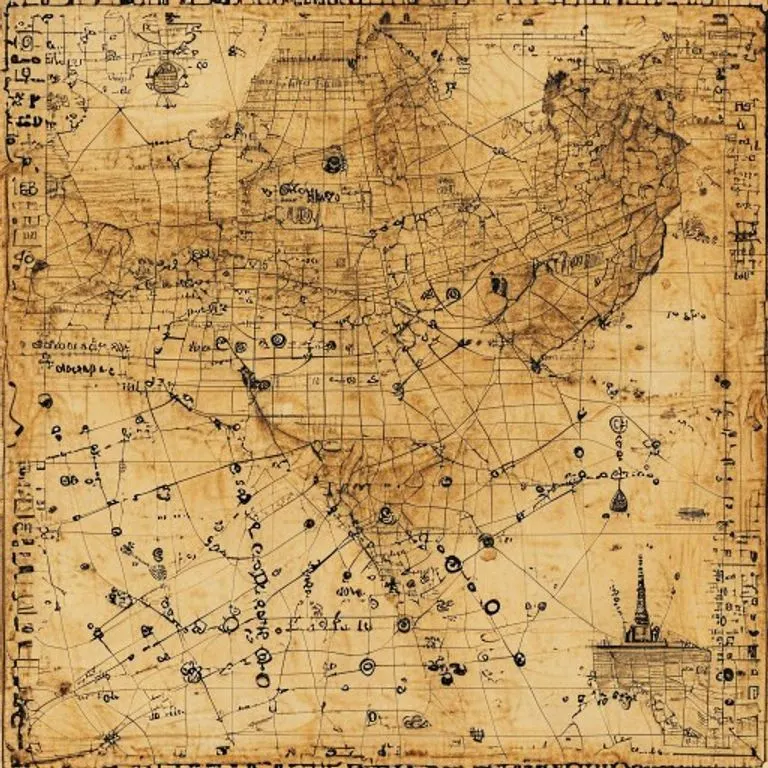
A conceptual map illustrating ancient Persian trade routes, with subtle mathematical symbols overlaid, hinting at the administrative needs for calculation in a vast empire.
This article aims to thoroughly explore the historical context, potential forms, and the significant challenges associated with definitively understanding and reconstructing the Persian and Iranian abacus. We will delve into the profound influences from neighboring cultures and examine the crucial role of oral tradition in preserving what little is known about these ancient computational instruments. Understanding the Persian abacus necessitates a journey through fragmented historical records, meticulous linguistic analysis, and comprehensive comparative studies with other early computational tools to piece together its enigmatic past.
Historical Foundations of Persian Calculation
The Achaemenid Empire, founded by Cyrus the Great, represented one of the largest and most influential empires of the ancient world, extending from the Balkans and Eastern Europe all the way to the Indus Valley. The sheer scale of such an immense political and economic entity necessitated the development and implementation of advanced systems for accounting, taxation, and comprehensive resource management. While direct, unequivocal evidence of a specific "Persian abacus" remains scarce, the existence of highly sophisticated mathematical practices throughout this period is undeniable and well-supported by historical records.
Archaeological discoveries, particularly cuneiform tablets unearthed from the Achaemenid period, reveal incredibly detailed administrative records. These documents include complex calculations related to labor distribution, rations for workers and soldiers, and the meticulous collection of tribute from conquered territories. Such intricate record-keeping strongly suggests the widespread use of some form of counting aid, even if it wasn't a bead-based abacus in the form we commonly envision today. Early counting methods frequently involved simple tally sticks, pebbles, or marked boards, which could have functioned as precursors or parallel tools to a more formalized abacus-like device.
The subsequent Parthian and Sassanid Empires, which succeeded the Achaemenids, continued and further developed this tradition of intellectual curiosity and administrative precision. These periods saw Persia solidify its role as a crucial crossroads of civilizations, actively absorbing and disseminating knowledge from regions as diverse as Greece, Rome, India, and China. This dynamic intellectual environment was exceptionally conducive to the adoption, adaptation, and indigenous development of various computational techniques and tools.
Prominent scholars from the Islamic Golden Age, such as Al-Biruni and Al-Khwarizmi, whose works followed the Sassanid era, extensively documented contemporary mathematical practices. Their writings often detailed the use of finger reckoning and various forms of calculation. While their works frequently refer to Indian numerals and methods, the underlying and persistent need for efficient calculation tools would have been a constant throughout the entirety of Persian history. The concept of a "counting board" or a "dust abacus" – essentially a surface upon which numbers could be written and erased – is also a plausible form for an early Persian calculating device. Such ephemeral devices, common in other ancient cultures, would naturally leave minimal archaeological traces, thereby explaining the current lack of physical finds. Interestingly, the very term "abacus" itself possesses Semitic roots, suggesting a widespread presence and conceptual understanding of such tools across the ancient Near East.
Cultural Exchange and External Influences
Persia's strategic geographical location positioned it as a natural bridge connecting the East and the West, thereby facilitating a vibrant and continuous exchange of ideas, goods, and technological innovations. This rich cultural melting pot undoubtedly exerted a profound influence on its mathematical and computational practices. The interactions with India, China, and the Roman Empire are particularly relevant when considering the potential development and evolution of the Persian abacus.
- Influence from India: From India, Persia absorbed advanced concepts in astronomy and mathematics, most notably the decimal system and the revolutionary concept of zero. These innovations later transformed global computation. While India had its own forms of counting boards, the primary influence on Persia was more likely on theoretical numerical systems rather than the physical design of a specific abacus type.
- Contact with China: Along the famed Silk Road, contact with China would have exposed Persian scholars and merchants to the Chinese suanpan. This distinctive bead-based abacus, with its unique structure, could have potentially inspired or merged with existing Persian counting methods. However, it is important to note that the suanpan, as we recognize it today, primarily developed later during the Ming Dynasty, making direct early influence on the Achaemenid abacus less probable but not impossible for subsequent periods.
- Interactions with the Roman Empire: The Roman Empire, with its own well-documented hand abacus and various counting boards, also maintained significant interactions with Persia. The Roman abacus, often crafted from durable bronze or stone, featured grooves or rods with movable beads. It is highly plausible that Persian traders and administrators encountered and possibly adopted or adapted similar devices, especially in border regions or during diplomatic exchanges.
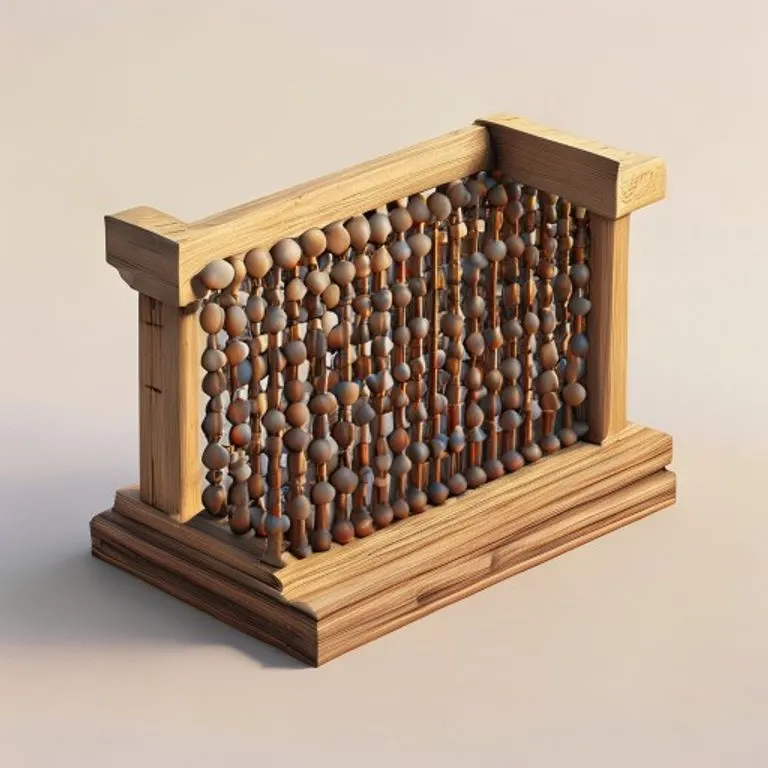
A 3D isometric render of an ancient counting board, featuring movable beads on rods, representing a potential form of early computational device.
The flow of knowledge was certainly not unidirectional; Persian innovations in mathematics, astronomy, and engineering also traveled westward and eastward, enriching other cultures. This dynamic intellectual environment strongly suggests that any Persian abacus that existed would have been a complex product of both indigenous development and external inspiration, constantly evolving to meet the specific demands of a sophisticated and expanding society. This continuous adaptation would have made its form highly fluid and responsive to changing needs and available materials.
The Elusive Nature of the Persian Abacus
The most significant and persistent challenge in understanding the Persian abacus is the profound paucity of physical remains. Unlike the remarkably durable stone or metal Roman abaci, or the relatively well-preserved wooden Chinese suanpan, there are virtually no archaeological artifacts that have been unequivocally identified as a Persian abacus. This striking absence of tangible evidence has led scholars to propose several compelling hypotheses regarding its potential nature and form:
- Ephemeral Materials: It is highly probable that the Persian abacus was constructed from perishable materials such as wood, unfired clay, or even simply drawn on sand or dust. These materials would naturally degrade over millennia, leaving no discernible trace for modern archaeologists to discover.
- Simple Counting Boards: Instead of a complex bead-and-rod structure, it could have been a more rudimentary counting board, similar to a checkerboard or a "Shatranj" board used for games. On such boards, pebbles, tokens, or even fingers could have been moved within designated columns to perform calculations. These boards could also have been temporary or made from common, easily degradable materials.
- Integration with Other Tools: The function of an abacus might not have been a standalone device but rather integrated into other administrative or educational tools. This integration would make it considerably harder to distinguish as a separate computational instrument in the archaeological record.
- Evolution into Finger Reckoning: As mathematical knowledge advanced, particularly with the widespread adoption of Indian numerals and their place-value system, the immediate need for a physical abacus might have diminished. This could have given way to more sophisticated mental arithmetic or highly developed finger reckoning techniques, which were extensively practiced in the Islamic world.
The term "Shatranj," often translated as chess, originally referred to a board game that involved moving pieces across a grid. Some historians have posited that early forms of counting boards or abaci might have borne a resemblance to such game boards, with different "pieces" or markers representing numerical values. This concept aligns well with the idea of a flexible, adaptable tool rather than a rigid, standardized instrument that would leave clear archaeological footprints. Furthermore, historical accounts from the region frequently prioritize theoretical advancements in mathematics over detailed descriptions of the practical tools used for computation. This emphasis on abstract principles rather than physical implements further complicates the challenging task of reconstructing the precise form and function of the Persian abacus. The intellectual climate of the time highly valued the understanding of numerical principles and algorithms, which could be applied effectively with various, often simple, aids.
Unraveling the Past: Oral Traditions and Textual Clues
Given the pronounced scarcity of physical evidence, much of what is conjectured about the Persian abacus is necessarily derived from two primary, albeit indirect, sources: oral traditions passed down through generations within local communities, and scattered, often vague, references found in ancient historical texts. While oral traditions are invaluable for cultural preservation, they are inherently subject to change, interpretation, and embellishment over time, making precise historical reconstruction a formidable task.
In remote villages and rural areas across Iran and its neighboring regions, anecdotal evidence and local folklore occasionally allude to ancient counting methods. These stories, frequently preserved and recounted by elders, describe simple systems of counting using natural elements like stones, seeds, or marked lines drawn directly on the ground. While these narratives do not directly describe an "abacus" in the modern, bead-and-frame sense, they nonetheless highlight a continuous and enduring tradition of practical arithmetic that has persisted throughout Persian history.
A conceptual digital artwork depicting fragmented historical documents, symbolizing the challenge of reconstructing ancient mathematical practices from incomplete evidence.
Historical accounts from various periods offer tantalizing, yet often vague, clues. For instance, some Greek and Roman historians who engaged with the Persian Empire occasionally mentioned the sophisticated administrative practices of the Persians, implicitly suggesting the use of highly efficient calculation methods. However, these accounts rarely provided detailed descriptions of the specific tools or instruments employed for these calculations, leaving much to scholarly interpretation.
Islamic scholars, who meticulously built upon the foundational knowledge inherited from Persian and Greek traditions, also provide indirect insights into ancient computational methods. Texts discussing arithmetic and algebra often describe different methods of calculation, some of which might have been performed with the aid of a counting board. A notable example is the "dust board" or "takht-i-ghubar," which was a common tool for calculations where numbers were written and then erased, functioning similarly to a modern whiteboard but utilizing sand or dust. The primary challenge lies in distinguishing between general counting practices and a specific, formalized abacus. The lack of precise terminology in ancient texts further blurs these lines, making it difficult to ascertain if a mentioned "counting device" refers to a structured abacus or a simpler, more informal method of tallying.
Comparative Analysis with Other Ancient Abaci
To infer the possible characteristics and evolution of the Persian abacus, it is highly beneficial to compare it with other known ancient calculating devices from neighboring or historically influential cultures. This comparative approach allows scholars to identify common features, shared principles, and potential adaptations that might have been incorporated into Persian computational tools.
- The Mesopotamian Abacus: Although also poorly documented physically, the Mesopotamian abacus is widely believed to have been a counting board featuring columns for different powers of ten, utilizing pebbles or tokens for enumeration. Given Persia's deep historical ties and geographical proximity to Mesopotamia, this type of counting board is a strong candidate for an early Persian device, suggesting a shared lineage in computational methodology.
- The Greek Abacus: The Greek abacus, particularly exemplified by the Salamis Tablet, is a well-known example of a counting board dating back to the 4th century BCE. It features engraved lines for different numerical values, where counters were strategically placed. The intellectual exchange between Greece and Persia was significant and continuous, making it highly plausible that similar designs or underlying principles were known and possibly adopted in Persia.
"The Salamis Tablet, discovered in 1846, is the oldest surviving counting board. It is a large slab of white marble, measuring approximately 150 cm by 75 cm, with engraved lines and symbols used for calculations. Its existence demonstrates the sophistication of ancient Greek arithmetic and provides a tangible reference for early abaci."
- The Roman Abacus: The Roman abacus, particularly the hand abacus, was a compact and highly portable device featuring grooves and beads, widely used for everyday calculations by merchants and officials across the empire. Its portability and efficiency would have rendered it an attractive tool for a vast and commercially active empire like Persia, especially for facilitating trade and managing military logistics across its extensive territories. The Roman abacus often employed a bi-quinary system, with beads representing units of five and one.
- The Indian Abacus: While not as physically distinct as the Chinese or Roman versions, the "Indian abacus" referred more to a sophisticated method of calculation performed on a dust board or through advanced finger reckoning. The decimal place-value system, which originated in India, eventually made complex calculations more accessible without the absolute necessity of elaborate physical aids, although simple counting boards would still have been highly useful for larger sums and educational purposes.
Considering these diverse influences and parallels, it is highly probable that the Persian abacus likely evolved from a relatively simple counting board, possibly constructed from readily available materials such as wood or clay, and utilizing pebbles or tokens for counting. It would have adopted and integrated elements from both Eastern traditions, such as decimal concepts from India, and Western traditions, including board designs from Greece and Rome. This synthesis would have culminated in a practical and adaptable computational tool specifically suited for the unique administrative and commercial needs of the Persian empires. Its precise form could have been fluid, adapting dynamically to different contexts, specific computational requirements, and the materials available in various regions.
Mathematical and Administrative Significance
Regardless of its exact physical manifestation, the existence of a functional and efficient calculating device was absolutely paramount for the flourishing and sustained operation of the Persian empires. Their vast territories, complex and interconnected economies, and extensive infrastructure projects demanded incredibly precise numerical management and sophisticated accounting practices. The abacus, or its functional equivalent, would have played an indispensable role in several key areas that underpinned the stability and prosperity of these empires:
| Area of Significance | Role of Calculation Device |
|---|---|
| Taxation and Tribute | Managing the collection of taxes and tribute from diverse provinces required meticulous accounting. An abacus would facilitate the accurate summation of various goods, currencies, and resources. |
| Trade and Commerce | Persian merchants engaged in extensive trade networks spanning from the Mediterranean to China. Calculating profits, losses, currency conversions, and inventory relied heavily on efficient mathematical tools. |
| Military Logistics | Supplying and managing large armies across vast distances involved complex calculations of provisions, troop movements, payroll, and resource allocation, all requiring rapid and accurate arithmetic. |
| Construction and Engineering | The construction of monumental structures like Persepolis, as well as extensive irrigation systems (qanats), demanded advanced planning, precise measurements, and intricate calculations, all supported by computational aids. |
| Astronomy and Calendar Keeping | Persian astronomers were highly skilled, developing sophisticated calendars and astronomical tables. These endeavors required continuous and highly accurate calculations, for which an abacus would have been an invaluable aid. |
The administrative efficiency of the Persian empires is exceptionally well-documented by numerous historians. Their remarkable ability to manage such a large, diverse, and geographically dispersed population for many centuries speaks volumes about their organizational acumen and their underlying computational capabilities. While scribes and mathematicians undoubtedly performed many complex calculations, the widespread use of an abacus or a similar counting device would have significantly expedited and simplified routine arithmetic operations, thereby making the overall administration more fluid, less prone to errors, and considerably more efficient in handling the vast data flows of a sprawling empire.
Reconstruction Challenges and Modern Interpretations
The quest to definitively reconstruct the Persian abacus remains a significant challenge for historians of science and mathematics. The primary obstacle, as extensively discussed, is the enduring lack of direct archaeological evidence. This absence forces scholars to rely heavily on indirect clues, comparative studies with other ancient civilizations, and careful interpretation of fragmented textual references and oral traditions. The ephemeral nature of the materials likely used, coupled with the possibility that such devices were integrated into broader administrative practices rather than existing as distinct, durable artifacts, contributes to this difficulty.
Despite these formidable challenges, the academic pursuit of understanding the Persian abacus is far from futile. The very act of investigating its potential existence and forms sheds critical light on the sophisticated mathematical capabilities of ancient Persian societies. It underscores their administrative ingenuity and their capacity for cultural assimilation and innovation. Modern interpretations often hypothesize a device that was highly adaptable, perhaps evolving from simple counting boards to more complex systems influenced by interactions with Indian, Chinese, and Roman computational methods.
The ongoing academic debate surrounding the Persian abacus serves as a powerful reminder of the gaps in our historical record and the continuous effort required to piece together the technological and intellectual heritage of ancient civilizations. While a definitive physical reconstruction may remain elusive, the conceptual understanding of its role reinforces the idea that advanced numerical tools were indispensable for the rise and maintenance of complex empires. The legacy of the Persian abacus, though shrouded in mystery, thus lies in its profound implications for understanding the universal human drive to quantify, organize, and manage the world through mathematics.
Fuente: Contenido híbrido asistido por IAs y supervisión editorial humana.


