
Bumblebee Habitat: Thermal Regulation, Ecology, and Conservation | Althox
Bumblebees, members of the genus Bombus, are among the most recognizable and ecologically vital insects in many terrestrial ecosystems. Their distinctive fuzzy bodies and often vibrant coloration make them a familiar sight in gardens, meadows, and wild landscapes across the globe. Unlike their more commonly known relatives, the honeybees, bumblebees exhibit a remarkable adaptability to a wide range of climatic conditions, thriving in environments that would be inhospitable to many other pollinator species.
This extraordinary resilience is largely attributed to their unique physiological and behavioral adaptations, which allow them to regulate their body temperature effectively, even in colder climates. Understanding the intricacies of bumblebee habitat is crucial for appreciating their ecological role and for developing effective conservation strategies in an era of rapid environmental change. Their presence signifies a healthy ecosystem, and their decline can have cascading effects on plant reproduction and biodiversity.
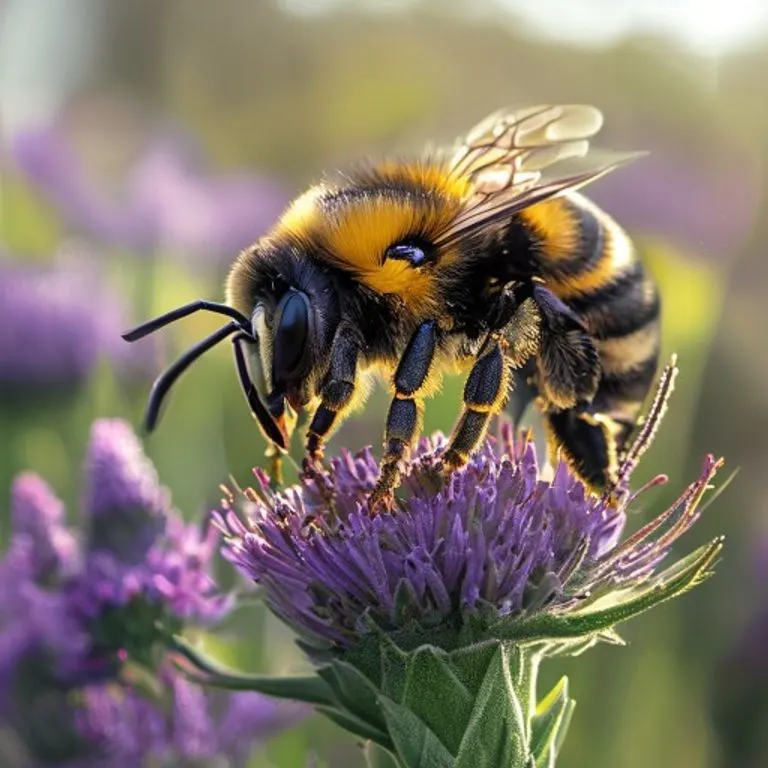
A bumblebee expertly navigates a thistle, showcasing its thick hair and foraging prowess in its natural habitat.
The ability of bumblebees to thrive in diverse habitats, from the Arctic tundra to high alpine meadows and temperate forests, is a testament to their evolutionary success. This article delves into the specific characteristics that define bumblebee habitats, explores their thermal regulation mechanisms, examines their global distribution, and discusses the critical factors influencing their survival and conservation.
Bumblebee Thermal Regulation: A Masterclass in Adaptation
The ability of bumblebees to maintain a stable body temperature, known as thermoregulation, is a cornerstone of their ecological success, particularly in colder environments. Unlike many other insects that are largely poikilothermic (cold-blooded) and rely on external heat sources, bumblebees are facultatively endothermic, meaning they can generate their own heat. This physiological marvel allows them to be active at lower ambient temperatures than most other insect pollinators.
One of the most striking features contributing to their thermal regulation is their physical anatomy. Bumblebees are coated in a dense layer of fine, insulating hair, often referred to as a "fur coat." This thick pilosity acts as a highly effective thermal insulator, trapping a layer of warm air close to their bodies. This adaptation is analogous to the fur of mammals or the feathers of birds, providing a significant advantage in cold climates by minimizing heat loss to the environment, as detailed in studies by Heinrich (1979) on insect thermoregulation.
Beyond passive insulation, bumblebees employ active mechanisms to generate heat. The most prominent of these is shivering thermogenesis. Before taking flight or when ambient temperatures are low, a bumblebee can rapidly contract its flight muscles without moving its wings. This isometric muscle contraction generates metabolic heat, effectively warming up its thorax to the optimal temperature required for flight, typically around 30-35°C (86-95°F). This pre-flight warm-up period is critical, especially on cool mornings or at high altitudes, allowing them to forage earlier and longer than other insects.
Another sophisticated mechanism involves the manipulation of hemolymph circulation. Hemolymph, the insect equivalent of blood, plays a role in heat distribution. Bumblebees can selectively increase the circulation of hemolymph to their thorax, where heat is generated by muscle activity, and reduce it to their abdomen. This allows them to concentrate heat in the area where it's most needed for flight and metabolic functions, while minimizing heat loss from the abdomen, which is less insulated and can act as a radiator. This differential heating strategy is a key factor in their ability to forage in conditions that would immobilize other insects.
Furthermore, this internal heat generation is not only vital for the adult bees but also extends to the protection of their vulnerable offspring. Bumblebee queens and workers will actively incubate their brood by pressing their thoraxes against the wax cells containing eggs, larvae, and pupae. This behavioral thermoregulation ensures that the developing young are kept at a stable, warm temperature, accelerating their development and protecting them from the harsh cold of the nest environment. This parental care, combined with the nest's insulation, is a crucial aspect of their reproductive success in challenging climates.
Key Habitat Requirements for Bumblebee Survival
A suitable habitat for bumblebees is a complex mosaic of resources that must meet their needs throughout their annual life cycle. These requirements can be broadly categorized into nesting sites, foraging resources, and overwintering locations. The availability and quality of these elements directly influence the presence, abundance, and health of bumblebee populations.
Firstly, bumblebees require undisturbed areas for nesting. Unlike honeybees, which live in perennial colonies and construct elaborate wax combs in hives, most bumblebee species are annual, meaning their colonies last for only one season. A new queen emerges in spring, establishes a nest, raises workers, and then new queens and males are produced before the colony dies off in autumn. The availability of appropriate nesting sites is a primary limiting factor for bumblebee populations.
Secondly, a continuous supply of diverse floral resources is paramount. Bumblebees are generalist foragers, meaning they visit a wide variety of flowers to collect nectar (for energy) and pollen (for protein and other nutrients). The availability of these resources must span the entire active season of the colony, from early spring when queens emerge to late autumn when new queens are fattening up for hibernation. A lack of floral diversity or seasonal gaps in bloom can severely impact colony growth and reproductive success.
Thirdly, suitable overwintering sites are essential for new queens. After mating in late summer or early autumn, new queens seek out secluded, sheltered locations to hibernate through the winter. These sites, often referred to as hibernacula, need to provide stable temperatures, protection from predators, and adequate moisture levels to prevent desiccation. Without safe overwintering sites, the continuity of the bumblebee population is jeopardized.
Finally, the overall landscape structure plays a significant role. Bumblebees generally have a foraging range of a few hundred meters to a few kilometers from their nest. Therefore, the required resources (nesting sites, foraging areas, overwintering spots) must be present within a reasonable proximity to each other. Habitat fragmentation, where these resources are isolated by large expanses of unsuitable land, can make it difficult for queens to establish colonies and for workers to find sufficient food, as highlighted by research on pollinator landscape ecology.
Nesting Sites: The Hidden Homes of Bumblebee Colonies
Bumblebee nesting habits are quite distinct from those of honeybees. Most bumblebee species are ground-nesters, utilizing existing cavities rather than excavating their own. The queen, upon emerging from hibernation in spring, embarks on a crucial search for a suitable nesting site. The success of her colony hinges on finding a location that offers protection, insulation, and proximity to food sources.
Common nesting sites include abandoned rodent burrows (such as those of mice or voles), which offer ready-made, insulated underground chambers. These burrows provide excellent protection from predators and temperature fluctuations. The queen will often line these cavities with soft materials like moss, dry grass, or leaf litter to further enhance insulation and create a cozy environment for her initial brood.
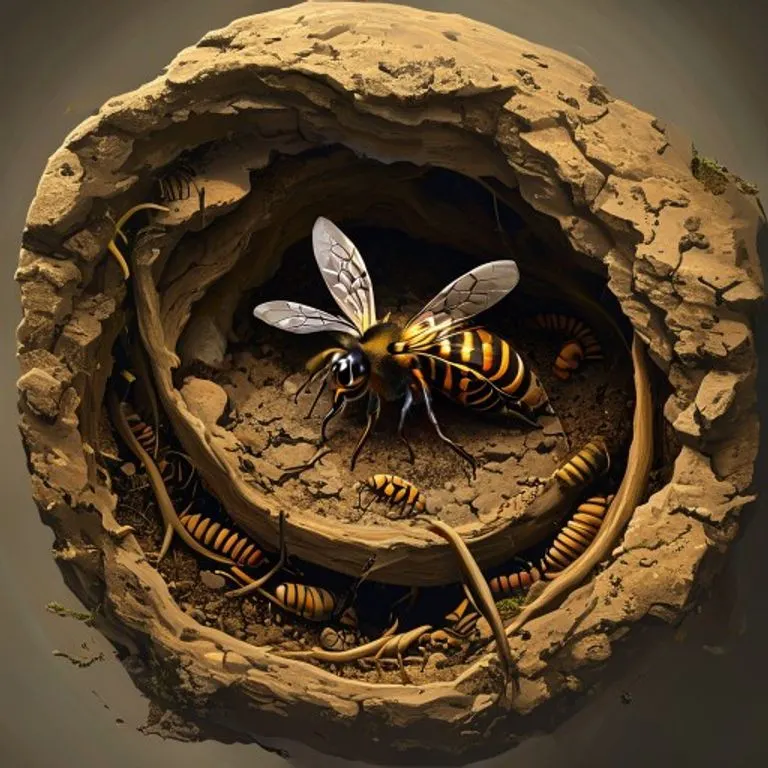
An intricate digital illustration revealing the hidden structure of a bumblebee nest, bustling with life beneath the earth.
Other species may choose to nest on the surface, often within dense tussocks of grass, under thick mats of moss, or beneath fallen logs. These "surface nests" also rely on existing vegetation or debris for camouflage and insulation. Some species, particularly those found in forested areas, may even utilize tree cavities or hollows in old stumps. The choice of nesting site is often species-specific, reflecting different ecological niches.
The ideal nesting site offers several critical features:
- Insulation: Protection from extreme temperatures, both hot and cold, is vital for the developing brood.
- Protection from Predators: Seclusion from badgers, foxes, birds, and other animals that might raid the nest.
- Undisturbed Location: Areas free from human disturbance, such as frequent mowing, digging, or heavy foot traffic.
- Drainage: Nests must be well-drained to prevent flooding, which can be catastrophic for a colony.
- Proximity to Foraging: While not directly in a flower patch, the nest should be within a reasonable flight distance of abundant floral resources.
The availability of these undisturbed, suitable nesting locations is increasingly threatened by modern land management practices. Intensive agriculture, urban development, and even overly tidy gardening can eliminate potential nesting sites. Promoting natural, less manicured landscapes, particularly in rural and suburban areas, is crucial for supporting bumblebee populations.
Foraging Resources: Sustaining Bumblebee Populations
Foraging for nectar and pollen is the primary activity of bumblebee workers and, initially, the queen. Nectar provides carbohydrates, which are essential for fueling their high metabolic rate, especially for flight and thermoregulation. Pollen, on the other hand, is a rich source of protein, lipids, vitamins, and minerals, vital for larval development and queen egg-laying. A healthy bumblebee habitat must therefore provide a continuous and diverse supply of flowering plants from early spring to late autumn.
Different bumblebee species have varying tongue lengths, influencing which flowers they can effectively access. Long-tongued species, for example, can reach nectar in deep tubular flowers like foxgloves or honeysuckle, while short-tongued species prefer more open flowers or engage in "nectar robbing" from the base of deeper flowers. This specialization contributes to the biodiversity of plant-pollinator interactions.
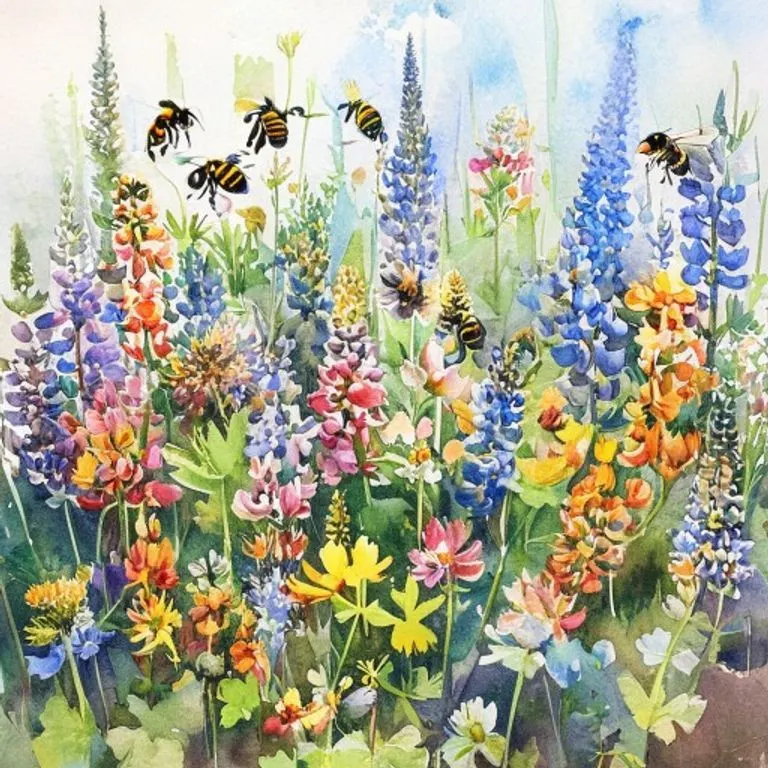
A vibrant watercolor scene captures the essential relationship between bumblebees and a rich tapestry of flowering plants.
The concept of "nectar corridors" and "pollen pathways" highlights the importance of connected floral resources across the landscape. A single patch of flowers, no matter how rich, may not be sufficient to sustain a colony throughout its entire life cycle. Bumblebees require a succession of blooms, ensuring that food is available even when certain plant species have finished flowering, a principle central to Deep Sleep Biohacking: Chronobiology, Cellular Recovery, Longevity.
Key characteristics of ideal foraging resources include:
- Diversity: A wide range of native plant species ensures a balanced diet and caters to different bumblebee species.
- Continuous Bloom: Flowers available from early spring (for emerging queens) through late autumn (for new queens preparing for hibernation).
- Abundance: Sufficient quantities of flowers to support the energy demands of a growing colony, which can number in the hundreds of individuals.
- Pesticide-Free: Flowers free from harmful insecticides, herbicides, and fungicides that can poison or weaken bees.
- Native Plants: Local native plants are often best adapted to local bumblebee species and provide the most suitable nectar and pollen.
Agricultural intensification has led to a significant loss of floral diversity in many landscapes, with monocultures replacing diverse wildflower meadows. This reduction in foraging resources is a major driver of bumblebee decline. Creating and maintaining pollinator-friendly habitats, such as wildflower strips, hedgerows, and diverse gardens, is essential for providing these vital food sources.
Global Distribution and Biogeography of Bumblebees
The genus Bombus comprises approximately 250 recognized species, exhibiting a wide and fascinating global distribution. Primarily found in the Northern Hemisphere, bumblebees are particularly abundant and diverse in temperate and cold regions, including high latitudes and high altitudes. Their remarkable thermal adaptations, as discussed earlier, are key to their success in these challenging environments.
In contrast to honeybees (Apis mellifera), which are predominantly found in warmer or temperate climates and require human intervention to survive harsh winters in many regions, bumblebees are well-adapted to cold. This is why they are often the dominant pollinators in alpine meadows, Arctic tundra, and boreal forests. Their thick insulating hair and ability to shiver for heat generation allow them to remain active and forage at temperatures close to freezing, where other insects would be immobile.
Bumblebees are found across Europe, Asia, North America, and parts of South America (specifically in the Andes mountain range). Their distribution generally follows a pattern of decreasing diversity towards the equator, with a few exceptions in high-altitude tropical regions. For instance, species like Bombus atratus can be found in the tropical Andes, demonstrating the adaptability of the genus to specific microclimates. Some species, such as Bombus polaris, are true Arctic specialists, capable of surviving in the most extreme northern environments, while others like Bombus terrestris are widespread across Europe and have been introduced to other continents for agricultural pollination, sometimes with unintended ecological consequences. For more on their Bumblebee Biology: Pollination, Characteristics, Ecology | Althox, refer to specialized studies.
The varied biogeography of bumblebees highlights their evolutionary flexibility and their ability to exploit a wide array of ecological niches. The distribution of bumblebees is also shaped by historical factors, including glacial cycles and land bridges, which allowed for dispersal and subsequent speciation. Understanding these historical patterns, alongside current climatic and habitat conditions, is crucial for predicting how bumblebee populations might respond to ongoing environmental changes, particularly Quantum Cybersecurity Critical Infrastructure Post-Quantum Defenses and habitat loss.
Bumblebee Life Cycle and Habitat Interaction
The annual life cycle of a bumblebee colony is intricately linked to the availability and quality of its habitat. This cycle typically begins in early spring and concludes in late autumn, with distinct phases each requiring specific environmental conditions and resources. Understanding this interaction is key to appreciating their ecological resilience and vulnerability.
In early spring, a solitary queen emerges from hibernation (often in a hibernaculum underground or in leaf litter). Her first task is to find a suitable nesting site and forage for nectar to replenish her energy and pollen to provision her first brood. The availability of early flowering plants is critical during this phase, as it directly impacts her ability to establish a successful colony. She lays her first eggs, and once they hatch, she feeds the larvae until they pupate and emerge as the first generation of worker bees.
Throughout summer, the colony grows, with workers taking over foraging duties and nest maintenance. The queen focuses on egg-laying, and the colony can reach several hundred individuals. During this period, a continuous and abundant supply of diverse floral resources is essential to support the growing colony's energy demands and larval development. The nest provides protection from predators and adverse weather, while the workers' thermoregulation ensures optimal brood development.
Towards late summer and early autumn, the queen begins to produce reproductive individuals: new queens and males. These new queens will mate and then seek out overwintering sites, while the old queen, males, and worker bees will die as winter approaches. The success of the next generation hinges on the availability of late-season floral resources for the new queens to build up fat reserves for hibernation, and the presence of suitable, undisturbed hibernacula. This delicate balance between life cycle stages and habitat availability makes bumblebees particularly sensitive to environmental changes.
Conservation Challenges and Strategies
Bumblebee populations worldwide are facing significant declines, driven by a combination of factors. Understanding these threats is the first step towards effective conservation. The primary challenges include habitat loss and fragmentation, widespread pesticide use, the impacts of climate change, and the spread of diseases and invasive species.
Habitat Loss and Fragmentation: The conversion of natural landscapes into agricultural fields, urban areas, and infrastructure development directly destroys nesting and foraging sites. Even when habitats remain, they are often fragmented, creating isolated patches that are too small or too far apart for bumblebees to effectively utilize. This reduces genetic diversity and makes populations more vulnerable to local extinctions.
Pesticide Use: Neonicotinoid insecticides, in particular, have been widely implicated in pollinator declines. Even sub-lethal doses can impair bumblebees' foraging ability, navigation, learning, and reproductive success. Herbicides also indirectly harm bumblebees by reducing the diversity and abundance of wildflowers they rely on for food.
Climate Change: Rising temperatures, altered precipitation patterns, and more frequent extreme weather events disrupt the delicate synchrony between bumblebees and their floral resources. Some species are forced to shift their ranges northward or to higher altitudes, while others may face extinction if they cannot adapt quickly enough. The impact of Quantum Cybersecurity Critical Infrastructure Post-Quantum Defenses is a major concern for pollinator health.
Diseases and Invasive Species: The global trade of bumblebees for commercial pollination can inadvertently spread diseases and parasites to wild populations. Additionally, invasive plant species can outcompete native flora, reducing the quality of foraging resources, while invasive insect species can introduce new competitive pressures or predation risks.
Effective conservation strategies require a multi-faceted approach:
- Habitat Restoration and Creation: Planting native wildflowers, creating pollinator gardens, and restoring natural meadows provide essential foraging and nesting sites.
- Sustainable Agriculture: Promoting farming practices that reduce pesticide use, establish wildflower margins, and diversify crops can significantly benefit bumblebees.
- Policy and Regulation: Implementing stricter regulations on harmful pesticides and supporting policies that protect and connect natural habitats are crucial.
- Public Awareness and Education: Engaging the public in pollinator conservation through educational campaigns encourages individual actions, such as planting pollinator-friendly species and avoiding pesticides in gardens.
- Research and Monitoring: Continued scientific research helps us better understand bumblebee biology, threats, and the effectiveness of conservation interventions.
Ecological Importance of Bumblebees
Bumblebees are not just charming insects; they are indispensable components of healthy ecosystems and agricultural systems. Their role as pollinators is critical for the reproduction of countless wild plants and a significant portion of the crops we rely on for food. Without them, many plant communities would suffer, leading to a cascade of negative effects throughout the food web.
One of their unique contributions is "buzz pollination" (sonication), a technique where they vibrate their flight muscles to release pollen from flowers that hold it tightly, such as tomatoes, blueberries, and cranberries. This specialized pollination method makes them more efficient than many other pollinators for certain crops, contributing significantly to agricultural yields and food security. Their ability to forage in cooler temperatures and lower light conditions also extends the pollination window, benefiting plants that bloom early or late in the season, or those in northern climates.
Beyond agriculture, bumblebees play a vital role in maintaining biodiversity in natural ecosystems. By pollinating wild flowers, they support the plant communities that form the base of many food webs, providing food and habitat for other insects, birds, and mammals. Their decline can lead to reduced seed set in plants, affecting plant populations and the animals that depend on them for survival. Therefore, the conservation of bumblebees is not merely about protecting a single genus of insects, but about safeguarding the intricate web of life that sustains our planet.
In conclusion, the bumblebee's ability to thrive in diverse and often challenging environments is a testament to its remarkable adaptations, particularly its sophisticated thermal regulation mechanisms. However, these adaptations alone are not enough to counteract the growing pressures from habitat loss, pesticide use, and climate change. Protecting bumblebee habitats and implementing comprehensive conservation strategies are essential not only for the survival of these charismatic pollinators but also for the health and resilience of the ecosystems they underpin.
Fuente: Contenido híbrido asistido por IAs y supervisión editorial humana.


