
Bumblebee Flight Speed: Aerodynamic Marvel | Althox
The flight of a bumblebee has long captivated scientists and laypeople alike, often cited as a classic example of nature defying conventional aerodynamic principles. For decades, a popular misconception persisted that, based on early aerodynamic calculations, bumblebees should not be able to fly. This intriguing paradox, however, was eventually resolved through advanced research, revealing the sophisticated and highly adapted mechanisms that enable these fuzzy insects to achieve remarkable speeds and maneuverability.
A bumblebee in full flight is a testament to nature's engineering, defying perceived aerodynamic limits. While often underestimated, these insects can attain speeds of up to 54 kilometers per hour (approximately 34 miles per hour). This speed is particularly astonishing considering their relatively heavy, stout bodies and small, rapidly beating wings, which appear to possess limited aerodynamic efficiency at first glance. Their flight capabilities underscore a unique evolutionary pathway that prioritizes robustness and efficiency over the sleek, streamlined designs seen in many other flying creatures.
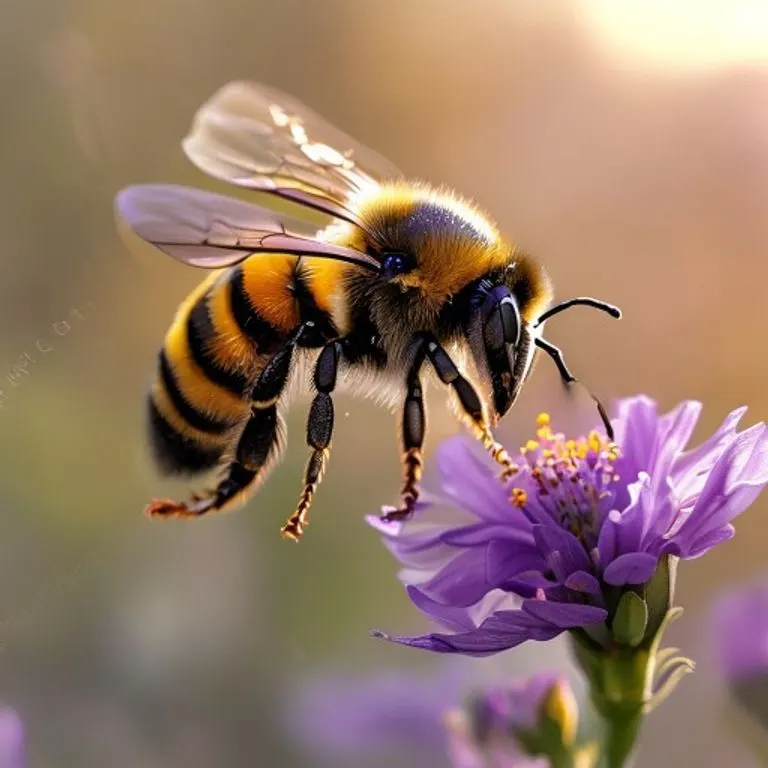
A bumblebee in rapid flight, showcasing its incredible speed and agility, a true marvel of Extreme Longevity: Genomic Strategies, Biohacking Human Survival.
This article delves into the intricate science behind the bumblebee's flight, exploring the biomechanics, aerodynamic principles, and physiological adaptations that allow these insects to achieve such speeds. We will examine how they generate lift and thrust, the energy demands of their high-performance flight, and the ecological implications of their aerial prowess, particularly in foraging and pollination. Understanding bumblebee flight not only unravels a long-standing scientific puzzle but also offers valuable insights into biomimetics and the potential for innovative engineering solutions.
Table of Contents
- The Aerodynamic Paradox Unveiled: Dispelling the Myth
- Biomechanics of Bumblebee Flight: Wing Kinematics and Muscle Power
- Key Factors Influencing Bumblebee Flight Speed
- Maximum Attainable Speeds: Scientific Observations and Variability
- Energy Expenditure and Flight Efficiency in Bumblebees
- Ecological Significance: Pollination and Survival
- Biomimetics: Bumblebee Flight as Technological Inspiration
- Conclusion: The Enduring Marvel of Bumblebee Flight
The Aerodynamic Paradox Unveiled: Dispelling the Myth
The myth that bumblebees defy the laws of aerodynamics originated in the 1930s. It is often attributed to a Swiss aerodynamicist, although the exact source remains debated among historians of science. The core of the "paradox" lay in calculations based on steady-state aerodynamics, a model primarily used for fixed-wing aircraft. This model assumes a constant air flow over a rigid wing, which is fundamentally different from the dynamic, oscillating motion of an insect wing.
Early analyses, applying these inappropriate models, concluded that bumblebee wings were too small and their bodies too heavy to generate sufficient lift. This led to the popular, albeit incorrect, notion that bumblebees were somehow breaking the laws of physics. However, as fluid dynamics and high-speed photography advanced, particularly in the latter half of the 20th century, scientists were able to observe and analyze insect flight with unprecedented detail.
The resolution of the paradox came with the understanding that insect flight operates under principles of unsteady aerodynamics. Unlike airplanes, bumblebees do not rely solely on Bernoulli's principle acting on a static airfoil. Instead, they employ a complex series of rapid, rotational, and flapping motions that create dynamic lift. Key mechanisms include leading-edge vortices (LEVs), clap-and-fling, and delayed stall, which are crucial for generating the necessary lift and thrust.
- Leading-Edge Vortices (LEVs): As the bumblebee's wing flaps forward, a vortex forms along its leading edge. This swirling mass of air creates an area of low pressure above the wing, significantly increasing lift. This phenomenon is stable and persistent throughout much of the wing stroke, a critical discovery in understanding insect flight.
- Clap-and-Fling Mechanism: Some insects, including bumblebees, bring their wings together at the top of the upstroke (clap) and then rapidly separate them (fling). This motion creates a burst of circulation and a strong vortex, generating additional lift and thrust at the beginning of the downstroke.
- Delayed Stall: Insect wings operate at high angles of attack, which would typically cause a stall in conventional aircraft. However, the rapid flapping and rotational movements of bumblebee wings delay this stall, allowing them to maintain high lift coefficients.
These dynamic aerodynamic phenomena, combined with the incredible power-to-weight ratio of their flight muscles, allow bumblebees to not only fly but to do so with remarkable agility and speed. The "paradox" was never about defying physics, but rather about the limitations of applying an incomplete model to a complex biological system. Modern research has since provided a comprehensive and elegant explanation for their aerial capabilities, moving beyond the simplistic models that initially puzzled scientists.
Biomechanics of Bumblebee Flight: Wing Kinematics and Muscle Power
The biomechanics of bumblebee flight are a testament to evolutionary optimization, involving a highly specialized musculoskeletal system and intricate wing movements. Unlike birds or bats, insects do not directly articulate their wings with individual muscles for each stroke. Instead, they utilize a system of indirect flight muscles that deform the thorax, which in turn causes the wings to flap.
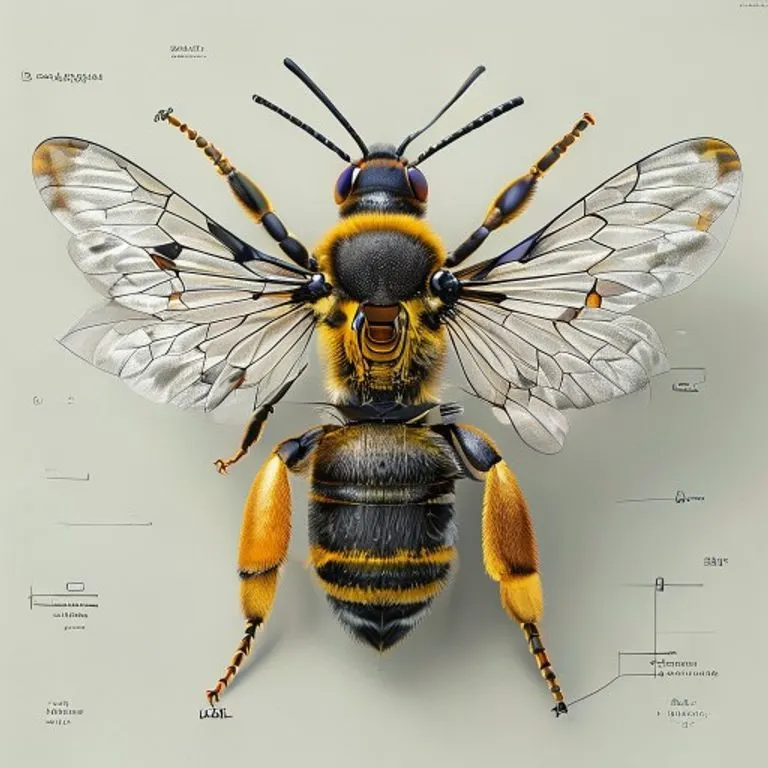
A detailed illustration of the powerful indirect flight muscles within a bumblebee's thorax, crucial for generating high-frequency wingbeats.
The primary flight muscles in bumblebees are asynchronous, meaning they contract multiple times for a single nerve impulse. This allows for incredibly high wingbeat frequencies, far exceeding what synchronous muscles could achieve. Bumblebees typically flap their wings at frequencies ranging from 130 to 200 beats per second, a rate that is imperceptible to the human eye but crucial for generating the necessary lift and thrust.
Wing kinematics refer to the precise movements of the wings during flight. High-speed video analysis and computational fluid dynamics have revealed the complexity of these motions. Each wing stroke involves a combination of flapping, rotation, and pronation/supination. During the downstroke, the wing moves downwards and forwards, generating the primary lift and thrust. The wing then rapidly rotates at the end of the downstroke, preparing for the upstroke, which also contributes to lift, albeit to a lesser extent.
The wings themselves are not rigid structures. They are flexible and can deform during the stroke, a property that further enhances aerodynamic efficiency. This passive deformation can create beneficial aerodynamic effects, such as camber changes, which optimize lift generation throughout the complex wing trajectory. The wing venation provides structural support while maintaining flexibility, allowing the wing to withstand the immense forces generated during rapid flapping.
The power required for such high-frequency, dynamic flight is immense. Bumblebees possess highly specialized flight muscles that are among the most metabolically active tissues known in the animal kingdom. These muscles are rich in mitochondria, the cellular powerhouses, and are capable of rapid ATP (adenosine triphosphate) production to fuel continuous contraction. Before taking flight, bumblebees often shiver their flight muscles to warm them up to an optimal operating temperature, which can be significantly higher than the ambient air temperature, ensuring peak performance.
The thoracic structure plays a vital role in this process. The exoskeleton of the thorax acts as a resonant structure, storing and releasing elastic energy with each wingbeat. This elastic recoil helps to reduce the energy cost of flapping, making the flight more efficient than if the muscles had to do all the work against purely inertial forces. This intricate interplay of muscle power, wing mechanics, and thoracic elasticity allows bumblebees to sustain their powerful and agile flight, enabling them to perform vital ecological roles.
Key Factors Influencing Bumblebee Flight Speed
Bumblebee flight speed is not a static value; it is influenced by a multitude of intrinsic and extrinsic factors. These factors interact in complex ways to determine the actual velocity a bumblebee can achieve and sustain during its various activities, such as foraging, commuting, or escaping predators. Understanding these variables is crucial for ecological studies, as they help explain foraging patterns, territorial behavior, and overall colony success.
- Body Size and Weight: Generally, larger bumblebees with greater muscle mass tend to achieve higher absolute speeds. However, the wing loading (body weight divided by wing area) is also critical. Bumblebees have relatively high wing loading compared to many other insects, which necessitates powerful flight and high wingbeat frequencies to generate sufficient lift.
- Wing Morphology: The precise shape, flexibility, and aspect ratio of the wings can impact aerodynamic efficiency and, consequently, flight speed. While bumblebee wings are not traditionally "aerodynamic" in the fixed-wing sense, their specific design is optimized for their unique flapping mechanism, allowing for dynamic lift generation.
- Temperature: As poikilothermic (cold-blooded) animals, bumblebees' muscle performance is highly dependent on ambient temperature. They require their flight muscles to be warmed to an optimal temperature (around 30-40°C) before efficient flight can occur. In colder conditions, they may need to shiver more extensively, and their maximum flight speed may be reduced, impacting their foraging range and activity periods.
- Nectar Load: When foraging, bumblebees collect nectar and pollen, which adds significant weight to their bodies. A heavily laden bumblebee will fly slower and require more energy to maintain flight compared to an unladen one. This trade-off between payload and speed is a critical aspect of their foraging strategy, influencing how far they travel and how much they can carry.
- Wind Conditions: Headwinds will naturally reduce ground speed, while tailwinds can increase it. Bumblebees are known to adjust their flight patterns and power output to compensate for wind, often flying lower to the ground to avoid stronger winds or orienting themselves to minimize drag, demonstrating remarkable adaptability.
- Physiological State: Factors such as age, health, hydration, and energy reserves (e.g., fat bodies) can all influence a bumblebee's flight performance. A healthy, well-fed bumblebee will generally be capable of higher speeds and longer flight durations, directly affecting its ability to contribute to colony survival and reproduction.
- Flight Purpose: The purpose of flight also dictates speed. Commuting between the nest and foraging patches might involve sustained, moderate speeds, while escaping a predator or chasing a rival might involve short bursts of maximum speed, highlighting the versatility of their flight capabilities.
Researchers often conduct controlled experiments to isolate and quantify the impact of each factor on flight performance, using techniques like flight mills and high-speed cameras. These studies provide valuable data for understanding the complex ecological roles and survival strategies of these essential pollinators.
Maximum Attainable Speeds: Scientific Observations and Variability
The maximum speed of a bumblebee is a fascinating metric, often quoted around 54 km/h (34 mph), but this figure represents an upper limit and can vary significantly depending on the species, individual, and environmental conditions. Scientific observations have utilized various methods to measure these speeds, from flight tunnels with controlled airflow to radar tracking in natural environments, providing a comprehensive view of their capabilities.
Studies have shown that different species of bumblebees, due to variations in size, wing morphology, and muscle physiology, exhibit different average and maximum flight speeds. For instance, larger species like Bombus terrestris (the buff-tailed bumblebee) might achieve higher absolute speeds than smaller species, though smaller species might exhibit greater agility and maneuverability in confined spaces.
The 54 km/h figure is often associated with peak performance under ideal conditions, likely when the bumblebee is unladen or in an escape maneuver. When a bumblebee is carrying a heavy load of nectar and pollen, its flight speed can drop considerably. Research indicates that a bumblebee carrying a full nectar load, which can sometimes be up to 75% of its body weight, might fly at speeds closer to 15-20 km/h (9-12 mph). This reduction in speed is a direct consequence of the increased energy required to generate lift and thrust for the heavier payload, illustrating a clear trade-off.
| Flight Condition | Speed (km/h) | Speed (mph) | Notes |
|---|---|---|---|
| Maximum Recorded (Unladen) | ~54 | ~34 | Peak performance, often during escape or high-speed transit. |
| Average Foraging (Unladen) | ~20-30 | ~12-19 | Typical cruising speed between flowers or short distances. |
| Foraging (Full Nectar Load) | ~15-20 | ~9-12 | Reduced speed due to increased weight, higher energy cost. |
| Hovering/Maneuvering | ~0-5 | ~0-3 | Precise flight for flower manipulation, minimal forward motion. |
Environmental conditions, such as air density (which varies with altitude and temperature) and humidity, can also subtly affect flight performance. However, the bumblebee's robust flight system is remarkably resilient to many of these variations. Their ability to maintain flight in diverse conditions, from cool mountain regions to warmer lowlands, highlights the adaptability of their flight mechanism and their success as widespread pollinators. The variability in observed speeds underscores the dynamic nature of insect flight and the complex interplay of biological and environmental factors.
Energy Expenditure and Flight Efficiency in Bumblebees
Flight is one of the most energetically demanding activities for any animal, and bumblebees are no exception. Their high wingbeat frequencies and powerful muscle contractions require a continuous and substantial supply of energy. Understanding their energy expenditure and efficiency is crucial for comprehending their ecological success and foraging strategies, particularly given their relatively large body size compared to other flying insects.
Bumblebees primarily fuel their flight with sugars obtained from nectar. These sugars are rapidly metabolized to produce ATP, the immediate energy currency of cells. Their flight muscles have exceptionally high metabolic rates, consuming oxygen at levels comparable to, or even exceeding, those of hummingbirds during hovering flight. This high metabolic rate is supported by a dense network of tracheoles (insect respiratory tubes) that deliver oxygen directly to the muscle cells, and a rich supply of mitochondria within these cells, which are the powerhouses responsible for ATP synthesis.
Despite the high energy demands, bumblebees exhibit remarkable efficiency in their flight. Part of this efficiency comes from the asynchronous nature of their flight muscles, which allows for rapid contractions without requiring a nerve impulse for every beat. This reduces the neurological overhead and allows for sustained high-frequency flapping. Furthermore, the elastic properties of the thorax, as discussed earlier, act like a spring, storing and releasing elastic energy with each wingbeat, thereby reducing the muscular effort needed to overcome inertial forces.

A bumblebee diligently collecting nectar, a process that fuels its high-energy flight and contributes to Quantum Cybersecurity Critical Infrastructure Post-Quantum Defenses.
This elastic energy storage and release mechanism significantly reduces the metabolic cost of flight, making it possible for bumblebees to undertake long foraging trips and carry substantial loads. Their ability to thermoregulate by shivering their flight muscles also ensures that their flight machinery operates at optimal temperatures, maximizing power output and efficiency even in cooler environments. This intricate balance of high energy consumption and sophisticated energy-saving mechanisms is key to their survival and ecological success.
Ecological Significance: Pollination and Survival
The remarkable flight capabilities of bumblebees are not merely a scientific curiosity; they are fundamental to their ecological role, particularly as pollinators. Their ability to fly at considerable speeds, carry heavy loads of nectar and pollen, and operate in a wide range of temperatures makes them exceptionally effective at pollinating a diverse array of plants, including many important agricultural crops. This efficiency directly impacts ecosystem health and human food security.
Bumblebees are known for a specialized pollination technique called "buzz pollination" or sonication, where they vibrate their flight muscles to release pollen from flowers that do not readily release it otherwise. This technique is crucial for crops like tomatoes, blueberries, and cranberries. Their flight speed and endurance allow them to visit a large number of flowers over a wide area, contributing significantly to cross-pollination and genetic diversity within plant populations.
Beyond pollination, flight speed is vital for bumblebee survival. Rapid flight allows them to evade predators such as birds, spiders, and other insects. Their ability to quickly accelerate and maneuver helps them escape dangerous situations. Furthermore, efficient flight is essential for locating suitable nesting sites and for queens to establish new colonies, which often involves significant travel distances.
Their capacity to generate heat through flight muscle activity also allows them to forage in cooler temperatures than many other insects. This extends their foraging window, enabling them to be active earlier in the morning, later in the evening, and in higher altitudes or latitudes where other pollinators might be inactive. This thermal advantage further solidifies their role as critical pollinators in various ecosystems, contributing to the resilience and productivity of both wild and agricultural landscapes.
Biomimetics: Bumblebee Flight as Technological Inspiration
The intricate and highly efficient flight mechanism of the bumblebee has become a significant source of inspiration for the field of biomimetics, particularly in the design of micro aerial vehicles (MAVs) and other advanced robotic systems. Engineers and researchers are actively studying the principles of unsteady aerodynamics and the biomechanics of insect flight to develop more agile, efficient, and robust flying machines that can operate in complex environments.
Key lessons from bumblebee flight that are being applied in engineering include the understanding of leading-edge vortices (LEVs) for enhanced lift generation, the benefits of flexible wings that passively deform during flapping, and the efficiency gains from asynchronous muscle systems. The ability of bumblebees to hover, maneuver precisely, and carry significant payloads relative to their size presents a compelling model for drones designed for surveillance, search and rescue, or environmental monitoring in confined or cluttered spaces.
Replicating the clap-and-fling mechanism or the delayed stall phenomenon in artificial wings could lead to MAVs with unprecedented maneuverability and lift capacity. Furthermore, the energy efficiency strategies employed by bumblebees, such as elastic energy storage in the thorax, offer insights into developing more power-efficient propulsion systems for small robots, extending their operational endurance. The challenges in biomimicry lie in accurately replicating the complex interplay of biological materials, neural control, and fluid dynamics at such small scales.
The ongoing research into bumblebee flight continues to push the boundaries of robotics and aerospace engineering. By deciphering the secrets of these tiny, fuzzy aviators, scientists hope to unlock new possibilities for future technologies, creating a new generation of flying robots that are not only faster and more agile but also more resilient and adaptable to a wider range of environmental conditions, mirroring the natural world's ingenious designs.
Conclusion: The Enduring Marvel of Bumblebee Flight
The flight of the bumblebee, once a perplexing paradox, now stands as a profound testament to the intricate and often counter-intuitive wonders of natural selection and biomechanical engineering. Far from defying the laws of physics, these insects masterfully exploit the principles of unsteady aerodynamics, employing sophisticated wing kinematics and powerful, efficient muscles to achieve remarkable speeds and unparalleled agility.
From their ability to generate dynamic lift through leading-edge vortices to their strategic use of elastic energy storage within their thoraxes, every aspect of bumblebee flight is optimized for survival and ecological success. Their flight speed, influenced by a myriad of factors from temperature to nectar load, directly underpins their vital role as pollinators, ensuring the health of ecosystems and the productivity of agricultural landscapes. Moreover, their aerial prowess serves as a critical defense mechanism against predators and enables the establishment of new colonies.
The ongoing scientific exploration of bumblebee flight continues to yield invaluable insights, not only deepening our understanding of the natural world but also inspiring innovative solutions in biomimetics and robotics. As we look to the future, the humble bumblebee remains a powerful symbol of nature's ingenuity, demonstrating that even the most seemingly improbable designs can achieve extraordinary feats through evolutionary adaptation and complex biomechanical principles.
Fuente: Contenido híbrido asistido por IAs y supervisión editorial humana.


