
Bumblebee Life Cycle: Reproduction, Survival | Althox
Bumblebees, members of the genus Bombus within the family Apidae, are among the most recognizable and ecologically vital insects on Earth. Their robust, fuzzy bodies and characteristic buzzing sound are familiar sights and sounds in gardens, meadows, and agricultural landscapes across temperate regions. Far beyond their charming appearance, these fascinating creatures play an indispensable role as pollinators, contributing significantly to both natural ecosystems and human food security.
Understanding their intricate life cycle and reproductive strategies is not merely a matter of scientific curiosity but a crucial step towards appreciating and protecting these essential bio-indicators. The life of a bumblebee colony unfolds through a series of distinct phases, each meticulously orchestrated by instinct and biological imperative. From the solitary emergence of a queen in spring to the complex social dynamics of a bustling summer colony and the eventual decline in autumn, their existence is a testament to adaptive evolution.
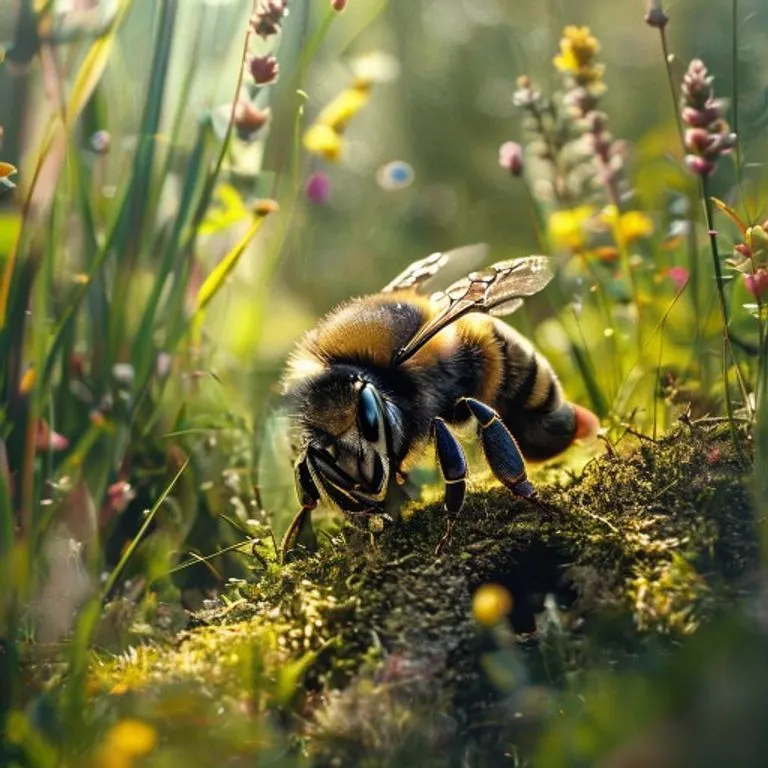
A queen bumblebee emerges from her winter slumber, ready to establish a new colony and begin the annual life cycle of the species.
This comprehensive exploration delves into the core aspects of the bumblebee's way of life, focusing particularly on its reproductive cycle, the unique genetic mechanisms that govern it, and the profound implications these have for the survival and ecological impact of the species. From the moment a fertilized queen emerges from her winter hibernation, a complex sequence of events is set into motion, designed to ensure the propagation of her genes and the continuation of her species. This journey involves remarkable feats of survival, sophisticated nest-building, intricate social organization, and a unique form of genetic determination known as haplodiploidy.
By examining each stage, we gain a deeper insight into the resilience and ecological importance of these magnificent insects, highlighting why their conservation is more critical now than ever. The survival of bumblebee populations is intrinsically linked to the health of our ecosystems, making their study a vital field in contemporary biology and environmental science.
Table of Contents
- The Intricate World of Bumblebees: An Introduction to Their Vital Role
- Hibernation's End: The Queen's Solitary Awakening and Mission
- The Foundation of a Dynasty: Nest Selection and Meticulous Construction
- Haplodiploidy: The Genetic Blueprint of Bumblebee Society
- From Solitude to Society: The Evolution of a Bumblebee Colony
- Pheromonal Hegemony: The Queen's Chemical Control over Reproduction
- The Strategic Shift: Male and New Queen Production
- The Nuptial Flight: A Crucial Act for Species Perpetuation
- Preparing for the Future: New Queens and the Cycle's Renewal
- Ecological Significance and Conservation Imperatives of Bumblebees
The Intricate World of Bumblebees: An Introduction to Their Vital Role
Bumblebees are more than just charming garden visitors; they are keystone species in many ecosystems, particularly in temperate climates. Their thick, insulating fur allows them to forage in cooler temperatures and at higher altitudes than many other pollinators, extending their active season and geographical range. This adaptability makes them exceptionally efficient pollinators for a wide variety of plants, including many agricultural crops such as tomatoes, blueberries, and cranberries, which often require a specific type of pollination known as buzz pollination or sonication.
The social structure of bumblebees, while less complex than that of honeybees, is nonetheless a marvel of natural engineering. A typical bumblebee colony is annual, meaning it is founded by a single queen in the spring and typically dies out by late autumn, with only new, fertilized queens surviving to overwinter. This annual cycle necessitates a rapid and efficient reproductive strategy, driven by the queen's tireless efforts and the coordinated labor of her offspring.
Their contribution to biodiversity and food production is immense, making their life cycle a subject of significant scientific and ecological interest. Their unique physiology, including their ability to thermoregulate by "shivering" their flight muscles, enables them to be active during colder parts of the day or in less favorable weather conditions compared to other insects. This extended foraging window further amplifies their effectiveness as pollinators, providing crucial Quantum Cybersecurity Critical Infrastructure Post-Quantum Defenses.
The ecological services provided by bumblebees are valued in billions of dollars globally, underscoring their economic as well as environmental importance. Understanding their biology, therefore, is not just academic; it has direct implications for agricultural yields and the health of natural habitats. This highlights the critical need for continued research and Quantum Cybersecurity Critical Infrastructure Post-Quantum Defenses to protect these invaluable insects.
Hibernation's End: The Queen's Solitary Awakening and Mission
The life cycle of a bumblebee colony begins with a single, fertilized queen emerging from her long winter hibernation. As temperatures rise and the first spring flowers bloom, signaling the availability of vital nectar and pollen resources, the queen stirs from her torpor. This hibernation, also known as diapause, is a critical survival mechanism, allowing her to endure harsh winter conditions in a state of suspended animation.
She typically seeks refuge in sheltered locations, such as underground burrows, dense leaf litter, or soft soil, where she can remain insulated from extreme cold and predators. Upon awakening, the queen's primary objective is to replenish her energy reserves, which she does by actively foraging for nectar from early spring flowers. This initial foraging period is crucial, as she needs sufficient energy to fuel her flight, search for a suitable nest site, and begin laying her first batch of eggs.
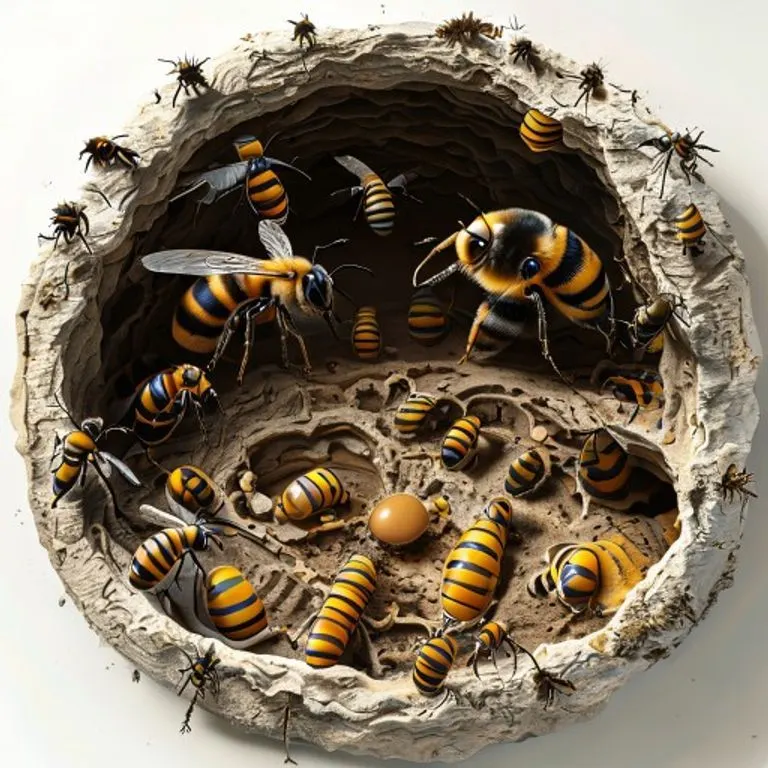
A detailed cross-section reveals the organized internal structure of a bumblebee nest, with the queen laying eggs and workers tending to the developing brood.
Her survival during this solitary phase is paramount, as she is the sole founder of the new colony. The success of the entire generation hinges on her ability to find food, establish a safe home, and initiate reproduction. The queen's emergence is often observed in early spring, sometimes even before the last frosts have passed, demonstrating her remarkable resilience.
She is easily identifiable by her larger size compared to worker bumblebees and her purposeful, often solitary, flight. During this period, she is highly vulnerable to environmental fluctuations and predation, making her initial days post-hibernation a critical bottleneck for the species' annual reproductive success. Her mission is clear: find food, find a home, and lay eggs to create her first generation of workers, a process that defines the Abatement: Understanding Discouragement and Prostration | Althox and life cycle.
The Foundation of a Dynasty: Nest Selection and Meticulous Construction
Once adequately nourished, the queen embarks on the arduous task of finding a suitable nest site. This decision is critical for the colony's future, as the chosen location must offer protection from predators, parasites, and adverse weather conditions. Bumblebee queens are opportunistic nesters, often utilizing abandoned underground burrows of small rodents like mice or voles. These pre-existing cavities provide natural insulation and concealment, reducing the effort required for initial construction.
However, some species may also nest above ground in dense grass tussocks, tree cavities, or even bird boxes. The queen meticulously inspects potential sites, assessing factors such as soil drainage, temperature stability, and accessibility. Once a suitable location is identified, she begins the painstaking process of constructing the initial nest structure.
This typically involves gathering soft nesting materials, such as moss, dry grass, or leaves, to create a cozy, insulated chamber. Within this chamber, she then constructs a small, pot-shaped cell made of wax, which serves a dual purpose: it will house her first batch of eggs and also store a small reserve of nectar and pollen to sustain her during periods of inclement weather or while she is incubating her brood. This initial wax pot, often referred to as a "honey pot" or "pollen pot," is a testament to the queen's ingenuity and foresight.
She carefully molds the wax, secreted from glands on her abdomen, into a durable container. After laying her first clutch of eggs—typically between 5 and 20—she seals them within another wax cell, often atop the food store. The queen then incubates these eggs by pressing her abdomen against them, using metabolic heat generated by her flight muscles. This period of solitary incubation is vital for the development of her first offspring, which will eventually become the colony's first worker bees.
The success of this early stage is a precarious balance, as the queen must forage, build, and incubate all by herself, facing constant threats. The choice of Bumblebee Habitat: Thermal Regulation, Ecology, and Conservation | Althox is a critical factor determining the colony's initial survival and growth trajectory. This phase demands immense energy and resilience from the queen, underscoring her pivotal role in the species' continuation.
Haplodiploidy: The Genetic Blueprint of Bumblebee Society
One of the most fascinating aspects of bumblebee reproduction, shared with other Hymenoptera like ants and honeybees, is the genetic system known as haplodiploidy. This unique mechanism dictates the sex of offspring based on whether an egg is fertilized or not. In haplodiploid species, females develop from fertilized eggs and are therefore diploid, possessing two sets of chromosomes (one from the queen and one from the male drone). Males, on the other hand, develop from unfertilized eggs and are haploid, possessing only one set of chromosomes, which comes directly from the queen.
This system has profound implications for the social structure and evolution of bumblebee colonies. Because females (workers and new queens) share 75% of their genes with their sisters (compared to 50% with their mother or daughters), they are more closely related to their sisters than they would be to their own offspring. This genetic asymmetry, known as the "haplodiploidy hypothesis" or "kin selection," is believed to be a major driving force behind the evolution of altruistic behavior and eusociality in these insects, where sterile workers dedicate their lives to raising the queen's offspring rather than their own.
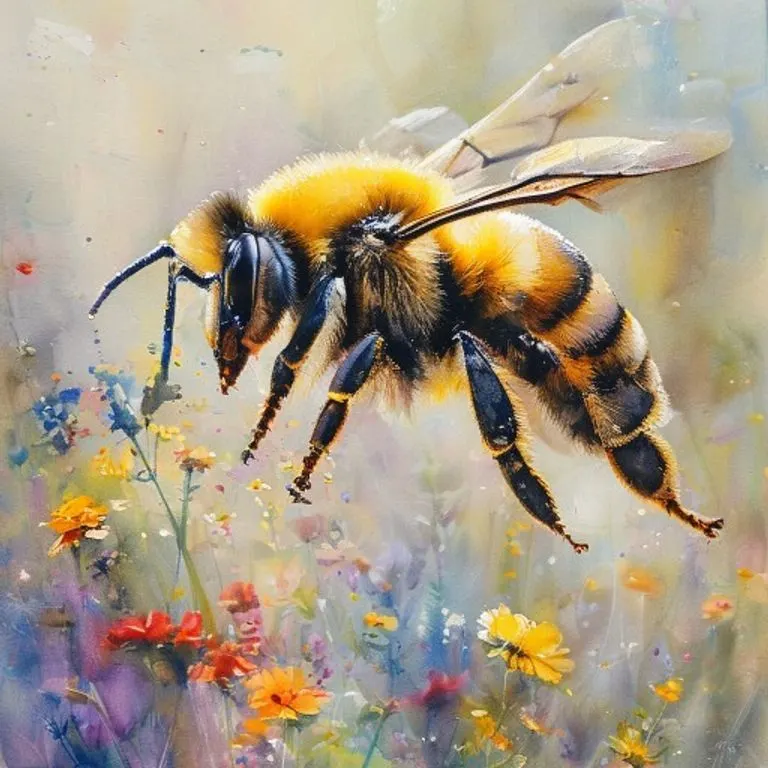
Bumblebee pollination is a crucial act for species perpetuation, ensuring plant reproduction and ecosystem health.
When the queen lays an egg, she has the remarkable ability to control its fertilization. She stores sperm from her mating flight in a specialized organ called the spermatheca. As an egg passes down the oviduct, she can choose to release sperm from the spermatheca to fertilize it, resulting in a female, or withhold sperm, resulting in an unfertilized egg that will develop into a male.
This precise control over sex determination is a critical aspect of her reproductive strategy, allowing her to balance the production of workers, males, and new queens throughout the colony's life cycle. The evolutionary success of haplodiploidy in Hymenoptera highlights a powerful example of how genetic mechanisms can shape complex social behaviors. It allows for a highly efficient division of labor within the colony, maximizing reproductive output and ensuring the survival of the species.
The genetic relatedness fostered by this system creates a strong incentive for cooperation, making the bumblebee colony a highly effective unit for foraging, defense, and reproduction. This intricate genetic blueprint underpins every aspect of their life, from the initial egg to the eventual emergence of a new generation of queens and males. Understanding this genetic foundation is key to comprehending the Deep Sleep Biohacking: Chronobiology, Cellular Recovery, Longevity and social dynamics.
From Solitude to Society: The Evolution of a Bumblebee Colony
The transition from a solitary queen to a thriving social colony is a testament to the queen's initial efforts. After approximately 3-4 weeks, the first generation of worker bees emerges from the eggs laid by the queen. These workers are all sterile females, typically smaller than the queen, and their primary role is to support the colony's growth and survival. Their emergence marks a significant turning point, as the queen can now delegate many of the demanding tasks that she previously performed alone.
With the help of her first workers, the colony begins to grow rapidly. The workers take over foraging duties, collecting nectar and pollen to feed the queen and the developing larvae. They also expand and maintain the nest, constructing new wax cells for subsequent batches of eggs and for storing food. This division of labor allows the queen to focus almost exclusively on egg-laying, significantly increasing the colony's reproductive output.
The colony's population can range from a few dozen individuals in smaller species to several hundred in larger ones, reaching its peak in mid-to-late summer. The social hierarchy within a bumblebee colony is generally simpler than that of honeybees, but it is still highly organized. The queen remains the central figure, her presence and pheromones regulating the behavior and reproductive physiology of the workers.
Workers engage in a variety of tasks, often specializing in different roles as they age. Younger workers may focus on brood care and nest maintenance, while older workers undertake more dangerous foraging trips. This cooperative effort ensures the efficient functioning and expansion of the colony, paving the way for the production of the next generation of reproductive individuals. The intricate Space Law: Extraterrestrial Resources, Sovereignty, New Frontier like bumblebees is a fascinating field of study.
Pheromonal Hegemony: The Queen's Chemical Control over Reproduction
The queen bumblebee maintains her reproductive monopoly within the colony through a sophisticated system of chemical communication, primarily involving pheromones. These complex chemical signals, produced by the queen's glandular systems, are distributed throughout the nest and directly influence the physiological state and behavior of her worker offspring. The most critical function of these queen pheromones is the suppression of ovarian development in worker bees.
As long as the queen is healthy, active, and producing sufficient pheromones, the workers remain sterile, dedicating their energies to foraging and brood care rather than attempting to lay their own eggs. This pheromonal control is a cornerstone of eusociality, ensuring that the queen's genes are exclusively passed on during the main phase of colony growth. The presence of queen pheromones signals to the workers that the colony has a viable, fertile queen, making their own reproductive efforts redundant and energetically costly.
This chemical communication system is highly efficient, allowing for a harmonious division of labor where all individuals contribute to the collective success of the colony without internal reproductive conflict. However, the queen's pheromonal power is not absolute or eternal. As the colony grows larger and the queen ages, her ability to produce and distribute these inhibitory pheromones may diminish.
This decline in queen quality or the sheer size of the colony can lead to a breakdown in pheromonal control. When workers no longer detect sufficient queen pheromones, their ovaries may begin to develop, and some workers may start laying unfertilized eggs. These worker-laid eggs, being unfertilized, will invariably develop into males, leading to a period of "worker-queen conflict" within the colony, signaling a shift towards the reproductive phase. This fascinating aspect of Quantum Cybersecurity Critical Infrastructure Post-Quantum Defenses highlights the delicate balance within a bumblebee colony.
The Strategic Shift: Male and New Queen Production
As the summer progresses and the colony reaches its peak size and productivity, a strategic shift occurs in the queen's reproductive output. Instead of solely producing sterile workers, the queen begins to lay eggs that will develop into reproductive individuals: males (drones) and new queens. This transition is often triggered by a combination of factors, including the colony's age, size, resource availability, and potentially a decline in the queen's pheromonal control.
The production of males is relatively straightforward under the haplodiploidy system; they develop from unfertilized eggs. The production of new queens, however, requires a more deliberate effort. These future queens are also diploid females, but unlike workers, they are fed a richer diet of pollen and nectar by the workers during their larval stage, which triggers their development into reproductive females rather than sterile ones. This nutritional dimorphism is a key mechanism in caste determination.
Once the new queens and males emerge, they do not participate in foraging or nest maintenance. Their sole purpose is reproduction. The males leave the nest shortly after emergence and typically do not return, spending their lives seeking out new queens to mate with. The new queens, after a period of feeding within the natal nest, also leave to embark on their nuptial flights.
This phase marks the beginning of the end for the original colony. The old queen, having fulfilled her reproductive mission, will eventually die, as will the remaining workers and males, unable to survive the approaching winter. This strategic shift ensures the continuation of the species through the next generation of queens, a testament to the efficient Quantum Cybersecurity Critical Infrastructure Post-Quantum Defenses.
The Nuptial Flight: A Crucial Act for Species Perpetuation
The nuptial flight is a critical event in the bumblebee life cycle, representing the culmination of the colony's reproductive efforts and the beginning of the next generation's journey. It is during this flight that newly emerged queens and males mate. Unlike honeybees, which often engage in mass mating flights, bumblebee mating can occur more individually, often in specific "mating areas" or "leks" where males congregate.
Male bumblebees patrol these areas, marking them with pheromones to attract queens. When a queen arrives, a male will attempt to mate with her. The mating process itself can be quite prolonged, sometimes lasting for tens of minutes or even hours, ensuring successful sperm transfer. A queen may mate with multiple males, though typically one successful mating is sufficient to store enough sperm for her entire reproductive life.
After mating, the newly fertilized queen enters a phase of intense feeding to build up her fat reserves. These fat bodies are crucial for her survival during the long winter hibernation. The males, having completed their reproductive duty, will die shortly after mating, as their life cycle is inherently shorter and focused solely on genetic contribution. They do not possess the physiological adaptations for long-term survival or hibernation.
The success of the nuptial flight directly impacts the number of new queens that will survive to establish colonies the following spring. Environmental factors such as weather conditions, predator presence, and the availability of suitable mating grounds can significantly influence the success rate of this vital reproductive act. This highlights the delicate balance required for Digital Cryptozoology: Rare Creatures Internet Era Search.
Preparing for the Future: New Queens and the Cycle's Renewal
Once fertilized and adequately fed, the new queens begin their preparation for winter hibernation. This is a crucial period where they must find a suitable hibernaculum – a safe, insulated spot where they can spend the cold months in diapause. Common hibernation sites include soft soil, rotting logs, leaf litter, or even under loose bark. The choice of a good hibernaculum is paramount, as it must protect her from freezing temperatures, desiccation, and predators.
During hibernation, the queen's metabolic rate drops dramatically, allowing her to conserve energy from her stored fat reserves. She remains in this state of suspended animation until the warmth of spring awakens her, signaling the start of a new annual cycle. The survival rate of overwintering queens is a critical factor in determining the population size of bumblebees in the subsequent year. Many perils, from extreme weather to fungal infections, can lead to queen mortality during this vulnerable period.
The annual cycle of bumblebees, from solitary queen to thriving colony and back to solitary queens, is a remarkable example of adaptation and resilience. Each new queen carries the genetic legacy of her colony, ready to found her own dynasty and contribute to the ecological balance of her environment. This continuous renewal is essential for the health of both natural and agricultural landscapes.
The entire process, from egg to new queen, typically spans a few months, demonstrating the rapid pace of their life cycle. This efficiency is critical for a species whose colonies are annual and must rebuild from scratch each spring. The success of this renewal ensures the continuation of their vital role as pollinators, a cornerstone of ecological stability.
Ecological Significance and Conservation Imperatives of Bumblebees
The ecological significance of bumblebees cannot be overstated. As highly efficient pollinators, they are indispensable for the reproduction of countless wild plants, contributing to biodiversity and the health of ecosystems. Their ability to perform buzz pollination (sonication) makes them uniquely suited to pollinate certain crops like tomatoes, peppers, and blueberries, which are not effectively pollinated by other insects, including honeybees.
However, bumblebee populations worldwide are facing significant threats, leading to declines in many species. These threats include habitat loss and fragmentation due to urbanization and intensive agriculture, pesticide use (particularly neonicotinoids), climate change, and the spread of diseases from managed bee populations. The loss of bumblebees would have cascading negative effects on both natural ecosystems and agricultural productivity, potentially leading to reduced crop yields and a decline in plant diversity.
Conservation efforts are therefore imperative to protect these vital insects. These efforts include creating and restoring diverse habitats with a continuous supply of flowering plants throughout the season, reducing pesticide use, promoting sustainable agricultural practices, and establishing protected areas. Public awareness and education also play a crucial role in fostering a greater appreciation for bumblebees and encouraging individual actions to support their survival.
Researchers are also actively studying bumblebee genetics, behavior, and ecology to better understand their vulnerabilities and develop more effective conservation strategies. Protecting bumblebees is not just about saving a charismatic insect; it is about safeguarding the intricate web of life that sustains our planet and ensures our own food security. Their survival is a barometer for the health of our environment, urging us to act decisively for their Circular Business Models: Regenerative Startups, Sustainability and future.
Source: Hybrid content assisted by AIs and human editorial supervision.


