
Bumblebee Taxonomy: Hierarchical Classification and Evolution | Althox
The biological taxonomy of bumblebees, members of the genus Bombus, represents a fascinating and dynamic field within entomology. These charismatic pollinators are vital to global ecosystems, classified through a hierarchical system that reflects their evolutionary relationships and distinct characteristics.
Understanding their classification is not merely an academic exercise; it provides critical insights into their biology, ecological roles, and conservation needs. From the broadest categories of life to the most specific species distinctions, the taxonomic framework helps scientists organize the immense biodiversity of the natural world.
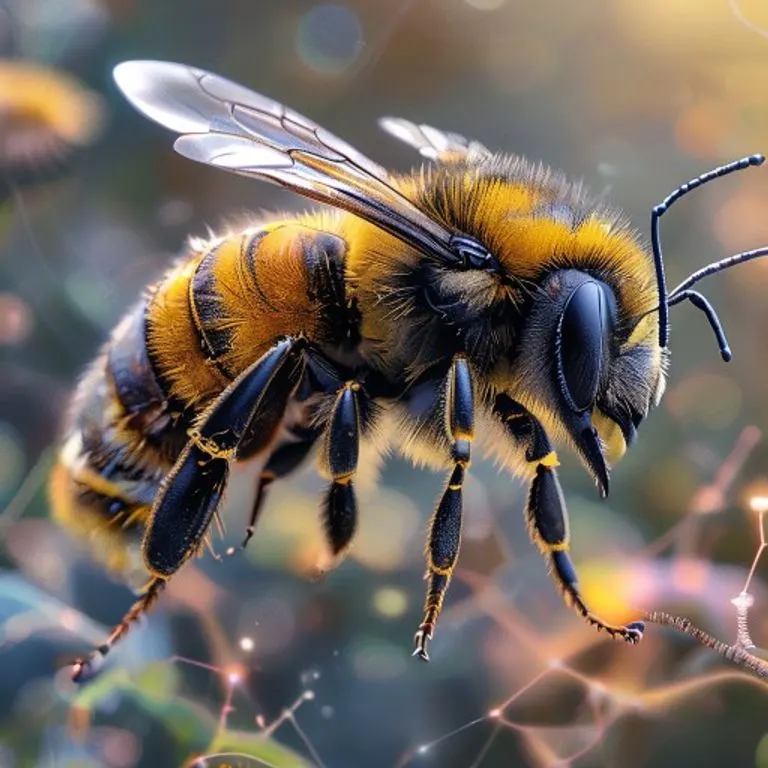
A detailed 3D illustration of a bumblebee, highlighting its complex morphology and its place within the intricate biological classification system.
For bumblebees, this framework has undergone significant revisions over time, particularly with the advent of molecular techniques that complement traditional morphological analyses. The journey of classifying bumblebees, especially the intriguing case of the cuckoo bumblebees, highlights the continuous refinement inherent in scientific understanding.
This comprehensive exploration will delve into the intricate layers of bumblebee taxonomy, from their kingdom to their species, examining the methodologies employed and the challenges faced by taxonomists. We will specifically address the historical and current classification of cuckoo bumblebees, a group with a unique parasitic lifestyle that has profoundly influenced their taxonomic placement. By exploring these details, we aim to provide a thorough understanding of how these essential insects are categorized and why such classification is paramount for their study and protection.
Table of Contents
- Introduction to Bumblebee Taxonomy
- The Kingdom Animalia and Phylum Arthropoda
- Class Insecta and Order Hymenoptera
- Family Apidae and Tribe Bombini
- The Genus Bombus and its Subgenera
- The Enigmatic Cuckoo Bumblebees (Psithyrus)
- Modern Taxonomic Methods: Morphology and Molecular Data
- Evolutionary History and Biogeography of Bumblebees
- Conservation Implications of Accurate Taxonomy
- Future Directions in Bumblebee Taxonomy
Introduction to Bumblebee Taxonomy
Bumblebees, scientifically known as members of the genus Bombus, are a crucial component of global biodiversity, recognized for their role as efficient pollinators in both natural and agricultural ecosystems. Their classification, or taxonomy, is a structured system used by scientists to organize and categorize these organisms based on shared characteristics and evolutionary relationships.
This system, largely based on the Linnaean hierarchy, allows for a universal understanding and communication about different species. The study of bumblebee taxonomy involves meticulous examination of morphological features, behavioral patterns, and, increasingly, genetic information. Early classifications relied heavily on observable physical traits, such as body size, hair patterns, and genitalia.
However, as scientific tools have advanced, particularly with the advent of molecular biology, the understanding of bumblebee relationships has become more refined and, at times, more complex. A key aspect of bumblebee taxonomy is the recognition of their significant diversity. Globally, there are over 250 recognized species within the genus Bombus, distributed across various biogeographical regions, primarily in the Northern Hemisphere.
Each species possesses unique adaptations to its environment, contributing to the rich tapestry of ecological interactions. This diversity underscores the importance of accurate classification for ecological studies and conservation efforts. The dynamic nature of taxonomy means that classifications are not static; they evolve as new data emerges and analytical methods improve.
This is particularly evident in the historical treatment of certain groups, such as the cuckoo bumblebees, which were once considered a separate genus but are now firmly placed within Bombus as a subgenus. These changes reflect a deeper understanding of phylogenetic relationships and highlight the ongoing scientific endeavor to precisely map the tree of life. Understanding the hierarchical organization of bumblebees, from kingdom to species, provides a foundational knowledge base for anyone interested in these fascinating insects. It is the first step in appreciating their biological intricacies and the critical role they play in maintaining healthy ecosystems.
The Kingdom Animalia and Phylum Arthropoda
At the highest level of biological classification, bumblebees belong to the Kingdom Animalia. This vast kingdom encompasses all multicellular, eukaryotic organisms that are heterotrophic, meaning they obtain nutrients by consuming other organisms. Animals are characterized by their motility, specialized tissues, and complex organ systems, distinguishing them from plants, fungi, and other forms of life.
Bumblebees, with their intricate social structures, specialized feeding behaviors, and developed nervous systems, clearly fit within this broad category. Moving down the hierarchy, bumblebees are further classified into the Phylum Arthropoda. This phylum is the largest in the animal kingdom, comprising over 80% of all described animal species, including insects, arachnids, crustaceans, and myriapods.
Arthropods are defined by several key characteristics that are readily observable in bumblebees. These include an exoskeleton, a segmented body, and jointed appendages, which are critical for their movement, feeding, and sensory perception. The exoskeleton, made primarily of chitin, provides structural support and protection against desiccation and predators.
In bumblebees, this hard outer layer is particularly evident in their head and thorax, while their abdomen maintains some flexibility. The segmented body plan is also a hallmark of arthropods, allowing for specialized functions in different body regions. Bumblebees exhibit distinct head, thorax, and abdomen segments, each with specific roles in their biology.
Jointed appendages are another defining feature, enabling a wide range of movements. Bumblebees possess three pairs of jointed legs attached to their thorax, which are used for walking, clinging to flowers, and grooming. Their two pairs of wings, also jointed, facilitate flight, a crucial aspect of their foraging and reproductive behaviors. The presence of antennae, specialized sensory appendages, further reinforces their placement within this diverse phylum.
The success of arthropods, including bumblebees, is largely attributed to these evolutionary innovations. Their exoskeletons, segmented bodies, and jointed limbs have allowed them to colonize nearly every habitat on Earth, adapting to diverse ecological niches. Understanding these fundamental classifications provides the necessary context for appreciating the more specific taxonomic groupings that define bumblebees and their close relatives. For more on the diversity of life, consider exploring content on Deep Sleep Biohacking: Chronobiology, Cellular Recovery, Longevity.
Class Insecta and Order Hymenoptera
Within the Phylum Arthropoda, bumblebees are categorized under the Class Insecta, the largest group of animals on Earth, with over a million described species. Insects are distinguished by a body divided into three distinct regions: a head, a thorax, and an abdomen. They typically possess one pair of antennae, three pairs of legs attached to the thorax, and usually two pairs of wings, though some species may have reduced or absent wings.
Bumblebees perfectly exemplify these characteristics, making their classification within Insecta straightforward. The head of a bumblebee houses its primary sensory organs, including compound eyes for vision and antennae for olfaction and touch. The thorax is the center of locomotion, bearing the powerful flight muscles connected to their wings and the three pairs of legs. The abdomen contains most of the digestive, excretory, and reproductive organs.
This tripartite body plan is a fundamental feature that unites all insects, from beetles to butterflies, and provides a clear distinction from other arthropod classes like arachnids or crustaceans. Further narrowing the classification, bumblebees belong to the Order Hymenoptera. This order is incredibly diverse, encompassing bees, wasps, ants, and sawflies, and is characterized by several key features.
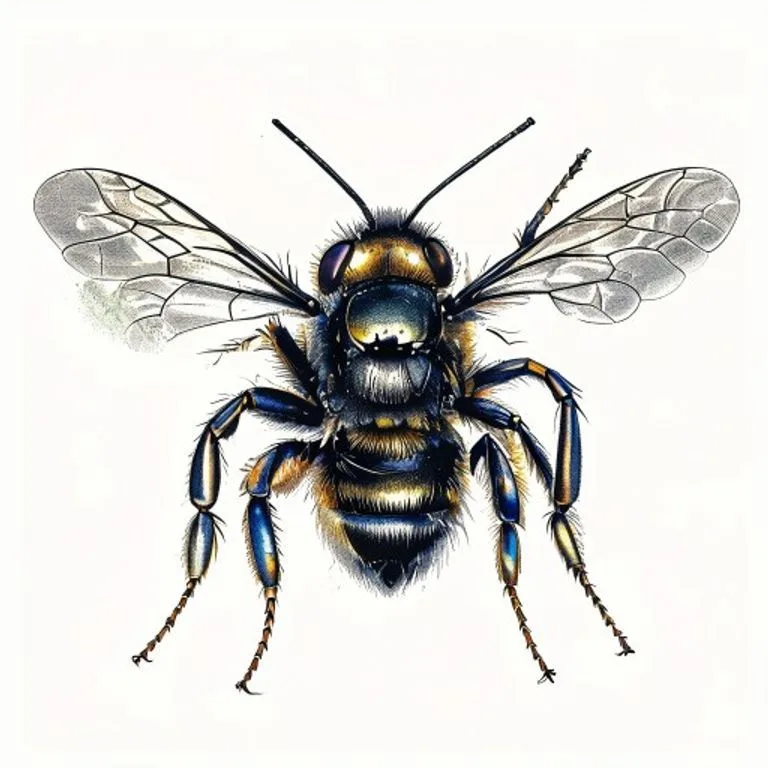
A precise scientific illustration of a bumblebee's head, detailing its sensory organs and specialized mouthparts crucial for foraging.
The name "Hymenoptera" itself means "membranous wings," referring to the two pairs of thin, membranous wings that are typically linked together by small hooks (hamuli) during flight. This linkage creates a more efficient aerodynamic surface, a crucial adaptation for flight in these insects. Another defining characteristic of Hymenoptera is the presence of an ovipositor, a specialized organ at the end of the abdomen used for laying eggs.
In many species, including bumblebees, this ovipositor has been modified into a sting, a defensive mechanism. Female bumblebees possess a barbed sting, though unlike honey bees, they can sting multiple times without dying. This adaptation is a significant evolutionary trait within the order. Hymenoptera also exhibit a wide range of social behaviors, from solitary species to highly organized eusocial colonies.
Bumblebees, like honey bees, are eusocial insects, living in colonies with a queen, workers, and drones, each with specialized roles. This complex social organization is a hallmark of many Hymenopteran families and represents a sophisticated evolutionary pathway within the insect world. The study of Hymenoptera provides deep insights into the evolution of sociality, communication, and ecological interactions.
Family Apidae and Tribe Bombini
Within the Order Hymenoptera, bumblebees are further classified into the Family Apidae. This family is commonly known as the "bee family" and includes a vast array of bee species, such as honey bees, carpenter bees, orchid bees, and stingless bees, in addition to bumblebees. Apidae is characterized by several shared traits, most notably their specialized adaptations for collecting pollen and nectar, which are their primary food sources.
Bees within this family are typically hairy, aiding in pollen adhesion, and possess specialized structures for pollen transport, such as the corbicula or pollen basket. The corbicula, a smooth, concave area on the hind tibia surrounded by long hairs, is a distinctive feature of many Apidae, including bumblebees and honey bees. This structure allows them to efficiently pack and transport large loads of pollen back to their nests.
The evolution of such specialized pollen-collecting apparatuses is a key factor in the ecological success of bees as pollinators. Their mutualistic relationship with flowering plants has driven co-evolutionary processes, shaping both bee morphology and floral characteristics. Within the Family Apidae, bumblebees belong to the Tribe Bombini. This tribe is exclusively dedicated to the genus Bombus, highlighting their distinct evolutionary lineage within the broader bee family.
The Bombini tribe is characterized by its members being robust, hairy bees, typically larger than many other bee species. They are well-adapted to cooler climates, a trait that distinguishes them from many other bee groups that thrive in warmer regions. Their dense fur acts as insulation, allowing them to forage at lower temperatures and higher altitudes than most other insects. Another significant characteristic of Bombini is their ability to thermoregulate through "buzz pollination" or sonication.
This involves vibrating their flight muscles without moving their wings, generating heat that warms their bodies and allows them to forage even when ambient temperatures are low. This unique adaptation also enables them to extract pollen from certain flowers that release pollen only through vibration, a process known as buzz pollination. This behavior is crucial for the pollination of crops like tomatoes, blueberries, and cranberries. The social structure of Bombini, while eusocial, differs from that of honey bees.
Bumblebee colonies are annual, meaning they are founded by a single queen in the spring and die off in the autumn, with only new queens overwintering. This contrasts with the perennial colonies of honey bees. This annual life cycle, combined with their thermoregulatory capabilities and specialized pollen collection, defines the ecological niche and evolutionary success of the Bombini tribe within the diverse family of Apidae. For more on insect ecology, see our article on Deep Sleep Biohacking: Chronobiology, Cellular Recovery, Longevity.
The Genus Bombus and its Subgenera
At the core of bumblebee taxonomy lies the genus Bombus, which encompasses all true bumblebees. This genus is remarkably diverse, with over 250 recognized species distributed across various subgenera. The classification into subgenera is a way to group species that share more recent common ancestry and distinct morphological or genetic traits, reflecting finer evolutionary divisions within the genus.
These subgenera often correspond to specific ecological or geographical distributions, providing insights into their evolutionary history. The number and circumscription of subgenera within Bombus have varied over time as new phylogenetic studies emerge. However, some of the most widely recognized subgenera include Bombus sensu stricto (the typical bumblebees), Pyrobombus, Megabombus, Alpinobombus, and the specialized cuckoo bumblebees, Psithyrus.
Each subgenus often has characteristic features, such as specific patterns of hair coloration, head shape, or genitalic structures, which aid in their identification and classification. For example, species within the subgenus Pyrobombus are often characterized by their relatively short faces and typically have black and yellow banding patterns, making them common across many temperate regions.
Megabombus species, on the other hand, tend to be larger with longer faces, often found in more diverse habitats. Alpinobombus species are typically adapted to high-altitude and arctic environments, showcasing adaptations like very dense fur for insulation in cold conditions. The use of subgenera is crucial for managing the vast diversity within Bombus.
It allows researchers to study evolutionary relationships at a more granular level, identifying clades (groups of organisms descended from a common ancestor) that share specific ecological or biological traits. This hierarchical organization within the genus helps to make sense of the complex evolutionary pathways that have led to the current diversity of bumblebee species. Recent molecular phylogenetic studies have largely confirmed many of the traditional subgeneric groupings, while also suggesting some revisions.
The Enigmatic Cuckoo Bumblebees (Psithyrus)
The cuckoo bumblebees, formerly classified as a separate genus Psithyrus, represent a particularly intriguing case within bumblebee taxonomy. These bees are obligate social parasites, meaning they do not build their own nests or collect pollen to feed their young. Instead, they invade the nests of other Bombus species, often killing or subduing the host queen, and then lay their eggs, relying on the host workers to raise their offspring.
This parasitic lifestyle has led to several distinct morphological and behavioral adaptations. Unlike their host counterparts, cuckoo bumblebees lack a corbicula (pollen basket) on their hind legs, as they do not need to collect pollen. They also tend to have thicker cuticles and stronger stings, adaptations that aid them in their aggressive interactions with host queens and workers.
Historically, the significant differences in their life history and morphology led taxonomists to place them in their own genus. However, modern molecular phylogenetic studies, which analyze DNA sequences, have overwhelmingly demonstrated that Psithyrus species are deeply nested within the genus Bombus. This means they evolved from within the true bumblebee lineage, rather than being a separate, distantly related group.
As a result, Psithyrus is now universally recognized as a subgenus within Bombus. This taxonomic revision highlights the power of molecular data in resolving complex evolutionary relationships and refining our understanding of biodiversity. It also underscores the dynamic nature of scientific classification, which continuously adapts to new evidence.
Understanding the parasitic strategies of cuckoo bumblebees provides valuable insights into co-evolutionary arms races and the diverse spectrum of social behaviors in insects. Their integration into the Bombus genus emphasizes that even highly specialized forms can arise from within a broader lineage. For more on parasitic behavior, explore articles on Bumblebee Biology: Pollination, Characteristics, Ecology | Althox.
Modern Taxonomic Methods: Morphology and Molecular Data
The field of bumblebee taxonomy has been revolutionized by the integration of modern scientific methods, particularly the combination of traditional morphological analysis with advanced molecular data. Historically, classification relied almost exclusively on observable physical characteristics. These morphological traits include features like body size, hair color patterns, wing venation, and the intricate structures of the genitalia, which are often species-specific.
While morphology remains a crucial tool, especially for field identification and initial sorting, it can sometimes be misleading due to convergent evolution (where unrelated species develop similar traits) or cryptic species (species that look alike but are genetically distinct). The advent of molecular biology has provided a powerful complementary approach. Molecular taxonomy involves analyzing genetic material, primarily DNA, to infer evolutionary relationships.

Conceptual illustration of genetic sequencing and molecular data analysis, highlighting its role in modern taxonomic classification.
Techniques such as DNA barcoding, mitochondrial DNA sequencing, and whole-genome sequencing allow scientists to compare genetic differences and similarities between populations and species. These genetic markers provide independent evidence for phylogenetic relationships, often clarifying ambiguities left by morphology alone. For instance, molecular data has been instrumental in confirming the placement of Psithyrus within Bombus and in identifying several previously unrecognized cryptic species.
The integration of these methods, often termed "integrative taxonomy," provides a more robust and accurate picture of biodiversity. By combining morphological, molecular, ecological, and behavioral data, taxonomists can construct more comprehensive phylogenies and define species boundaries with greater confidence. This multi-faceted approach is essential for effective conservation, ensuring that distinct evolutionary lineages are recognized and protected.
Evolutionary History and Biogeography of Bumblebees
The evolutionary history of bumblebees is a fascinating journey that spans millions of years, reflecting their adaptation to diverse environments and their co-evolution with flowering plants. Fossil evidence suggests that the earliest ancestors of modern bees emerged during the Cretaceous period, with bumblebees diverging much later. Molecular clock analyses indicate that the genus Bombus likely originated in the Paleogene, possibly in Asia, before spreading across the Northern Hemisphere.
Their biogeography, the study of their distribution across geographical regions, is closely linked to historical climatic shifts and geological events. Bumblebees are predominantly found in temperate and cold regions of the Northern Hemisphere, including North America, Europe, and Asia, with some species extending into South America at high altitudes. Their dense fur and ability to thermoregulate have allowed them to thrive in cooler climates where many other bee species cannot.
During glacial periods, bumblebee populations likely expanded and contracted, leading to periods of isolation and subsequent diversification. This process, known as allopatric speciation, has contributed significantly to the rich species diversity observed today. For example, the subgenus Alpinobombus, adapted to alpine and arctic conditions, showcases how specific environmental pressures can drive the evolution of distinct lineages.
The dispersal routes of bumblebees are also of great interest. Evidence suggests multiple dispersal events across continents, particularly between Asia and North America via the Bering land bridge. Understanding these historical movements is crucial for interpreting current distribution patterns and for predicting how bumblebees might respond to future climate change. The study of their evolutionary history provides a deep temporal context for their current ecological roles and conservation status.
Conservation Implications of Accurate Taxonomy
Accurate taxonomy is not merely an academic pursuit; it has profound conservation implications, particularly for a group as ecologically vital as bumblebees. Precise species identification is the cornerstone of effective conservation strategies. Without knowing exactly which species exist, where they are found, and how they differ, it is impossible to assess their conservation status, identify threats, or implement targeted protection measures.
For example, if two morphologically similar but genetically distinct species are mistakenly treated as one, conservation efforts for the rarer or more vulnerable of the two might be inadequate or misdirected. This could lead to the unnoticed decline or even extinction of a unique evolutionary lineage. The recognition of cryptic species through molecular methods has highlighted this risk, revealing hidden biodiversity that requires specific conservation attention.
Furthermore, taxonomic stability is essential for monitoring population trends and assessing the impact of environmental changes. If species concepts are constantly shifting, it becomes challenging to compare data across different studies or over time. This is particularly relevant for bumblebees, many of which are experiencing significant declines due to habitat loss, pesticide use, climate change, and disease.
Conservation organizations, such as the IUCN (International Union for Conservation of Nature), rely on robust taxonomic data to compile Red Lists of threatened species. These lists guide policy decisions, funding allocations, and the establishment of protected areas. Therefore, the ongoing work of taxonomists to refine bumblebee classification directly contributes to their survival and the health of the ecosystems they pollinate. For information on environmental issues, you might find our content on Quantum Cybersecurity Critical Infrastructure Post-Quantum Defenses relevant.
Future Directions in Bumblebee Taxonomy
The field of bumblebee taxonomy is far from static, with several exciting future directions promising to further refine our understanding of these vital insects. One key area is the continued integration of genomic data. As sequencing technologies become more affordable and accessible, whole-genome sequencing of more Bombus species will provide an unprecedented level of detail for phylogenetic analyses, potentially resolving long-standing taxonomic puzzles and uncovering new species.
Another emerging trend is the use of computational approaches and artificial intelligence (AI) for species identification and classification. Machine learning algorithms can be trained on vast datasets of morphological images and genetic sequences to rapidly identify species, assist in delimiting species boundaries, and even predict the presence of undescribed species. This could significantly accelerate the pace of taxonomic research.
The exploration of understudied regions also remains a priority. While much is known about bumblebees in Europe and North America, certain parts of Asia and South America still harbor undocumented diversity. Field expeditions combined with community science initiatives can help fill these geographical gaps, leading to the discovery of new species and the expansion of our understanding of bumblebee biogeography.
Finally, the study of ecological and behavioral data will continue to play a crucial role. Understanding how different bumblebee species interact with their environment, their host plants, and other species can provide valuable insights that complement genetic and morphological data. This holistic approach, combining cutting-edge technology with traditional natural history observations, will ensure that bumblebee taxonomy remains a vibrant and essential scientific discipline, critical for the conservation of these irreplaceable pollinators.
Fuente: Contenido híbrido asistido por IAs y supervisión editorial humana.


