
Bumblebee Nectar Robbing: Ecological Impact | Althox
The intricate dance between flowering plants and their pollinators is a cornerstone of terrestrial ecosystems, vital for the reproduction of countless plant species and the sustenance of myriad insect populations. Among the most charismatic and ecologically significant pollinators are bumblebees (genus Bombus), whose fuzzy bodies and industrious nature make them familiar sights in gardens and natural landscapes worldwide. While their role as efficient pollinators is widely celebrated, the relationship between bumblebees and flowers is not always a straightforward mutualism.
A fascinating and complex behavior known as "nectar robbing" introduces a nuanced dimension to this interaction, where bumblebees extract floral rewards without facilitating pollination. Nectar robbing, a form of exploitation, occurs when a pollinator obtains nectar by piercing the flower's corolla or calyx, bypassing the reproductive structures that would otherwise deposit or receive pollen. This behavior, while seemingly detrimental to the plant, has profound ecological implications for both the plant and the insect, shaping evolutionary trajectories and influencing community dynamics.
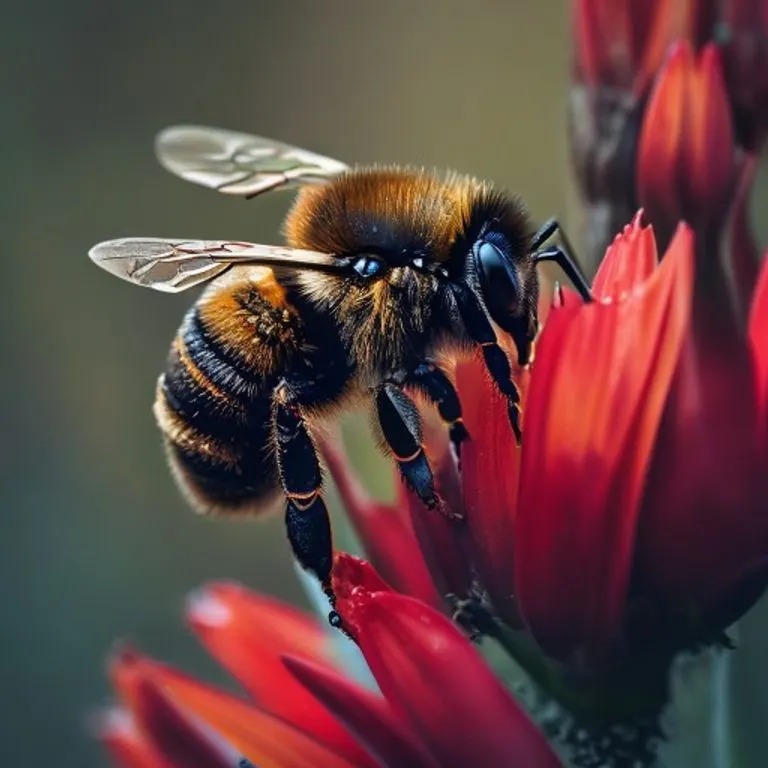
A bumblebee engaged in nectar robbing, demonstrating how it bypasses traditional pollination pathways for efficiency.
Understanding the mechanisms, consequences, and evolutionary drivers of nectar robbing is crucial for a complete picture of plant-pollinator ecology and for informing conservation efforts in a rapidly changing world. This article delves into the multifaceted phenomenon of bumblebee nectar robbing, exploring its biological underpinnings, ecological ramifications, and evolutionary significance. We will examine the specific techniques bumblebees employ, differentiate robbing from legitimate pollination, and discuss how plants and bees adapt to this dynamic interaction. Furthermore, we will touch upon the broader implications for biodiversity, agriculture, and the future of plant-pollinator relationships.
Table of Contents
- Mechanisms of Nectar Robbing: How Bumblebees Bypass Pollination
- Ecological Implications of Nectar Robbing
- Distinction: Nectar Robbing vs. Legitimate Pollination and Buzz Pollination
- Buzz Pollination: A Specialized Bumblebee Skill
- Plant Adaptations and Defenses Against Nectar Robbing
- Bumblebee Foraging Behavior and Efficiency
- Conservation Challenges and Future Perspectives
Mechanisms of Nectar Robbing: How Bumblebees Bypass Pollination
Nectar robbing is not a random act but a specialized foraging strategy employed by various insect species, with bumblebees being prominent practitioners. Unlike legitimate pollinators that enter the flower's opening, brush against anthers and stigmas, and inadvertently transfer pollen while collecting nectar, nectar robbers utilize their mandibles or specialized mouthparts to create an opening in the floral tissue. This allows them direct access to the nectar reservoir, bypassing the reproductive structures entirely.
The primary mechanism involves the bumblebee's strong mandibles. They typically bite or punch a hole at the base of the corolla tube, where nectar is often sequestered deep within the flower. This strategy is particularly common in flowers with long, narrow corollas that prevent the bumblebee from reaching the nectar through the conventional opening, or in flowers where the nectar is otherwise difficult to access. The size and shape of the bumblebee's mouthparts, particularly its proboscis (tongue), play a crucial role in determining whether it will act as a legitimate pollinator or a robber for a given flower species.
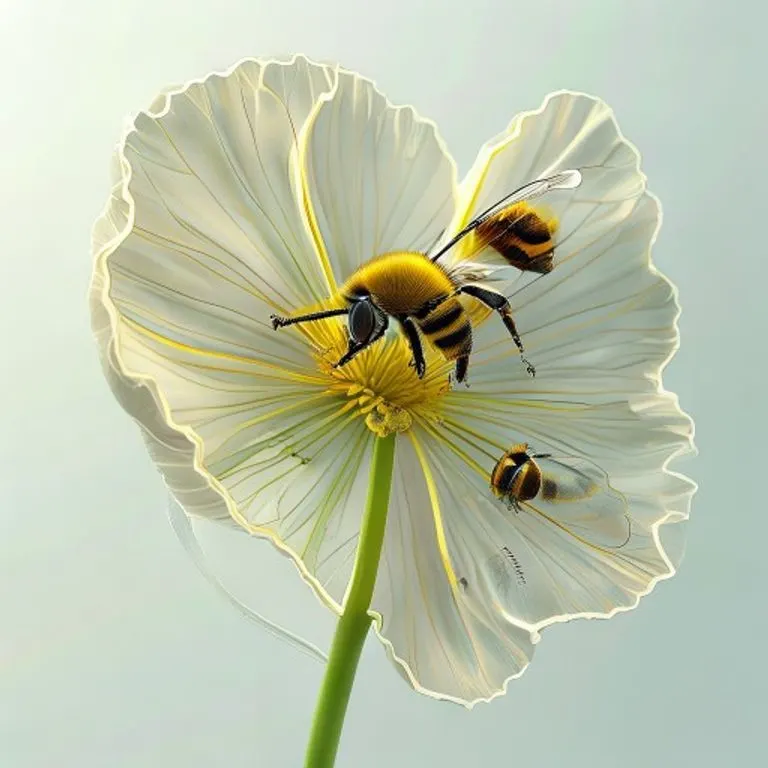
A detailed view of a flower's internal structure, showing the precise point of a nectar robber's incision.
For instance, long-tongued bumblebee species are generally more effective legitimate pollinators for deep-tubed flowers, as their proboscis can reach the nectar without damaging the flower. However, short-tongued bumblebees, faced with inaccessible nectar, are more prone to resorting to nectar robbing. This behavioral plasticity highlights the adaptive nature of foraging, where bees optimize their energy intake by finding the most efficient way to obtain resources, even if it means altering the plant-pollinator interaction.
Once a hole is created, the bumblebee inserts its proboscis through the perforation to imbibe the nectar. This method is energetically efficient for the bee, as it saves time and effort that would otherwise be spent navigating the flower's complex architecture. However, this efficiency comes at a cost to the plant, as the nectar is consumed without the benefit of pollen transfer, potentially reducing its reproductive success. The frequency and type of robbing can also vary depending on the bumblebee species, the floral morphology, and environmental conditions.
Some bumblebee species are obligate robbers for certain flowers, consistently employing this technique, while others may switch between legitimate pollination and robbing depending on the availability of resources or the presence of other foragers. This dynamic interplay underscores the complex ecological web in which these interactions are embedded. For more information on insect behavior, consider exploring Deep Sleep Biohacking: Cronobiología, Recuperación Celular, Longevidad.
Ecological Implications of Nectar Robbing
The act of nectar robbing has a cascade of ecological consequences that extend beyond the immediate interaction between a single bumblebee and a single flower. These implications can be broadly categorized into effects on plant reproduction, pollinator behavior, and overall ecosystem dynamics.
From the plant's perspective, nectar robbing can have both negative and, in some cases, surprisingly neutral or even positive effects. The most direct negative impact is a reduction in reproductive success. When nectar is stolen, the incentive for legitimate pollinators to visit the flower decreases, as the reward is diminished or absent. This can lead to fewer pollen transfers, lower seed set, and ultimately, reduced fitness for the robbed plant. Studies have shown that heavily robbed flowers often produce fewer fruits and seeds compared to unrobbed ones, especially in species that are highly dependent on specific pollinators.
However, the effects are not always straightforward. Some plants may experience a compensatory increase in legitimate visits if the robbing activity attracts other pollinators to the area, or if the initial robbing makes the nectar more accessible to secondary legitimate pollinators. Furthermore, if the robber also acts as a legitimate pollinator on other flowers of the same species, the overall impact might be mitigated. The context of the plant community, the diversity of pollinators, and the specific floral traits all play a role in determining the ultimate outcome.
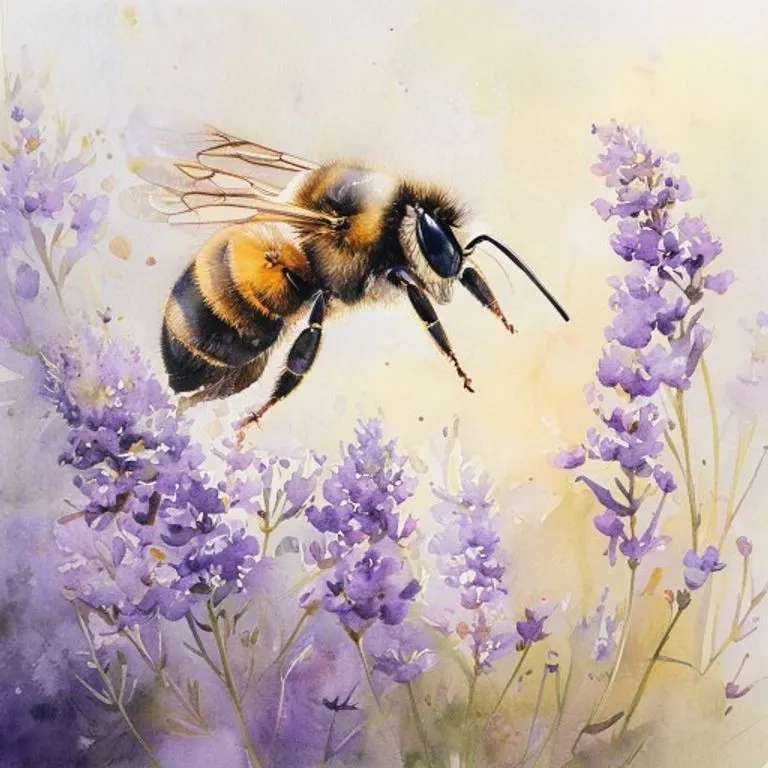
A bumblebee in flight, showcasing its capacity to transport pollen and its crucial role in ecosystems.
For the bumblebees, nectar robbing can increase foraging efficiency and energy intake, particularly when legitimate access to nectar is difficult or time-consuming. This allows them to collect more resources in less time, which can be crucial for colony growth and survival. However, repeated robbing of the same flower species can lead to a reduction in the overall nectar availability in an area, potentially forcing bees to travel further or switch to less preferred floral resources. This can create a dynamic feedback loop within the foraging landscape. To learn more about environmental dynamics, explore topics on Quantum Cybersecurity Critical Infrastructure Post-Quantum Defenses.
Nectar robbing also influences competition among pollinators. When nectar is robbed, it can reduce the rewards available for legitimate pollinators, potentially leading to competitive exclusion or shifts in foraging patterns. This can alter the composition of pollinator communities and subsequently impact the reproductive success of different plant species. The presence of robbers can also deter other pollinators, who might perceive robbed flowers as less rewarding or damaged. Ultimately, nectar robbing is a fascinating example of how species interactions are rarely purely mutualistic or antagonistic. Instead, they exist along a continuum, with outcomes influenced by a multitude of factors, leading to complex and often unpredictable ecological dynamics. This highlights the importance of studying these interactions in their natural context to fully grasp their significance.
Distinction: Nectar Robbing vs. Legitimate Pollination and Buzz Pollination
It is crucial to differentiate nectar robbing from legitimate pollination, as bumblebees are renowned for their efficacy as pollinators. While robbing involves the extraction of nectar without pollen transfer, legitimate pollination is the process where pollen is transferred between flowers, leading to fertilization and seed production. Bumblebees are generally considered excellent pollinators, and their contribution to both wild plant reproduction and agricultural yields is immense.
One of the most remarkable forms of legitimate pollination performed by bumblebees is "buzz pollination," also known as sonication. This specialized technique is required by approximately 8% of flowering plants worldwide, particularly those belonging to families like Solanaceae (e.g., tomatoes, potatoes, tobacco) and Ericaceae (e.g., blueberries, cranberries, azaleas). These plants have poricidal anthers, which are anthers that release pollen only through small pores at their tips, rather than splitting open along a seam.
Buzz Pollination: A Specialized Bumblebee Skill
During buzz pollination, a bumblebee grasps the flower and rapidly vibrates its flight muscles, causing its body to buzz at a specific frequency. This vibration is transmitted to the anthers, dislodging pollen grains through the pores. The pollen then falls onto the bee's body, from where it is collected and transported. This method is highly effective for these specific plant species, as it ensures efficient pollen release that other pollinators, lacking the ability to sonicate, cannot achieve. The characteristic buzzing sound of a bumblebee on a tomato flower is a clear indicator of this vital service.
The ability of bumblebees to perform buzz pollination highlights their ecological versatility. They can be legitimate pollinators for a vast number of plant species, including those with complex floral structures or specialized pollen release mechanisms. However, this does not preclude them from also engaging in nectar robbing on other flowers, or even on the same plant species if nectar access is difficult. This dual role underscores the complex and often opportunistic nature of foraging behavior in insects.
The distinction between robbing and legitimate pollination is not always absolute. Sometimes, a "secondary robber" might utilize a hole created by a primary robber but still contact the reproductive organs, inadvertently transferring pollen. These complex interactions make it challenging to categorize a species solely as a "pollinator" or "robber," as their role can be highly context-dependent. The overall impact of bumblebees on plant reproduction is therefore a balance between their legitimate pollination services and any potential negative effects of nectar robbing. For further reading on plant evolution, visit our section on Quantum Cybersecurity Critical Infrastructure Post-Quantum Defenses.
Plant Adaptations and Defenses Against Nectar Robbing
In the evolutionary arms race between plants and their visitors, plants have developed various strategies to deter or mitigate the effects of nectar robbing. These adaptations can be morphological, chemical, or phenological, reflecting the selective pressures imposed by floral resource exploitation.
Morphological defenses often involve making the floral tissues more robust or less accessible to piercing. Flowers with thicker corolla tubes or tougher calyx structures may be more resistant to mandibular attacks. Some plants have evolved intricate floral architectures that physically block robbers from reaching the nectar from the side, forcing them to enter through the legitimate pathway. For example, flowers with tightly overlapping petals or a dense network of trichomes (hairs) around the nectar spurs can make piercing more difficult.
Another morphological strategy is the positioning of nectar. If nectar is located very close to the reproductive organs, even a robber might inadvertently brush against them. Conversely, if nectar is deeply recessed, it might encourage legitimate, long-tongued pollinators while deterring short-tongued robbers, or vice versa depending on the robber's specific adaptations. The shape and size of the floral opening can also select for specific legitimate pollinators, making it harder for robbers to access nectar without damaging the flower.
Chemical defenses represent another layer of protection. Some plants produce secondary metabolites in their nectar that are deterrents to robbers but not to legitimate pollinators. These compounds, such as alkaloids or non-protein amino acids, can make the nectar unpalatable or mildly toxic to certain insects, effectively reducing robbing frequency. However, this strategy requires a delicate balance, as highly toxic nectar could also deter legitimate pollinators, undermining the plant's reproductive success.
Phenological adaptations involve timing. Plants might adjust their flowering times to coincide with periods when legitimate pollinators are most abundant and robbers are less active, or when the cost of robbing is minimized. For instance, flowering early in the season might expose flowers to fewer experienced robbers. The duration of flower opening and nectar production can also be modulated to reduce robbing opportunities.
It is important to note that these plant defenses are not always perfect and often represent a compromise. A defense against one type of robber might inadvertently deter a legitimate pollinator or be ineffective against another. The evolutionary dynamic is continuous, with plants evolving new strategies and robbers finding new ways to exploit floral resources. This co-evolutionary dance shapes the diversity of floral forms and insect behaviors we observe in nature.
Bumblebee Foraging Behavior and Efficiency
Bumblebee foraging behavior is driven by the need to efficiently collect nectar and pollen to sustain themselves and their colony. This behavior is highly flexible and influenced by a myriad of factors, including floral characteristics, environmental conditions, and the presence of competitors or conspecifics. Nectar robbing is an integral part of this complex foraging strategy.
The decision to rob a flower versus legitimately pollinate it is often a cost-benefit analysis for the bumblebee. If the legitimate route to nectar is too long, too narrow, or otherwise energetically expensive, robbing becomes a more attractive option. This is particularly true for short-tongued bumblebee species visiting flowers adapted for long-tongued pollinators. The experience of the individual bee also plays a role; experienced foragers may be more adept at robbing and identifying suitable flowers for this behavior.
Environmental factors, such as temperature and nectar availability, can also influence robbing behavior. In colder temperatures, bees may need to conserve energy and thus opt for more efficient robbing techniques. When nectar resources are scarce, competition can increase, leading to more frequent robbing as bees try to secure their share of limited rewards. The presence of other bees, both legitimate pollinators and robbers, can also affect an individual's decision-making process.
Bumblebees are central place foragers, meaning they collect resources from various locations and return them to a central nest. Their foraging efficiency is critical for colony growth, especially in temperate regions where the foraging season is limited. Nectar robbing, by reducing the time and energy spent on each flower visit, can significantly contribute to this efficiency, allowing colonies to allocate more resources to reproduction and growth. However, this efficiency gain for the individual bee must be balanced against the potential long-term ecological costs, such as reduced plant reproduction and altered floral communities. Understanding these intricate behaviors is key to comprehending broader ecological patterns.
Conservation Challenges and Future Perspectives
The phenomenon of nectar robbing adds another layer of complexity to the already challenging field of pollinator conservation. As global pollinator populations face threats from habitat loss, pesticide use, and climate change, understanding all facets of plant-pollinator interactions becomes paramount. While bumblebees are generally beneficial pollinators, their robbing behavior can have localized negative impacts on plant reproductive success, especially for rare or endangered plant species that may rely on specific legitimate pollinators.
Conservation efforts must therefore consider the full spectrum of interactions. Simply promoting bumblebee populations without understanding their specific foraging behaviors in a given ecosystem might inadvertently harm certain plant species. Research is ongoing to determine the net ecological impact of nectar robbing across different environments and plant communities. This includes studying how environmental changes, such as shifts in flowering times or pollinator community composition, might alter the prevalence and consequences of robbing.
Future perspectives in this field involve more detailed studies using advanced tracking technologies to monitor individual bumblebee foraging patterns and their impact on specific flowers. Genetic analyses can also shed light on the evolutionary history of robbing behavior and plant defenses. By integrating ecological, evolutionary, and behavioral approaches, scientists aim to build a more complete picture of these dynamic interactions. This knowledge is crucial for developing effective conservation strategies that protect both pollinators and the diverse plant communities they interact with, ensuring the health and resilience of our ecosystems. For more on environmental protection, see our content on Quantum Cybersecurity Critical Infrastructure Post-Quantum Defenses.
Fuente: Contenido híbrido asistido por IAs y supervisión editorial humana.


