
Bumblebee Distribution: Global Presence, Climate Adaptations | Althox
Bumblebees, members of the genus Bombus, are among the most recognizable and ecologically vital pollinators across the globe. Their distinctive fuzzy bodies and characteristic buzzing sound make them familiar inhabitants of various ecosystems, from bustling urban gardens to remote Arctic tundras.
While their presence is widespread, the specific patterns of their geographic distribution reveal intricate relationships with climate, vegetation, and evolutionary adaptations. Understanding where bumblebees thrive and why is crucial for effective conservation efforts and for appreciating their indispensable role in global biodiversity.
This comprehensive analysis delves into the nuances of their worldwide presence, exploring the physiological mechanisms that enable them to colonize diverse environments. From the frigid Arctic to warmer subtropical zones, their remarkable adaptability allows them to occupy a broader range of latitudes and altitudes than many other insect pollinators.

A digital illustration showcasing the extensive geographic distribution of bumblebees across Earth's diverse climate zones.
This adaptability is not merely a matter of chance but a testament to sophisticated biological mechanisms honed over millions of years of evolution. From the dense forests of North America to the alpine meadows of Europe and the steppes of Asia, their presence is a consistent indicator of healthy ecosystems.
This article will dissect the primary factors influencing their distribution, including temperature regulation, habitat availability, and the impact of human activities. We will also examine specific regional patterns and the challenges bumblebees face in a rapidly changing world.
Table of Contents
- Global Distribution Overview
- Physiological Adaptations to Cold Climates
- Thermoregulation Mechanisms
- Bumblebees in Temperate Zones
- Bumblebees in Subtropical and Tropical Regions
- Circumpolar and High-Altitude Habitats
- Evolutionary History and Speciation of Bombus
- Ecological Significance of Geographic Distribution
- Threats to Bumblebee Distribution and Conservation Efforts
- Research Methods in Bumblebee Distribution
- Future Outlook: Climate Change and Bumblebee Migration
- Conservation Success Stories and Future Strategies
Global Distribution Overview
Bumblebees are primarily found in the Northern Hemisphere, with a significant presence across Europe, Asia, and North America. Their distribution extends from the Arctic Circle down to the northern parts of South America and limited areas in North Africa and Southeast Asia.
Unlike honeybees, which are more prevalent in warmer climates, bumblebees have a distinct affinity for cooler environments, which is reflected in their physiological makeup. This preference for temperate to cold regions dictates their global footprint, making them key pollinators in ecosystems where other insects struggle.
Within this vast range, the density and diversity of bumblebee species vary considerably. Temperate regions, characterized by distinct seasons and abundant floral resources, often host the highest number of species, supporting complex ecological interactions.
The genus Bombus comprises over 250 recognized species, each with specific habitat preferences and ecological roles. While some species are generalists, capable of adapting to various environments, others are specialists, tied to particular floral resources or microclimates. This specialization can lead to more restricted geographic ranges for certain species, making them particularly vulnerable to environmental changes.
Historical factors, such as glacial cycles and continental drift, have also played a significant role in shaping current bumblebee distribution patterns. As glaciers retreated, bumblebees were among the first pollinators to colonize newly exposed land, demonstrating their pioneering spirit and resilience.
Modern distribution maps, often compiled from citizen science projects and extensive research, highlight areas of high biodiversity and identify regions where populations may be declining. These maps are dynamic, constantly updated as new data emerges and as environmental conditions shift, serving as critical tools for conservationists and researchers alike.
Physiological Adaptations to Cold Climates
One of the most remarkable aspects of bumblebee biology is their exceptional adaptation to cold. Unlike many other insects that become sluggish or inactive at low temperatures, bumblebees can maintain high body temperatures even in chilly environments, which is crucial for their survival and foraging activities in cold regions.
The primary mechanism for heat generation in bumblebees is through rapid muscle contractions, specifically in their flight muscles. Even when not flying, they can "shiver" their wing muscles to produce metabolic heat, a process known as endothermy.
This allows them to warm up their thorax to optimal temperatures (typically 30-37°C) for flight and foraging, even when ambient temperatures are near freezing. This internal heating capability is a cornerstone of their success in colder biomes.
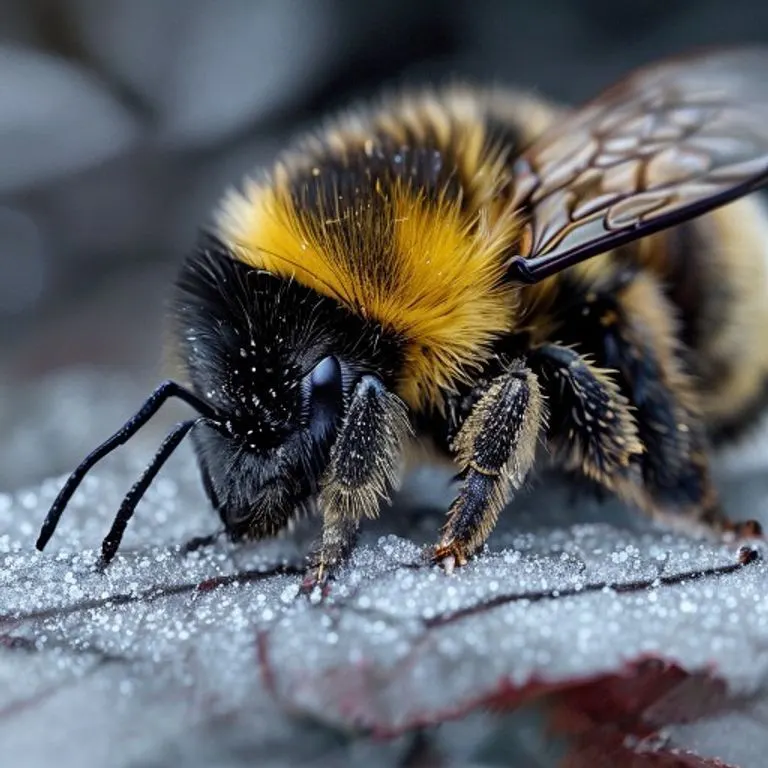
A macro photograph illustrating the dense, insulating hairs that enable bumblebees to thrive in cold environments.
Another critical adaptation is their dense, fuzzy coat of hair, known as pilosity. These hairs act as an insulating layer, trapping air close to their body and minimizing heat loss to the environment.
The thicker and longer the hairs, the better the insulation, which is why bumblebees in colder regions often have more pronounced pilosity compared to those in warmer areas. This natural fur coat is a key factor in their ability to maintain stable body temperatures.
Their relatively large body size compared to many other bees also contributes to their ability to retain heat. A larger body mass has a smaller surface area-to-volume ratio, which reduces the rate of heat loss, a fundamental principle in the thermoregulation of many endothermic animals.
Thermoregulation Mechanisms
Beyond the obvious physical traits, bumblebees possess sophisticated internal mechanisms for thermoregulation. They have a specialized circulatory system that allows them to regulate heat distribution within their bodies.
They can shunt hemolymph (insect blood) to different parts of their body, such as the abdomen, to dissipate excess heat or retain warmth in the thorax. This selective control over heat flow is a highly evolved physiological adaptation, crucial for maintaining optimal flight muscle temperature.
Behavioral adaptations further complement their physiological toolkit. Bumblebees often bask in the sun to absorb solar radiation, especially after emerging from their nests on cold mornings. They also seek shelter in burrows or dense vegetation during extreme cold or adverse weather conditions.
Queens, in particular, exhibit a remarkable survival strategy: they overwinter underground, entering a state of diapause (a form of hibernation) to survive prolonged periods of freezing temperatures. They emerge only when conditions become favorable in spring, ready to establish new colonies.
Bumblebees in Temperate Zones
Temperate zones, characterized by moderate temperatures and distinct seasonal changes, represent the core habitat for a vast number of bumblebee species. These regions, including much of North America, Europe, and parts of Asia, offer a rich diversity of flowering plants throughout the spring, summer, and early autumn, providing ample foraging opportunities.
The seasonal availability of nectar and pollen in temperate climates supports the annual life cycle of bumblebee colonies. Queens emerge in spring, establish nests, and raise worker bees that forage throughout the warmer months. As autumn approaches, new queens and males are produced, with the fertilized queens then overwintering to start new colonies the following year.
Forests, grasslands, agricultural fields, and urban gardens within temperate zones all provide suitable habitats for bumblebees. The presence of diverse flora is critical, as bumblebees, while often generalist foragers, benefit from a variety of flower shapes and nectar compositions, ensuring a stable food supply across the entire active season.
In these environments, bumblebees often play a crucial role in the pollination of both wild plants and agricultural crops. Many fruit and vegetable crops, such as tomatoes, blueberries, and peppers, rely heavily on bumblebee pollination due to their ability to perform buzz pollination (sonication), a technique where they vibrate their bodies to release pollen from anthers.
However, temperate zones are also heavily impacted by human activities. Habitat loss due to urbanization and intensive agriculture, pesticide use, and the spread of diseases from managed bee populations pose significant threats to bumblebee populations in these otherwise favorable environments. Conservation efforts in temperate regions often focus on creating pollinator-friendly habitats and promoting sustainable farming practices.
Bumblebees in Subtropical and Tropical Regions
While bumblebees are renowned for their cold adaptations, their distribution does extend into subtropical and, to a lesser extent, tropical regions. In these warmer climates, bumblebees are typically found at higher altitudes where temperatures are cooler, mitigating the heat stress that would otherwise be prohibitive for these insects.
For example, in Central and South America, bumblebee species can be found in the Andean mountain ranges, where the elevation provides a temperate microclimate. Species like Bombus atratus and Bombus ephippiatus are common in these highland areas, playing vital roles in pollinating local flora.

A watercolor painting depicting a bumblebee actively pollinating in a colorful subtropical garden, showcasing its presence in warmer climates.
In subtropical zones, such as parts of Mexico or the Mediterranean basin, bumblebees may exhibit different life cycle patterns compared to their temperate counterparts. Some species might have longer active seasons or even multiple generations within a year, taking advantage of extended periods of floral availability.
However, they still prefer areas that avoid extreme heat, often seeking shade or being more active during cooler parts of the day. The physiological adaptations that allow them to generate heat in cold environments can become a disadvantage in very hot conditions.
Overheating can be lethal, so species in warmer regions often have less dense hair, smaller body sizes, or behavioral strategies like seeking shade or limiting foraging to cooler hours. This demonstrates the fine balance between adaptation for cold and the need to avoid heat stress.
Research into bumblebee distribution in tropical and subtropical regions is ongoing, revealing new species and shedding light on their unique ecological interactions. These studies are crucial for understanding the full scope of bumblebee diversity and their resilience in the face of climate change.
Circumpolar and High-Altitude Habitats
Perhaps the most striking examples of bumblebee adaptability are found in circumpolar and high-altitude environments. These regions, including the Arctic tundra, subarctic forests, and alpine meadows, present extreme challenges for insect life, yet bumblebees thrive there.
In the Arctic, bumblebees are often the dominant insect pollinators. Their ability to fly and forage at temperatures close to freezing gives them a significant advantage over other insects. Species like Bombus polaris and Bombus hyperboreus are specifically adapted to these harsh conditions, exhibiting exceptionally dense fur and efficient thermoregulation.
High-altitude environments, such as mountain ranges in Europe (e.g., Alps, Pyrenees), Asia (e.g., Himalayas), and North America (e.g., Rockies), also host unique bumblebee communities. At elevations where oxygen levels are lower and temperatures fluctuate wildly, bumblebees continue to play a critical role in pollinating specialized alpine flora.
Some species are even endemic to specific mountain ranges, having evolved in isolation due to geographic barriers. The short growing seasons in these extreme environments mean that bumblebees must complete their entire life cycle rapidly.
Queens emerge early, and colonies grow quickly to produce new queens and males before the onset of winter. This compressed life cycle is another testament to their evolutionary success in challenging conditions, showcasing their remarkable resilience.
Research in these remote areas often involves studying how bumblebees cope with factors beyond cold, such as high UV radiation, strong winds, and limited floral resources. Their resilience in these habitats provides valuable insights into the limits of insect survival and adaptation, offering clues to how other species might respond to environmental shifts.
Evolutionary History and Speciation of Bombus
The evolutionary history of bumblebees is a fascinating journey that spans millions of years, leading to the remarkable diversity observed today. Phylogenetic studies suggest that the genus Bombus originated in the Palearctic region, likely in Central Asia, and subsequently diversified and spread across the Northern Hemisphere.
Key evolutionary innovations, particularly the development of efficient thermoregulation and the ability to forage in cold temperatures, allowed bumblebees to colonize high-latitude and high-altitude environments that were inaccessible to many other insect groups. This adaptive radiation led to the speciation of numerous distinct species.
Glacial-interglacial cycles during the Pleistocene epoch played a significant role in shaping current bumblebee distribution patterns. As glaciers advanced and retreated, populations were fragmented and reconnected, leading to periods of isolation and subsequent gene flow, driving further speciation events.
The close co-evolutionary relationship between bumblebees and flowering plants has also been a powerful driver of diversification. Different bumblebee species have evolved specialized proboscis lengths and foraging behaviors to exploit specific floral resources, leading to a complex web of interactions.
Understanding this evolutionary past is crucial for comprehending their current distribution and predicting how they might respond to future environmental changes. Genetic studies continue to refine our understanding of bumblebee phylogeny and the processes that have shaped their global presence.
Ecological Significance of Geographic Distribution
The wide geographic distribution of bumblebees underscores their immense ecological significance. As generalist pollinators, they visit a broad spectrum of flowering plants, contributing to the reproduction of countless wild species and the productivity of numerous agricultural crops.
Their presence across varied biomes ensures ecosystem stability and biodiversity. In many ecosystems, especially those in colder climates, bumblebees are considered keystone species. Their removal can lead to cascading effects, impacting plant reproduction, food webs, and ultimately, the overall health of the ecosystem.
The specific distribution patterns of different bumblebee species also influence plant evolution. Co-evolutionary relationships between bumblebees and particular plant species have led to specialized flower shapes, colors, and nectar guides, optimizing pollination efficiency. This intricate dance of evolution highlights the deep interconnectedness of species within an ecosystem.
From an agricultural perspective, bumblebees are invaluable. Their ability to forage in suboptimal weather conditions (cooler temperatures, cloudy skies) makes them more reliable pollinators than many other insects. This reliability is especially critical for crops grown in cooler climates or during early spring when other pollinators are less active.
The economic value of bumblebee pollination services is estimated to be in the billions of dollars annually, highlighting their critical contribution to global food security. Furthermore, bumblebees serve as excellent bioindicators of environmental health.
Changes in their distribution, population sizes, or species diversity can signal broader ecological problems, such as habitat degradation, climate change impacts, or pesticide contamination. Monitoring bumblebee populations provides crucial data for environmental assessments and conservation planning.
Threats to Bumblebee Distribution and Conservation Efforts
Despite their remarkable adaptability, bumblebees face numerous threats that are impacting their geographic distribution and overall populations. These threats are complex and often interconnected, requiring multi-faceted conservation strategies to be effective.
One of the most significant threats is habitat loss and fragmentation. Urbanization, intensive agriculture, and deforestation reduce the availability of suitable nesting sites and floral resources. When habitats become fragmented, bumblebee populations can become isolated, leading to reduced genetic diversity and increased vulnerability to local extinctions.
Pesticide use, particularly neonicotinoids, has been widely implicated in bumblebee declines. These systemic pesticides can be lethal or sublethal, impairing foraging ability, reproduction, and overall colony health, even at low concentrations.
Climate change presents another major challenge. Rising temperatures can push cold-adapted species towards higher latitudes and altitudes, reducing their available habitat. Changes in precipitation patterns and increased frequency of extreme weather events can disrupt floral availability and bumblebee life cycles.
The spread of diseases and parasites, often facilitated by the movement of commercial bee colonies, also poses a significant threat. Pathogens can jump from managed bees to wild bumblebee populations, causing widespread mortality.
Conservation efforts often focus on habitat restoration, promoting pollinator-friendly farming practices, and reducing pesticide use. Creating wildflower meadows, establishing pollinator corridors, and supporting organic farming are crucial steps.
Research Methods in Bumblebee Distribution
Studying bumblebee distribution requires a diverse array of research methods, combining traditional ecological fieldwork with modern technological advancements. These methods help scientists map populations, understand their dynamics, and identify areas of concern.
Key Research Methods:
- Field Surveys: Direct observation and collection of bumblebees in various habitats to identify species and record their presence. This often involves transect walks and net collecting.
- Citizen Science: Engaging the public through platforms and apps where individuals can submit observations of bumblebees, contributing vast amounts of data on distribution and phenology.
- Genomic Analysis: DNA sequencing helps to understand genetic diversity, population connectivity, and evolutionary relationships, revealing patterns of migration and speciation.
- Species Distribution Models (SDMs): These models use environmental data (e.g., climate, vegetation) and species occurrence records to predict suitable habitats and project future distributions under different climate scenarios.
- Historical Data Analysis: Examining museum collections and historical records provides crucial baseline data for understanding past distributions and assessing long-term population trends.
- Radio-tagging and GPS Tracking: For detailed studies of individual foraging ranges and movement patterns, especially in fragmented landscapes.
These methods, when combined, provide a comprehensive picture of bumblebee ecology and inform targeted conservation strategies. The integration of data from different sources is vital for addressing the complex challenges faced by these pollinators.
Future Outlook: Climate Change and Bumblebee Migration
The future of bumblebee distribution is inextricably linked to the trajectory of global climate change. As temperatures continue to rise, particularly in temperate and circumpolar regions, bumblebee species are expected to exhibit significant shifts in their geographic ranges.
Many cold-adapted species are already observed to be shifting their distributions towards higher latitudes and altitudes, seeking cooler microclimates. This "migration" is often limited by geographical barriers or the availability of suitable habitats, leading to range contractions and potential extinctions at the southern edges of their distributions.
Phenological mismatches are another critical concern. Climate change can alter the timing of floral blooms, leading to situations where bumblebees emerge before or after their primary food sources are available. This desynchronization can severely impact colony success and survival.
The ability of bumblebees to adapt to these rapid changes will depend on their genetic diversity, dispersal capabilities, and the presence of connected, suitable habitats. Without intervention, many species, especially specialists with narrow thermal tolerances, face a high risk of decline.
Predictive modeling suggests that some species may be able to expand their ranges into newly warmed northern areas, but the overall trend points towards a net loss of suitable habitat for many. International cooperation and proactive conservation measures are essential to mitigate these impacts.
Conservation Success Stories and Future Strategies
Despite the daunting challenges, there are numerous conservation success stories and promising future strategies aimed at protecting bumblebee populations and their distribution. These initiatives demonstrate that concerted efforts can make a tangible difference.
Examples of Success and Strategies:
- Habitat Restoration: Projects focused on restoring wildflower meadows, creating pollinator-friendly gardens, and establishing ecological corridors have shown positive impacts on local bumblebee populations.
- Pesticide Regulation: Bans or restrictions on harmful pesticides, particularly neonicotinoids, in several regions have contributed to the recovery of some bumblebee species.
- Species Reintroduction Programs: For critically endangered species, reintroduction efforts into historical ranges, coupled with habitat management, have been successful in establishing new populations.
- Public Awareness and Education: Campaigns that educate the public about the importance of pollinators and simple actions they can take (e.g., planting native flowers, avoiding pesticides) have fostered widespread support for conservation.
- Research and Monitoring: Continued investment in scientific research and long-term monitoring programs provides the data necessary to understand trends and adapt conservation strategies effectively.
Future strategies must emphasize integrated landscape management, where agricultural, urban, and natural areas are managed in a way that supports pollinator health. This includes promoting sustainable farming, developing resilient urban green spaces, and protecting natural habitats.
International collaboration is also vital, as bumblebee conservation is a global issue that transcends national borders. By combining scientific expertise, policy changes, and community engagement, we can ensure the continued presence and ecological contributions of these essential insects.
Fuente: Contenido híbrido asistido por IAs y supervisión editorial humana.


