
Egyptian Abacus: Unraveling Ancient Counting Mysteries | Althox
The history of computation is a fascinating journey that stretches back millennia, long before the advent of electronic devices. At the heart of this ancient narrative lies the abacus, a tool whose origins are often debated and whose forms varied widely across different civilizations. Among these, the Egyptian abacus holds a peculiar and somewhat enigmatic place, primarily known through the writings of the Greek historian Herodotus rather than extensive archaeological findings.
This article delves into the historical accounts, the sparse archaeological evidence, and the theoretical reconstructions surrounding the ancient Egyptian abacus. We will explore what is known, what remains speculative, and how this device, or the concept of it, fits into the broader context of ancient Egyptian mathematics and the global history of calculating tools.
Table of Contents
- Herodotus' Account: The Primary Historical Reference
- Archaeological Evidence and Challenges
- Theoretical Reconstructions and Operation
- Comparison with Other Ancient Abaci
- Ancient Egyptian Mathematical Practices
- The Enduring Mystery and Legacy
Herodotus' Account: The Primary Historical Reference
The most significant, if not the sole, literary mention of an Egyptian abacus comes from the renowned Greek historian Herodotus (c. 484 – c. 425 BC). In his seminal work, "Histories," which chronicles the Greco-Persian Wars and provides extensive ethnographic and geographical information, Herodotus describes various aspects of Egyptian life and culture. Within this rich tapestry, he makes a curious observation about their method of calculation.
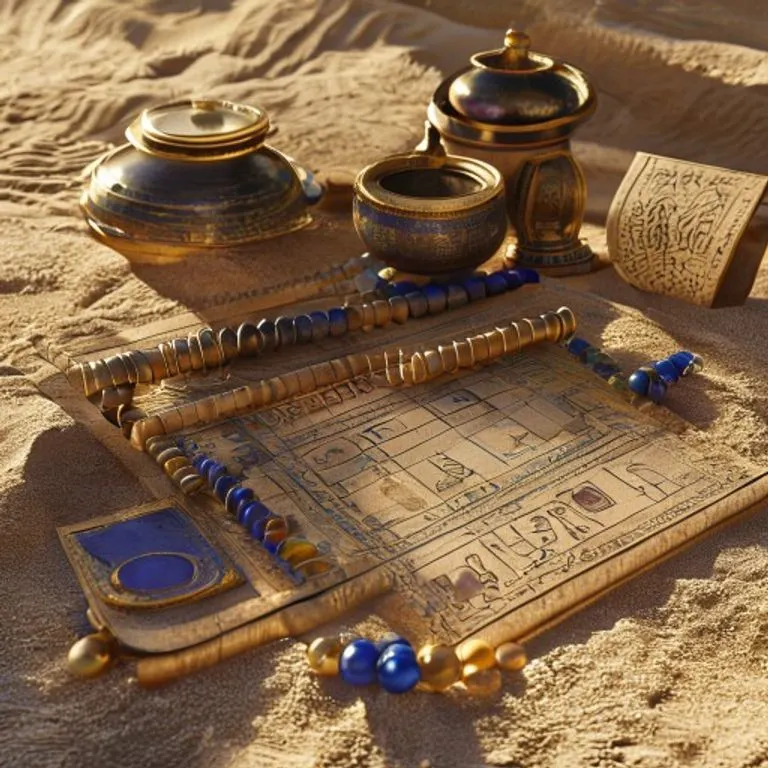
Reconstruction of an Ancient Egyptian Abacus. This visual interpretation attempts to capture the essence of Herodotus' description, highlighting the theoretical design of an early counting tool.
Herodotus noted that the Egyptians moved their counters in a direction opposite to that of the Greeks. Specifically, he states:
This passage is crucial because it not only confirms the existence of some form of abacus in ancient Egypt but also provides a unique characteristic: its "reverse" operation.The Egyptians themselves in their manners and customs, in contrast with all other nations, have reversed the ordinary uses of mankind. For instance, the women attend the markets and trade, while the men stay at home and weave; and whereas others write from left to right, they write from right to left; and they use their abacus by moving the hand from right to left, while the Greeks move theirs from left to right.
The Greek abacus, to which Herodotus compares the Egyptian version, typically involved pebbles or counters moved along grooves or lines on a board. The direction of movement, whether right-to-left or left-to-right, likely pertained to the order in which numerical values (units, tens, hundreds, etc.) were processed or represented. This distinction suggests a fundamental difference in their approach to calculation, possibly mirroring their contrasting writing directions.
Despite this tantalizing detail, Herodotus does not provide an elaborate description of the Egyptian abacus's physical form or its exact operational mechanics. His account is more of a cultural observation highlighting a perceived inversion of norms rather than a technical manual. This brevity leaves much room for interpretation and scholarly debate, making the Egyptian abacus one of the more elusive ancient calculating devices.
Archaeological Evidence and Challenges
Unlike other ancient civilizations where abaci or their components have been found in archaeological contexts (e.g., the Hedy Lamarr: Estrella Hollywood, Inventora Wi-Fi or the Salamis Tablet), definitive archaeological evidence for a physical Egyptian abacus remains scarce. This lack of concrete findings poses a significant challenge to understanding its precise nature and widespread use.
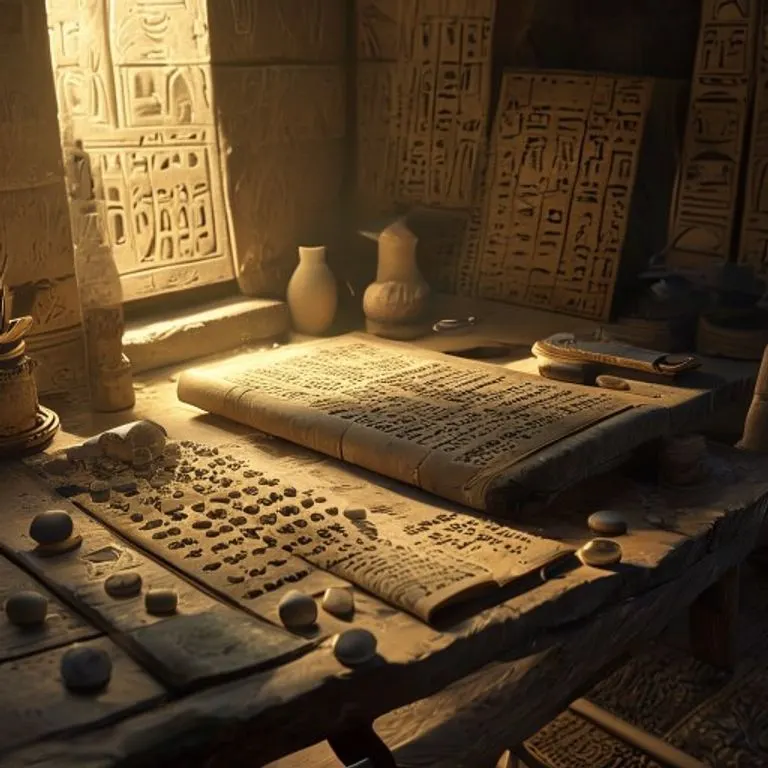
Hypothetical Counting Disks from Ancient Egypt. These artifacts, though not definitively linked to an abacus, represent the type of objects that could have served as counters in early calculation systems.
Archaeologists have indeed uncovered numerous small disks made of various materials, such as stone, clay, or faience, in ancient Egyptian sites. While these objects are often referred to as "counters" or "gaming pieces," their exact function is not always clear. It is plausible that some of these disks were utilized in numerical operations, potentially as components of an abacus-like device, but direct evidence linking them unequivocally to such a tool is often missing.
One of the primary reasons for this ambiguity is the absence of accompanying boards or clear contextual evidence. Unlike board games, where the board and pieces are often found together, a counting board might have been made of perishable materials like wood, which would not survive the passage of millennia. Furthermore, the simple nature of an abacus—essentially a board with lines or grooves and movable counters—means that its components could easily be mistaken for other artifacts or simply disintegrate over time.
Another significant challenge is the lack of visual representations. Ancient Egyptian art is rich with depictions of daily life, rituals, and tools. However, there are no known wall paintings, reliefs, or papyri that explicitly illustrate an abacus being used. This contrasts sharply with other aspects of their mathematical and scribal practices, which are well-documented visually. The absence of such iconography casts doubt on the extent to which a formal abacus was integrated into their common computational methods, or if it was a more specialized or less frequently depicted tool.
Theoretical Reconstructions and Operation
Given the limited direct evidence, scholars have attempted to reconstruct the possible form and operation of the Egyptian abacus based on Herodotus's account and comparative studies with other ancient calculating devices. The "reverse" movement mentioned by Herodotus is a key piece of this puzzle.
If the Greek abacus typically represented units on the right and higher powers of ten towards the left, with operations moving from left to right (e.g., adding from the highest value column), then an Egyptian abacus moving "from right to left" might imply a different arrangement or operational flow. This could mean:
- Reversed Place Value: The units column might have been on the left, with higher values progressing to the right. This would be unusual compared to most known abacus systems.
- Operational Direction: The actual process of adding or subtracting, or carrying over, might have been performed by moving counters from the rightmost column towards the left, regardless of the place value arrangement.
- Scribal Influence: Given that ancient Egyptians wrote from right to left for hieratic and demotic scripts, it is plausible that their numerical tools mirrored this directional preference, even if the underlying mathematical principles were the same.

The Enigma of Ancient Egyptian Calculation. This artwork symbolizes the interpretive challenges faced by historians and archaeologists when reconstructing the methods and tools of ancient mathematical practices.
Most reconstructions envision a simple counting board, perhaps made of wood or clay, with incised lines or grooves. Small pebbles or the aforementioned disks would then be moved along these lines to represent numbers and perform arithmetic operations. This "board abacus" or "dust abacus" (where lines were drawn in sand or dust) was a common form of early calculating device across many cultures.
The simplicity of such a device might also explain the lack of archaeological finds. A wooden board would decay, and lines drawn in sand would vanish. Only the more durable counters would remain, leading to the current state of uncertainty regarding the Egyptian abacus's physical manifestation.
Comparison with Other Ancient Abaci
To better understand the potential characteristics of the Egyptian abacus, it is useful to compare it with other known ancient calculating devices. While the exact form of the Egyptian version remains speculative, its reported "reverse" operation offers a unique point of differentiation.
Here's a brief comparison with some prominent ancient abaci:
| Abacus Type | Civilization | Key Characteristics | Archaeological Evidence |
|---|---|---|---|
| Egyptian Abacus (Theoretical) | Ancient Egypt | Counters moved "right to left" (Herodotus). Likely a simple board with lines and loose counters/disks. | No definitive abacus boards found; numerous small disks whose function is debated. |
| Greek Abacus | Ancient Greece | Counters moved "left to right." Often a board with grooves or lines. | Salamis Tablet (5th century BC) is a prime example of a marble counting board. |
| Roman Abacus | Roman Empire | Small, portable metal abacus with beads sliding in grooves. Used for various calculations, including fractions. | Numerous examples found, including the "hand abacus" and larger variants. |
| Abacus Cognitive Tool: Child Neurodevelopment, Executive Functions | Ancient China | Frame with rods and beads (2 beads above the bar, 5 below). Highly efficient for complex calculations. | Well-documented history and continuous use for centuries; many historical examples exist. |
| Mesopotamian Abacus | Mesopotamia | Likely a dust abacus or counting board, used with sexagesimal (base-60) number system. | Evidence primarily from cuneiform texts describing calculation methods, not physical devices. |
The "right to left" movement of the Egyptian abacus stands out as a unique characteristic, reflecting a cultural distinction in their approach to numerical representation or manipulation. This suggests that while the fundamental concept of using counters on a board was shared across ancient cultures, the specific implementation could vary significantly.
Ancient Egyptian Mathematical Practices
To appreciate the role an abacus might have played, it is essential to consider the broader context of ancient Egyptian mathematics. The Egyptians were skilled mathematicians, as evidenced by texts like the Rhind Mathematical Papyrus and the Moscow Mathematical Papyrus. These documents reveal a sophisticated understanding of arithmetic, geometry, and rudimentary algebra.
Their number system was decimal (base-10), but it was not a place-value system in the modern sense. Instead, they used hieroglyphic symbols for powers of ten (1, 10, 100, 1,000, etc.) and repeated these symbols as needed. For instance, the number 345 would be represented by three 'hundred' symbols, four 'ten' symbols, and five 'unit' symbols.
- Addition and Subtraction: These operations were relatively straightforward, involving the collection or removal of symbols. An abacus would have been highly effective for these tasks, allowing for quick manipulation of quantities.
- Multiplication: Egyptians primarily used a method of successive doubling, which involved adding numbers multiple times. An abacus could assist in keeping track of these additions and intermediate sums.
- Division: Similar to multiplication, division often involved a process of doubling the divisor until it approached the dividend, then subtracting.
- Fractions: They predominantly used unit fractions (e.g., 1/2, 1/3), with the exception of 2/3. Calculations with fractions were complex and often required conversion to sums of unit fractions.
Given the nature of their arithmetic, a simple counting board with disks would have been a valuable aid for scribes, accountants, and administrators. It would have provided a concrete, manipulable representation of numbers, facilitating calculations for tasks such as managing granaries, collecting taxes, constructing monumental buildings, and astronomical observations. The efficiency of such a tool would have been particularly beneficial in a society that relied heavily on precise record-keeping and resource management.
The Enduring Mystery and Legacy
The Egyptian abacus, despite its elusive nature, represents an important facet of the broader history of human ingenuity in computation. While we may lack the definitive archaeological "smoking gun," Herodotus's testimony ensures its place in the narrative of ancient calculating devices. The mystery surrounding its exact form and widespread adoption only adds to its intrigue, prompting continued scholarly inquiry.
The concept of using a physical aid for arithmetic is universal, emerging independently in various cultures. The Egyptian abacus, even if primarily known through a single historical reference, underscores this universal drive to simplify and expedite numerical tasks. It serves as a reminder that the path from simple counting stones to modern supercomputers is a long and winding one, paved with countless innovations, some of which remain shrouded in the mists of time.
Future archaeological discoveries or re-evaluations of existing artifacts might one day shed more light on the precise nature of the Egyptian abacus. Until then, it remains a compelling example of how historical accounts, even brief ones, can open windows into the intellectual lives of ancient civilizations, challenging us to reconstruct their world with the fragments of evidence available.
Fuente: Contenido híbrido asistido por IAs y supervisión editorial humana.


