
Circular Business Models Green Startups Regenerative Economy
Circular Business Models and Green Startups: Paving the Way for a Regenerative Economy
The global economy stands at a critical juncture, facing unprecedented environmental challenges alongside growing social inequalities. Traditional linear economic models, characterized by "take-make-dispose" practices, have led to resource depletion, excessive waste generation, and significant ecological degradation. In response, a paradigm shift is underway, driven by the principles of circularity and regeneration. This shift is championed by innovative circular business models and a burgeoning ecosystem of green startups, all striving to build an economy that not only minimizes harm but actively restores and rejuvenates natural systems.
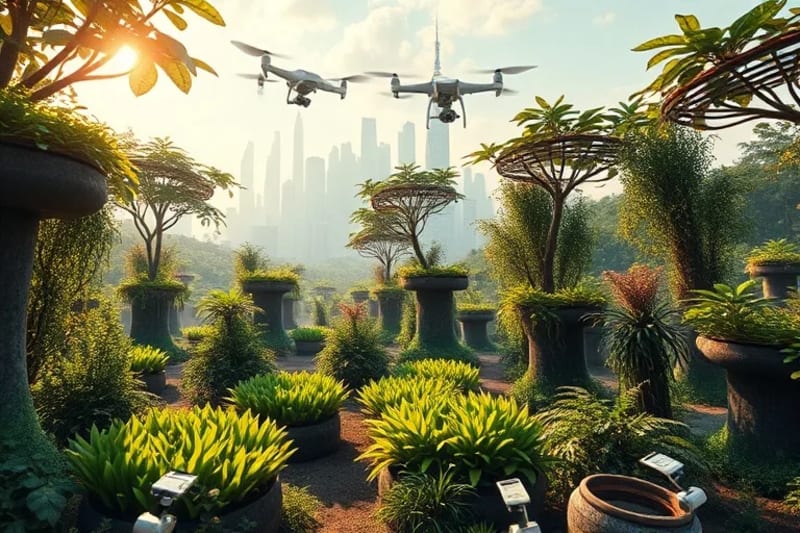 A conceptual visualization of the intricate relationship between technological innovation and natural regeneration within a circular economic framework.
A circular economy is fundamentally different from its linear predecessor. It is an economic system aimed at eliminating waste and the continual use of resources. This model is restorative and regenerative by design, seeking to keep products, components, and materials at their highest utility and value at all times. It distinguishes between technical and biological cycles, envisioning a future where waste is not merely reduced but designed out of the system entirely.
Green startups are at the forefront of this transformation. These entrepreneurial ventures are specifically designed to address environmental challenges through innovative products, services, and business models. They often integrate sustainable practices from their inception, focusing on areas such as renewable energy, sustainable agriculture, waste management, eco-friendly manufacturing, and resource efficiency. Their agility and disruptive potential make them crucial catalysts for accelerating the transition towards a more sustainable global economy.
Key Principles of the Circular Economy
The circular economy is built upon three core principles, as articulated by the Ellen MacArthur Foundation, a leading advocate for the model. These principles guide the design of products, processes, and systems to ensure long-term sustainability and value creation.
- Design Out Waste and Pollution: This principle emphasizes that waste and pollution are not accidents but rather the result of design choices. By rethinking how products and services are created, businesses can eliminate negative impacts from the outset. This includes selecting sustainable materials, designing for disassembly, and avoiding toxic substances.
- Keep Products and Materials in Use: Maximizing the lifespan and utility of products and their components is central to circularity. Strategies include repair, reuse, remanufacturing, and recycling. This extends beyond individual products to entire material streams, ensuring resources circulate within the economy rather than being discarded.
- Regenerate Natural Systems: Beyond minimizing negative impacts, a regenerative economy actively seeks to restore and enhance natural capital. This involves returning biological materials safely to the biosphere, fostering biodiversity, and improving ecosystem health. Practices like regenerative agriculture and sustainable forestry are key examples.
These principles are not merely theoretical; they are being actively implemented by a growing number of companies, from multinational corporations to nimble green startups. The shift requires a fundamental rethinking of value chains, product lifecycles, and consumer engagement, moving away from a linear mindset towards a systemic, interconnected approach.
The Pivotal Role of Green Startups
Green startups are uniquely positioned to drive the transition to a circular and regenerative economy. Their inherent agility, innovative spirit, and often mission-driven founders allow them to challenge existing norms and develop novel solutions. Unlike established corporations that may face legacy infrastructure and entrenched business practices, startups can build circularity into their DNA from day one.
These startups are innovating across various sectors. In material science, they are developing biodegradable plastics, sustainable packaging, and alternative construction materials. In energy, they are pioneering new forms of renewable energy generation, energy storage solutions, and smart grid technologies. Waste management is being revolutionized by startups that convert waste into valuable resources, such as upcycling textiles or transforming food waste into bioenergy. This entrepreneurial drive is essential for creating the diverse solutions needed to address complex environmental problems.
 Visual representation of green startups as dynamic engines of sustainable growth and circular innovation.
Furthermore, green startups often leverage cutting-edge technologies like artificial intelligence, blockchain, and advanced manufacturing to optimize resource use, track material flows, and create transparent supply chains. For instance, AI algorithms can predict demand to reduce overproduction, while blockchain can verify the origin and lifecycle of materials, enhancing trust and accountability. These technological advancements are critical for implementing circular strategies at scale.
The success of these ventures often relies on attracting sustainable investment, which is increasingly flowing into companies with strong Environmental, Social, and Governance (ESG) performance. Investors are recognizing that businesses built on circular principles are not only more resilient to resource price volatility but also offer significant long-term growth potential. This alignment of financial incentives with environmental impact is a powerful driver for the green startup ecosystem.
Benefits of a Regenerative Economy
The transition to a regenerative economy, powered by circular business models and green startups, offers a multitude of benefits that extend beyond environmental protection. These advantages span economic, social, and systemic dimensions, creating a more resilient and equitable future.
| Benefit Category | Description |
|---|---|
| Economic Resilience | Reduces reliance on virgin raw materials, mitigating supply chain risks and price volatility. Creates new markets and job opportunities in repair, remanufacturing, and recycling sectors. |
| Environmental Protection | Significantly reduces waste, pollution, and greenhouse gas emissions. Conserves natural resources, protects biodiversity, and restores ecosystem health. |
| Innovation & Competitiveness | Fosters creativity and technological advancement in product design, material science, and process optimization. Companies adopting circular models gain a competitive edge. |
| Social Impact | Can lead to improved public health by reducing pollution exposure. Creates local job opportunities and strengthens community resilience through localized resource management. |
| Brand Value & Consumer Trust | Consumers increasingly prefer sustainable brands. Adopting circular practices enhances brand reputation and builds trust among environmentally conscious customers. |
These benefits underscore why the shift towards a regenerative economy is not just an environmental imperative but also a strategic business decision. Companies that embrace these models are better positioned for long-term success in a resource-constrained world. The development of adaptability and soft skills within the workforce is also crucial for navigating these evolving economic landscapes.
Challenges and Pathways to Regeneration
Despite the clear advantages, the transition to a fully regenerative economy faces significant hurdles. These include initial investment costs for new infrastructure, regulatory frameworks that still favor linear models, and ingrained consumer behaviors that prioritize convenience over sustainability. Overcoming these challenges requires concerted effort from governments, businesses, and individuals.
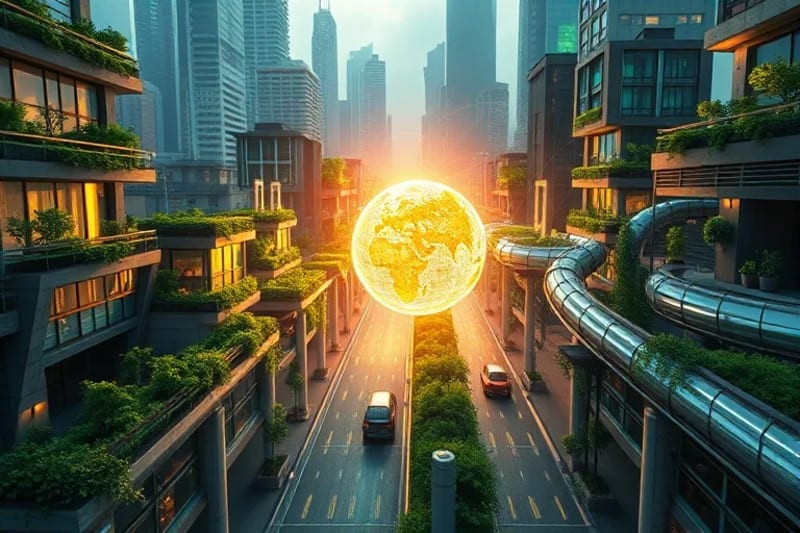 A futuristic urban landscape showcasing integrated green infrastructure and circular resource flows, embodying a regenerative economic vision.
Governments have a crucial role to play in creating an enabling environment through policy incentives, such as extended producer responsibility schemes, tax breaks for circular businesses, and funding for research and development in sustainable technologies. International cooperation, as seen in discussions around geopolitics of water and resource management, is also vital for addressing global resource challenges. Education and awareness campaigns are also essential to shift consumer mindsets and encourage demand for circular products and services.
Technological advancements will continue to be a key enabler. Innovations in areas like 3D printing for food and alternative protein sources demonstrate how technology can create entirely new, sustainable industries. Furthermore, advancements in materials science, such as self-healing materials and advanced recycling techniques, will expand the possibilities for keeping resources in circulation for longer periods.
Collaboration across sectors is equally important. Partnerships between large corporations and green startups can combine the scale and resources of established players with the innovation and agility of new ventures. Academia, research institutions, and civil society organizations also contribute by providing scientific insights, developing new solutions, and advocating for systemic change. This multi-stakeholder approach is necessary to build a robust and inclusive regenerative economy.
Conclusion
The journey towards a regenerative economy is complex but imperative. Circular business models provide a robust framework for achieving this, while green startups act as vital engines of innovation and disruption. By embracing principles of designing out waste, keeping materials in use, and regenerating natural systems, we can move beyond mere sustainability to a future where economic activity actively contributes to ecological and social well-being.
The collective efforts of entrepreneurs, policymakers, investors, and consumers are shaping a new economic landscape—one that is resilient, equitable, and in harmony with the planet. The vision of a regenerative economy is not just an aspiration; it is a tangible path forward, being built today by those who dare to innovate for a better tomorrow.
Related Searches
- Economía Circular: Modelos de Negocio Sostenibles
- Startups Verdes: Innovación y Sostenibilidad Ambiental
- Economía Regenerativa: Principios y Aplicaciones
- Inversión Sostenible: Estrategias ESG
- Desarrollo Sostenible: Retos y Oportunidades
Source: Hybrid content assisted by AI and human editorial supervision.


Comentarios