
Circular Business Models Green Startups Regenerative Economy
Circular Business Models and Green Startups: Towards a Regenerative Economy
The global economy stands at a critical juncture, facing unprecedented environmental challenges and resource depletion. The traditional linear "take-make-dispose" model, which has dominated industrial practices for centuries, is proving unsustainable. In response, a transformative paradigm is emerging: the circular economy, championed by innovative green startups. This approach seeks to redefine growth, focusing on positive societal benefits, resource efficiency, and the elimination of waste through thoughtful design and continuous use.
This article delves into the core principles of circular business models, explores the pivotal role of green startups in accelerating this transition, and examines how these efforts collectively contribute to building a truly regenerative economy. We will explore the various strategies, benefits, and challenges associated with this shift, providing a comprehensive overview of a future where economic prosperity and ecological health are inextricably linked.
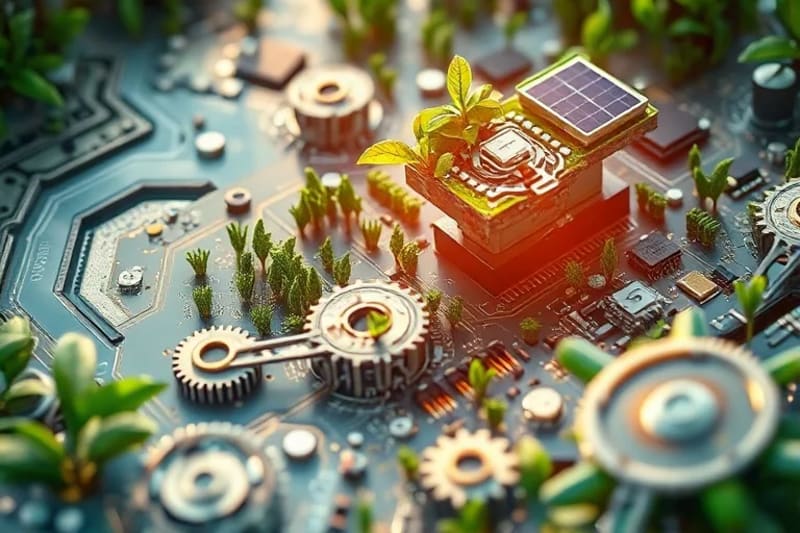 A harmonious blend of technology and nature, illustrating the interconnectedness of circular business models and ecological regeneration.
Table of Contents
- What is a Circular Business Model?
- The Rise of Green Startups
- Principles of a Regenerative Economy
- Types of Circular Business Models
- Benefits of Circularity
- Challenges and Future Outlook
What is a Circular Business Model?
A circular business model (CBM) fundamentally deviates from the linear economic model, which follows a sequence of extraction, production, consumption, and disposal. Instead, CBMs are designed to keep resources in use for as long as possible, extract the maximum value from them while in use, then recover and regenerate products and materials at the end of each service life.
The core principles underpinning a circular economy, as popularized by the Ellen MacArthur Foundation, include:
- Design out waste and pollution: This principle emphasizes that waste is not an accidental byproduct but a design flaw. By designing products and systems with their end-of-life in mind, waste can be eliminated from the outset.
- Keep products and materials in use: This involves strategies like repair, reuse, remanufacturing, and recycling. The goal is to extend the lifespan of products and components, minimizing the need for new raw materials.
- Regenerate natural systems: Beyond simply minimizing harm, a circular economy aims to actively improve and restore natural capital. This includes transitioning to renewable energy, returning biological materials to the earth, and fostering biodiversity.
These principles are not merely environmental aspirations; they represent a robust framework for economic resilience and innovation. Businesses adopting circular models often find new revenue streams, reduce costs associated with raw material procurement, and enhance their brand reputation among increasingly eco-conscious consumers.
The Rise of Green Startups
Green startups are emerging as crucial catalysts in the transition to a circular and regenerative economy. These innovative ventures are typically characterized by their mission-driven approach, integrating environmental and social impact directly into their business models from inception. They often leverage cutting-edge technologies and novel approaches to address systemic inefficiencies and create sustainable alternatives.
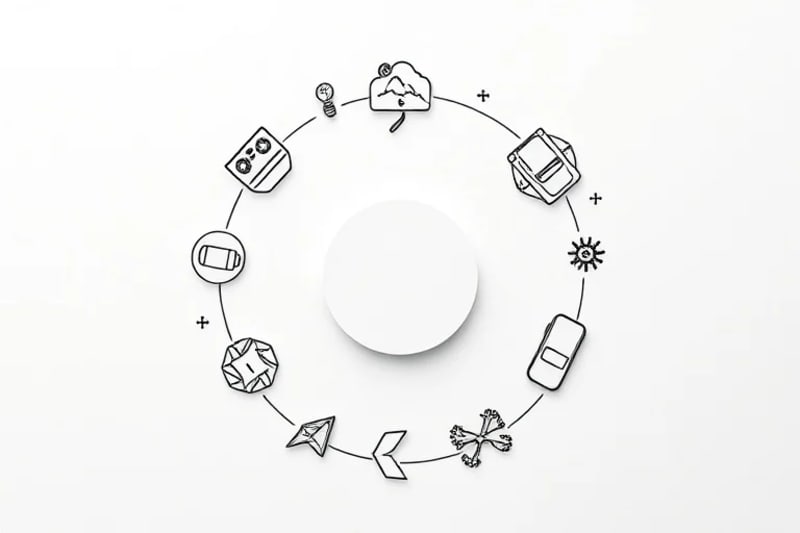 A visual representation of resource recovery and continuous value creation in a circular system.
Their agility and willingness to challenge conventional practices allow them to experiment with new circular strategies, from developing advanced recycling technologies to creating platforms for sharing and repairing goods. Many green startups are also at the forefront of digital innovation, utilizing data analytics, IoT, and AI to optimize resource flows and enhance product longevity. For instance, platforms that facilitate the sharing of assets or enable peer-to-peer repair services rely heavily on robust digital infrastructures and advanced information architecture.
The impact of these startups extends beyond their immediate products or services. They inspire larger corporations to re-evaluate their own linear models, fostering a competitive environment that prioritizes sustainability. Furthermore, green startups often attract impact investors and consumers who are increasingly seeking ethical and environmentally responsible options, driving market demand for circular solutions.
Principles of a Regenerative Economy
While the circular economy focuses on minimizing negative impacts and optimizing resource use, a regenerative economy goes a step further. It aims not just to sustain but to actively restore and enhance natural and social capital. This means designing systems that are inherently restorative, capable of regenerating ecosystems, fostering community well-being, and creating abundance.
Key tenets of a regenerative economy include:
- Net positive impact: Moving beyond "less bad" to actively "more good." This implies that economic activities should result in a net gain for the environment and society.
- Holistic systems thinking: Recognizing the interconnectedness of ecological, social, and economic systems. Solutions are designed with a deep understanding of these interdependencies.
- Empowerment and equity: Ensuring that economic benefits are broadly distributed and that communities have agency in shaping their own sustainable futures. This often involves supporting local economies and fair labor practices.
- Biodiversity and ecosystem health: Prioritizing the health and diversity of natural ecosystems as the foundation for long-term prosperity. This includes practices like regenerative agriculture and ecological restoration.
Green startups are pivotal in this transition, often embedding regenerative principles into their core operations. From companies developing bio-based materials that enrich soil to those creating energy systems that restore local ecosystems, they exemplify the potential for business to be a force for positive regeneration.
Types of Circular Business Models
Circular business models manifest in various forms, each designed to keep products and materials in circulation and maximize their value. Understanding these models is crucial for businesses aiming to transition away from linear practices.
 An abstract interpretation of the regenerative impact, highlighting growth and ecological restoration.
Here are some prominent types of circular business models:
- Product-as-a-Service (PaaS): Instead of selling products, companies lease them to customers, retaining ownership and responsibility for maintenance, repair, and end-of-life management. Examples include lighting-as-a-service or tire-as-a-service. This incentivizes durability and ease of repair.
- Resource Recovery: This model focuses on collecting and reprocessing waste streams into valuable secondary raw materials. This includes advanced recycling facilities, upcycling initiatives, and industrial symbiosis where one industry's waste becomes another's input.
- Circular Supply Chains: Designing supply chains to minimize waste and maximize resource efficiency from the outset. This involves sourcing recycled or renewable materials, optimizing logistics, and implementing reverse logistics for product take-back.
- Longevity and Repair: Businesses that specialize in extending the lifespan of products through repair, refurbishment, and upgrades. This directly counters planned obsolescence and empowers consumers to keep their items longer.
- Sharing Platforms: Digital platforms that enable the sharing, renting, or swapping of goods and services among individuals or businesses. This increases the utilization rate of products and reduces the need for individual ownership, from car-sharing to tool libraries.
Each of these models offers unique opportunities for innovation and value creation, contributing to a more resilient and sustainable economic system. Green startups often pioneer these models, demonstrating their viability and scalability.
Benefits of Circularity
The adoption of circular business models and the growth of green startups offer a myriad of benefits, extending beyond environmental protection to encompass significant economic and social advantages.
Economically, circularity can lead to:
- Reduced raw material costs: By reusing and recycling, businesses become less dependent on volatile virgin material markets.
- New revenue streams: Selling services (PaaS), recovered materials, or refurbished products opens up diverse income opportunities.
- Increased innovation and competitiveness: The challenge of designing for circularity fosters creativity and leads to more resilient business models.
- Job creation: New industries in repair, remanufacturing, and recycling create local jobs, often requiring specialized skills.
Environmentally, the advantages are profound:
- Reduced waste generation: Minimizing landfill waste and incineration.
- Lower carbon emissions: Less energy is typically required for recycling and remanufacturing compared to producing from virgin materials.
- Conservation of natural resources: Protecting ecosystems and biodiversity by reducing extraction pressures.
- Pollution reduction: Decreasing air, water, and soil pollution associated with extraction and manufacturing.
Socially, circularity contributes to:
- Enhanced consumer value: Access to durable, high-quality products and services, often at a lower cost through sharing or leasing models.
- Community empowerment: Local repair shops and recycling centers strengthen community ties and provide accessible services.
- Improved public health: Reduced pollution leads to healthier living environments.
- Resilience: Less reliance on global supply chains for raw materials can make local economies more robust against disruptions.
These multifaceted benefits underscore why the shift towards circular and regenerative practices is not just an ethical imperative but a strategic business advantage. Supporting initiatives like digital microcredits can further empower green startups to scale these beneficial models.
Challenges and Future Outlook
Despite the compelling benefits, the transition to a fully circular and regenerative economy faces several challenges. These include overcoming ingrained linear thinking, developing scalable infrastructure for collection and reprocessing, and shifting consumer behavior away from disposable consumption patterns.
One significant hurdle is the initial investment required for new technologies and business models. Green startups, while innovative, often struggle with securing adequate funding to scale their solutions. Policy and regulatory frameworks also need to evolve to support circular practices, for example, through extended producer responsibility schemes, tax incentives for recycled content, and clear standards for circular products.
However, the future outlook is promising. Growing awareness among consumers, increasing corporate commitments to sustainability, and advancements in digital technologies are accelerating the shift. The integration of artificial intelligence and blockchain, for instance, can enhance traceability of materials, optimize logistics for reverse supply chains, and verify sustainable claims, fostering greater trust and efficiency in circular systems. Furthermore, the collaborative spirit often seen in the startup ecosystem, where knowledge and resources are shared, can help overcome individual challenges.
The journey towards a regenerative economy is a collective effort, requiring collaboration between governments, businesses, consumers, and civil society. Green startups are leading the charge, demonstrating that economic growth can indeed be decoupled from resource depletion and environmental degradation. By embracing circular principles and fostering regenerative practices, we can build an economy that not only thrives but also restores and enriches our planet for generations to come.
This paradigm shift represents not just a change in business models, but a fundamental re-evaluation of our relationship with resources, nature, and each other. The innovative spirit of green startups, combined with a robust understanding of circular principles, offers a viable pathway to a more sustainable and equitable future.
Explore More on Sustainable Innovation
Source: Hybrid content assisted by AI and human editorial supervision.


Comentarios