
Neuroarchitecture Cognitive Well-being Digital Age
In an increasingly digital world, the spaces we inhabit play a crucial role in shaping our cognitive functions and overall well-being. Neuroarchitecture, an emerging interdisciplinary field, explores the profound connection between built environments and the human brain. It delves into how architectural design can influence our emotions, productivity, stress levels, and even our mental health, offering a scientific approach to creating spaces that support optimal cognitive performance and emotional balance.

Thoughtful design integrates natural elements and ergonomic solutions to enhance cognitive well-being in contemporary workspaces.
The digital age, with its constant connectivity and information overload, presents unique challenges to our mental state. From prolonged screen time to the blurring lines between work and personal life, modern lifestyles often lead to increased stress, anxiety, and diminished attention spans. Neuroarchitecture offers a powerful framework to counteract these negative effects by intentionally designing spaces that promote calm, concentration, and restorative experiences.
This article will explore the core principles of neuroarchitecture and how they can be applied to foster cognitive well-being in our homes, workplaces, and public areas. We will examine the scientific evidence supporting these principles and discuss practical strategies for creating environments that nurture our minds in an ever-evolving digital landscape.
Table of Contents
- Foundations of Neuroarchitecture: Bridging Brain and Building
- The Digital Age: Cognitive Challenges and Environmental Impact
- Key Neuroarchitectural Design Principles for Well-being
- Practical Applications Across Different Spaces
- The Future of Neuroarchitecture: Smart Environments and Personalization
Foundations of Neuroarchitecture: Bridging Brain and Building
Neuroarchitecture draws upon neuroscience, psychology, and architectural design to understand how physical spaces affect our brains and behavior. It moves beyond aesthetics to consider the physiological and psychological responses evoked by different environmental stimuli. This scientific approach allows designers to make informed decisions that optimize human experience.
Research in this field often utilizes advanced techniques like fMRI, EEG, and biometric sensors to measure brain activity, heart rate, and skin conductance in response to various architectural elements. These measurements provide objective data on how factors such as light, color, spatial configuration, and material textures influence mood, stress, cognitive load, and even social interaction. The goal is to create environments that are not only functional and beautiful but also inherently supportive of human health and performance.
For instance, studies have shown that exposure to natural light can regulate circadian rhythms, leading to improved sleep and reduced symptoms of depression. Similarly, the presence of natural elements, a concept known as biophilia, has been linked to lower stress levels and enhanced cognitive function. Understanding these fundamental connections is the first step towards designing spaces that truly nurture the human mind.
The Digital Age: Cognitive Challenges and Environmental Impact
The rapid evolution of digital technology has reshaped our daily lives, bringing unprecedented convenience and connectivity but also introducing new cognitive stressors. Constant notifications, the pressure to be always "on," and the sheer volume of information can lead to mental fatigue and decreased productivity. Our physical environments often exacerbate these issues if not designed with cognitive well-being in mind.

Abstract art illustrates the complex interaction between brain activity and architectural structures, highlighting cognitive design.
Consider the impact of poorly designed workspaces on concentration. Open-plan offices, while promoting collaboration, can be detrimental to tasks requiring deep focus due to noise and visual distractions. Homes, too, often lack dedicated zones for work, relaxation, and digital detox, leading to a constant state of mild stimulation. These environmental factors contribute significantly to issues like attention deficit, burnout, and increased anxiety, making the application of neuroarchitectural principles more critical than ever.
The challenge lies in designing spaces that support both our engagement with digital tools and our need for cognitive rest and recovery. This requires a nuanced understanding of how different environmental cues affect our brain's ability to process information, regulate emotions, and maintain sustained attention. Addressing these challenges through thoughtful design can lead to significant improvements in mental health and overall quality of life. Understanding how our brains process information is also crucial for effective neuroscience of sleep, ensuring restorative rest.
Key Neuroarchitectural Design Principles for Well-being
Several core principles guide neuroarchitectural design, each backed by scientific evidence demonstrating its positive impact on cognitive well-being:
- Biophilia: Integrating natural elements like plants, natural light, and views of nature. This principle reduces stress, improves mood, and enhances cognitive performance.
- Natural Light and Circadian Rhythms: Maximizing exposure to natural light and designing lighting systems that mimic natural cycles. This supports healthy sleep patterns and alertness.
- Acoustic Comfort: Managing noise levels through sound-absorbing materials and strategic layouts. Reducing unwanted noise improves concentration and reduces irritation.
- Ergonomics and Movement: Designing furniture and layouts that support good posture and encourage movement. This prevents physical discomfort and promotes mental agility.
- Spatial Configuration and Wayfinding: Creating clear, intuitive layouts that reduce cognitive load and stress associated with navigation. Spaces that offer both privacy and opportunities for social interaction are key.
- Color Psychology: Utilizing colors that evoke desired emotional responses, such as calming blues and greens for relaxation, or energizing yellows for creativity.
- Materiality and Texture: Selecting materials with varied textures that stimulate sensory perception without overwhelming it, contributing to a richer and more engaging environment.
By thoughtfully applying these principles, designers can create environments that actively support mental health, reduce cognitive fatigue, and foster a sense of calm and productivity. This holistic approach to design considers the human experience at its core, moving beyond purely aesthetic considerations to prioritize the well-being of occupants. The careful management of our surroundings is as vital as the strategies for happiness management at work, linking physical space to emotional state.
Practical Applications Across Different Spaces
Neuroarchitectural principles can be applied across a wide range of environments, from personal residences to large corporate campuses, each with specific goals for cognitive well-being.
A watercolor depiction of a peaceful home environment, emphasizing natural light and comfort for mental restoration.
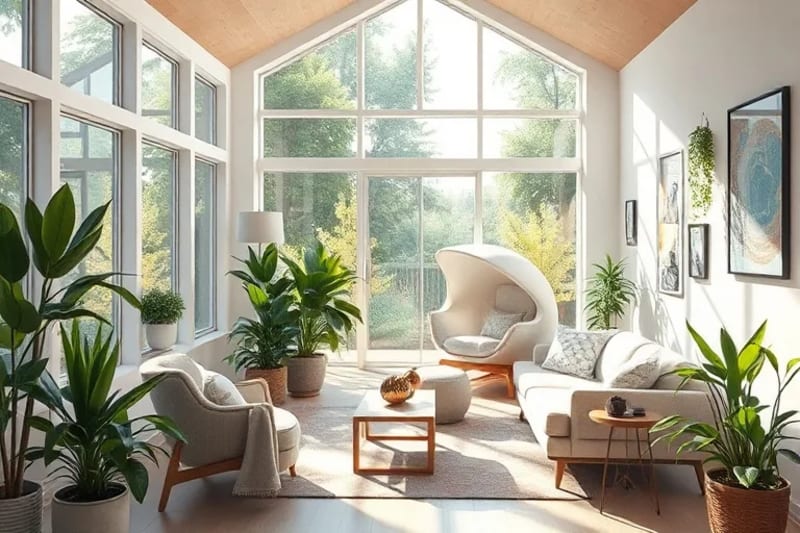
In **residential spaces**, the focus is on creating havens for rest, rejuvenation, and family connection. This involves designing bedrooms that are dark and quiet for optimal sleep, living areas that encourage social interaction with comfortable seating arrangements, and dedicated zones for focused work or creative pursuits. Incorporating biophilic elements like indoor plants, natural materials, and views of greenery can significantly enhance the sense of calm and reduce household stress.
For **workplaces**, neuroarchitecture aims to boost productivity, foster collaboration, and reduce employee burnout. This might include creating diverse work zones—from quiet pods for deep work to vibrant common areas for brainstorming—optimizing natural light, implementing advanced acoustic solutions, and providing ergonomic furniture. The design should also encourage movement throughout the day, perhaps through accessible staircases or walking paths, to combat sedentary lifestyles and improve alertness. The careful design of such systems can also inform the development of cybersecurity for critical infrastructures, where human factors in design are paramount.
**Educational institutions** can benefit from designs that enhance learning, concentration, and social development. This means classrooms with flexible layouts, ample natural light, and stimulating but not overwhelming color schemes. Outdoor learning spaces and access to green areas can also improve student engagement and reduce behavioral issues. Even public spaces like parks, hospitals, and transportation hubs can be designed to reduce stress and improve the overall user experience through thoughtful application of these principles.
The Future of Neuroarchitecture: Smart Environments and Personalization
As technology continues to advance, the field of neuroarchitecture is poised for even greater innovation. The integration of smart home and building systems offers unprecedented opportunities for personalized environments that adapt to individual needs and preferences. Imagine a workspace that automatically adjusts lighting, temperature, and even soundscapes based on your biometric data, optimizing your cognitive state for different tasks throughout the day.
Artificial intelligence and machine learning will play a pivotal role in this future, analyzing vast amounts of data on human-environment interactions to inform more sophisticated design solutions. From predictive models that anticipate stress triggers to adaptive interfaces that respond to emotional states, smart neuroarchitecture promises to create truly responsive and supportive spaces. This evolution will move beyond static design to dynamic environments that continuously learn and optimize for human well-being. This vision aligns with the broader discussions around ethical AI in business decisions, ensuring that technology serves human needs responsibly.
The ultimate goal is to empower individuals with greater control over their cognitive environments, fostering resilience and mental health in an increasingly complex world. Neuroarchitecture stands as a testament to the idea that our surroundings are not merely backdrops but active participants in our mental and emotional lives, deserving of careful and scientifically informed design.
The journey towards truly brain-friendly architecture is ongoing, but the foundational principles and emerging technologies offer a compelling vision for a future where our built environments actively contribute to a healthier, happier, and more productive humanity.
Further Exploration
- Creative AI and Music Copyright: Future Challenges
- Lucid Dreaming Therapy: Anxiety & PTSD Applications
- Gen Z Retirement Finances: Crypto, Sustainability, Planning
- Microplastic Marine Pollution: Global Problem, Solutions
- Space Law & Extraterrestrial Resources: New Legal Frontier
- Global Economic Inequality: Causes, Consequences, Solutions
- Sovereign Digital Identity Law: Blockchain, AI, Privacy
- Soft Robotics: Flexible Materials and Medical Applications
- Jyotish Planetary Remedies: Gems, Mantras, and Yantras for Health
- Chinese Monkey Health & Well-being: Energetic Vitality Tips
- Emotional Healing Crystals: Releasing Trauma & Energy Blocks
- Christian Gratitude: Path to Inner Peace
- Marian Prophecies: Emotional Healing & Spiritual Impact
- Transfiguration of Jesus: Celestial Glory and Meaning
- Elemental Harmony: Chinese Zodiac Dynamics Explained
- Ethical AI Predictive Astrology: Navigating Cosmic Guidance
- Crystal Grids & Planetary Alignments Manifestation: Advanced Healing
Source: Hybrid content assisted by AI and human editorial supervision.


Comentarios