
AI Marine Conservation: Challenges, Solutions, Future
The world's oceans are vital to life on Earth, regulating climate, providing food, and supporting an unparalleled diversity of species. However, these critical ecosystems face unprecedented threats from climate change, pollution, overfishing, and habitat destruction. Traditional conservation methods, while essential, often struggle to keep pace with the scale and complexity of these challenges.
In this context, Artificial Intelligence (AI) emerges as a powerful ally, offering innovative tools and approaches to enhance marine conservation efforts. AI's capacity to process vast amounts of data, identify complex patterns, and automate tasks is transforming how we understand, monitor, and protect our oceans. This article explores the multifaceted role of AI in marine ecosystem conservation, delving into its key applications, the challenges it faces, and the promising solutions it offers for a sustainable future.
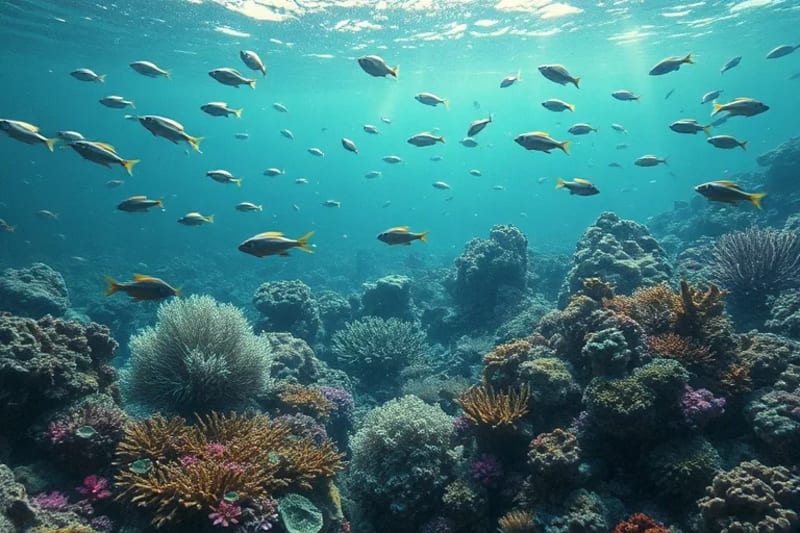
A vibrant marine ecosystem integrated with AI monitoring systems, symbolizing advanced conservation efforts.
Table of Contents
- Introduction
- AI's Transformative Role in Marine Conservation
- Key Applications of AI in Marine Ecosystems
- Challenges in AI-Driven Marine Conservation
- Solutions and Future Directions
- Conclusion
AI's Transformative Role in Marine Conservation
The sheer scale of marine environments makes comprehensive monitoring and intervention incredibly challenging. AI, through its various subfields like machine learning, computer vision, and natural language processing, offers unprecedented capabilities to address these complexities. It can analyze satellite imagery, acoustic data, and underwater video feeds with a speed and accuracy far beyond human capacity.
By automating routine tasks and providing actionable insights, AI allows conservationists to allocate their limited resources more effectively. This technological leap is not about replacing human effort but augmenting it, enabling a more proactive and data-driven approach to protecting our oceans. The integration of AI tools promises a future where conservation strategies are more precise, timely, and impactful.
Key Applications of AI in Marine Ecosystems
AI's versatility allows it to be deployed across numerous facets of marine conservation, from the deep sea to coastal waters. Its applications are continuously expanding, offering new avenues for research and protective measures.
Monitoring and Data Collection
One of AI's most significant contributions is its ability to revolutionize how data is collected and processed in marine environments. Autonomous Underwater Vehicles (AUVs) and drones equipped with AI-powered cameras and sensors can survey vast areas, collecting high-resolution imagery and environmental data.
Machine learning algorithms then analyze this data to detect changes in ocean temperature, salinity, and pH levels, providing crucial insights into the health of marine ecosystems. Satellite imagery combined with AI can track large-scale phenomena like algal blooms, ice melt, and ocean currents, offering a macroscopic view of environmental shifts. The sheer volume of data collected necessitates scalable cloud infrastructure for storage and processing, highlighting the interconnectedness of modern technological solutions.
Species Identification and Tracking
Identifying and tracking marine species is fundamental to conservation, yet it can be incredibly labor-intensive. AI-driven computer vision systems can automatically identify individual animals, such as whales, sharks, or specific fish species, from underwater footage or photographs. This capability is vital for population assessments and understanding migration patterns.
Acoustic sensors combined with AI can detect and classify marine mammal vocalizations, allowing researchers to monitor their presence and behavior without direct visual contact. This non-invasive approach is particularly useful for elusive or deep-sea species. Such advanced predictive models are crucial for understanding and mitigating potential threats to marine biodiversity.
Pollution Detection and Mitigation
Marine pollution, particularly from plastics and oil spills, poses a severe threat to ocean health. AI is being deployed to detect and even help mitigate these pollutants. Drones equipped with AI can identify plastic accumulation zones on the ocean surface or along coastlines, guiding cleanup efforts.
Machine learning models can analyze water samples to detect microplastics and other contaminants, providing a more comprehensive understanding of pollution distribution. In the event of oil spills, AI can predict the trajectory of the spill, optimizing response strategies and minimizing environmental damage. These technologies represent significant progress in our fight against ocean pollution.

A visual representation of various AI tools, from AUVs to holographic maps, aiding marine conservation.
Habitat Mapping and Restoration
Understanding and restoring critical marine habitats like coral reefs, seagrass beds, and mangrove forests is crucial for biodiversity. AI can process vast amounts of underwater imagery to create detailed 3D maps of these habitats, identifying areas of degradation and potential for restoration.
Algorithms can track the growth and health of restored areas over time, providing valuable feedback on the effectiveness of conservation interventions. This data-driven approach allows for more targeted and efficient restoration projects, maximizing their ecological impact. The precision offered by AI is unparalleled in this field.
Predictive Modeling and Early Warning Systems
Beyond current monitoring, AI excels at predicting future trends and potential threats. Machine learning models can analyze historical data on climate patterns, human activities, and marine ecosystem responses to forecast phenomena such as marine heatwaves, ocean acidification, and the spread of invasive species.
These predictive capabilities enable the development of early warning systems, allowing conservationists and policymakers to implement proactive measures. For instance, AI can help identify areas at high risk of illegal fishing, guiding enforcement efforts. The ethical considerations in AI deployment, particularly in sensitive environmental contexts, remain a critical area of discussion.
Challenges in AI-Driven Marine Conservation
Despite its immense potential, the application of AI in marine conservation is not without its hurdles. These challenges span technological, logistical, and ethical dimensions, requiring careful consideration and collaborative solutions.
- Data Quantity and Quality: While AI thrives on data, obtaining high-quality, standardized marine data can be difficult. The ocean is vast and often inaccessible, leading to data gaps and inconsistencies.
- Computational Resources: Processing and analyzing massive datasets, especially from real-time sensors, requires significant computational power and storage, which can be costly and energy-intensive.
- Ethical Concerns and Bias: AI models can inherit biases from the data they are trained on, potentially leading to skewed conservation priorities or unintended consequences. Ensuring fairness and transparency is paramount.
- Integration with Existing Systems: Integrating new AI technologies with established conservation practices and infrastructure can be complex, requiring significant investment in training and adaptation.
- Cost and Accessibility: Advanced AI tools and the necessary hardware (AUVs, specialized sensors) can be expensive, limiting their accessibility for many conservation organizations, particularly in developing nations.

A futuristic control room where AI-powered dashboards visualize real-time ocean data for conservationists.
Solutions and Future Directions
Addressing these challenges requires a concerted effort from scientists, technologists, policymakers, and local communities. Several promising avenues are being explored to maximize AI's positive impact on marine conservation.
- Collaborative Data Platforms: Fostering open-access data repositories and standardized data collection protocols can improve data quality and availability for AI training.
- Open-Source AI Tools: Developing and sharing open-source AI models and software can reduce costs and increase accessibility for conservation groups worldwide.
- Policy and Regulatory Frameworks: Establishing clear guidelines for the ethical development and deployment of AI in environmental contexts is crucial to prevent misuse and ensure accountability.
- Capacity Building: Investing in training programs for conservationists to understand and utilize AI tools effectively will bridge the knowledge gap.
- Interdisciplinary Research: Encouraging collaboration between AI experts, marine biologists, oceanographers, and social scientists can lead to more holistic and effective solutions.
The future of AI in marine conservation is bright, with ongoing advancements in areas like neuromorphic computing regulation promising even more efficient and powerful processing capabilities. As AI technology matures, its ability to analyze complex environmental systems and predict outcomes will become even more sophisticated, offering new hope for our oceans.
Conclusion
Artificial Intelligence is rapidly becoming an indispensable tool in the global effort to conserve marine ecosystems. From enhancing data collection and species tracking to detecting pollution and predicting environmental changes, AI offers transformative solutions to complex challenges. While obstacles such as data quality, computational resources, and ethical considerations remain, ongoing innovation and collaborative efforts are paving the way for more effective and accessible AI applications.
By harnessing the power of AI, we can gain deeper insights into our oceans, make more informed conservation decisions, and work towards a future where marine life thrives. The synergy between human expertise and artificial intelligence holds the key to safeguarding these invaluable natural resources for generations to come. The potential for advanced predictive models, powered by quantum AI, further illustrates the exciting frontier of this field.
Disclaimer: This article is for informational purposes only and does not constitute professional advice. The field of AI in marine conservation is rapidly evolving, and readers are encouraged to consult with experts for specific applications or challenges.
Copyright Notice: All content, including text, images, and other media, is protected by copyright law. Unauthorized reproduction or distribution is strictly prohibited.
Explore More Topics
Source: Hybrid content assisted by AI and human editorial supervision.


Comentarios