
Artificial Intelligence Creativity: Art Music Intellectual Property
The rapid evolution of Artificial Intelligence (AI) is fundamentally reshaping numerous aspects of human existence, and creativity is no exception. Once considered an exclusively human domain, the ability to generate novel and valuable ideas, forms, or solutions is now increasingly shared with sophisticated algorithms. This paradigm shift challenges our traditional understanding of art, music, and even the very concept of authorship.
From generating photorealistic images to composing intricate musical scores, AI is proving to be a powerful tool, a collaborator, and sometimes, a provocateur in the creative process. This article delves into the burgeoning role of AI in human creativity, exploring its applications in visual arts and music, the complex intellectual property challenges it presents, and the ethical considerations that arise from this technological frontier.
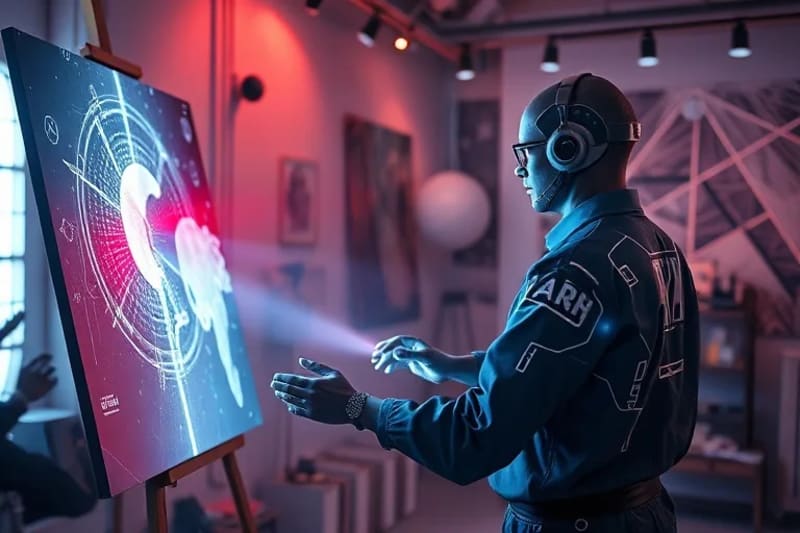
Precursors intellectuales, diagramas fundamentales y representaciones conceptuales que forjaron la visión de la inteligencia artificial sobre la creatividad y la innovación.
Fuente visual sujeta a disponibilidad del ecosistema: Wikimedia Commons bajo licencia CC BY-SA 4.0 o renderizado conceptual IA.
Table of Contents
- Defining AI Creativity: Beyond Imitation
- AI in Visual Arts: From Generation to Interpretation
- AI in Music Composition: Harmonizing Algorithms
- Intellectual Property Challenges: Who Owns AI-Generated Art?
- Human-AI Collaboration: A New Creative Paradigm
- Ethical Considerations and Societal Impact
- The Future Outlook: Evolving Creativity in the AI Age
Defining AI Creativity: Beyond Imitation
At its core, AI creativity refers to the capacity of artificial intelligence systems to produce outputs that are considered novel, surprising, and valuable, qualities traditionally associated with human ingenuity. This goes beyond mere replication or algorithmic execution of predefined rules. Modern AI, particularly through generative models, can learn complex patterns from vast datasets and then generate entirely new content that reflects these learned styles and structures.
Generative Adversarial Networks (GANs) and Transformer models (like those underpinning DALL-E, Midjourney, and GPT-3) are at the forefront of this revolution. GANs, for instance, consist of two neural networks—a generator and a discriminator—that compete against each other. The generator creates new data (e.g., images), while the discriminator tries to determine if the data is real or fake. Through this adversarial process, the generator becomes increasingly adept at producing highly realistic and often creative outputs.
The concept of "creativity" itself is complex, often debated by philosophers and scientists. When applied to AI, it sparks questions about intentionality, consciousness, and the unique human experience. While AI may not possess consciousness or emotions in the human sense, its ability to synthesize, transform, and innovate based on learned data undeniably produces results that evoke aesthetic and intellectual responses, blurring the lines between machine-generated and human-made art.
AI in Visual Arts: From Generation to Interpretation
The visual arts have been one of the most visibly impacted domains by AI's creative capabilities. Tools like DALL-E 2, Stable Diffusion, and Midjourney allow users to generate intricate images from simple text prompts, ranging from photorealistic landscapes to abstract masterpieces. These systems have democratized image creation, enabling individuals without traditional artistic skills to produce stunning visuals.
Artists are increasingly leveraging AI as a creative partner. Some use AI to generate initial concepts or variations, which they then refine and integrate into their human-led work. Others employ AI to create entirely new styles or to explore aesthetic possibilities that would be impossible or prohibitively time-consuming through conventional methods. This collaboration can lead to truly innovative artistic expressions, pushing the boundaries of what is considered art.
However, the rise of AI-generated art also brings challenges. Concerns about the originality of AI outputs, the potential for plagiarism if AI models are trained on copyrighted works without permission, and the devaluation of human artistic labor are frequently raised. Despite these concerns, the integration of AI into visual arts is accelerating, opening new avenues for artistic exploration and commercial application.
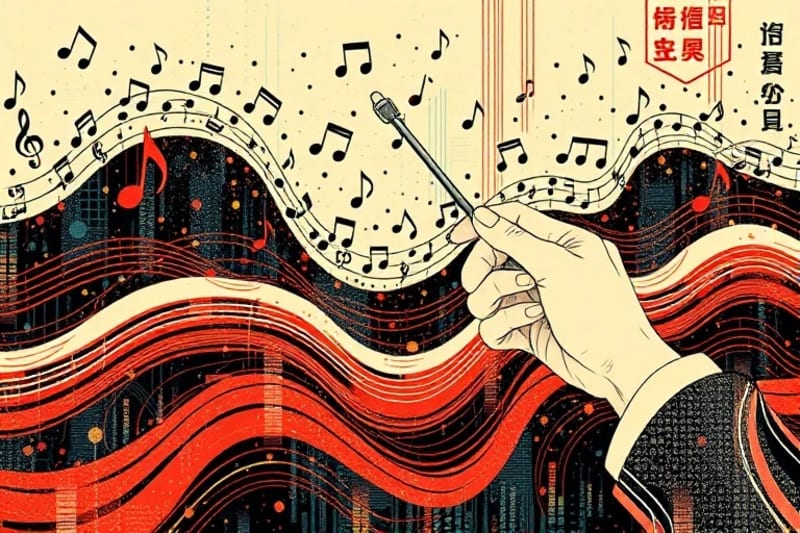
A dynamic interplay of human touch and algorithmic precision in the creation of new musical forms.
AI in Music Composition: Harmonizing Algorithms
In the realm of music, AI is transforming how melodies are conceived, harmonies are structured, and entire compositions are brought to life. AI music generators can analyze vast libraries of existing music to learn different genres, styles, and compositional techniques. They can then create original pieces, generate background scores for films, or even produce personalized soundtracks for listeners.
Companies like Amper Music, AIVA, and Jukebox by OpenAI are examples of platforms that leverage AI for music creation. These tools can generate music in various styles, from classical to electronic, often with minimal human input. Composers and producers use AI to overcome creative blocks, experiment with new sounds, or automate repetitive tasks, allowing them to focus on the more conceptual and emotional aspects of their work.
The debate in music often centers on the "soul" or emotional depth of AI-generated compositions. While algorithms can master technical complexity and emulate human emotion through learned patterns, the question remains whether they can truly "feel" or convey the raw human experience. Nevertheless, AI is undeniably expanding the sonic landscape and offering new tools for musical expression, potentially leading to novel forms of cognitive engagement for audiences.
Intellectual Property Challenges: Who Owns AI-Generated Art?
The advent of AI creativity has thrown a significant wrench into existing intellectual property (IP) frameworks. Traditional copyright law is built on the premise of human authorship, granting rights to the creator of an original work. When an AI generates a piece of art or music, the question of ownership becomes incredibly complex.
Several scenarios emerge: Is the AI the author? Is it the programmer who developed the AI? Is it the user who provided the prompt? Or is it the entity that owns the data used to train the AI? Current legal systems are ill-equipped to handle these nuances. For instance, the U.S. Copyright Office has stated that it will only register works created by a human author, explicitly excluding AI-generated content from copyright protection if there is no human creative input.
Furthermore, the issue of "fair use" and potential copyright infringement arises when AI models are trained on vast datasets of existing copyrighted material. Does the act of training an AI on such data constitute infringement? What about the outputs that might bear a striking resemblance to existing works? These questions are actively being debated in legal and academic circles, with various proposals ranging from new categories of "AI copyright" to treating AI as a tool, with human users retaining authorship. The need for updated legal frameworks is urgent to ensure fairness and foster innovation without stifling creativity. This is a critical area where critical thinking must be applied to evolving legal precedents.
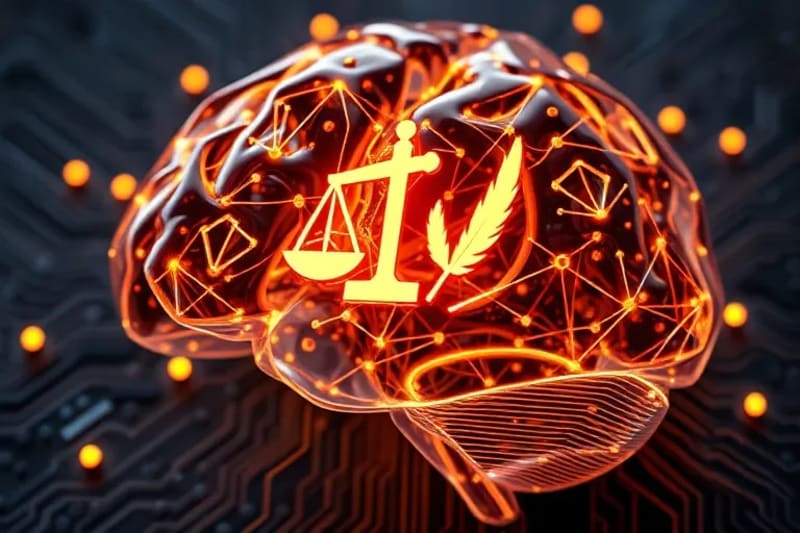
The intricate web of technology, law, and human thought in protecting creative works generated by artificial intelligence.
Human-AI Collaboration: A New Creative Paradigm
Despite the concerns, many view AI not as a replacement for human creativity but as a powerful collaborator. This collaborative model, often termed "centaur chess" (referencing human-computer teams outperforming either alone), suggests that the most potent creative outcomes arise from the synergy between human intuition and AI's computational power.
In this paradigm, humans provide the vision, intent, and emotional context, while AI offers technical execution, rapid iteration, and exploration of vast possibility spaces. An artist might use AI to generate hundreds of variations of a concept, then curate, select, and refine the most promising ones. A musician might use AI to generate harmonies or counter-melodies, which they then adapt and integrate into their original composition, injecting their unique artistic voice.
This approach redefines the role of the human creator, shifting it from sole producer to curator, director, and conceptualizer. It allows for unprecedented levels of experimentation and efficiency, potentially unlocking new forms of creativity that were previously unimaginable. The future of creativity may not be human versus AI, but rather human-plus-AI, leading to a richer and more diverse creative landscape.
Ethical Considerations and Societal Impact
The rise of AI in creativity also brings forth a range of ethical and societal considerations that demand careful attention. One significant concern is the potential for job displacement in creative industries. If AI can generate high-quality art, music, or writing at a fraction of the cost, what becomes of human artists, musicians, and writers?
Another critical issue is the authenticity and cultural value of AI-generated content. Does a painting created by an algorithm hold the same cultural significance as one born from human struggle and emotion? The perception of authenticity can deeply influence how art is valued and consumed. Furthermore, there is the risk of perpetuating biases present in the training data, leading to AI-generated content that reflects and amplifies existing societal prejudices.
Ensuring transparency about AI's role in creative works is also vital. Audiences have a right to know if a piece of art or music was generated by AI or if it involved human input. Establishing clear guidelines and ethical frameworks for the development and deployment of creative AI is essential to navigate these complex waters responsibly. This mirrors the broader discussions on sustainable practices across various industries.
The Future Outlook: Evolving Creativity in the AI Age
The future of AI in human creativity is dynamic and multifaceted. We can anticipate further advancements in AI's generative capabilities, leading to even more sophisticated and nuanced artistic outputs. The legal landscape will likely evolve to address the intellectual property challenges, possibly introducing new categories of rights or revised definitions of authorship that accommodate AI's role.
Education will play a crucial role in preparing future generations for a creative world augmented by AI. Artists, musicians, and designers will need to learn how to effectively collaborate with AI tools, understanding their strengths and limitations. The emphasis will shift from purely technical skills to conceptualization, curation, and the ability to guide AI towards desired creative outcomes.
Ultimately, AI is not merely a tool but a catalyst for re-evaluating what it means to be creative. It compels us to ponder the unique contributions of human consciousness and emotion, even as it expands the horizons of artistic possibility. The journey ahead involves navigating the ethical complexities, adapting legal frameworks, and embracing a future where human ingenuity and artificial intelligence converge to forge unprecedented forms of expression.
Explore More: Related Insights
- ► SAS Colombia: Legal Advantages and Disadvantages
- ► Amateur Astronomy: Beginner's Guide to Sky Observation
- ► E-Sports: Global Phenomenon, Redefining Sport
- ► Vocal Biohacking Michael Jackson: Science Range Control
- ► Elite Athlete Digestive Biohacking: Microbiome, Sports Performance
- ► Virtual Reality Astral Travel: Conscious Cosmos Exploration
- ► Crystal Programming: Advanced Techniques to Maximize Power
- ► Christian Martyrdom: Seed of Faith and Growth
- ► Shadow Work Basics: Integrating Unconscious Self
Source: Hybrid content assisted by AI and human editorial supervision.


Comentarios