
Artificial Intelligence Marine Ecosystem Conservation
The world's oceans, covering over 70% of the Earth's surface, are vital for life as we know it, regulating climate, providing food, and hosting an unparalleled diversity of species. However, these critical ecosystems face unprecedented threats from climate change, pollution, overfishing, and habitat destruction. As humanity grapples with the scale of this ecological crisis, the innovative power of Artificial Intelligence (AI) is emerging as a transformative tool in the fight for marine conservation.
AI offers capabilities that extend far beyond traditional conservation methods, enabling more efficient data collection, sophisticated analysis, and targeted interventions. From monitoring vast ocean expanses to predicting ecological shifts and combating illegal activities, AI's applications are diverse and rapidly evolving. This article explores the multifaceted role of AI in safeguarding our marine environments, highlighting its potential to revolutionize ocean stewardship and foster a sustainable future for our blue planet.
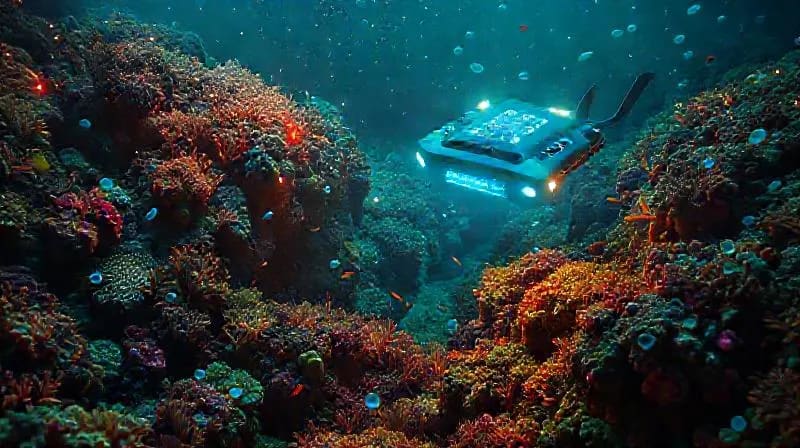
Advanced AI technologies, such as autonomous underwater vehicles, are revolutionizing the monitoring and protection of delicate marine ecosystems like coral reefs.
Fuente visual sujeta a disponibilidad del ecosistema: Wikimedia Commons bajo licencia CC BY-SA 4.0 o renderizado conceptual IA.The integration of AI in marine conservation represents a significant leap forward, moving beyond reactive measures to proactive strategies. By leveraging machine learning, computer vision, and big data analytics, scientists and conservationists can gain deeper insights into complex ecological processes and human impacts. This technological synergy promises to enhance our understanding of marine life and empower more effective conservation actions on a global scale.
Table of Contents
- The Urgency of Marine Conservation
- AI's Role in Data Collection and Monitoring
- Predictive Analytics for Ecosystem Management
- Combating Illegal Activities with AI
- AI-Powered Restoration and Rehabilitation Efforts
- Challenges and Ethical Considerations
- The Future of AI in Ocean Stewardship
The Urgency of Marine Conservation
Marine ecosystems are under immense pressure, with a multitude of threats jeopardizing their delicate balance and the services they provide. Global warming leads to ocean acidification and rising sea levels, devastating coral reefs and coastal communities. Pollution, particularly from plastics and chemical runoff, contaminates habitats and harms marine life, with microplastics and nanoplastics posing a significant health risk to both marine organisms and humans.
Overfishing depletes fish stocks, disrupts food webs, and can lead to the collapse of entire fisheries. Habitat destruction, through coastal development and destructive fishing practices, further reduces the resilience of these environments. The cumulative impact of these stressors creates a complex challenge that requires innovative and scalable solutions.
Recognizing the urgency, international bodies and local communities are increasingly seeking technological allies to augment traditional conservation efforts. AI, with its capacity to process vast amounts of data and identify patterns, offers a powerful new frontier in this critical endeavor. It enables us to understand the scope of the problem with unprecedented clarity and to devise more effective strategies for protection and recovery.
AI's Role in Data Collection and Monitoring
One of AI's most impactful contributions to marine conservation lies in its ability to enhance data collection and monitoring. Traditional methods are often labor-intensive, costly, and limited in scope. AI-powered tools, however, can process information from diverse sources, providing a comprehensive and real-time picture of marine health.
- Autonomous Underwater Vehicles (AUVs) and Drones: These robotic platforms, equipped with AI, can autonomously navigate vast areas, collecting high-resolution imagery, acoustic data, and environmental parameters. AI algorithms then analyze this data to identify species, detect pollution, and map habitats with remarkable accuracy.
- Satellite Imagery and Remote Sensing: AI algorithms can sift through petabytes of satellite data to track changes in ocean temperature, detect algal blooms, monitor ice melt, and identify illegal fishing vessels. This global perspective is crucial for understanding large-scale environmental shifts.
- Acoustic Monitoring: Underwater microphones (hydrophones) capture the sounds of the ocean. AI can differentiate between various marine species, identify human-made noise pollution, and even detect illegal activities like dynamite fishing by analyzing sound signatures.
- Computer Vision for Species Identification: AI models trained on vast image databases can automatically identify and count marine species from underwater cameras or drone footage. This accelerates population assessments and helps track endangered species without human intervention.

Artificial Intelligence systems are adept at processing and interpreting complex oceanographic data, transforming raw information into actionable insights for conservation.
The sheer volume and complexity of marine data make AI an indispensable tool. It transforms raw, disparate information into actionable insights, allowing conservationists to make informed decisions rapidly. This capability is particularly critical in dynamic environments where conditions can change quickly, demanding agile responses.
Predictive Analytics for Ecosystem Management
Beyond monitoring, AI's predictive capabilities are revolutionizing ecosystem management. Machine learning models can analyze historical and real-time data to forecast future trends, allowing for proactive conservation strategies rather than reactive responses. This foresight is invaluable in a rapidly changing world.
- Species Movement and Migration: AI can predict the migration patterns of marine animals, helping to establish dynamic protected areas or adjust fishing quotas to avoid critical breeding grounds. This is crucial for species like whales and sea turtles.
- Climate Change Impact Modeling: By integrating climate data with ecological observations, AI models can predict the impact of rising temperatures, ocean acidification, and extreme weather events on specific marine habitats and species. This helps prioritize vulnerable areas for intervention.
- Pollution Spread Forecasting: AI can model the movement of oil spills, plastic debris, and other pollutants, enabling rapid response teams to deploy resources effectively. This minimizes environmental damage and protects sensitive coastlines.
- Optimizing Resource Allocation: Conservation efforts often operate with limited resources. AI can help optimize the deployment of patrols, research vessels, and restoration teams by identifying areas where intervention will have the greatest impact.
The ability to anticipate ecological changes allows conservationists to implement preventative measures, such as adjusting fishing seasons, creating temporary no-take zones, or initiating early warning systems for marine heatwaves. This proactive approach is essential for building resilient marine ecosystems capable of withstanding future environmental pressures.
Combating Illegal Activities with AI
Illegal, Unreported, and Unregulated (IUU) fishing is a major threat to marine biodiversity and the livelihoods of legitimate fishers. AI is proving to be a powerful ally in the fight against these illicit activities, providing tools for enhanced surveillance and enforcement.
- Satellite Surveillance and Vessel Tracking: AI algorithms analyze vast amounts of satellite imagery and Automatic Identification System (AIS) data to detect suspicious vessel behavior. This includes identifying ships that turn off their transponders, enter protected areas, or engage in rendezvous at sea for illegal transshipment.
- Pattern Recognition for Poaching: In marine protected areas, AI can analyze sensor data, such as acoustic signatures or drone footage, to detect patterns indicative of poaching activities. This allows authorities to intercept illegal operations more effectively.
- Data Fusion and Anomaly Detection: By combining data from multiple sources – satellite, radar, vessel registries, and even social media – AI can identify anomalies and flag potential illegal activities that would be impossible for humans to detect manually. This holistic approach strengthens enforcement capabilities.
The transparency and data integrity offered by technologies like blockchain can further complement AI's role in combating IUU fishing. Integrating blockchain for intellectual property and legal challenges could also extend to tracking seafood supply chains, ensuring ethical sourcing and preventing the entry of illegally caught fish into markets. This multi-layered technological approach creates a more robust defense against environmental crime.
AI-Powered Restoration and Rehabilitation Efforts
Beyond protection, AI is also playing a crucial role in actively restoring degraded marine ecosystems and rehabilitating injured wildlife. These efforts are often complex and require precise, data-driven interventions to be successful.
- Coral Reef Restoration: AI-powered robots can identify suitable locations for coral transplantation, monitor the health of transplanted corals, and even assist in the delicate process of attaching new coral fragments. Machine learning helps determine optimal conditions for coral growth and resilience.
- Habitat Mapping and Assessment: AI analyzes sonar and imagery data to create detailed 3D maps of the seafloor, identifying areas suitable for restoration or those in urgent need of intervention. This allows for more strategic and effective habitat recovery projects.
- Wildlife Rehabilitation: AI can assist in the diagnosis and treatment of injured marine animals by analyzing medical imaging and physiological data. Predictive models can also help assess the success rate of rehabilitation efforts and optimize release strategies.
- Optimizing Aquaculture: While not direct conservation, sustainable aquaculture can reduce pressure on wild fish stocks. AI can optimize feeding regimes, monitor water quality, and detect diseases in aquaculture farms, making them more efficient and environmentally friendly.
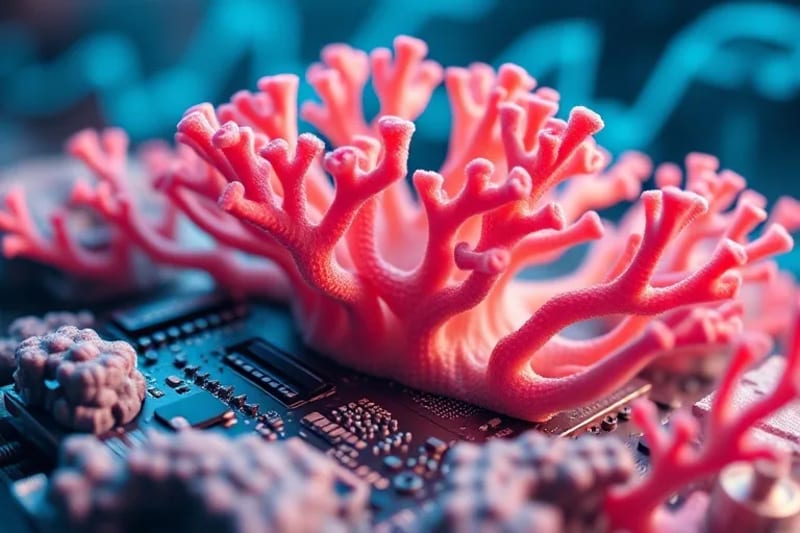
Miniature AI-driven robots are being developed to aid in the meticulous tasks of coral reef restoration, contributing to the recovery of vital marine habitats.
These AI-driven restoration techniques are particularly promising for large-scale projects where human intervention alone would be impractical. The precision and efficiency offered by AI can significantly accelerate the recovery of damaged ecosystems, bringing them back to a state of health and productivity.
Challenges and Ethical Considerations
Despite its immense potential, the application of AI in marine conservation is not without its challenges and ethical considerations. Addressing these issues is crucial for ensuring that AI serves as a beneficial force for the oceans.
- Data Bias and Quality: AI models are only as good as the data they are trained on. Biased or incomplete datasets can lead to flawed conclusions and ineffective conservation strategies. Ensuring high-quality, representative data is paramount.
- Energy Consumption: Training and running complex AI models require significant computational power, which consumes substantial energy. Developing energy-efficient AI algorithms and infrastructure is important to minimize the carbon footprint of these technologies.
- Accessibility and Equity: Advanced AI technologies can be expensive and require specialized expertise, potentially creating a divide between well-resourced organizations and those in developing nations. Efforts must be made to make these tools more accessible and equitable.
- Ethical Implications of Surveillance: The use of AI for surveillance, particularly in combating illegal activities, raises questions about privacy and the potential for misuse. Clear ethical guidelines and oversight are necessary to prevent unintended consequences.
- Over-reliance on Technology: While powerful, AI should complement, not replace, human expertise and traditional ecological knowledge. A balanced approach that integrates technology with community engagement and scientific understanding is essential.
Addressing these challenges requires a collaborative effort involving scientists, technologists, policymakers, and local communities. Transparent development, robust ethical frameworks, and a focus on open-source solutions can help mitigate risks and maximize the benefits of AI for marine conservation. Furthermore, exploring innovative funding mechanisms, perhaps through Finanzas Descentralizadas Sostenibilidad: Impulsando Inversión Verde, could help democratize access to these powerful tools.
The Future of AI in Ocean Stewardship
The future of AI in ocean stewardship is bright, with ongoing advancements promising even more sophisticated and integrated solutions. As AI capabilities continue to evolve, we can expect to see more autonomous systems, enhanced predictive accuracy, and greater global collaboration.
- Advanced Robotics: Next-generation AUVs and drones will be more intelligent, capable of complex decision-making, adaptive sampling, and even direct intervention in delicate environments.
- Digital Twins of Oceans: The creation of "digital twins" – virtual replicas of marine ecosystems powered by AI – will allow scientists to simulate various scenarios, test conservation strategies, and predict outcomes with unprecedented precision.
- Global Data Platforms: AI will facilitate the integration of diverse datasets from around the world into unified platforms, enabling a more holistic understanding of global ocean health and fostering international cooperation.
- Personalized Conservation: AI could even empower individual citizens with tools to monitor local marine environments, report issues, and participate in citizen science initiatives, fostering a global network of ocean advocates.
The synergistic relationship between human ingenuity and artificial intelligence holds the key to unlocking new possibilities in marine conservation. By harnessing AI responsibly and ethically, we can move towards a future where our oceans are not only protected but also thriving, supporting biodiversity and human well-being for generations to come. The journey towards sustainable ocean stewardship is complex, but with AI as a powerful ally, the prospects for success are significantly enhanced.
Source: Hybrid content assisted by AI and human editorial supervision.


Comentarios