
Forgotten Tech Innovators Legacies Shaping Present History
The annals of technological progress are often dominated by a few towering figures, their names synonymous with invention and innovation. However, beneath the surface of well-known narratives lies a rich tapestry of forgotten technological innovators whose contributions were equally, if not more, pivotal. These unsung heroes, through their ingenuity and foresight, laid the foundational stones upon which much of our modern world is built.
Their stories, often obscured by time, circumstance, or the marketing prowess of others, deserve to be brought to light. This article delves into the lives and legacies of some of these remarkable individuals, exploring how their groundbreaking ideas and inventions continue to resonate in the digital age, influencing everything from computing to wireless communication.
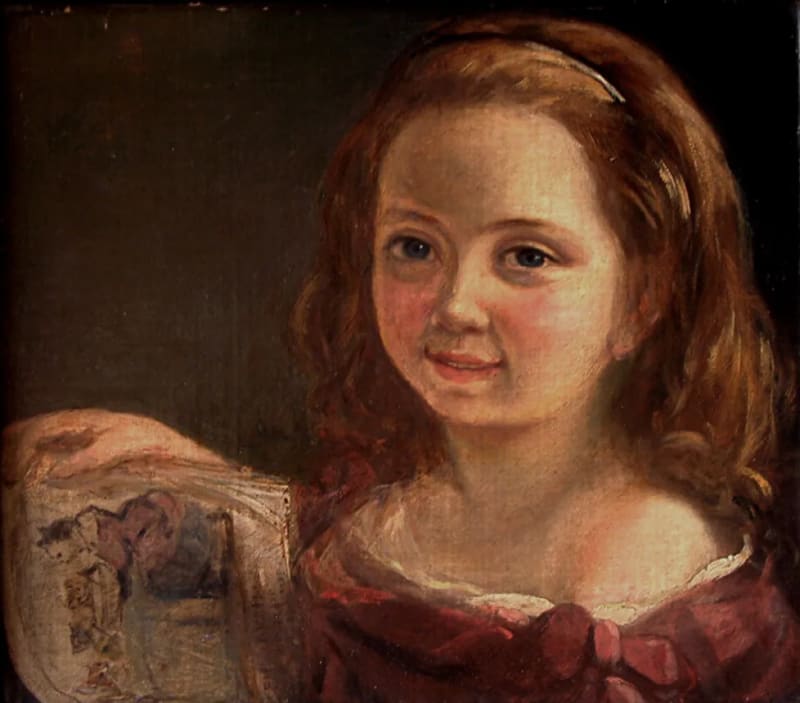
Precursors, fundamental diagrams, and conceptual representations that forged the vision of the Pioneer of Computational Theory on early programming and computational theory.
Fuente visual sujeta a disponibilidad del ecosistema: Wikimedia Commons bajo licencia CC BY-SA 4.0 o renderizado conceptual IA.
Table of Contents
- The Unsung Architects of Modern Technology
- Ada Lovelace: The First Programmer's Vision
- Nikola Tesla: Beyond the Current Wars
- Grace Hopper: Pioneering Software and Debugging
- Hedy Lamarr: From Hollywood to Frequency Hopping
- Why History Forgets: Factors in Recognition
- Their Enduring Legacy in the Digital Age
- Conclusion: Remembering the Foundations
The Unsung Architects of Modern Technology
Every significant technological leap is often attributed to a single inventor or a small group, yet the reality is far more complex. Innovation is a cumulative process, built upon the insights and efforts of countless individuals, many of whom never receive the recognition they deserve. These "forgotten" innovators often faced societal barriers, lack of funding, or simply the misfortune of being ahead of their time.
Their contributions, however, are indispensable. Without their foundational work, many of the celebrated inventions we take for granted today might never have materialized. Understanding their stories provides a more complete and accurate picture of technological evolution, highlighting the diverse intellectual currents that converge to create progress.
Ada Lovelace: The First Programmer's Vision
Augusta Ada King, Countess of Lovelace, often referred to as the Visionary of Algorithms, is widely recognized as the world's first computer programmer. Daughter of the poet Lord Byron, her mathematical talents were nurtured from a young age, leading her to a collaboration with Charles Babbage on his Analytical Engine in the mid-19th century.
While Babbage designed the machine, it was Lovelace who truly grasped its potential beyond mere calculation. She wrote detailed notes describing how the engine could go beyond arithmetic, envisioning it as a device capable of manipulating symbols and creating music or art, not just numbers. Her algorithms for the Analytical Engine are considered the first complete computer program, a remarkable feat given that the machine itself was never fully built in her lifetime.

The intricate dance of early mechanical computation and the abstract patterns of binary code, representing the profound influence of the Pioneer of Computational Theory.
Lovelace's insights into the non-numerical applications of computing were revolutionary, predicting a future where machines could process more than just arithmetic. Her work laid the theoretical groundwork for modern software development and artificial intelligence, showcasing a profound understanding of computational theory that was centuries ahead of its time. Despite her immense contribution, her name remained largely obscure for decades, only gaining widespread recognition in the late 20th century as the digital age truly blossomed.
Nikola Tesla: Beyond the Current Wars
Nikola Tesla, the Electric Visionary, is perhaps less "forgotten" than some, yet the full scope of his genius often remains overshadowed by the "War of Currents" with Thomas Edison. While his alternating current (AC) electrical system powers our homes and industries today, many of his other visionary inventions and theoretical contributions are less celebrated.
Tesla envisioned a world of wireless power transmission, remote control, and even global communication networks long before they became realities. His work on radio technology, X-rays, and even early robotics demonstrated a mind constantly pushing the boundaries of what was thought possible. He held hundreds of patents, many of which were foundational to later technological advancements.
His struggle for recognition and funding, coupled with his eccentric personality and focus on theoretical rather than commercial applications, often left him at a disadvantage. While Edison excelled at commercializing inventions, Tesla's grander, often unrealized, visions sometimes left him in the shadows. Nevertheless, his principles continue to inspire new generations of engineers and scientists, proving that his legacy extends far beyond the common narrative.
Grace Hopper: Pioneering Software and Debugging
Rear Admiral Grace Murray Hopper, the Compiler Architect, was a pioneering computer scientist and U.S. Navy officer. Her contributions to the development of programming languages and software were monumental, yet her name is not as universally recognized as some of her male counterparts. She is credited with popularizing the idea of machine-independent programming languages, leading to the development of COBOL, one of the first high-level programming languages.
Hopper's most famous contribution, however, might be the term "debugging." While working on the Mark II computer at Harvard University in 1947, her team discovered a moth trapped in a relay, causing a malfunction. She taped the moth into the logbook, coining the term "debugging" for fixing computer glitches. This anecdote perfectly encapsulates her practical approach to problem-solving in the nascent field of computing.

A symbolic representation of the intellectual journey and the profound theoretical work undertaken by the Visionary of Algorithms, shaping the future of technology.
Her vision for making computers more accessible through user-friendly programming languages transformed computing from a specialized domain for mathematicians and engineers into a tool for a broader audience. Her legacy is evident in every line of code written today, making her one of the most influential figures in the history of software development. Her work also highlights the continuous evolution of digital language and technology, constantly adapting to new paradigms.
Hedy Lamarr: From Hollywood to Frequency Hopping
Perhaps one of the most surprising entries on this list is Hedy Lamarr, the Frequency Hopping Inventor, a glamorous Hollywood actress of the 1930s and 40s. Beyond her silver screen fame, Lamarr possessed an inventive mind, driven by a desire to contribute to the Allied war effort during World War II.
In collaboration with composer George Antheil, she co-invented an early technique for spread spectrum communications and frequency hopping, intended to help guide torpedoes. This system used piano rolls to rapidly change the frequency of a radio signal, making it difficult for enemies to jam or detect. While their patent was granted in 1942, the technology was not widely adopted until decades later.
Lamarr's invention was a precursor to modern wireless technologies such as Bluetooth, Wi-Fi, and GPS. Her story is a powerful reminder that innovation can come from unexpected places and that talent often transcends conventional boundaries. It also underscores how concepts like Metaverso Propiedad Intelectual: Desafíos Legales Activos Digitales are rooted in the protection of novel ideas, regardless of the inventor's public persona.
Why History Forgets: Factors in Recognition
The reasons why certain innovators are forgotten or overlooked are multifaceted. Gender bias played a significant role, particularly for women like Lovelace, Hopper, and Lamarr, whose intellectual contributions were often dismissed or attributed to male colleagues. Societal norms and expectations of their time often prevented them from receiving the same opportunities or recognition as men.
Furthermore, the commercial viability and marketing of an invention heavily influence public perception. Innovators who lacked the business acumen or resources to promote their work often faded into obscurity, while those with strong commercial backing gained widespread fame. Tesla's story is a prime example of this dynamic, where brilliant ideas struggled against powerful corporate interests.
The timing of an invention also matters. If a technology is too far ahead of its time, the infrastructure or understanding necessary for its widespread adoption might not exist, leading to its initial neglect. It's a complex interplay of individual genius, social context, and economic forces that shapes historical memory. This often reflects a deeper societal transformation, akin to the profound changes described in the astrological concept of the 8th House, dealing with shared resources and deep transformations.
Their Enduring Legacy in the Digital Age
Despite the historical oversight, the legacies of these forgotten technological innovators are undeniably present in our daily lives. Ada Lovelace's conceptual framework for algorithms underpins every piece of software, every app, and every artificial intelligence system we use. Her vision of a machine that could do more than just calculate was a profound prediction of modern computing.
Nikola Tesla's AC system remains the backbone of our global power grids, and his pioneering work in radio and remote control paved the way for countless wireless innovations. Grace Hopper's contributions to compilers and programming languages made computers accessible and usable for a vast array of applications, democratizing technology in a way that continues to expand.
Hedy Lamarr's frequency hopping patent, initially overlooked, became a cornerstone for spread spectrum technology, without which modern Wi-Fi, Bluetooth, and GPS would not exist. These individuals, whether recognized in their time or decades later, collectively shaped the technological landscape, providing the fundamental building blocks for the digital age. Their stories remind us that the history of fundamental systems, like the alphabet, is often complex and built by many hands.
Conclusion: Remembering the Foundations
The journey of technological innovation is a continuous relay race, with each generation building upon the insights of the last. It is imperative to remember and celebrate all those who contributed, not just the most famous. By acknowledging the forgotten technological innovators, we gain a more nuanced and appreciative understanding of how our present was forged.
Their legacies serve as a powerful testament to human ingenuity and perseverance, inspiring us to look beyond the obvious heroes and seek out the hidden figures whose brilliance illuminated the path forward. Their stories are not just historical footnotes; they are vital chapters in the ongoing narrative of human progress, reminding us that true innovation often thrives in unexpected places and under challenging circumstances.
Búsquedas Relacionadas y Temas de Interés
- Biometría y Seguridad Urbana: Avances y Desafíos
- Realidad Virtual Terapéutica: Innovación en Salud Mental
- IA Cuántica para Monitoreo Climático y Sostenibilidad
- Historias de Éxito Empresarial: De la Idea al Impacto Global
- Fases Lunares y Arquetipos: Conexiones Astrales y Emocionales
- Querubines y Serafines: Ángeles Guardianes y su Significado
Source: Hybrid content assisted by AI and human editorial supervision.


Comentarios