
Neuro-rights Mental Privacy: Protecting Consciousness Digital Era
The rapid advancements in neuroscience and artificial intelligence (AI) are ushering in an era where the human mind, once considered the ultimate private sanctuary, is becoming increasingly accessible and manipulable. This unprecedented convergence of technology and biology has given rise to a critical new frontier in human rights: neuro-rights and mental privacy. These emerging concepts aim to protect the fundamental aspects of our cognitive existence, ensuring that individuals retain autonomy over their thoughts, emotions, and personal identity in an increasingly digital and interconnected world.
As brain-computer interfaces (BCIs) and neuro-monitoring devices become more sophisticated and widespread, the potential for both profound benefits and severe ethical challenges grows exponentially. From medical applications that restore lost senses to consumer devices that enhance cognitive abilities, neurotechnology promises to redefine human capabilities. However, without robust legal and ethical frameworks, these innovations could also lead to unprecedented forms of surveillance, manipulation, and discrimination, fundamentally altering what it means to be human.
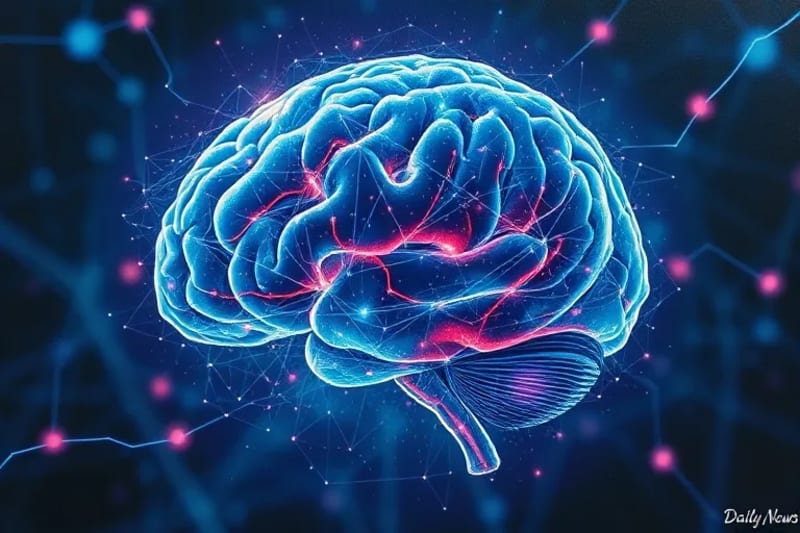 Precursors, foundational diagrams, and conceptual representations that forged the vision of neuro-rights regarding mental privacy.
Visual source subject to ecosystem availability: Wikimedia Commons under license CC BY-SA 4.0 or conceptual AI rendering.
This article delves into the core tenets of neuro-rights, exploring the imperative need for mental privacy, cognitive liberty, and psychological continuity in the digital age. We will examine the technological drivers behind this movement, the ethical dilemmas they pose, and the nascent legal and policy responses emerging globally to safeguard our innermost selves. Understanding these concepts is not merely an academic exercise; it is a crucial step towards shaping a future where technological progress aligns with human dignity and autonomy.
Table of Contents
- The Rise of Neurotechnology: Unveiling the Mind's Frontier
- Defining Neuro-rights: A New Framework for Human Dignity
- Mental Privacy: The Core of Neuro-rights
- Ethical and Legal Challenges in the Neuro-Digital Era
- Global Responses and Emerging Frameworks
- Broader Implications for Society and the Future of Humanity
The Rise of Neurotechnology: Unveiling the Mind's Frontier
Neurotechnology encompasses a broad range of devices and methods that interact with the nervous system, particularly the brain. These technologies can either monitor brain activity (neuro-monitoring) or stimulate it (neuro-modulation), offering unprecedented insights into and influence over cognitive processes. From medical diagnostics and therapeutic interventions to consumer applications for performance enhancement, the scope of neurotechnology is rapidly expanding.
Brain-Computer Interfaces (BCIs) are at the forefront of this revolution. These devices translate brain signals into commands for external devices or, conversely, translate external information into brain signals. While initially developed for individuals with severe motor impairments, enabling them to control prosthetics or communicate through thought, BCIs are now moving into mainstream consumer markets. Companies are developing wearables that promise to improve focus, enhance memory, or even facilitate direct brain-to-brain communication.
The implications of these technologies are profound. On one hand, they offer immense potential for human betterment, addressing neurological disorders, enhancing learning, and fostering new forms of interaction. On the other hand, they introduce novel risks related to data security, privacy, and personal autonomy. As neuro-data—information about our brain activity—becomes a valuable commodity, the need for robust protections becomes critically apparent. This is not unlike the challenges faced in Advanced Biometrics: Security and Privacy, where unique biological identifiers require stringent safeguards.
Defining Neuro-rights: A New Framework for Human Dignity
Neuro-rights are a set of fundamental human rights designed to protect the human brain and its activity in the context of neurotechnology. They represent an ethical and legal response to the potential threats posed by these emerging technologies, aiming to preserve human dignity, autonomy, and mental integrity. While the exact scope and definition are still evolving, several core principles have gained prominence:
- Right to Mental Privacy: This ensures that individuals have control over their brain data and the thoughts, emotions, and memories derived from it. It protects against unauthorized access, collection, use, or disclosure of neural information.
- Right to Cognitive Liberty: This guarantees individuals the freedom to make their own choices about their mental processes and the use of neurotechnology. It includes the right to enhance one's cognitive abilities, but also the right to refuse such enhancements or interventions.
- Right to Mental Integrity: This protects individuals from unauthorized alteration or manipulation of their neural activity. It safeguards against technologies that could involuntarily change a person's thoughts, emotions, or personality.
- Right to Psychological Continuity: This ensures the protection of an individual's personal identity and sense of self from external alteration by neurotechnologies. It addresses concerns about technologies that could disrupt or fragment one's psychological narrative over time.
- Protection from Algorithmic Bias: As AI algorithms are increasingly used to interpret neuro-data, there's a need to ensure these algorithms are free from biases that could lead to discrimination or unfair treatment based on neural patterns.
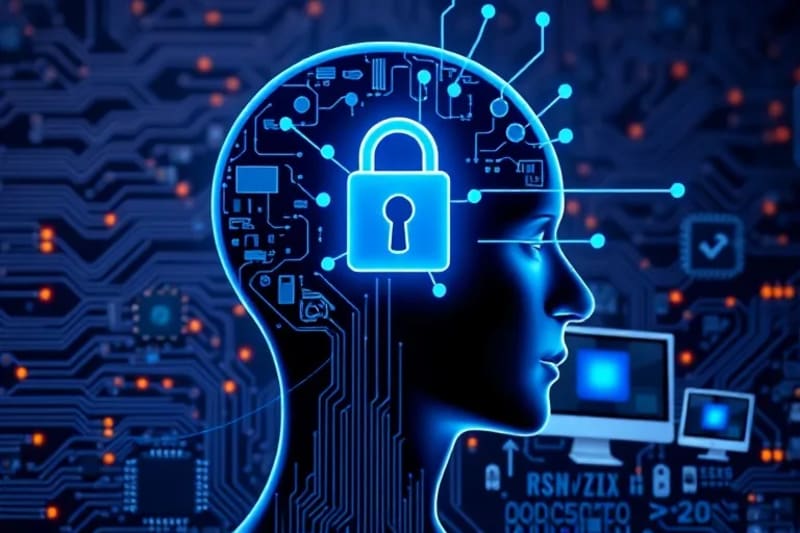 Conceptual illustration of mental privacy in the digital age.
These principles are crucial for navigating a future where the lines between human thought and digital information blur. They aim to prevent a scenario where our innermost experiences become commodities or tools for external control, ensuring that the essence of our individuality remains protected.
Mental Privacy: The Core of Neuro-rights
Among the neuro-rights, mental privacy stands out as a foundational concern. It addresses the unique vulnerability of brain data, which can reveal highly sensitive information about an individual's thoughts, intentions, emotions, and even predispositions. Unlike traditional data, neuro-data offers a direct window into the subjective experience of a person, raising profound questions about consent, ownership, and control.
The challenge lies in the nature of neuro-data itself. It is often generated continuously and passively, making it difficult for individuals to fully comprehend what information is being collected and how it might be used. Moreover, the interpretation of brain signals can be complex, and even seemingly innocuous data points could, when aggregated and analyzed by advanced AI, reveal deeply personal insights. This is a challenge that extends beyond the individual, impacting societal norms and expectations regarding personal boundaries.
Protecting mental privacy requires a multi-faceted approach, encompassing robust data security measures, clear legal definitions of neuro-data ownership, and ethical guidelines for its collection and use. It also necessitates a public discourse on the societal implications of widespread neuro-monitoring, ensuring that individuals are informed and empowered to make choices about their cognitive data. The need for strong protective measures is akin to the ongoing efforts in Post-Quantum Cryptography: Protecting Data from Future Threats, where anticipation of advanced computational power drives the development of new security paradigms.
Ethical and Legal Challenges in the Neuro-Digital Era
The emergence of neurotechnology and the concept of neuro-rights bring forth a host of complex ethical and legal challenges that existing frameworks are ill-equipped to handle. These challenges span various domains, from individual autonomy to broader societal implications.
One primary concern is the issue of consent. Can individuals truly provide informed consent for the collection and use of their brain data, especially when the implications of such data are still being understood? The dynamic and often unconscious nature of brain activity makes traditional consent models problematic. Furthermore, the commercialization of neurotechnology raises questions about data ownership and the potential for companies to exploit neural information for profit, influencing consumer behavior or even mental states.
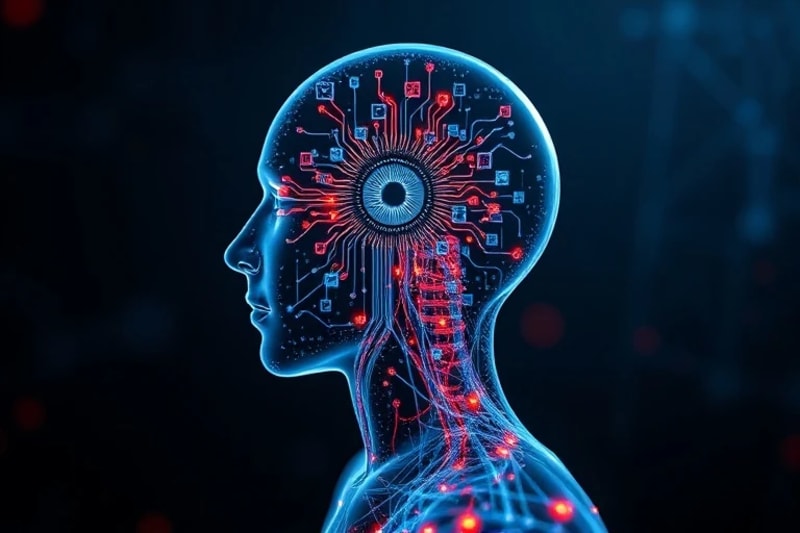 A conceptual representation of human consciousness and AI observation.
Another significant challenge is the potential for discrimination. If neuro-data can reveal predispositions to certain conditions or behaviors, could this information be used by employers, insurance companies, or even legal systems to discriminate against individuals? The concept of "brain-reading" in legal contexts, for instance, raises serious questions about self-incrimination and the reliability of neuro-evidence.
Moreover, the line between therapeutic intervention and enhancement becomes increasingly blurred. While treating neurological disorders is widely accepted, the use of neurotechnology to enhance cognitive abilities in healthy individuals presents ethical dilemmas regarding fairness, access, and the very definition of human normalcy. These considerations are vital as we navigate the evolving landscape of digital interaction, much like understanding the new terminologies in a Metaverse Dictionary: Guide for Digital Navigators.
Global Responses and Emerging Frameworks
Recognizing the urgency of these issues, several countries and international organizations have begun to explore legal and ethical frameworks for neuro-rights. Chile has emerged as a pioneer in this field, becoming the first country to amend its constitution to protect neuro-rights. In October 2021, Chile enacted a constitutional reform that explicitly safeguards mental integrity and the right to personal identity, ensuring that neurotechnologies are developed and used in a way that respects human dignity.
Artículo 19. La Constitución asegura a todas las personas:
1º El derecho a la vida y a la integridad física y psíquica de la persona.
La ley protegerá la actividad cerebral, así como la información proveniente de ella, de toda manipulación o intervención no consentida, y garantizará la identidad individual y la autonomía de la voluntad ante el avance de las neurotecnologías.
Beyond Chile, organizations like UNESCO have also taken a proactive stance. UNESCO's International Bioethics Committee (IBC) has published reports and recommendations on the ethical implications of neurotechnology, advocating for the development of international guidelines and legal instruments to protect neuro-rights. These efforts aim to foster a global consensus on how to balance innovation with ethical responsibility, ensuring that neurotechnological progress benefits humanity without compromising its core values.
The European Union is also considering how existing data protection regulations, such as GDPR, might apply to neuro-data, and whether new legislation is needed. The development of ethical AI guidelines, which frequently touch upon issues of human autonomy and bias, also provides a foundation for addressing neuro-specific concerns. These global discussions highlight the shared understanding that neuro-rights are not just a national issue but a universal challenge requiring coordinated international action. The ethical considerations here are as complex as those in Metaverso Propiedad Intelectual: Desafíos Legales Activos Digitales, where groundbreaking technology must be guided by strong ethical frameworks.
Broader Implications for Society and the Future of Humanity
The protection of neuro-rights and mental privacy has far-reaching implications for various sectors of society and for the very future of human existence. In healthcare, neurotechnology offers transformative potential for treating neurological and psychiatric conditions. However, it also raises questions about patient data privacy, the right to refuse treatment, and the ethical boundaries of brain interventions.
In education, neuro-enhancement technologies could create new disparities, where access to cognitive advantages could exacerbate existing inequalities. Similarly, in employment, the monitoring of brain activity for productivity or emotional states could lead to new forms of worker surveillance and exploitation, eroding mental integrity and cognitive liberty. The military and security sectors are also exploring neurotechnology for various applications, raising concerns about autonomous weapon systems controlled by thought and the ethical use of neuro-interrogation techniques.
Ultimately, neuro-rights compel us to confront fundamental questions about what it means to be human in an age where our minds can be augmented, monitored, and potentially manipulated. They challenge us to define the boundaries of our inner world and to ensure that technological progress serves to enhance, rather than diminish, human dignity and autonomy. As we continue to integrate advanced technologies into our lives, understanding and upholding these rights will be paramount to safeguarding our collective future.
The ongoing development of neuro-rights frameworks is a testament to humanity's commitment to adapting its ethical and legal systems to the challenges of scientific progress. It reflects a proactive stance in anticipation of technologies that could redefine our understanding of self, consciousness, and freedom. By engaging in robust public debate, fostering interdisciplinary collaboration, and enacting forward-thinking legislation, we can ensure that the digital era, with all its neurotechnological marvels, remains a realm where human consciousness is protected and revered.
The journey to fully integrate neuro-rights into our legal and ethical landscape is just beginning. It requires continuous vigilance, adaptation, and a deep commitment to the principles of human rights. As neurotechnology continues to evolve, so too must our understanding and protection of the mind. The future of mental privacy and cognitive liberty depends on the actions we take today to establish robust safeguards for the most intimate aspect of our being.
Explore Further: Related Insights
-
Commercial Commission Contract: Role and Responsibilities
Understand the legal framework governing commercial agreements and agent responsibilities in business transactions.
-
Yoga Pilates: Physical and Mental Benefits for Everyone
Discover the combined advantages of Yoga and Pilates for holistic well-being, enhancing both body and mind.
-
Neuroeducation: Brain Science Transforms Teaching Learning
Explore how neuroscience principles are revolutionizing educational practices to optimize learning processes.
-
Industrial Cybersecurity Augmented Reality Future Factory
Delve into the integration of cybersecurity and augmented reality in the factories of tomorrow, ensuring secure and efficient operations.
-
Index Funds vs. ETFs: Long-Term Investor Strategy
Compare index funds and ETFs to determine the best investment strategies for achieving long-term financial goals.
-
Consumer Rights Metaverse: Purchases, Virtual Properties Legal Aspects
Navigate the complex legal landscape of consumer rights within the metaverse, covering virtual purchases and property ownership.
-
Mexican Commercial Code: Book One and Merchants
A detailed look at the initial sections of Mexico's Commercial Code, focusing on fundamental principles and merchant regulations.
-
Airport Bidding: 3,000 Million Euros Asset Stake
Analyze the financial and strategic aspects of large-scale airport bids and asset acquisitions.
-
Blockchain Decentralized Governance: Transformative Social Impact
Discover how blockchain technology is enabling new models of decentralized governance and its potential social transformations.
-
Colombian Commercial Code: Dissolution of Societies Art. 218-224
An in-depth analysis of articles 218-224 of the Colombian Commercial Code, detailing the dissolution of companies.
-
Sustainable Social Entrepreneurship: Global Impact Strategies
Explore innovative strategies for social entrepreneurship that combine business models with sustainable global impact.
-
Vedic Ascendant Dharma Karmic: Life Purpose Manifestation
Uncover the profound connections between Vedic astrology, life purpose, and karmic manifestation.
-
Major Astrology Aspects: Conjunctions, Oppositions, Trines
A comprehensive guide to understanding the major astrological aspects and their influence on personality and events.
-
Chiron Transits: Karmic Healing, Astrological Life Purpose
Explore the significance of Chiron transits in astrology, focusing on karmic healing and discovering one's life purpose.
-
Luminous Mysteries Rosary: Complete Guide to Prayer and Reflection
A detailed guide to praying the Luminous Mysteries of the Rosary, offering insights for spiritual reflection.
-
Guided Forgiveness Meditation: Releasing Emotional Burdens
Experience a guided meditation focused on forgiveness, designed to help individuals release emotional burdens and find inner peace.
-
Prayer for Liberation from Fear: Trusting Providence
A powerful prayer for overcoming fear and fostering trust in divine providence during challenging times.
-
Augmented Reality Astrology: Natal Chart 3D Visualization
Explore the innovative application of augmented reality to visualize and interpret natal charts in 3D.
-
Snake 2015 Travel: Astrological Insights & Forecast
Discover astrological insights and travel forecasts specifically for those born under the Chinese zodiac sign of the Snake in 2015.
-
Dream Interpretation Unlocking Subconscious Messages: Complete Guide
A comprehensive guide to understanding and interpreting dreams, unlocking the hidden messages of the subconscious mind.
Source: Hybrid content assisted by AI and human editorial supervision.


Comentarios