
Industrial Cybersecurity Augmented Reality Future Factory
The manufacturing landscape is undergoing a profound transformation, driven by the convergence of advanced digital technologies. Industrial Cybersecurity and Augmented Reality (AR) stand at the forefront of this evolution, promising to redefine operational efficiency, safety, and resilience within the factory of the future. This synergy is not merely about adopting new tools; it represents a fundamental shift in how industries protect their assets and empower their workforce.
As factories become increasingly interconnected and data-driven, the need for robust cybersecurity measures becomes paramount. Simultaneously, Augmented Reality offers innovative ways to visualize complex data, streamline maintenance, and enhance human-machine interaction. Understanding the intricate relationship between these two fields is crucial for any organization aiming to thrive in the era of Industry 4.0.
The Dawn of Smart Manufacturing
The concept of the "smart factory" or Industry 4.0 envisions fully integrated, collaborative manufacturing systems that respond in real-time to changing demands and conditions. This paradigm shift leverages technologies such as the Internet of Things (IoT), Artificial Intelligence (AI), big data analytics, and cloud computing. These innovations enable unprecedented levels of automation, predictive maintenance, and optimized resource allocation.
However, this interconnectedness also introduces new vulnerabilities and complexities. Traditional operational technology (OT) systems, once isolated, are now exposed to the same cyber threats that plague information technology (IT) networks. The integration of legacy systems with modern digital infrastructure creates a vast attack surface that requires specialized protection strategies.
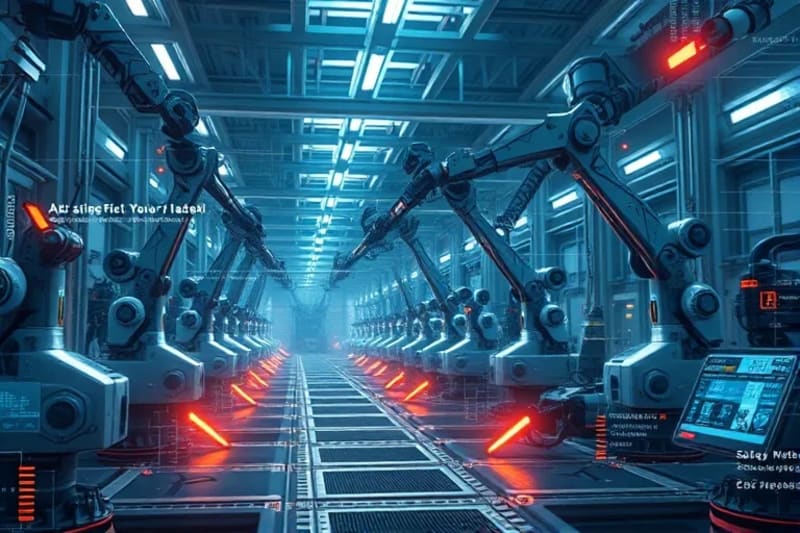 A futuristic factory floor showcasing the seamless integration of robotic automation and real-time augmented reality data visualization.
The drive towards smart manufacturing is fueled by the promise of increased productivity, reduced downtime, and enhanced quality control. Companies are investing heavily in digital transformation initiatives to gain a competitive edge. This digital evolution necessitates a proactive approach to security, ensuring that the benefits of innovation are not undermined by potential cyber risks.
Industrial Cybersecurity: The Digital Shield
Industrial Cybersecurity is a specialized field focused on protecting critical infrastructure and industrial control systems (ICS) from cyber threats. Unlike traditional IT security, which prioritizes confidentiality, industrial cybersecurity often places a higher emphasis on availability and integrity. A cyberattack on an industrial system can lead to physical damage, production halts, environmental disasters, and even loss of life.
The threats are diverse and constantly evolving, ranging from ransomware and malware to sophisticated state-sponsored attacks. These attacks can target various components, including programmable logic controllers (PLCs), supervisory control and data acquisition (SCADA) systems, and distributed control systems (DCS). A robust cybersecurity strategy for the industrial sector must encompass multiple layers of defense, from network segmentation to employee training.
Key elements of an effective industrial cybersecurity framework include continuous monitoring, threat intelligence, incident response planning, and regular vulnerability assessments. Organizations must also adhere to industry-specific standards and regulations, such as ISA/IEC 62443, to ensure compliance and best practices. The legal implications of AI in public procurement, for instance, highlight the broader need for legal and ethical considerations in all technological deployments.
The convergence of IT and OT networks further complicates security efforts, requiring a holistic approach that bridges these historically separate domains. This integration demands collaboration between IT and OT teams, a shared understanding of risks, and unified security policies. Without a strong digital shield, the smart factory remains vulnerable to disruptive and potentially catastrophic cyber incidents.
Augmented Reality: Bridging the Physical and Digital
Augmented Reality (AR) technology superimposes digital information onto the real world, enhancing a user's perception and interaction with their environment. In industrial settings, AR applications can provide workers with real-time data, interactive instructions, and remote assistance, all within their field of view. This capability significantly improves efficiency, reduces errors, and accelerates training processes.
For example, maintenance technicians can use AR glasses to see virtual overlays of machine schematics, sensor readings, or step-by-step repair guides directly on the equipment they are working on. This eliminates the need for paper manuals and allows for faster, more accurate diagnostics and repairs. AR also facilitates remote collaboration, enabling expert technicians to guide on-site personnel from anywhere in the world.
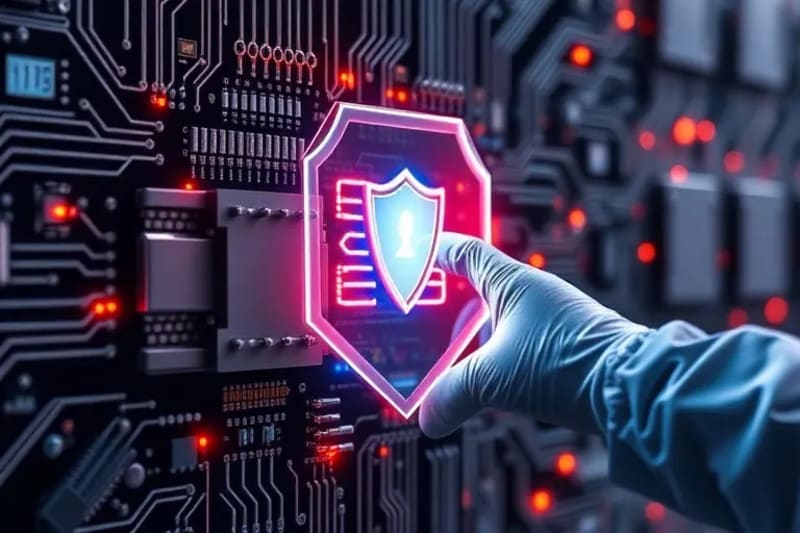 A conceptual visualization of robust cybersecurity measures safeguarding interconnected industrial systems.
The applications of AR extend beyond maintenance to areas such as quality control, assembly, and training. Workers can receive visual cues for correct part placement, inspect products against digital models, or undergo immersive training simulations without risking real equipment. This technology fundamentally changes how human operators interact with complex machinery and processes, making operations more intuitive and less prone to human error.
The integration of AR into industrial workflows represents a significant leap towards optimizing human potential within automated environments. It empowers workers with immediate access to critical information, transforming them into "connected workers" who can perform tasks with greater precision and confidence. This technological advancement is a cornerstone of the smart factory's operational model.
Synergies: AR and Cybersecurity in Action
The true power of Industrial Cybersecurity and Augmented Reality emerges when they are integrated. AR can serve as a critical tool for enhancing cybersecurity awareness and response within industrial environments. Imagine an operator wearing AR glasses who receives an immediate visual alert overlaid on a piece of equipment that is experiencing a cyber anomaly.
This visual cue, combined with real-time data about the nature of the threat, can enable a much faster and more informed response than traditional alarm systems. AR can display the affected network segments, potential attack vectors, and even recommended mitigation steps directly in the operator's field of view. This immediate contextual information is invaluable in time-sensitive incident response scenarios.
Furthermore, AR can be used to visualize complex cybersecurity data in an intuitive manner. Security analysts could use AR to explore 3D representations of their network topology, identify vulnerable points, and track the spread of an attack in real-time. This immersive data visualization can reveal patterns and insights that might be missed on traditional 2D screens, enhancing threat detection and analysis capabilities.
For example, in a scenario where a critical system is under attack, an AR interface could highlight the compromised components, display the origin of the attack, and suggest immediate isolation procedures. This rapid, visually-driven response can significantly reduce the impact of a cyber incident. Such advanced applications are transforming the field of blockchain smart contracts, where secure and transparent interactions are paramount.
Conversely, cybersecurity is essential for the secure deployment and operation of AR systems themselves. AR devices often collect sensitive operational data and connect to critical networks, making them potential targets for cyberattacks. Protecting these devices and the data they handle is crucial to prevent unauthorized access, data manipulation, or disruption of AR-enhanced workflows. This includes securing the AR hardware, software, and the communication channels they utilize.
Challenges and Future Outlook
Despite the immense potential, the integration of Industrial Cybersecurity and Augmented Reality faces several challenges. One significant hurdle is the inherent complexity of integrating diverse systems, including legacy OT, modern IT, and emerging AR platforms. Ensuring interoperability and seamless data flow while maintaining robust security is a monumental task.
Another challenge lies in the human element. Workers need adequate training to effectively use AR tools and understand their role in maintaining cybersecurity protocols. Resistance to new technologies and a lack of digital literacy can hinder adoption and compromise security. Therefore, comprehensive training programs and change management strategies are vital for successful implementation.
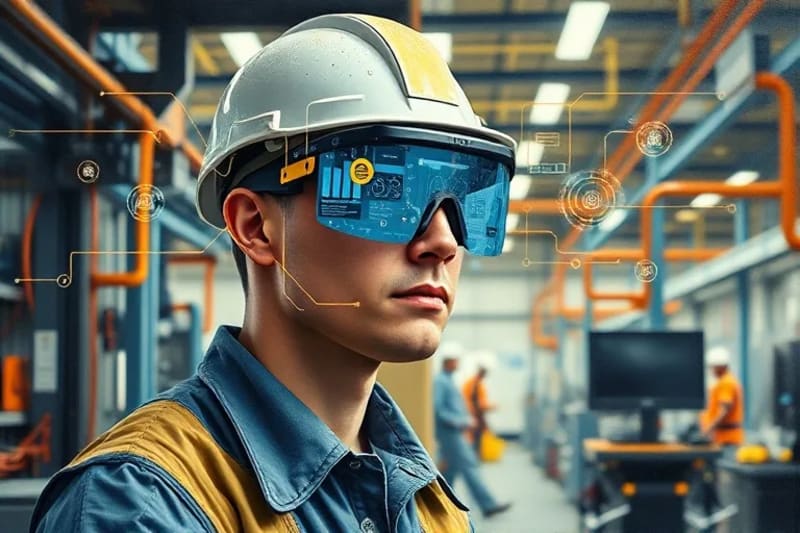 A modern factory worker utilizing augmented reality to visualize real-time data and instructions for equipment maintenance.
Data privacy and ethical considerations also come into play. AR systems can collect vast amounts of data about worker performance and operational processes. Ensuring this data is handled securely and ethically, in compliance with regulations, is critical. The potential for misuse or unauthorized access to sensitive operational insights must be carefully addressed through strong governance and encryption.
Looking ahead, the future of the factory will undoubtedly be shaped by the continued advancement and integration of these technologies. As AR devices become more sophisticated and cybersecurity solutions more intelligent, the smart factory will become even more resilient, efficient, and adaptive. The ongoing research into DevOps multicloud strategies will also play a role in securing these complex, distributed environments.
The convergence of Industrial Cybersecurity and Augmented Reality is not just a technological trend; it's a strategic imperative for modern manufacturing. By embracing these innovations responsibly and proactively addressing their associated challenges, industries can build factories that are not only smarter and more productive but also inherently secure against the threats of the digital age. This dual approach ensures that the factory of the future is robust, intelligent, and protected.
Explore More Insights
- Michael Jackson Music Social Change: Deep Thematic Analysis: Dive into the King of Pop's influence.
- Driver's Licenses in Latin America: Legal Framework: A comprehensive guide to driving regulations.
- Neuroscience of Happiness: How the Brain Seeks Well-being: Explore the biological basis of joy.
- NGOs Humanitarian Crisis: Global Challenges Achievements: Learn about the role of NGOs in global crises.
- Globalization Economic Inequality: Deep Impact Analysis: An in-depth look at global economic disparities.
- Blockchain Generative Art: Intellectual Property in AI Era: The intersection of art, technology, and law.
- Graphic Design Evolution: Typography Modern Digital Art: Tracing the journey of visual communication.
- French Alphabet: Structure, Pronunciation, History: A guide to the fundamentals of French.
- Colombian Commercial Code: Air Transport Articles 1874-1876: Legal aspects of commercial air transport.
- Colombian Commercial Code Pledge: Articles 1204-1206 Explained: Detailed analysis of pledge regulations.
- Metaverse Legal Jurisdiction: Virtual World Disputes: Navigating the legal challenges of virtual realities.
- Abazón: Anatomy, Function, Animal Adaptations: Exploring unique biological features.
Related Topics Across Our Network
- Capricorn Love: Stability, Commitment, Lasting Building (AstroFuturo): Astrological insights into relationships.
- Chinese Horoscope Compatibility: Zodiacal Affinity Guide (AstroFuturo): Discover your compatibility.
- Angelical Codes 11:11 Numeric Sequences: Life Purpose (AstroFuturo): Unravel the mysteries of numerology.
- Theological Depth 15 Promises Rosary: Detailed Analysis (Profecías de la Virgen): Spiritual reflections and teachings.
- Saints Relics: History, Veneration, Christian Miracles (Profecías de la Virgen): Exploring sacred artifacts.
- Eucharistic Prayers Guide Deep Adoration Communion (Profecías de la Virgen): A guide to spiritual practices.
- Elemental Compatibility: Rat Ox Fire Water Dynamics (StarPluto): Astrological elements and their interactions.
- Biophilic Manifestation Nature's Blueprint: Harmonizing Intentions (StarPluto): Connecting with nature for personal growth.
- 11th House Astrology: Friendships, Hopes, Social Circles (StarPluto): Understanding your astrological chart.
Source: Hybrid content assisted by AI and human editorial supervision.


Comentarios