
Circular Business Models Regenerative Startups Green Economy
Circular Business Models: Regenerative Startups and the Green Economy
The global economy is at a critical juncture, facing unprecedented environmental challenges that demand a fundamental shift in how businesses operate. Traditional linear models, characterized by "take-make-dispose" approaches, have led to resource depletion, excessive waste generation, and significant ecological degradation. In response, a transformative paradigm is gaining momentum: the circular economy, championed by innovative regenerative startups and integrated into the broader concept of the green economy.
This article delves into the intricacies of circular business models, exploring how regenerative startups are redefining value creation, and examining their crucial role in fostering a sustainable and resilient green economy. We will uncover the core principles, benefits, challenges, and practical applications that drive this essential evolution in commerce and industry.
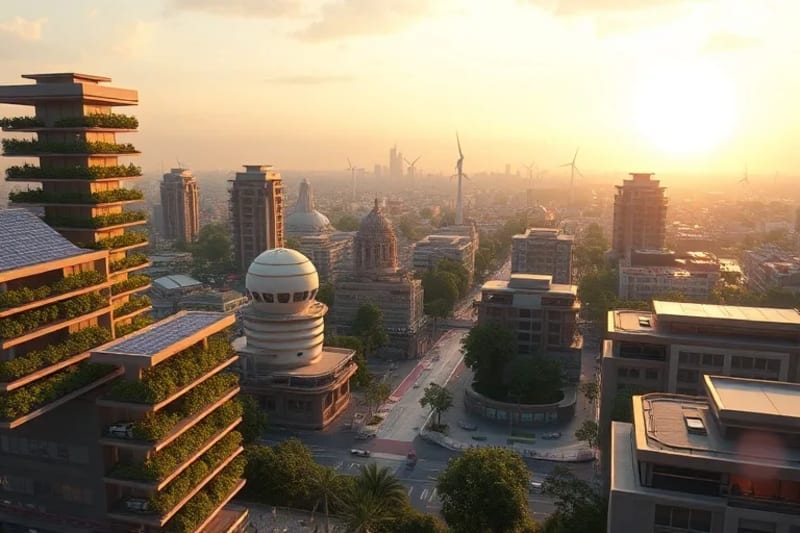
Precursors to sustainable urban development, conceptual diagrams, and visionary representations that shaped the understanding of circularity in modern economies.
Fuente visual sujeta a disponibilidad del ecosistema: Wikimedia Commons bajo licencia CC BY-SA 4.0 o renderizado conceptual IA.
Table of Contents
- Understanding the Circular Economy
- The Rise of Regenerative Startups
- Integrating with the Green Economy
- Key Principles and Benefits
- Challenges and Future Outlook
- Real-World Examples and Innovation
Understanding the Circular Economy
The circular economy represents a systemic approach to economic development designed to benefit businesses, society, and the environment. Unlike the linear economy, which follows a "take-make-dispose" pattern, a circular economy aims to keep resources in use for as long as possible, extract the maximum value from them whilst in use, then recover and regenerate products and materials at the end of each service life.
This model is built on three core principles: designing out waste and pollution, keeping products and materials in use, and regenerating natural systems. It emphasizes durability, reuse, repair, remanufacturing, and recycling, moving away from the notion of waste altogether. By embracing these principles, businesses can significantly reduce their environmental footprint while simultaneously creating new economic opportunities.
The Ellen MacArthur Foundation, a leading proponent of the circular economy, highlights its potential to decouple economic growth from finite resource consumption. This decoupling is crucial for long-term sustainability, offering a pathway to economic prosperity that respects planetary boundaries. It involves a fundamental rethinking of product design, business models, and consumption patterns.
The Rise of Regenerative Startups
Regenerative startups are at the forefront of implementing circular economy principles. These companies are not just minimizing harm; they are actively working to restore and replenish natural systems, going beyond sustainability to achieve a net positive impact. Their business models are inherently designed to create value while enhancing ecological and social well-being.
These innovative ventures often leverage cutting-edge technologies and creative approaches to address systemic issues. They might focus on developing products from waste materials, offering product-as-a-service models to extend product lifespans, or creating closed-loop supply chains. Their agility and willingness to challenge conventional practices make them powerful agents of change.
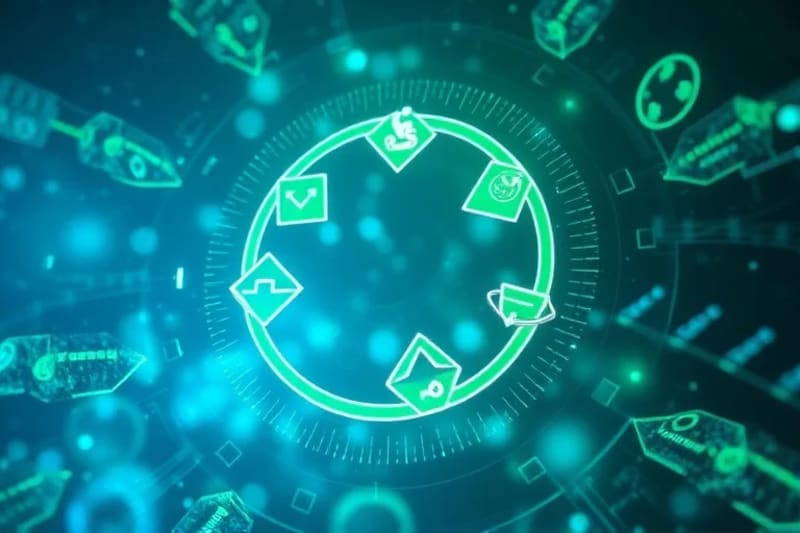
A visual representation of the interconnected processes that define a circular economy model.
For instance, a regenerative startup might specialize in investing in technological startups that develop advanced recycling techniques or bio-based materials. Others might focus on creating platforms for sharing and repairing goods, thereby reducing the need for new production. Their impact extends beyond their immediate products or services, inspiring broader industry shifts.
The concept of regenerative business aligns closely with the idea of a gratitude economy, where value is not solely measured in monetary terms but also in positive social and environmental contributions. These startups often embed social impact and ethical considerations directly into their core operations, fostering a more holistic approach to business success.
Integrating with the Green Economy
The green economy is a broader concept that encompasses economic activities focused on reducing environmental risks and ecological scarcities, and on achieving sustainable development without degrading the environment. It is characterized by low carbon emissions, resource efficiency, and social inclusiveness. Circular business models and regenerative startups are fundamental pillars of this overarching framework.
By adopting circular principles, businesses contribute directly to the goals of the green economy, such as minimizing pollution, conserving natural resources, and promoting renewable energy. Regenerative startups, with their inherent focus on restoration and positive impact, often act as accelerators for green economic transitions, demonstrating viable and profitable pathways to sustainability.
The integration of these models helps to create a resilient economic system less reliant on volatile raw material markets and more capable of absorbing environmental shocks. It fosters innovation in areas like renewable energy, sustainable agriculture, and eco-friendly manufacturing, driving job creation in green sectors. This synergy is vital for building economies that thrive within ecological limits.
Key Principles and Benefits
The successful implementation of circular business models by regenerative startups hinges on several key principles:
- Design for Longevity and Disassembly: Products are designed to be durable, easily repaired, upgraded, and eventually disassembled for material recovery.
- Resource Optimization: Maximizing the utility of resources through sharing, leasing, repairing, and remanufacturing.
- Waste as a Resource: Viewing waste not as an end product, but as a valuable input for new production cycles.
- Renewable Energy Integration: Powering operations with renewable energy sources to minimize carbon footprint.
- System Thinking: Considering the entire lifecycle of products and materials, and their interconnectedness within ecological and social systems.
The benefits derived from these models are multifaceted, extending beyond environmental protection:
| Benefit Category | Description |
|---|---|
| Economic Resilience | Reduced reliance on virgin raw materials, mitigating supply chain risks and price volatility. Creation of new revenue streams through service models (e.g., product-as-a-service). |
| Environmental Impact | Significant reduction in waste generation, greenhouse gas emissions, and resource depletion. Regeneration of natural capital. |
| Innovation & Competitiveness | Stimulates creativity in product design, process optimization, and business model development. Enhances brand reputation and attracts environmentally conscious consumers. |
| Social Benefits | Job creation in repair, remanufacturing, and recycling sectors. Improved public health due to reduced pollution. Enhanced community engagement. |
Challenges and Future Outlook
Despite the compelling advantages, the transition to a fully circular and regenerative economy faces several challenges. These include the need for significant upfront investment in new infrastructure, changes in consumer behavior, regulatory frameworks that still favor linear models, and the complexity of establishing robust reverse logistics and material recovery systems.

Conceptual representation illustrating the harmonious integration of ecological principles with economic structures.
Overcoming these hurdles requires concerted efforts from governments, businesses, and consumers. Policy support, such as extended producer responsibility schemes and incentives for circular innovation, is crucial. Furthermore, advancements in mixed reality applications and IoT cybersecurity for smart homes can play a role in optimizing resource management and enabling more efficient circular systems.
The future outlook, however, is optimistic. Growing environmental awareness, coupled with technological advancements and increasing investor interest in sustainable ventures, is propelling the circular economy forward. Regenerative startups will continue to be vital innovators, pushing boundaries and demonstrating the economic viability of ecological restoration.
As more businesses adopt these models, and as consumers demand more sustainable products and services, the transition to a truly green and regenerative economy will accelerate, promising a more equitable and prosperous future for all.
Real-World Examples and Innovation
Numerous companies are already demonstrating the power of circular business models. For instance, companies like Patagonia have long championed repair and reuse programs, offering customers options to mend their clothing rather than replace it, and even buying back used items. This extends product life and reduces waste.
Another compelling example comes from the tech sector, where some manufacturers are designing modular smartphones that allow users to easily replace components like batteries or cameras, thereby extending the device's lifespan and reducing electronic waste. This shifts the focus from planned obsolescence to product longevity.
In the packaging industry, startups are developing innovative biodegradable materials or creating closed-loop systems for reusable containers, significantly reducing single-use plastics. These examples showcase how diverse sectors can embrace circularity, not just as an environmental imperative, but as a source of competitive advantage and new market opportunities.
The shift towards circularity also involves reimagining traditional services. For example, some companies now offer "light-as-a-service," where customers pay for the illumination rather than owning the light fixtures themselves. The company maintains, repairs, and eventually recycles the fixtures, ensuring maximum resource efficiency and performance over time.
These real-world applications underscore the versatility and economic viability of circular and regenerative approaches. They prove that it is possible to build profitable businesses that simultaneously contribute to environmental restoration and social welfare, paving the way for a truly sustainable global economy.
The transition to a circular economy is not merely an environmental strategy; it is a profound economic transformation that redefines value, fosters innovation, and builds resilience. It moves beyond simply doing "less bad" to actively doing "more good" for both people and the planet.
This paradigm shift is driven by the understanding that our planet's resources are finite and that continuous growth based on linear consumption is unsustainable in the long run.
The journey towards a fully circular and regenerative economy is ongoing, but the momentum is undeniable. With increasing awareness, technological advancements, and the pioneering spirit of regenerative startups, the vision of a thriving green economy is becoming an achievable reality. This transformation promises not just environmental protection, but also enhanced economic stability, social equity, and a healthier planet for future generations.
Explore Further
Deepen your understanding of related topics:
- Amapola Alkaloids: Modern, Traditional Pharmacology and Chemistry
- Digital Archaeology: Reconstructing the Past with Technology
- DES Encryption: History, Security, and Cryptographic Legacy
- Colombian Personal Insurance: Legal Principles 1971
- Greek Abacus: Pedagogical Tool Contemporary Mathematics Education
- Encryption Standards: From DES to Post-Quantum and Security
- Air Pollution Autoimmune Diseases: Scientific Evidence
- Mexico Commercial Code: Commercial Acts Contracts
- Smart Contracts: Legal and Technological Applications
- Abandoned: Causes, Impact, and Integral Recovery
- Advanced Biometrics: Security and Privacy
- Asteroid Transits Vesta Juno Ceres: Impact on Relationships Purpose
- Advanced Ayurvedic Remedies: Doshas, Jyotish, Well-being
- Magic Energy Defense: Protection Rituals Subtle Shields
- Unfulfilled Prophecies: Why They Occur and What They Teach Us
- Heaven and Eternal Life: God's Final Promise
- Prophecies Bioethical Challenges Genetic Editing Transhumanism
- Lunar Astrology: Emotional Well-being, Moon Phases Harmony
- Chinese Zodiac Five Elements Baby Names: Prosperity Guide
- Chakra Healing for Beginners: Balance Energy Centers
Source: Hybrid content assisted by AI and human editorial supervision.


Comentarios