
Forgotten Tech Innovators: Shaping Our Digital Present
The annals of technological advancement are often dominated by a few towering figures, their names synonymous with revolutionary inventions. However, beneath the surface of mainstream recognition lies a rich tapestry of brilliant minds whose contributions, though foundational, have been largely overlooked or forgotten by popular history. These innovators, often working in the shadows or ahead of their time, laid crucial groundwork that continues to shape our digital present and future.
Understanding their stories is not merely an exercise in historical curiosity; it is a vital recognition of the diverse intellectual heritage that underpins modern technology. From the earliest concepts of programming to the fundamental principles of wireless communication, these unsung heroes demonstrate that innovation is a collective, often incremental, and profoundly human endeavor. Their legacies serve as a powerful reminder that progress is built on the shoulders of many, not just a select few.
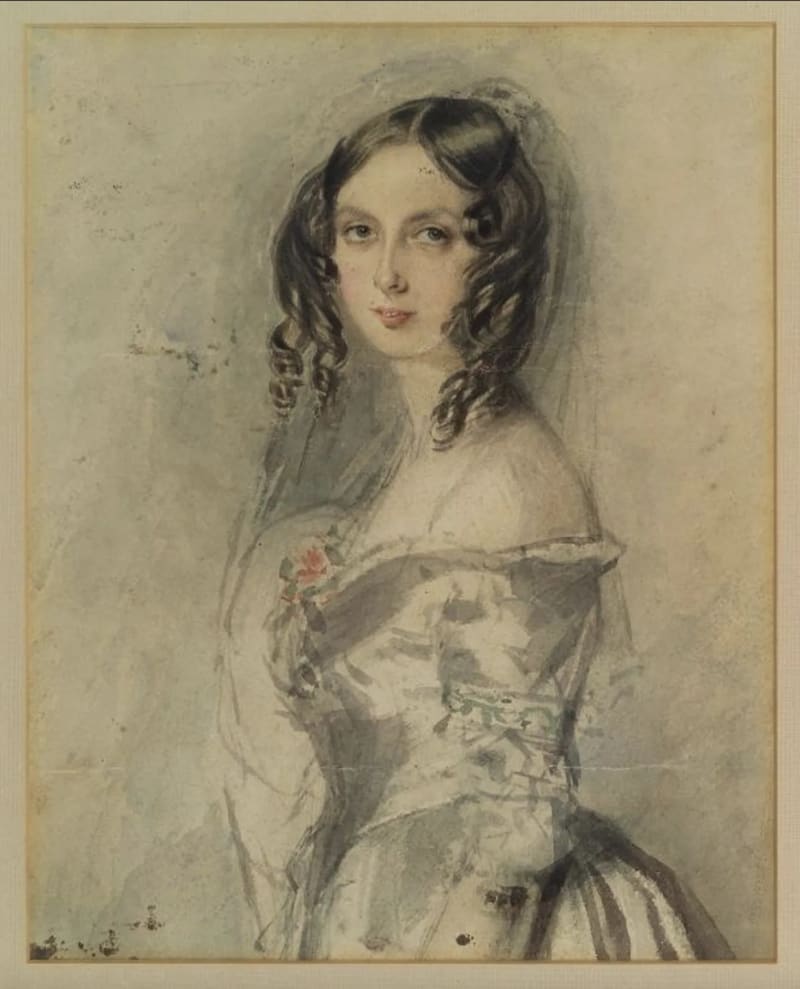 Precursors, analytical diagrams, and conceptual representations that forged the vision of early computing pioneers on the nature of computation.
Fuente visual sujeta a disponibilidad del ecosistema: Wikimedia Commons bajo licencia CC BY-SA 4.0 o renderizado conceptual IA.
This exploration aims to bring to light some of these remarkable individuals, highlighting their specific contributions and the profound impact they had on the trajectory of technological development. By delving into their lives and work, we can gain a more complete and nuanced understanding of how our digital world came to be, appreciating the often-invisible threads that connect past ingenuity to present-day marvels.
Table of Contents
- Ada Lovelace: The First Programmer's Vision
- Hedy Lamarr: From Silver Screen to Wireless Innovation
- Grace Hopper: Pioneering Programming Languages
- Other Unsung Heroes of the Digital Age
- Reclaiming Their Legacy: Why It Matters Today
Ada Lovelace: The First Programmer's Vision
Augusta Ada King, Countess of Lovelace, widely known as Ada Lovelace, is often celebrated as the world's first computer programmer. Born in 1815, she was the daughter of the famous poet Lord Byron, but her mother ensured she received a rigorous education in mathematics and science, a rarity for women of her era. This unique upbringing positioned her at the forefront of early computational theory.
Lovelace's most significant contribution stemmed from her collaboration with Charles Babbage, the inventor of the Analytical Engine, a mechanical general-purpose computer. While Babbage conceived the machine, it was Lovelace who truly grasped its potential beyond mere numerical calculations. Her detailed notes, published in 1843, included what is now recognized as the first algorithm intended to be carried out by a machine.
In these notes, Lovelace described a method for the Analytical Engine to calculate a sequence of Bernoulli numbers. More importantly, she articulated the concept that a machine could manipulate symbols according to rules, not just numbers, hinting at the vast possibilities of computing for tasks like music composition or graphic generation. Her vision extended far beyond Babbage's initial scope, foreseeing the modern computer's multifaceted capabilities.
 A conceptual still-life depicting the societal impact of early computational theories.
Her work was revolutionary because it moved beyond the idea of computers as glorified calculators. Lovelace envisioned a machine that could process any form of information, provided it could be represented symbolically. This abstract understanding of computing is a cornerstone of today's digital world, where algorithms power everything from search engines to artificial intelligence. Despite her profound insights, her contributions remained largely unacknowledged for nearly a century after her death in 1852.
The programming language Ada, developed for the U.S. Department of Defense, was named in her honor in the 1970s, finally bringing some recognition to her pioneering spirit. Her legacy underscores the importance of theoretical foresight in technological development, demonstrating that conceptual breakthroughs can be as impactful as mechanical inventions. Her understanding of the Analytical Engine's non-numerical potential was a critical leap in the evolution of computing.
Hedy Lamarr: From Silver Screen to Wireless Innovation
Hedy Lamarr, often remembered as a glamorous Hollywood actress, possessed an inventive mind that far transcended her cinematic fame. Born Hedwig Eva Maria Kiesler in Vienna in 1914, she developed an interest in engineering and applied science from a young age. Her intellectual curiosity, combined with her experiences during World War II, led to an invention that would become fundamental to modern wireless technology.
During the war, Lamarr became aware of the vulnerability of Allied torpedoes to jamming by Axis forces. Inspired by piano rolls and player pianos, she collaborated with composer George Antheil to develop a "secret communication system" designed to prevent such jamming. Their invention, patented in 1942, was a frequency-hopping spread spectrum technology.
This system involved rapidly changing the radio frequencies used to transmit signals, making it incredibly difficult for adversaries to intercept or jam the communication. Although the U.S. Navy initially dismissed the invention, it was eventually implemented decades later. The principles of frequency hopping are now integral to technologies like Bluetooth, Wi-Fi, and GPS, making Lamarr a crucial, albeit often forgotten, pioneer in wireless communication. You can learn more about the broader context of digital advancements in articles like Norbert Wiener: Padre Cibernética, Visión Era Digital, which discusses other foundational figures.
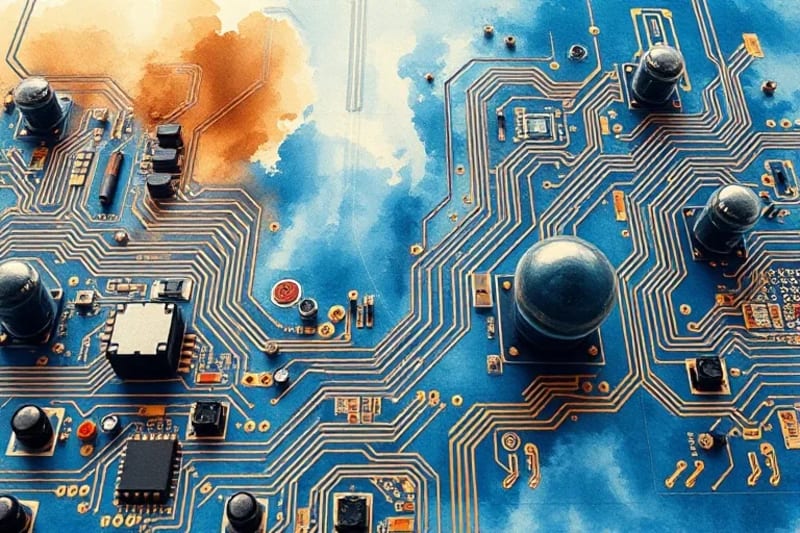 An abstract representation of the invisible forces and foundational concepts that enable modern wireless communication.
Lamarr and Antheil's patent expired before they could fully benefit from their invention, and its significance was not widely recognized until much later in the 20th century. Her story is a compelling example of how diverse talents and perspectives can lead to groundbreaking technological solutions. It also highlights the challenges faced by innovators, particularly women, in having their technical contributions taken seriously.
Her work demonstrates that creativity knows no bounds and that individuals from seemingly unrelated fields can bring fresh insights to complex technical problems. The ubiquity of Wi-Fi and Bluetooth in our daily lives stands as a silent testament to her ingenious mind, proving that her impact extended far beyond the silver screen. Her ability to conceptualize complex systems underscores a broader theme of innovation explored in discussions about Internet Cosas Agricultura Precisión, where interconnected systems drive progress.
Grace Hopper: Pioneering Programming Languages
Rear Admiral Dr. Grace Murray Hopper was a trailblazing computer scientist and U.S. Navy officer whose work fundamentally transformed how humans interact with computers. Born in 1906, Hopper earned a Ph.D. in mathematics from Yale University before joining the Navy Reserve during World War II. Her career in computing began at Harvard University, working on the Mark I computer.
Hopper's most famous contribution is often cited as coining the term "debugging" after finding a moth trapped in a relay of the Mark II computer. However, her more profound impact lies in her pioneering work on compilers and programming languages. She believed that computer code should be written in a language closer to English rather than complex mathematical symbols, making programming accessible to a broader audience.
In the early 1950s, Hopper and her team developed the A-0 System, the first compiler, which translated symbolic mathematical code into machine language. This innovation was a monumental step towards developing high-level programming languages. Her vision culminated in the creation of FLOW-MATIC, one of the first English-like data processing languages, which significantly influenced the design of COBOL (Common Business-Oriented Language).
COBOL became one of the most widely used programming languages in business and government applications, dominating the field for decades. Hopper's insistence on user-friendly programming languages democratized access to computing, moving it from the exclusive domain of mathematicians and engineers to a tool for various industries. Her work laid the foundation for modern software development and the proliferation of computer applications we see today.
Hopper's career was marked by numerous accolades, including the National Medal of Technology. She continued to advocate for computer literacy and simplified programming until her death in 1992. Her unwavering belief in making technology accessible and intuitive has had a lasting impact, influencing every programmer and software developer who uses high-level languages. Her story is a testament to the power of vision and persistence in driving technological change, much like the strategic thinking discussed in Finanzas Personales Generación Z: Ahorro, Inversión, Crédito, where foresight is key.
Other Unsung Heroes of the Digital Age
While Ada Lovelace, Hedy Lamarr, and Grace Hopper represent prominent examples, countless other individuals have made indispensable, yet often unrecognized, contributions to technology. Their stories collectively paint a picture of relentless curiosity and dedication that propelled humanity forward.
- Radia Perlman: The Mother of the Internet – Perlman invented the Spanning Tree Protocol (STP), which is fundamental to the operation of network bridges and prevents network loops. Her work was critical in enabling the stable and scalable growth of Ethernet networks, forming a backbone of the internet as we know it.
- The ENIAC Programmers (Kay McNulty, Betty Jennings, Betty Snyder, Marlyn Wescoff, Fran Bilas, and Ruth Lichterman) – These six women were the original programmers of the ENIAC, the first electronic general-purpose computer. They manually programmed the machine using wires and switches, solving complex ballistic trajectories, and effectively pioneering the field of software development.
- Katherine Johnson, Dorothy Vaughan, and Mary Jackson: NASA's Human Computers – These African-American women performed complex mathematical calculations crucial to the success of NASA's early space missions. Their precise computations were vital for launching astronauts into orbit and bringing them safely back to Earth, though their stories remained largely untold for decades.
- Vannevar Bush: Visionary of Hypertext – Bush, an American engineer, proposed the "Memex" in 1945, a hypothetical electro-mechanical device that would store and link information, anticipating many aspects of the World Wide Web, hypertext, and personal computers. His ideas influenced early computer scientists and internet pioneers.
These individuals, among many others, represent the diverse talent and collaborative spirit that has always been at the heart of technological innovation. Their contributions, though sometimes overshadowed, are integral to the functionality and design of the digital tools we use daily. Recognizing their efforts provides a more complete and accurate historical narrative of technological progress.
Reclaiming Their Legacy: Why It Matters Today
The act of reclaiming and celebrating the legacies of forgotten technological innovators is more than just historical rectification; it holds significant relevance for contemporary society. Firstly, it provides a more accurate and inclusive understanding of how technology evolves, acknowledging the diverse range of minds that contribute to progress. This broader perspective can inspire new generations of innovators from all backgrounds.
Secondly, understanding these historical narratives can help us appreciate the long-term vision and foundational principles that underpin our current technological landscape. Many of the concepts these pioneers introduced, such as Lovelace's abstract view of computing or Lamarr's frequency hopping, were far ahead of their time and required decades to fully materialize. This reminds us that true innovation often involves patience and persistent development.
Finally, recognizing these forgotten figures encourages a critical examination of historical biases and the mechanisms through which certain contributions are highlighted while others are marginalized. By actively seeking out and promoting these stories, we can foster a more equitable and representative narrative of scientific and technological achievement. This approach aligns with broader ethical considerations in technology, as discussed in Ética Empresarial Siglo XXI: Transparencia, Responsabilidad Social, emphasizing fairness and transparency.
The digital world we inhabit is a complex edifice, built brick by brick by countless hands, many of which have remained unseen. By shining a light on these forgotten innovators, we not only pay homage to their genius but also enrich our collective understanding of human ingenuity. Their stories are a powerful testament to the enduring impact of vision, intellect, and perseverance in shaping the world around us.
Explore More Insights:
- Eco-Astrology: Rituals to Heal Earth and Connect with Your Chart - Discover how ancient wisdom can guide modern ecological consciousness.
- Marian Prophecies: Urgent Messages Beyond Fatima - Delve into spiritual insights and their potential implications for the future.
- Horary Astrology: Advanced Chart Interpretation for Complex Questions - Uncover intricate methods for gaining clarity through astrological charts.
- Rare Diseases: Early Diagnosis, Treatments - Understand the challenges and advancements in identifying and treating uncommon conditions.
Source: Hybrid content assisted by AI and human editorial supervision.


Comentarios