
Neurofeedback Cognitive Biohacking: Concentration, Productivity Enhancement
Neurofeedback, a sophisticated form of biofeedback, represents a cutting-edge approach within cognitive biohacking, offering individuals the potential to directly influence their brain activity for enhanced mental performance. This innovative technique leverages real-time monitoring of brainwave patterns, typically via electroencephalography (EEG), to provide immediate feedback to the user. The primary goal is to train the brain to produce more desirable brainwave states associated with specific cognitive functions, such as improved concentration, heightened focus, and increased productivity.
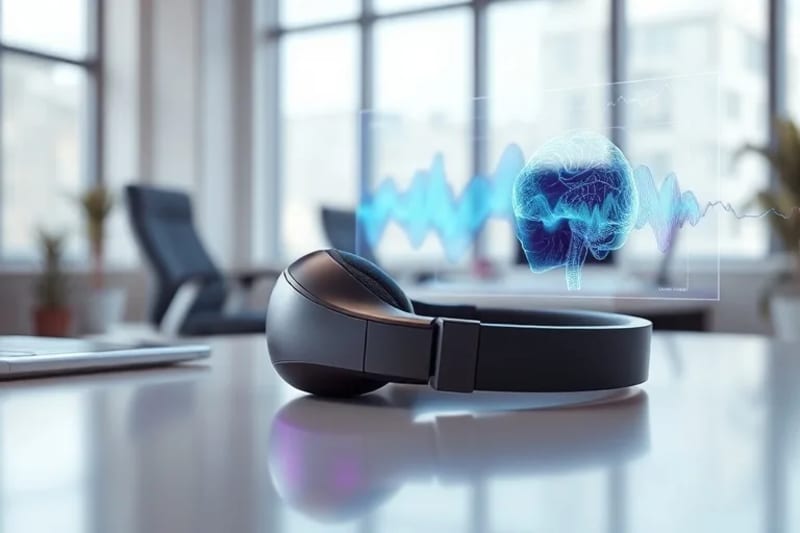
A state-of-the-art neurofeedback headset visualizes brain activity, representing the convergence of technology and cognitive biohacking.
What is Neurofeedback?
Neurofeedback, also known as EEG biofeedback, is a non-invasive therapeutic technique that allows individuals to learn self-regulation of their brain function. It operates on the principle of operant conditioning, where the brain is rewarded for producing desired patterns of electrical activity. Sensors placed on the scalp measure brainwave activity, which is then translated into visual or auditory feedback presented to the user in real-time.
The brain's electrical activity is categorized into different frequency bands, each associated with distinct mental states and cognitive processes. Understanding these brainwave types is fundamental to comprehending how neurofeedback targets specific areas for improvement. The primary brainwave frequencies include:
- Delta Waves (0.5-4 Hz): Associated with deep, dreamless sleep and unconscious bodily functions.
- Theta Waves (4-8 Hz): Linked to light sleep, deep relaxation, meditation, and creativity. An excess during waking hours can indicate inattention.
- Alpha Waves (8-12 Hz): Present during relaxed wakefulness, calm alertness, and meditation. Optimal for a state of relaxed focus.
- Beta Waves (12-30 Hz): Associated with active thinking, problem-solving, concentration, and alertness. High beta can indicate anxiety or overthinking.
- Gamma Waves (30-100+ Hz): Linked to higher-level cognitive processing, learning, memory, and information processing.
During a neurofeedback session, a trained practitioner identifies specific brainwave patterns that may be contributing to cognitive difficulties or hindering optimal performance. The individual then engages in exercises, often in the form of a video game or a movie, where their brainwave activity directly controls the on-screen action. For instance, if the goal is to increase alpha waves for relaxation, the game might progress only when the brain produces sufficient alpha activity.
Mechanisms of Action: How Neurofeedback Works
The efficacy of neurofeedback is rooted in the brain's remarkable capacity for neuroplasticity – its ability to reorganize itself by forming new neural connections throughout life. By providing real-time feedback, neurofeedback facilitates a learning process where the brain gradually adapts and optimizes its own electrical activity. This process is analogous to physical exercise, where repeated training strengthens specific muscles or neural pathways.
When the brain receives positive reinforcement for producing desired brainwave patterns, it learns to sustain those patterns more effectively. Conversely, it learns to reduce undesirable patterns. This self-regulation leads to lasting changes in brain function, improving cognitive control and emotional regulation. The neural pathways involved in attention, executive function, and emotional processing become more efficient and balanced.

Visual representation of brainwave training, illustrating the targeted enhancement of cognitive functions like focus and calm.
Research indicates that neurofeedback can influence various brain regions and networks. For example, training to increase alpha waves in specific cortical areas can enhance relaxation and reduce anxiety, while increasing beta waves in frontal regions can sharpen focus. The cumulative effect of these training sessions is a more resilient and optimally functioning brain, better equipped to handle cognitive demands and stress.
The brain's ability to learn and adapt through neurofeedback is a testament to its inherent plasticity. This makes it a powerful tool for individuals seeking to go beyond conventional methods to improve their mental faculties. The changes are not merely temporary but represent a fundamental re-patterning of brain activity, offering long-term benefits.
Enhancing Concentration through Neurofeedback
One of the most sought-after benefits of neurofeedback within the biohacking community is its capacity to significantly improve concentration and attention span. Many individuals struggle with maintaining focus in an increasingly distracting world, impacting their academic, professional, and personal lives. Neurofeedback offers a direct pathway to address these challenges by targeting the brainwave patterns associated with optimal attention.
Common protocols for enhancing concentration often involve training to increase the amplitude of beta waves (specifically SMR – Sensorimotor Rhythm, 12-15 Hz) and decrease theta waves in frontal and central brain regions. A higher theta-to-beta ratio is frequently observed in individuals with attention deficits, suggesting that reducing theta and increasing beta can lead to more sustained attention.
- SMR Training: Enhances motor control, body awareness, and a calm, focused state. It helps reduce restlessness and impulsivity often associated with poor concentration.
- Theta/Beta Training: Directly addresses attention deficits by teaching the brain to produce more fast-wave activity (beta) and less slow-wave activity (theta) during tasks requiring focus.
- Alpha-Theta Training: While primarily for deep relaxation and creativity, controlled alpha-theta training can improve access to subconscious resources, which indirectly supports sustained focus by reducing internal distractions.
By consistently reinforcing these desired brain states, individuals learn to voluntarily enter and maintain a state of focused attention. This training can be particularly beneficial for students, professionals, and anyone seeking to optimize their cognitive performance in demanding environments. The improvements are often noticeable in daily tasks, from reading complex documents to engaging in intricate problem-solving. For more insights into advanced cognitive enhancement, explore our article on Neuroscience Humor: Laughter Transforms Brain, Mental Health.
Boosting Productivity with Brainwave Training
Beyond mere concentration, neurofeedback also holds significant promise for enhancing overall productivity. A productive individual is not just someone who can focus, but also someone who can manage stress, maintain emotional balance, and sustain mental energy throughout the day. Neurofeedback addresses these underlying factors by promoting optimal brain regulation.
Improved productivity through neurofeedback stems from several interconnected benefits:
- Reduced Mental Fatigue: By training the brain to operate more efficiently, neurofeedback can decrease the effort required for cognitive tasks, leading to less mental exhaustion.
- Enhanced Stress Resilience: Protocols that increase alpha waves or balance alpha-theta activity can improve the brain's ability to return to a calm state after stress, preventing burnout.
- Better Emotional Regulation: A balanced brain is better at managing emotional responses, preventing emotional fluctuations from derailing work or creative flow.
- Increased Cognitive Flexibility: The ability to smoothly switch between tasks and adapt to new information is crucial for productivity. Neurofeedback can improve the brain's agility in this regard.
For professionals in high-demand fields, artists, and entrepreneurs, the ability to sustain peak mental performance is invaluable. Neurofeedback sessions can be tailored to address specific productivity bottlenecks, whether it's procrastination, creative blocks, or difficulty in decision-making. The cumulative effect is a more streamlined and efficient cognitive process, directly translating into higher output and better quality work.
Intricate neural pathways illuminate, representing the brain's profound capacity for neuroplasticity and adaptive learning through targeted interventions.
Diverse Modalities of Neurofeedback
While EEG neurofeedback remains the most common form, the field has evolved to include several other sophisticated modalities, each with its unique advantages and applications. These diverse approaches offer different ways to monitor and influence brain activity, broadening the scope of cognitive enhancement.
| Modality | Description | Primary Focus |
|---|---|---|
| EEG Neurofeedback (Traditional) | Measures electrical activity (brainwaves) from the scalp and provides real-time feedback. | Brainwave regulation, attention, relaxation, mood. |
| LORETA Neurofeedback (Low Resolution Electromagnetic Tomography) | Uses advanced algorithms to localize brain activity in 3D, providing feedback on deeper cortical structures. | Targeted regulation of specific brain regions, complex cognitive functions. |
| Hemoencephalography (HEG) Neurofeedback | Measures changes in cerebral blood flow and oxygenation, reflecting metabolic activity in the brain. | Frontal lobe activation, executive function, migraine relief. |
| fMRI Neurofeedback (Functional Magnetic Resonance Imaging) | Uses fMRI to provide real-time feedback on blood oxygenation level-dependent (BOLD) signals in deep brain structures. | Regulation of emotion, pain, and specific neural circuits. Highly precise but less accessible. |
| Infra-Low Frequency (ILF) Neurofeedback | Focuses on very slow brainwave activity (below 0.1 Hz), which is thought to be foundational for brain regulation. | Deep regulation, emotional stability, trauma processing. |
The choice of neurofeedback modality often depends on the specific cognitive goals and the individual's unique brain profile. Advanced systems can even combine these techniques, offering a more comprehensive and personalized training experience. The continuous innovation in this field promises even more refined and effective tools for cognitive biohacking in the near future.
Scientific Evidence and Clinical Applications
Neurofeedback is not merely a theoretical concept; it is supported by a growing body of scientific research and has established clinical applications. Numerous studies have investigated its efficacy across a range of cognitive and neurological conditions, providing empirical validation for its use in cognitive enhancement.
One of the most well-researched areas is its application in Attention-Deficit/Hyperactivity Disorder (ADHD). Meta-analyses and systematic reviews have consistently shown neurofeedback to be an effective intervention for improving attention, reducing impulsivity, and decreasing hyperactivity in both children and adults with ADHD. The American Academy of Pediatrics has recognized neurofeedback as a "Level 1 – Best Support" intervention for ADHD, comparable to medication.
Beyond ADHD, neurofeedback has demonstrated positive outcomes in:
- Anxiety and Depression: Protocols targeting alpha and theta waves can help individuals achieve deeper states of relaxation and improve emotional regulation.
- Peak Performance Training: Athletes, musicians, and executives use neurofeedback to enhance focus, reduce performance anxiety, and enter "flow states."
- Traumatic Brain Injury (TBI) and Post-Concussion Syndrome: Neurofeedback can help normalize disrupted brainwave patterns, improving cognitive function and reducing symptoms like headaches and fatigue.
- Sleep Disorders: Training to increase delta and theta waves can improve sleep architecture and alleviate insomnia.
The scientific community continues to explore the full potential of neurofeedback, with ongoing research into its applications for conditions like autism spectrum disorder, epilepsy, and chronic pain. The consistent findings across various studies underscore neurofeedback's role as a legitimate and effective tool for brain optimization. For further reading on related topics, consider our article on Precision Biohacking: AI, Genomics, Wearables, Longevity.
Practical Considerations and Ethical Implications
While the benefits of neurofeedback are compelling, prospective users should be aware of several practical and ethical considerations. Choosing the right practitioner, understanding the time commitment, and evaluating the cost are crucial steps before embarking on a neurofeedback journey.
- Finding a Qualified Practitioner: It is paramount to seek out certified neurofeedback specialists or clinicians with extensive experience. Credentials from organizations like the Biofeedback Certification International Alliance (BCIA) are a good indicator of expertise.
- Duration and Consistency: Neurofeedback is a learning process that requires consistency. A typical course of treatment can range from 20 to 40 sessions, often conducted 1-3 times per week. Results are cumulative, and adherence to the schedule is key.
- Cost: Sessions can be expensive, and insurance coverage varies. It's important to discuss costs and payment options upfront.
- Individual Variability: Not everyone responds to neurofeedback in the same way. While many experience significant improvements, individual results can vary based on factors like the specific condition, brain plasticity, and adherence to the protocol.
Ethically, the use of neurofeedback for cognitive enhancement raises questions about equitable access, potential for misuse, and the definition of "normal" brain function. As with any powerful technology, responsible application and clear ethical guidelines are essential to ensure its benefits are realized widely and safely. The focus should always be on promoting well-being and optimal function, rather than creating an unfair advantage.
Integrating Neurofeedback into a Biohacking Regimen
For those already engaged in biohacking, neurofeedback can be a powerful addition, creating synergistic effects with other practices aimed at optimizing human performance. When combined with a holistic approach to health, its impact on cognitive function can be amplified.
Consider integrating neurofeedback with:
- Optimized Nutrition: A diet rich in brain-supporting nutrients, omega-3 fatty acids, and antioxidants provides the building blocks for neuroplasticity and healthy brain function.
- Targeted Supplementation: Nootropics and adaptogens can complement neurofeedback by supporting neurotransmitter balance and stress resilience.
- Mindfulness and Meditation: These practices naturally train brainwave states (e.g., alpha and theta) that neurofeedback aims to enhance, creating a positive feedback loop.
- Regular Exercise: Physical activity boosts cerebral blood flow, neurogenesis, and overall brain health, making the brain more receptive to neurofeedback training.
- Quality Sleep: Adequate and restorative sleep is crucial for memory consolidation and brain repair, reinforcing the changes achieved through neurofeedback. Our article on Metaverse Digital Law: Property, Identity, Jurisdiction offers relevant insights.
By adopting a multi-faceted approach, individuals can create a comprehensive strategy for cognitive enhancement that leverages the direct brain training of neurofeedback alongside lifestyle interventions. This holistic synergy maximizes the potential for sustained improvements in concentration, productivity, and overall mental well-being.
The Future of Cognitive Neurofeedback
The field of neurofeedback is continuously evolving, driven by advancements in neuroscience, signal processing, and artificial intelligence. The future promises even more accessible, personalized, and effective tools for cognitive biohacking.
Key trends and developments to watch include:
- Wearable Neurofeedback Devices: Miniaturized, user-friendly headsets are making neurofeedback more accessible for home use, although professional guidance remains crucial.
- AI-Driven Personalization: Artificial intelligence can analyze vast amounts of brainwave data to create highly personalized training protocols, optimizing outcomes for each individual.
- Integration with Virtual Reality (VR) and Augmented Reality (AR): Immersive VR/AR environments can make neurofeedback training more engaging and context-specific, enhancing learning transfer.
- Combined Modalities: The integration of neurofeedback with other brain stimulation techniques, such as transcranial direct current stimulation (tDCS) or transcranial magnetic stimulation (TMS), may offer even more potent cognitive enhancement strategies.
- Advanced Biomarkers: Future research will likely identify more precise neural biomarkers for various cognitive states, allowing for even more targeted and effective neurofeedback interventions.
As our understanding of the brain deepens and technology advances, neurofeedback is poised to become an even more integral part of both clinical practice and personal cognitive optimization. Its potential to empower individuals to take direct control over their mental states and unlock their full cognitive potential is immense, solidifying its place at the forefront of biohacking innovation.
Fuente: Contenido híbrido asistido por IAs y supervisión editorial humana.


Comentarios