
Precision Biohacking: AI, Genomics, Wearables, Longevity
Precision Biohacking: AI, Genomics, and Wearables for Optimized Longevity
The quest for optimized health and extended longevity has entered a new era, driven by the convergence of cutting-edge technologies. Precision biohacking represents a sophisticated approach that moves beyond general wellness advice, utilizing personal biological data to craft highly individualized interventions. This paradigm shift is fundamentally powered by the synergistic integration of Artificial Intelligence (AI), advanced genomics, and ubiquitous wearable devices.
This deep dive explores how these three technological pillars are revolutionizing our understanding of human biology and enabling unprecedented control over our health trajectory. From decoding the intricacies of our DNA to monitoring real-time physiological responses, precision biohacking offers a data-driven pathway to not just extend lifespan, but to significantly enhance healthspan – the period of life spent in good health and free from chronic disease.
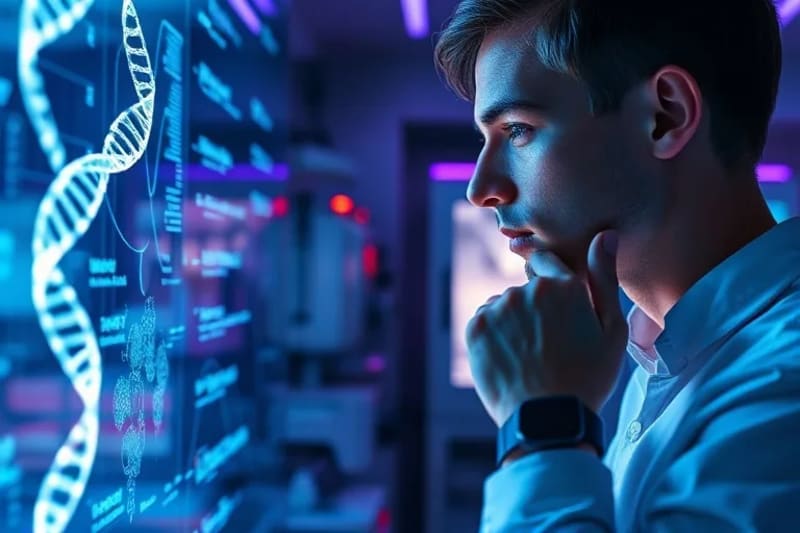
A visionary depiction of a precision biohacking environment, where data from genomics and wearables converges on holographic interfaces.
Table of Contents
- The Genomic Foundation: Unlocking Individual Blueprints
- AI: The Intelligence Layer for Data Synthesis and Prediction
- Wearables: Real-time Biometric Feedback and Continuous Monitoring
- Synergy for Optimized Longevity: The Integrated Approach
- Challenges and Future Directions in Precision Biohacking
- Ethical Considerations and Societal Impact
- Conclusion: The Future of Personalized Health
The Genomic Foundation: Unlocking Individual Blueprints
At the heart of precision biohacking lies genomics, the study of an organism's complete set of DNA, including all of its genes. Understanding an individual's unique genetic code provides an unparalleled blueprint for personalized health strategies. This goes beyond simple genetic predisposition, delving into the nuances of how genes interact with lifestyle and environmental factors.
Advanced sequencing technologies now allow for comprehensive genomic profiling, revealing insights into a person's susceptibility to certain diseases, their metabolic responses to specific nutrients, and even their optimal exercise routines. Epigenetics, the study of heritable changes in gene expression that do not involve changes to the underlying DNA sequence, further refines this understanding, showing how lifestyle choices can literally "turn genes on or off."
- Pharmacogenomics: Tailoring drug prescriptions based on an individual's genetic makeup to maximize efficacy and minimize adverse reactions.
- Nutrigenomics: Developing personalized dietary recommendations that align with genetic predispositions for nutrient absorption, metabolism, and food sensitivities.
- Disease Risk Assessment: Identifying genetic markers associated with increased risk for chronic conditions such as cardiovascular disease, diabetes, and certain cancers, enabling proactive prevention strategies.
- Longevity Pathways: Exploring genetic variants linked to exceptional longevity and understanding their mechanisms to inform interventions.
The data gleaned from genomic analysis forms the fundamental layer upon which precision biohacking protocols are built. It provides the "why" behind certain biological responses and guides the initial set of personalized interventions. However, raw genomic data is complex and requires sophisticated interpretation to be truly actionable, which is where AI plays a pivotal role.
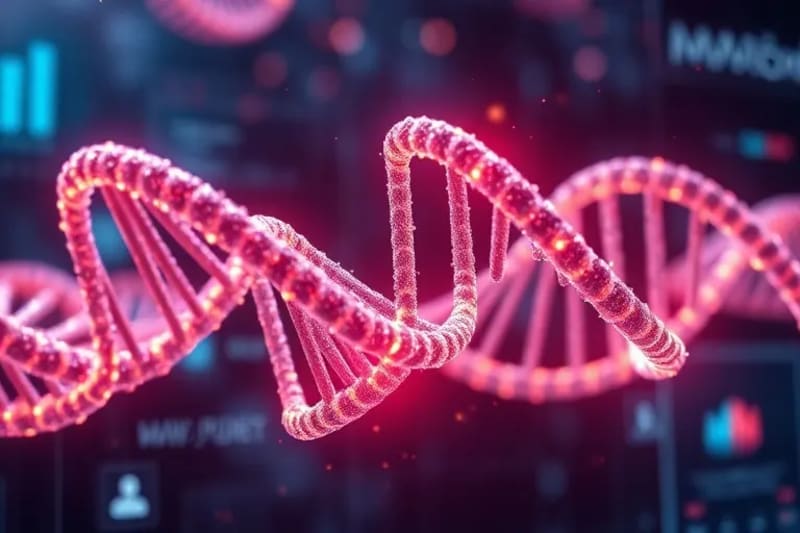
An artistic rendering of complex genomic data, highlighting the intricate biological information that underpins personalized health.
AI: The Intelligence Layer for Data Synthesis and Prediction
Artificial Intelligence acts as the indispensable intelligence layer in precision biohacking, transforming vast amounts of raw data into meaningful, actionable insights. Without AI, the sheer volume and complexity of genomic, proteomic, metabolomic, and real-time biometric data would be overwhelming for human analysis. AI algorithms, particularly machine learning and deep learning, excel at pattern recognition and predictive modeling, making them ideal for this task.
AI's capabilities extend across several critical functions:
- Data Integration and Analysis: AI can seamlessly integrate diverse datasets, including genomic profiles, wearable data, electronic health records, and even environmental factors. It identifies subtle correlations and causal relationships that might be invisible to human observation.
- Predictive Modeling: By analyzing historical data and current biometrics, AI can predict future health risks, anticipate the onset of chronic diseases, and forecast the efficacy of different interventions. This enables truly proactive rather than reactive healthcare.
- Personalized Intervention Design: Based on an individual's unique biological profile and current health status, AI can recommend highly specific interventions. This includes tailored dietary plans, exercise regimens, supplement protocols, and even sleep optimization strategies.
- Dynamic Optimization: As new data streams in from wearables and other monitoring devices, AI continuously refines its models and adjusts recommendations. This creates a dynamic, adaptive biohacking strategy that evolves with the individual's changing physiology and environment.
The application of AI in precision biohacking is not merely about processing data; it's about creating a "digital twin" of an individual's biology, allowing for simulations and predictive analyses that inform optimal health choices. This intelligent layer is what transforms raw information into a coherent, actionable strategy for longevity. For more insights into advanced cognitive optimization, consider exploring Neurotechnology Mental Health: Brain Empowerment, Disorder Combat.
Wearables: Real-time Biometric Feedback and Continuous Monitoring
Wearable devices are the eyes and ears of precision biohacking, providing a continuous stream of real-time biometric data that captures an individual's physiological state as it unfolds. From smartwatches and fitness trackers to continuous glucose monitors (CGMs) and advanced sleep sensors, these devices offer unprecedented insights into daily health and performance. They bridge the gap between static genetic information and dynamic physiological responses.
Key metrics tracked by wearables include:
- Heart Rate Variability (HRV): A key indicator of autonomic nervous system balance, reflecting stress levels, recovery, and overall resilience.
- Sleep Quality and Stages: Detailed analysis of sleep patterns, including REM, deep sleep, and light sleep, crucial for cognitive function and cellular repair.
- Activity Levels: Tracking steps, calories burned, and exercise intensity to ensure optimal physical activity for metabolic health and cardiovascular fitness.
- Continuous Glucose Monitoring (CGM): Providing real-time insights into blood sugar responses to food, exercise, and stress, enabling precise dietary adjustments to maintain metabolic stability.
- Body Temperature and Skin Conductance: Indicators that can reveal early signs of illness, stress, or hormonal fluctuations.
The data from wearables is invaluable because it reflects the immediate impact of lifestyle choices and environmental factors on an individual's biology. When combined with genomic insights and processed by AI, this real-time feedback loop allows for immediate adjustments and fine-tuning of biohacking protocols. This dynamic interaction is essential for achieving true optimization. Concerns about data privacy and the security of medical wearables are critical as these technologies become more integrated into daily life. Learn more about these considerations in Ciberseguridad Cuántica: Desafíos, Soluciones Infraestructuras Críticas.

A collection of advanced wearable devices, illustrating their role in continuous biometric data collection for personalized health.
Synergy for Optimized Longevity: The Integrated Approach
The true power of precision biohacking emerges from the seamless integration of AI, genomics, and wearables. This creates a closed-loop system where each component amplifies the others, leading to an unprecedented level of personalized health optimization for longevity. The process can be conceptualized as follows:
- Genomic Baseline: An initial comprehensive genomic analysis provides the fundamental understanding of an individual's unique biological predispositions and potential vulnerabilities.
- Continuous Monitoring via Wearables: Wearable devices gather real-time physiological data, capturing the dynamic interplay between lifestyle, environment, and genetic expression.
- AI-Powered Analysis and Prediction: AI algorithms ingest and synthesize both genomic and wearable data, identifying patterns, predicting risks, and generating personalized recommendations.
- Personalized Interventions: Based on AI insights, individuals receive tailored advice on diet, exercise, sleep, stress management, and targeted supplementation, often with specific timing and dosages.
- Feedback Loop and Adaptation: The impact of these interventions is continuously monitored by wearables, providing new data for AI to re-evaluate and refine the strategy, ensuring ongoing optimization.
This integrated approach moves beyond generic health advice to offer truly bespoke solutions. For instance, an individual might discover through genomics that they have a genetic variant affecting caffeine metabolism. Wearable data might then show that consuming caffeine after a certain time negatively impacts their sleep quality (HRV, sleep stages). AI would then recommend a precise caffeine cut-off time, and continued wearable monitoring would confirm the positive impact on sleep metrics, leading to optimized recovery and long-term health.
The focus shifts from treating symptoms to preventing disease and proactively promoting vitality. By understanding individual responses at a molecular and physiological level, precision biohacking aims to mitigate the effects of aging, enhance cellular health, and extend the period of robust well-being. Advances in cellular longevity are also being explored through gene therapy, offering complementary avenues for extending healthspan. Read more about this in Extreme Longevity: Genomic Strategies, Biohacking Human Survival.
Challenges and Future Directions in Precision Biohacking
While the promise of precision biohacking is immense, several challenges must be addressed for its widespread and equitable adoption. These include technical hurdles, ethical dilemmas, and regulatory complexities.
Data Privacy and Security: The collection of highly sensitive personal biological data necessitates robust cybersecurity measures and clear ethical guidelines to protect individuals from misuse, breaches, or discrimination based on their genetic and health information.
Accessibility and Equity: Currently, advanced genomic sequencing and high-end wearables can be costly, creating a potential divide where optimized longevity becomes a privilege of the wealthy. Efforts are needed to democratize access to these technologies and insights.
Regulatory Frameworks: The rapid pace of innovation often outstrips regulatory bodies. Clear guidelines are needed for direct-to-consumer genetic testing, AI-driven health recommendations, and the medical claims made by biohacking products and services.
Scientific Validation: While many biohacking practices are data-driven, rigorous scientific validation through large-scale clinical trials is essential to differentiate evidence-based interventions from unproven trends.
Despite these challenges, the future of precision biohacking is bright and holds several exciting directions:
- Integration with Clinical Medicine: As evidence grows, precision biohacking tools and methodologies will likely become more integrated into mainstream clinical practice, enabling physicians to offer truly personalized preventive care.
- Advanced Diagnostics: The development of non-invasive, continuous diagnostic tools (e.g., smart toilets, smart mirrors) will further enrich the data streams available for AI analysis, providing even deeper insights into health.
- Multi-Omics Integration: Beyond genomics, the integration of proteomics (study of proteins), metabolomics (study of metabolites), and microbiomics (study of the microbiome) will create an even more holistic picture of individual biology.
- AI-Driven Drug Discovery: AI will accelerate the discovery and development of novel compounds and therapies specifically tailored to genetic profiles, potentially leading to breakthroughs in anti-aging medicine.
Ethical Considerations and Societal Impact
The profound capabilities of precision biohacking also bring significant ethical and societal considerations to the forefront. As we gain the ability to manipulate our biology with unprecedented precision, questions arise about the boundaries of human enhancement, the definition of "natural" health, and the potential for new forms of inequality.
One primary concern is the potential for exacerbating health disparities. If access to advanced biohacking technologies remains limited to the affluent, it could create a "longevity gap," where only a segment of the population can afford to optimize their health and extend their lifespan. This raises fundamental questions about social justice and equitable access to health innovation.
Furthermore, the extensive collection of personal biological data raises critical privacy issues. Who owns this data? How is it protected from commercial exploitation or discriminatory practices by insurance companies or employers? Robust legal and ethical frameworks are urgently needed to govern data ownership, consent, and usage, ensuring that individuals retain control over their most intimate biological information.
The concept of human enhancement also sparks philosophical debates. Where do we draw the line between treating disease and enhancing normal human capabilities? As biohacking advances, it blurs the lines between therapy and enhancement, prompting society to re-evaluate its values regarding human nature and potential. These discussions are crucial to ensure that precision biohacking develops in a manner that benefits all of humanity, rather than creating new divisions or unintended consequences.
Conclusion: The Future of Personalized Health
Precision biohacking, through the powerful synergy of AI, genomics, and wearables, is poised to redefine our approach to health and longevity. It offers a compelling vision of a future where healthcare is truly personalized, predictive, preventive, and participatory. By leveraging our unique biological data, individuals can embark on a tailored journey to optimize their healthspan, mitigate disease risk, and unlock their full physiological potential.
While challenges related to data privacy, equity, and regulation remain, ongoing advancements and thoughtful ethical discourse will pave the way for a more accessible and beneficial future. The era of generic health advice is giving way to an age of precision, where every intervention is informed by an individual's unique biological blueprint. Precision biohacking is not just about extending life; it's about enriching it, ensuring more years of vibrant health and sustained well-being for all who embrace its potential.
Source: Hybrid content assisted by AIs and human editorial supervision.


Comentarios