
Metaverse Digital Law: Property, Identity, Jurisdiction
The concept of the Metaverse, once confined to science fiction, is rapidly evolving into a tangible reality, presenting unprecedented opportunities and complex challenges. As virtual worlds become increasingly sophisticated and integrated into daily life, the need for robust legal frameworks becomes paramount. This emerging digital frontier demands a re-evaluation of traditional legal principles concerning property, identity, and jurisdiction.

Conceptual representations of the metaverse, its intricate legal codes, and the dynamic interplay of digital assets within virtual environments.
Fuente visual sujeta a disponibilidad del ecosistema: Wikimedia Commons bajo licencia CC BY-SA 4.0 o renderizado conceptual IA.This article explores the intricate legal landscape of the Metaverse, diving into the critical areas of digital property rights, the evolving nature of virtual identity, and the formidable jurisdictional hurdles. We aim to provide an introductory yet comprehensive overview for those seeking to understand the foundational legal principles that will govern our future digital interactions.
The expansion of virtual economies and social spaces necessitates a clear understanding of how existing laws adapt to these new environments, and where new regulations are urgently needed. The implications extend across various sectors, from entertainment and commerce to education and governance, making this a crucial area of study for policymakers, developers, and users alike.
Table of Contents
- Introduction to the Metaverse Legal Frontier
- Digital Property Rights: The New Frontier of Ownership
- Virtual Identity and Personhood: Defining the Digital Self
- Navigating Jurisdictional Complexities in Virtual Worlds
- The Role of Smart Contracts and Blockchain in Metaverse Law
- Regulatory Frameworks and the Future of Digital Governance
- Ethical Considerations and Societal Impact
- Conclusion: Charting the Course for a Just Digital Future
Introduction to the Metaverse Legal Frontier
The Metaverse refers to a persistent, interconnected network of 3D virtual worlds, offering real-time interactions and experiences. It is envisioned as a successor to the current internet, where users can work, play, socialize, and conduct commerce in immersive digital spaces. This vision, however, brings with it a host of legal ambiguities that traditional legal systems are ill-equipped to handle.
The core challenge lies in translating real-world legal concepts into a virtual context. For instance, how do property rights apply to digital assets that can be copied infinitely? What constitutes identity when users are represented by avatars? And which jurisdiction governs disputes that occur across virtual borders, potentially involving participants from multiple physical countries?
Understanding these fundamental questions is crucial for fostering a safe, equitable, and functional Metaverse. Without clear legal guidelines, the potential for exploitation, fraud, and unresolved conflicts could hinder its development and adoption. This introductory exploration aims to shed light on these complex issues, providing a foundation for further discussion and policy development.
Digital Property Rights: The New Frontier of Ownership
One of the most pressing legal concerns in the Metaverse is the definition and protection of digital property rights. Unlike physical assets, digital items can be replicated easily, raising questions about scarcity, authenticity, and ownership. Non-Fungible Tokens (NFTs) have emerged as a key technology attempting to address these issues by providing verifiable ownership of unique digital assets.
Digital property in the Metaverse can encompass a wide range of items, including virtual land, avatar wearables, unique artwork, and even virtual experiences. The legal implications extend to intellectual property rights, such as copyright and trademark, when creations are made and shared within these virtual spaces. Who owns the rights to an avatar's custom-designed clothing, or a virtual building created by a user?
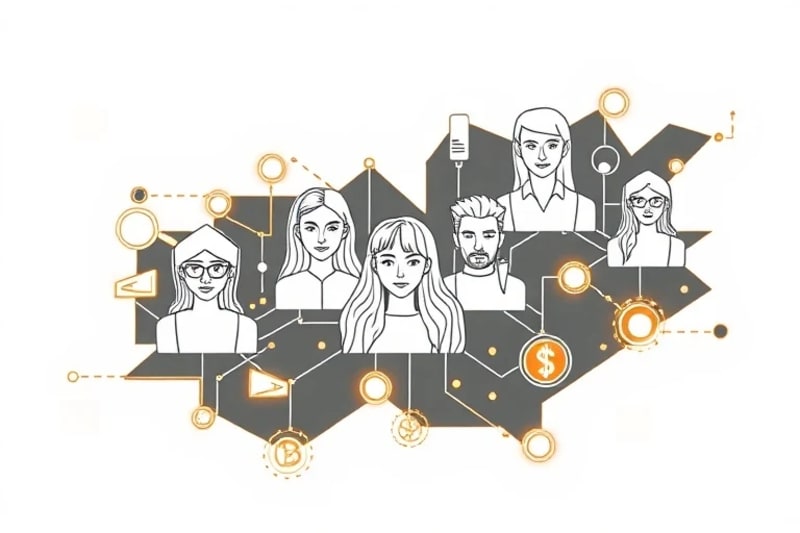
Interconnected networks of avatars and digital assets, illustrating the complex web of virtual ownership and identity verification within the metaverse.
The legal framework for digital property must consider several aspects. Firstly, the distinction between owning the asset itself and owning the underlying intellectual property. Secondly, the enforceability of these rights across different Metaverse platforms and real-world legal systems. Finally, the mechanisms for transfer, inheritance, and dispute resolution for these novel forms of property.
For example, if a user purchases a unique virtual sword as an NFT, do they own the sword's design, or just the token representing its ownership within a specific game? What happens if the game shuts down? These questions highlight the need for clear terms of service and potentially new legislation that specifically addresses digital asset ownership. The future of digital property may also involve concepts seen in 4D Printing and Smart Materials, where digital designs could translate into physical objects with embedded functionalities.
Virtual Identity and Personhood: Defining the Digital Self
In the Metaverse, users interact primarily through avatars, which serve as their digital representations. This raises profound questions about identity, privacy, and even the concept of personhood in a virtual context. Is an avatar merely a tool, or does it embody aspects of a user's identity that deserve legal protection?
Data privacy is a significant concern, as Metaverse platforms collect vast amounts of information about user behavior, preferences, and interactions. Protecting this data from misuse, unauthorized access, and surveillance is critical. Regulations like GDPR and CCPA provide some guidance, but their applicability to immersive virtual environments needs further clarification.
- Avatar Rights: Should avatars have rights similar to real-world individuals, especially concerning defamation, harassment, or discrimination?
- Digital Legacy: What happens to a user's digital identity and assets in the Metaverse after their physical death?
- Authentication: How can users securely prove their identity in the Metaverse without compromising privacy? This is where advancements in Biometric Behavioral Security could play a crucial role.
- Deepfakes and Impersonation: The ease of creating realistic digital representations also opens the door to sophisticated impersonation and malicious deepfakes, requiring robust verification and legal recourse.
The psychological impact of virtual identity also warrants legal consideration. The lines between the physical and digital self can blur, leading to new forms of psychological distress or even criminal behavior. Defining the legal boundaries of virtual personhood will be essential for ensuring user well-being and maintaining order.
Navigating Jurisdictional Complexities in Virtual Worlds
Perhaps the most challenging aspect of Metaverse law is jurisdiction. Virtual worlds are inherently global, allowing users from any physical location to interact. When a dispute arises, determining which country's laws apply becomes incredibly complex. This "borderless" nature clashes directly with traditional legal systems, which are geographically bound.
Consider a scenario where a user in Japan defrauds a user in Germany over a digital asset hosted on servers in the United States, within a Metaverse platform developed by a company in South Korea. Which country's laws govern the dispute? Which courts have jurisdiction?
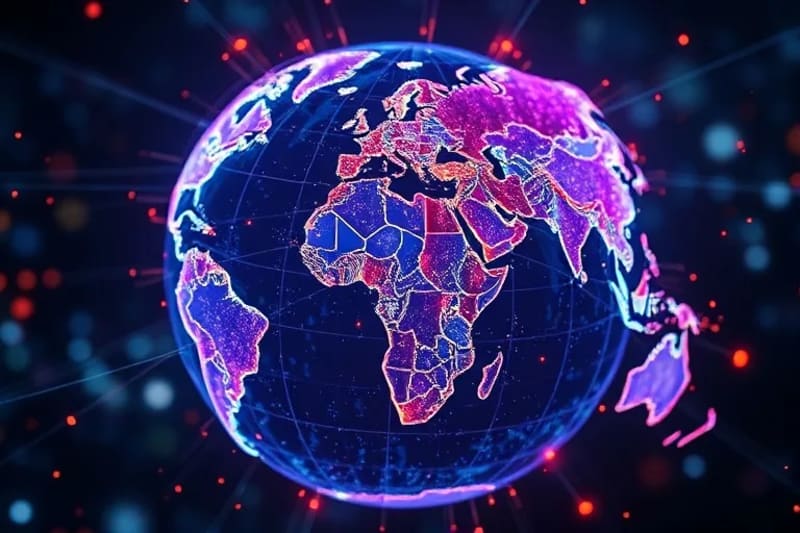
A fragmented digital globe, symbolizing the intricate and often overlapping legal jurisdictions that govern interactions within the global metaverse.
Possible approaches to jurisdiction include:
- Lex Situs (Law of the Location): Applying the law of where the server hosting the virtual world is located, which can be arbitrary and unfair.
- Lex Domicilii (Law of the Domicile): Applying the law of the user's real-world residence, which can lead to conflicts when multiple users from different countries are involved.
- Choice of Law Clauses: Metaverse platforms could implement terms of service that specify which law applies, though enforceability can be an issue.
- International Treaties: The long-term solution may involve new international agreements specifically designed for cyberspace and virtual worlds.
The establishment of clear jurisdictional rules is vital for ensuring legal certainty and facilitating effective dispute resolution. Without it, the Metaverse risks becoming a wild west, where legal remedies are elusive and justice is difficult to achieve.
The Role of Smart Contracts and Blockchain in Metaverse Law
Blockchain technology and smart contracts are often touted as foundational elements of the Metaverse, offering decentralized, transparent, and immutable records. These technologies have significant implications for legal frameworks, particularly in areas like property ownership, identity verification, and contractual agreements.
Smart contracts are self-executing contracts with the terms of the agreement directly written into lines of code. They can automate legal processes, such as the transfer of digital assets upon payment, without the need for intermediaries. This automation can enhance efficiency and reduce the potential for disputes, but it also introduces new legal questions.
For instance, what happens if a smart contract contains a bug or an unforeseen loophole? Who is liable for losses incurred due to a flawed contract? The immutability of blockchain, while a strength, can also be a weakness if errors or malicious actions are permanently recorded. Legal systems must grapple with how to interpret and enforce these code-based agreements, especially when they conflict with traditional contract law principles.
The legal recognition of smart contracts varies across jurisdictions.
Some countries have amended their laws to explicitly include electronic contracts and blockchain-based agreements, while others are still in the process of developing such frameworks.
Uniformity and international standards are crucial for the widespread adoption and legal certainty of smart contracts in the Metaverse.
Blockchain also underpins the concept of decentralized autonomous organizations (DAOs), which could govern aspects of the Metaverse. DAOs operate without central authority, making decisions based on pre-programmed rules and community voting. Legal questions arise regarding the liability of DAO members, their legal status, and how they interact with existing corporate and governance laws.
Regulatory Frameworks and the Future of Digital Governance
The rapid evolution of the Metaverse necessitates proactive regulatory responses from governments worldwide. A piecemeal approach, where each nation develops its own laws independently, could lead to a fragmented and inefficient legal landscape. International cooperation and the development of harmonized standards will be essential.
Regulatory bodies may need to establish new agencies or expand the mandates of existing ones to oversee virtual economies, protect consumers in the Metaverse, and address issues like virtual taxation. The challenges are immense, as regulators must balance innovation with protection, ensuring that laws do not stifle technological advancement while safeguarding users.
Key areas for regulatory focus include:
- Consumer Protection: Preventing fraud, scams, and unfair business practices in virtual marketplaces. This includes regulating virtual currency exchanges and NFT sales.
- Anti-Money Laundering (AML) and Know Your Customer (KYC): Ensuring that virtual transactions are not used for illicit activities.
- Content Moderation: Addressing harmful content, hate speech, and harassment in virtual spaces, balancing freedom of expression with user safety.
- Taxation: Determining how virtual transactions, digital asset sales, and income generated within the Metaverse should be taxed.
- Interoperability Standards: Developing legal frameworks that encourage seamless movement of assets and identities across different Metaverse platforms.
The development of these frameworks will require collaboration among legal experts, technologists, economists, and ethicists. The goal is to create a predictable and just environment that fosters growth while mitigating risks. This mirrors the complex ethical and legal considerations found in fields like Neuromorphic Computing's Ethical Regulations, where new technologies demand thoughtful governance.
Ethical Considerations and Societal Impact
Beyond the purely legal aspects, the Metaverse also presents a myriad of ethical considerations that will shape its societal impact. Ensuring equity, accessibility, and inclusivity in these virtual worlds is paramount to prevent the exacerbation of existing real-world inequalities. The digital divide, for example, could widen if access to the Metaverse is limited by economic status or technological literacy.
The psychological effects of prolonged immersion in virtual worlds, the potential for addiction, and the blurring of lines between reality and simulation are also critical ethical concerns. Developers and policymakers must consider the well-being of users and implement safeguards to promote healthy digital engagement. The creation of virtual entities, as seen in AI music reconstruction and virtual artists, also raises questions about authenticity and human connection.
Ethical guidelines should address:
- Inclusivity: Designing Metaverse platforms to be accessible to people with disabilities and from diverse cultural backgrounds.
- Digital Rights: Establishing a bill of rights for Metaverse users, covering aspects like freedom of expression, privacy, and protection from harm.
- Economic Equity: Preventing monopolization of virtual assets and ensuring fair economic opportunities for all participants.
- Environmental Impact: Addressing the energy consumption of blockchain technologies and data centers supporting the Metaverse.
- Mental Health: Implementing features and policies that support user mental well-being and prevent digital addiction or isolation.
A holistic approach that integrates legal, ethical, and technological perspectives is essential for building a Metaverse that serves humanity's best interests. This requires ongoing dialogue and adaptive governance models that can keep pace with technological innovation.
Conclusion: Charting the Course for a Just Digital Future
The Metaverse represents a monumental shift in how we interact with technology and each other. While its potential is vast, the legal and ethical challenges it presents are equally significant. Establishing clear frameworks for digital property, virtual identity, and jurisdictional authority is not merely a technical exercise; it is a fundamental requirement for creating a fair, secure, and thriving digital future.
As these virtual worlds continue to develop, a collaborative effort among governments, legal scholars, industry leaders, and the user community will be necessary. This cooperation will ensure that the Metaverse evolves in a manner that upholds human rights, protects individual autonomy, and fosters innovation responsibly. The journey to define Metaverse law is just beginning, but its outcome will profoundly shape the next era of human interaction.
The principles discussed here—from the intricacies of NFT ownership to the complexities of cross-border virtual disputes—form the bedrock of this evolving legal landscape. By addressing these challenges proactively, we can pave the way for a Metaverse that is not only technologically advanced but also ethically sound and legally robust.
Explore Further: Related Insights
Source: Hybrid content assisted by AI and human editorial supervision.


Comentarios