
Neuroarchitecture Longevity: Designing Brain Health Spaces
Neuroarchitecture, an emerging interdisciplinary field, explores the profound impact of built environments on the human brain and behavior. It integrates principles from neuroscience, psychology, and architecture to design spaces that actively support cognitive function, emotional well-being, and overall health. This innovative approach moves beyond mere aesthetics and functionality, aiming to create environments that are not only pleasing but also therapeutic and enhancing, particularly for promoting longevity and healthy aging.
The premise of neuroarchitecture is that our surroundings are not passive backdrops but active participants in shaping our mental states, stress levels, and even our brain's plasticity. By understanding how light, sound, texture, spatial layout, and natural elements influence neural pathways, designers can craft spaces that reduce cognitive load, foster creativity, improve memory, and mitigate the effects of aging on the brain. This article delves into the core tenets of neuroarchitecture and its critical role in designing spaces optimized for brain health and extended well-being.

Precursors intellectuales, diagramas fundamentales y representaciones conceptuales que forjaron la visión de la Neuroarquitectura sobre la salud cerebral.
Fuente visual sujeta a disponibilidad del ecosistema: Wikimedia Commons bajo licencia CC BY-SA 4.0 o renderizado conceptual IA.
Table of Contents
- What is Neuroarchitecture? An Interdisciplinary Approach
- Core Principles of Brain-Healthy Design
- Sensory Integration and Cognitive Function
- Biophilia and Nature's Impact on the Brain
- Designing for Cognitive Decline and Dementia
- The Future of Neuroarchitecture for Longevity
- Challenges and Ethical Considerations
What is Neuroarchitecture? An Interdisciplinary Approach
Neuroarchitecture represents a paradigm shift in how we conceive and construct our living and working spaces. It is not merely about making buildings look good; it is about making them feel good and function better for the human mind. This field draws heavily on neuroscience, which studies the nervous system, including the brain, and cognitive psychology, which examines mental processes such as perception, memory, and problem-solving. By bridging these scientific disciplines with architectural design, neuroarchitecture seeks to create environments that are inherently beneficial for human cognition and emotion.
The origins of this field can be traced back to a growing understanding that our physical surroundings have a measurable impact on our biology. For instance, exposure to natural light affects our circadian rhythms, which in turn regulate sleep, mood, and cognitive performance. Similarly, certain spatial configurations can either promote social interaction or induce feelings of isolation. Neuroarchitecture systematically applies these scientific insights to design choices, from material selection and color palettes to spatial organization and acoustic treatments. The goal is to optimize these environmental factors to support brain health throughout the lifespan, contributing significantly to overall longevity and quality of life.
Core Principles of Brain-Healthy Design
Designing spaces that foster brain health involves adherence to several core principles, each backed by scientific research. These principles are not isolated but often work in synergy to create a holistic environment. Understanding these elements is crucial for architects, urban planners, and individuals looking to optimize their personal spaces.
- Natural Light and Circadian Rhythms: Maximizing exposure to natural light and designing for dynamic lighting that mimics outdoor light cycles is paramount. This helps regulate the body's internal clock, improving sleep quality, mood, and cognitive alertness. Disruptions to circadian rhythms have been linked to various health issues, including cognitive decline.
- Biophilia and Connection to Nature: Integrating natural elements like plants, water features, and views of green spaces has been shown to reduce stress, improve focus, and accelerate healing. This principle, known as biophilia, taps into our innate human connection to nature.
- Sensory Stimulation: Thoughtful consideration of sound, touch, and smell can create a more engaging and less stressful environment. Acoustic design to minimize unwanted noise while allowing for pleasant ambient sounds, tactile materials, and subtle, natural scents all contribute to a richer sensory experience without overwhelming the brain.
- Wayfinding and Spatial Clarity: Clear layouts, intuitive signage, and distinct visual cues help reduce cognitive load, especially for older adults or those with cognitive impairments. Spaces that are easy to navigate reduce anxiety and promote independence.
- Ergonomics and Comfort: Furniture and fixtures designed to support natural body posture and comfort reduce physical strain, which in turn positively impacts mental well-being and focus.
- Social Interaction and Community Spaces: Designing for opportunities for social engagement, such as communal areas and flexible gathering spaces, is vital. Social interaction is a powerful stimulant for brain health and can combat loneliness, a significant risk factor for cognitive decline.
Sensory Integration and Cognitive Function
The human brain constantly processes sensory information from its environment. Neuroarchitecture leverages this understanding to create spaces that optimize sensory input, thereby supporting various cognitive functions. For instance, the strategic use of color can influence mood and perception; warm colors like reds and yellows can stimulate, while cool colors like blues and greens can soothe. The texture of materials, from smooth polished surfaces to rough natural stone, can evoke different tactile responses that contribute to the overall sensory landscape of a space.

Conceptual diagram of brain activity in response to architectural stimuli.
Acoustic design is another critical component. Excessive noise can be a significant source of stress, impairing concentration and memory. Conversely, carefully curated soundscapes, such as the gentle murmur of a water feature or sound-absorbing materials, can promote relaxation and focus. The integration of sound, light, and tactile elements is not arbitrary; it is based on scientific understanding of how these stimuli are processed by the brain and their subsequent effects on cognitive load, emotional regulation, and even memory recall. This holistic approach to sensory design can significantly enhance the quality of life, especially for those seeking to maintain cognitive vitality into old age. The principles of neuroarchitecture align with a broader understanding of well-being, touching upon concepts of mindful living and holistic health, much like the exploration of cosmic rhythms for well-being, where external forces are understood to influence internal states.
Biophilia and Nature's Impact on the Brain
The concept of biophilia, first popularized by E.O. Wilson, posits that humans have an innate tendency to connect with nature and other living systems. Neuroarchitecture embraces biophilia by integrating natural elements into the built environment, recognizing their profound positive effects on brain health. Studies have shown that exposure to natural views, indoor plants, and natural materials can reduce stress hormones, lower blood pressure, and improve mood. This is particularly relevant in urban settings where access to green spaces might be limited.
Incorporating biophilic design can take many forms: from large-scale interventions like green roofs and vertical gardens to smaller details such as natural wood finishes, stone textures, and water features. Even visual access to nature, such as a window overlooking a garden, can provide significant benefits. These natural elements help restore cognitive function by providing a sense of calm and reducing mental fatigue, often referred to as "attention restoration theory." This connection to nature is not just aesthetic; it's a fundamental requirement for optimal brain function and emotional balance, supporting a more robust and resilient mind throughout life. The idea of embracing natural processes and even imperfections, as seen in the Kintsugi philosophy, resonates with biophilic design's appreciation for organic forms and the beauty found in natural cycles.
Designing for Cognitive Decline and Dementia
One of the most critical applications of neuroarchitecture is in designing spaces for individuals experiencing cognitive decline, including those with Alzheimer's disease and other forms of dementia. These populations often face significant challenges with memory, orientation, and emotional regulation, which can be exacerbated by poorly designed environments. Neuroarchitectural principles can create supportive spaces that enhance safety, reduce agitation, and promote independence.
- Clear Wayfinding: Simple, consistent layouts, distinct color coding for different zones, and visible landmarks help residents orient themselves and reduce confusion. Eliminating confusing corridors and dead ends is vital.
- Reduced Sensory Overload: Minimizing excessive noise, harsh lighting, and visual clutter can prevent overstimulation, which often leads to agitation and anxiety in individuals with dementia.
- Access to Nature and Outdoors: Secure, easily accessible outdoor spaces provide opportunities for gentle exercise, fresh air, and engagement with nature, which have calming effects and can improve sleep patterns.
- Personalization and Familiarity: Allowing for personal items and familiar decor can provide comfort and aid memory recall. Creating a sense of "home" is crucial.
- Safety and Security: Incorporating discreet safety features, such as non-slip flooring, grab bars, and secure exits, ensures physical well-being without making the environment feel institutional.
These design considerations are not just about managing symptoms; they are about fostering dignity and improving the quality of life for vulnerable populations. The scientific rigor applied in neuroarchitecture mirrors the analytical approach seen in other complex fields, such as the study of Norbert Wiener's pioneering work in cybernetics, where understanding complex systems is key to effective intervention.
The Future of Neuroarchitecture for Longevity
The field of neuroarchitecture is continuously evolving, with future developments promising even more sophisticated approaches to designing for longevity. Advances in neuroscience, particularly in understanding brain plasticity and the mechanisms of aging, will provide new insights for design interventions. The integration of technology, such as smart home systems that adapt lighting and temperature based on individual needs and circadian rhythms, will become more prevalent. Wearable sensors could provide real-time data on occupants' stress levels and cognitive states, allowing environments to dynamically adjust for optimal well-being.
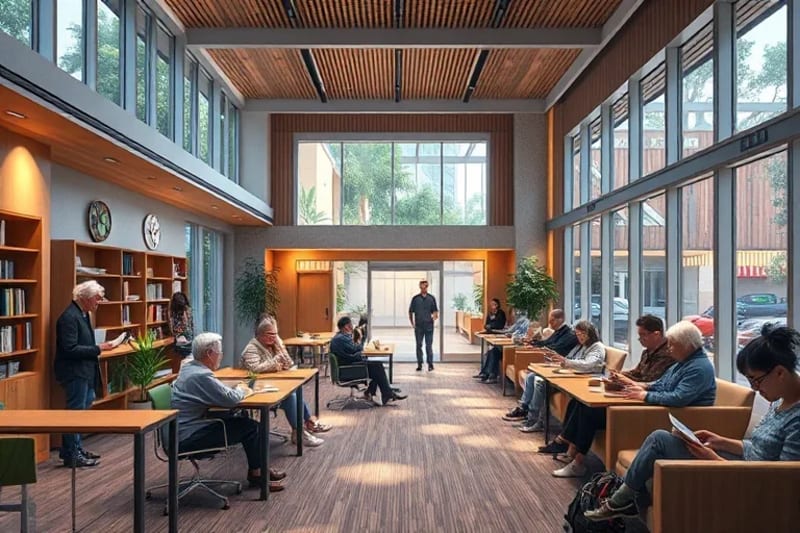
Elderly individuals thriving in a neuroarchitecturally designed communal area.
Furthermore, the increasing awareness of environmental factors, including the impact of climate change, will likely lead to a greater emphasis on sustainable neuroarchitectural practices. Designing buildings that are not only good for the brain but also good for the planet will be a key focus. This includes using non-toxic materials, optimizing energy efficiency, and integrating green infrastructure. The convergence of neuroarchitecture with fields like urban planning and public health will foster the creation of entire communities designed to support human flourishing and extended healthy lifespans. This holistic vision for healthy environments extends beyond individual buildings, touching upon the broader societal implications, much like the burgeoning field of climate litigation and environmental law.
Challenges and Ethical Considerations
Despite its immense potential, neuroarchitecture faces several challenges and ethical considerations. One primary challenge is the cost associated with implementing these specialized design principles, which can make brain-healthy environments less accessible to broader populations. Bridging the gap between cutting-edge research and practical, affordable applications is crucial for widespread adoption.
Another consideration is the need for more empirical research. While many neuroarchitectural principles are based on sound scientific theories, more rigorous, long-term studies are needed to quantify the exact impact of specific design interventions on cognitive function and longevity. Ethical concerns also arise regarding privacy, especially with the integration of smart technologies that monitor occupant behavior. Ensuring that design choices empower individuals rather than control them is paramount.
Ultimately, the success of neuroarchitecture in promoting longevity will depend on a collaborative effort between neuroscientists, architects, policymakers, and communities. By prioritizing human well-being and brain health in design, we can create environments that not only look beautiful but also actively contribute to a longer, healthier, and more fulfilling life for everyone. This interdisciplinary approach, where scientific understanding informs practical application, is key to unlocking the full potential of our built world.
Related Searches & Further Reading
Explore more topics that delve into the intersection of science, design, and human well-being.
- Neuroarchitecture Longevity: Designing Brain Health Spaces
- Norbert Wiener: Father of Cybernetics, Vision for the Digital Era
- Generative Artificial Intelligence: Art, Ethics, and Legal Challenges
- Japanese Kintsugi: Philosophy, Repair, Imperfect Beauty
- Animal Hybridization: Evolution, Adaptation, and Health
- Mindful Celestial Mechanics: Cosmic Rhythms for Well-being
- Eclipses Astrological Impact: Personal and Collective Significance
- Grids, Crystals, Sacred Geometry: Empowering Energy Healing
Source: Hybrid content assisted by AI and human editorial supervision.


Comentarios