
Circular Economy Business Models Green Startups
The global economy faces unprecedented challenges, from resource depletion to climate change. In response, the concept of the circular economy has emerged as a transformative framework, moving beyond the traditional linear "take-make-dispose" model. Green startups, driven by innovation and a commitment to sustainability, are uniquely positioned to spearhead this transition by developing and implementing sustainable business models.
This article delves into the core principles of the circular economy and explores various business models that green startups can adopt to foster environmental stewardship, economic resilience, and social equity. Understanding these models is crucial for entrepreneurs aiming to build ventures that are not only profitable but also contribute positively to the planet.
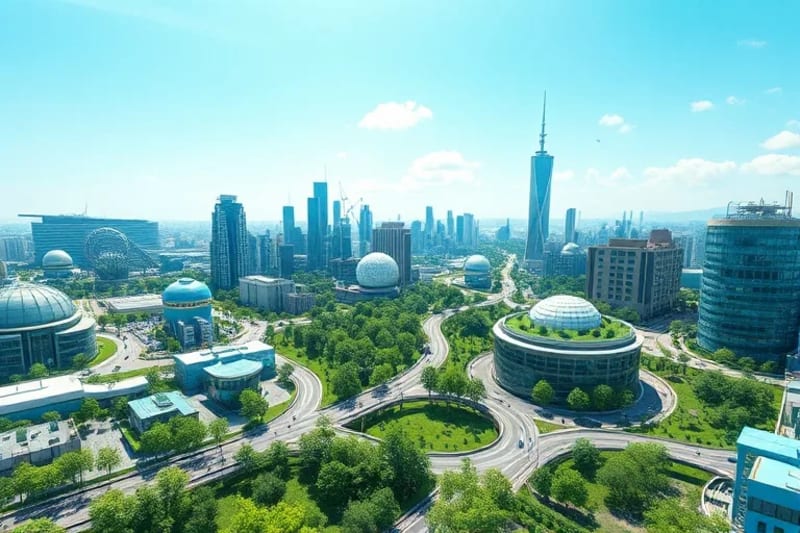
Conceptual representation of a future city operating on circular economy principles, integrating green infrastructure and advanced resource management.
Table of Contents
- Understanding the Circular Economy: A Paradigm Shift
- Why Green Startups are Essential for Circularity
- Key Sustainable Business Models for Green Startups
- Challenges and Opportunities for Implementation
- Strategies for Green Startup Success
- Measuring Impact and Sustainability Metrics
Understanding the Circular Economy: A Paradigm Shift
The circular economy is an economic system aimed at eliminating waste and the continual use of resources. It is a regenerative approach by design, contrasting sharply with the linear model of production and consumption that has dominated industrial economies for centuries. This model is built on three fundamental principles: design out waste and pollution, keep products and materials in use, and regenerate natural systems.
By embracing these principles, businesses can decouple economic growth from finite resource consumption, leading to a more resilient and sustainable future. It involves rethinking how products are designed, manufactured, used, and ultimately reused or recycled, creating a closed-loop system where materials retain their value for as long as possible. This shift requires systemic innovation across value chains, from material sourcing to end-of-life management.
The Ellen MacArthur Foundation, a leading proponent of the circular economy, emphasizes its potential to address global challenges like climate change, biodiversity loss, and pollution. It offers a framework for innovation that can unlock significant economic opportunities while delivering substantial environmental benefits. For a deeper understanding of economic transformations, consider exploring the Collaborative Economy, which shares some foundational principles of resource optimization.
| Feature | Linear Economy | Circular Economy |
|---|---|---|
| Resource Flow | Take-Make-Dispose | Reduce-Reuse-Recycle-Regenerate |
| Waste Generation | High, inherent to the system | Minimized, designed out |
| Value Retention | Lost at end-of-life | Maximized through loops |
| Economic Model | Volume-driven, consumption-focused | Value-driven, service-focused |
| Environmental Impact | Significant, resource depletion | Reduced, regenerative |
Why Green Startups are Essential for Circularity
Green startups are often born out of a desire to solve environmental problems, making them natural innovators in the circular economy space. Unlike established corporations burdened by legacy infrastructure and traditional business models, startups possess the agility and flexibility to experiment with new approaches. Their small scale allows for rapid prototyping and iteration, which is crucial for developing novel circular solutions.
These nascent companies can challenge existing norms, introduce disruptive technologies, and create entirely new value chains that align with circular principles. They can focus on specific niches, such as upcycling textile waste, developing sustainable packaging, or providing repair services for electronics. Furthermore, green startups often attract talent passionate about sustainability, fostering a culture of innovation and purpose.
Their role extends beyond mere product development; they are instrumental in educating consumers and businesses about the benefits of circularity. By demonstrating viable and profitable circular models, they inspire larger industries to follow suit, accelerating the overall transition towards a more sustainable global economy. The future of work itself is being reshaped by such innovations, as discussed in the context of Automation and AI.
Key Sustainable Business Models for Green Startups
Adopting a circular business model requires a fundamental shift in strategy. Here are some of the most prominent models that green startups can leverage to create value while minimizing environmental impact:
Product-as-a-Service (PaaS)
Instead of selling products outright, the PaaS model involves providing access to a product's function through a service agreement. The manufacturer retains ownership, incentivizing them to design durable, repairable, and recyclable products. Examples include companies leasing washing machines, selling light as a service, or providing tools on a subscription basis.
- Benefits: Reduced consumption, extended product lifespan, stable revenue streams for businesses, and lower upfront costs for consumers.
- Challenges: Requires robust logistics for maintenance and returns, and a shift in consumer mindset from ownership to access.
Resource Recovery & Recycling
This model focuses on capturing and reintroducing waste materials back into the production cycle, either as raw materials or as components for new products. This includes advanced recycling technologies, upcycling initiatives, and industrial symbiosis where one industry's waste becomes another's input. Green startups can specialize in collecting specific waste streams, developing innovative processing techniques, or creating high-value products from discarded materials.
- Benefits: Reduces reliance on virgin resources, minimizes landfill waste, and creates new economic opportunities in waste management.
- Challenges: Requires efficient collection infrastructure, quality control for recovered materials, and market acceptance for recycled content.
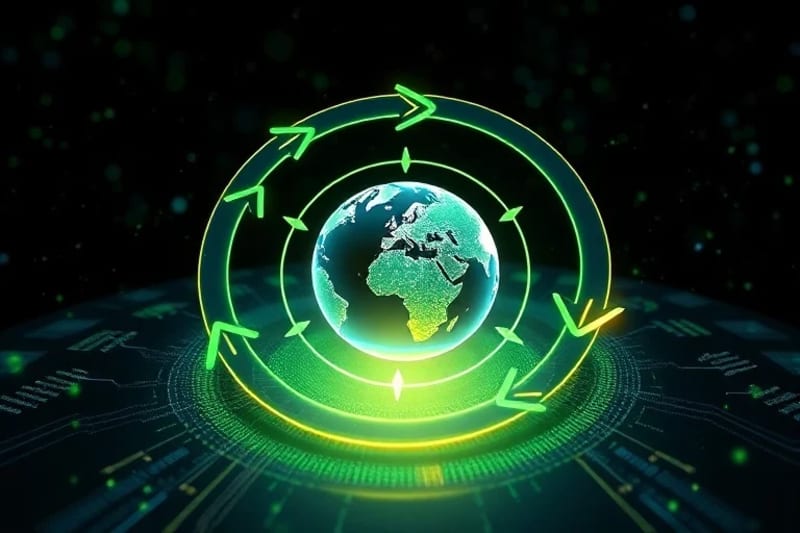
Visualizing the interconnected loops of production, consumption, and regeneration, illustrating efficient material flows and resource optimization.
Sharing Economy & Collaborative Consumption
The sharing economy facilitates the sharing of underutilized assets, services, or skills among individuals or organizations. Green startups can build platforms for peer-to-peer sharing of goods (e.g., tools, clothing, vehicles) or services (e.g., skill-sharing, co-working spaces). This model maximizes resource utilization and reduces the need for individual ownership, thereby lowering overall consumption.
- Benefits: Increased asset utilization, reduced environmental footprint, community building, and cost savings for users.
- Challenges: Trust and safety concerns, regulatory hurdles, and scaling platforms effectively.
Longevity & Repair Services
This model focuses on extending the lifespan of products through maintenance, repair, refurbishment, and upgrading. Green startups can specialize in offering expert repair services for electronics, appliances, furniture, or clothing, counteracting the trend of planned obsolescence. By making repair accessible and affordable, they empower consumers to keep their products longer.
- Benefits: Reduces waste, saves consumers money, and creates skilled local jobs.
- Challenges: Availability of spare parts, consumer perception of repair vs. replacement, and technical expertise requirements.
Bio-based & Regenerative Models
These models harness biological cycles, using renewable resources and ensuring that materials can safely return to the biosphere after use. Green startups can innovate in areas like biodegradable packaging, bio-based materials for construction or textiles, and regenerative agriculture practices that improve soil health and sequester carbon. This approach emphasizes ecological restoration and positive environmental impact.
- Benefits: Reduces reliance on fossil fuels, enhances natural capital, and supports biodiversity.
- Challenges: Ensuring true biodegradability, avoiding monoculture practices, and scaling production of bio-based alternatives.
Challenges and Opportunities for Implementation
While the circular economy offers immense potential, green startups face several challenges in its implementation. These include securing funding, overcoming regulatory hurdles designed for linear systems, and shifting consumer behavior. Many consumers are accustomed to convenience and low prices associated with disposable products, making the transition to circular models a cultural as well as an economic one. Startups must effectively communicate the long-term value and benefits of their offerings.
However, these challenges also present significant opportunities. The growing demand for sustainable products and services, coupled with increasing environmental awareness, creates a fertile ground for green innovation. Governments and international organizations are increasingly supporting circular economy initiatives through grants, policies, and incentives. This creates a supportive ecosystem for startups that can demonstrate tangible environmental and economic benefits.
Furthermore, technological advancements in areas like IoT, AI, and blockchain can facilitate circularity by enabling better tracking of materials, optimizing logistics, and enhancing transparency in supply chains. Green startups that integrate these technologies can gain a competitive edge. The legal framework around commerce, such as the Colombian Commercial Code, may also need to adapt to fully support these innovative models.
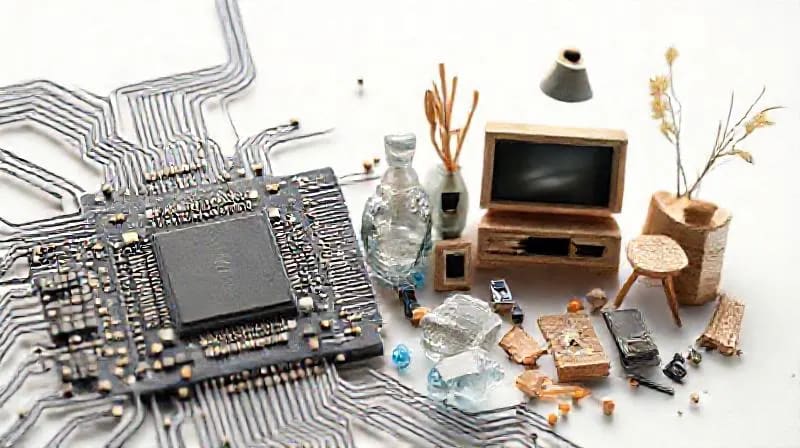
A conceptual still-life showcasing the artistic transformation and value creation from various recycled and upcycled materials.
Strategies for Green Startup Success
To thrive in the circular economy, green startups should adopt several strategic approaches. First, focus on strong product design that prioritizes durability, modularity, repairability, and recyclability from the outset. This "design for circularity" is fundamental to minimizing waste and maximizing resource value. Collaborating with material scientists and industrial designers can be crucial here.
Second, build robust partnerships across the value chain. This includes collaborating with suppliers for sustainable sourcing, with logistics providers for reverse logistics, and with other businesses for industrial symbiosis. A collaborative ecosystem is often more effective than isolated efforts. Consider how Cybersecurity Strategies are vital for protecting these interconnected systems.
Third, educate your customers. Transparency about your circular practices and the environmental benefits of your products can build trust and foster loyalty. Marketing efforts should highlight the unique value proposition of circular products, emphasizing quality, longevity, and positive impact. Fourth, continuously innovate and adapt. The circular economy is an evolving field, and staying abreast of new technologies, materials, and consumer trends is vital for long-term success.
Measuring Impact and Sustainability Metrics
For green startups, demonstrating tangible environmental and social impact is as important as financial performance. Implementing clear metrics to measure sustainability is crucial for attracting investors, satisfying customers, and guiding business decisions. Key performance indicators (KPIs) can include material circularity rates, waste diversion rates, carbon footprint reduction, water usage efficiency, and social impact metrics like job creation or community engagement.
Utilizing tools for life cycle assessment (LCA) can provide a comprehensive understanding of a product's environmental impact throughout its entire existence. Transparent reporting of these metrics builds credibility and reinforces the startup's commitment to its green mission. This commitment resonates with a growing segment of consumers and investors who prioritize ethical and sustainable practices. Effective financial education, as highlighted in Financial Education for Adults, often includes understanding sustainable investment.
Ultimately, green startups operating within the circular economy are not just building businesses; they are building a better future. By embracing these innovative models, they contribute to a regenerative system that benefits both people and the planet, proving that economic prosperity and ecological health can go hand in hand.
Related Searches
- Neuroplasticidad: Adaptación Cerebral y Aprendizaje Vital
- Abductor Hallucis: Clave Estabilidad Postural, Prevención Caídas
- Realidad Virtual Dolor Crónico: Rehabilitación Innovadora
- Alfabeto Historia: Orígenes, Evolución, Impacto Global
- Feng Shui Alma: Armonizando Espacio Interior Cinco Elementos Chinos
- Horóscopo Personalizado Tránsitos Diarios: Predicciones Astrales Únicas
- Sellos Apocalipsis: Interpretación Profética Eventos Finales
- Armadura Espiritual San Miguel: Defensa Ataques Negativos
- Conscious Activism Spiritual Practice: Global Change
- Cosmic Gardening: Aligning Planting with Lunar and Astrological Cycles
Source: Hybrid content assisted by AI and human editorial supervision.


Comentarios