
Gratitude Economy: Social Impact Business Models
In an era increasingly defined by conscious consumerism and a demand for corporate responsibility, the concept of the "Gratitude Economy" emerges as a transformative paradigm. This innovative approach to business transcends traditional profit-centric models, prioritizing social impact, authentic human connection, and sustainable practices. It's a movement that recognizes the intrinsic value of giving back, fostering community, and building relationships based on mutual respect and appreciation, rather than solely transactional exchanges. The gratitude economy is not merely a philanthropic endeavor; it represents a fundamental shift in how businesses operate, create value, and engage with their stakeholders.

A diverse group of individuals united by a common purpose, illustrating the collaborative spirit and human connection central to the gratitude economy.
At its core, the gratitude economy is built on the principle that positive impact and genuine appreciation can drive economic success. Businesses operating within this framework actively seek to address societal challenges, empower communities, and contribute to environmental well-being. This often involves integrating ethical sourcing, fair labor practices, and transparent operations into their core business strategy. The focus shifts from maximizing shareholder profit at all costs to creating shared value for all involved: employees, customers, suppliers, and the broader community.
This article will delve into the foundational principles, diverse models, and profound benefits of the gratitude economy. We will explore how businesses are successfully implementing these practices, the challenges they face, and the future outlook for this evolving economic philosophy. Understanding this shift is crucial for entrepreneurs, consumers, and policymakers alike, as it points towards a more equitable, sustainable, and ultimately, more human-centric future for commerce.
Table of Contents
- Defining the Gratitude Economy
- Core Principles and Values
- Business Models in the Gratitude Economy
- Benefits for Businesses and Society
- Challenges and Criticisms
- Case Studies and Examples
- The Future of Gratitude in Commerce
Defining the Gratitude Economy
The gratitude economy can be understood as an economic framework where transactions and relationships are deeply influenced by principles of appreciation, reciprocity, and positive social and environmental impact. Unlike traditional economic models that often prioritize competition and individual gain, this new paradigm emphasizes collaboration, shared prosperity, and collective well-being. It's a response to growing disillusionment with unchecked capitalism and a recognition that true value extends beyond monetary metrics.
This economy is characterized by businesses that intentionally integrate social and environmental goals into their core operations, not as an afterthought or a separate CSR (Corporate Social Responsibility) department, but as an integral part of their mission. Consumers, in turn, are increasingly drawn to brands that demonstrate genuine commitment to these values, willing to support companies that align with their ethical stance. This creates a virtuous cycle where conscious consumption fuels responsible business practices, fostering a more sustainable and compassionate marketplace.
Key elements defining this economy include:
- Purpose-Driven Business: Companies are founded on a mission to solve a problem or create positive change, beyond just making a profit.
- Stakeholder Focus: Value is created for all stakeholders, including employees, customers, suppliers, and communities, not just shareholders.
- Transparency and Authenticity: Open communication about practices, sourcing, and impact builds trust and fosters genuine connection.
- Reciprocity and Giving Back: Businesses actively engage in initiatives that benefit society or the environment, often without direct expectation of immediate financial return.
- Human Connection: Emphasis on building meaningful relationships with customers and employees, fostering loyalty and a sense of belonging.
Core Principles and Values
The gratitude economy is underpinned by a set of core principles that guide business decisions and interactions. These values are not just marketing slogans but deeply embedded philosophies that shape organizational culture and operational strategies. Adhering to these principles allows businesses to build strong, resilient relationships and create lasting positive impact.
One of the most fundamental principles is empathy. Businesses strive to understand the needs and challenges of their customers, employees, and the communities they serve. This understanding informs product development, service delivery, and social initiatives, ensuring that efforts are genuinely impactful and relevant. Empathy fosters a sense of shared humanity, moving beyond transactional interactions to meaningful engagements.
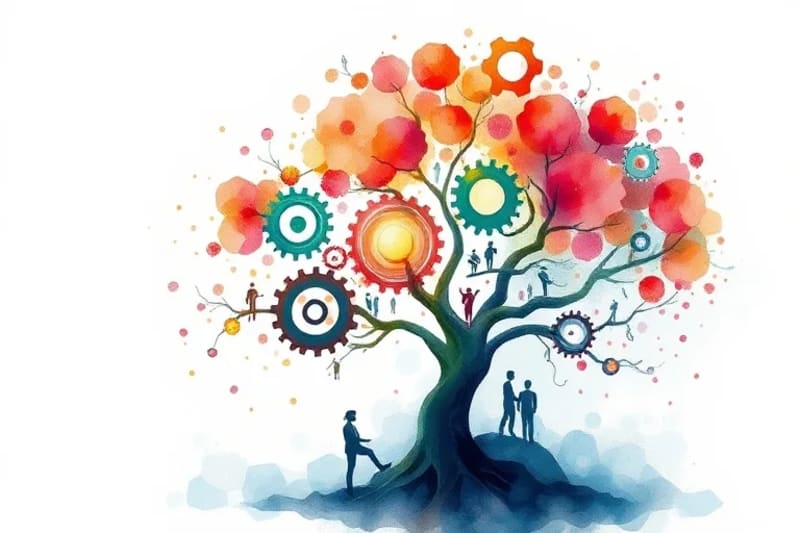
An artistic representation of how business models can integrate human connection and sustainable growth, fostering a deeper sense of purpose.
Another crucial principle is stewardship. This involves taking responsibility for the environmental and social impact of business operations. Companies in the gratitude economy often adopt practices that minimize waste, conserve resources, and promote ecological regeneration. This extends to responsible supply chain management, ensuring ethical sourcing and fair treatment of workers across the entire value chain. Stewardship reflects a long-term perspective, recognizing that current actions have future consequences.
Authenticity and transparency are also paramount. In an age of information overload, consumers are increasingly discerning and value genuine communication. Businesses that are open about their processes, challenges, and successes build trust and foster stronger relationships. This includes being honest about their impact, both positive and negative, and continuously striving for improvement. Authenticity creates a foundation for genuine gratitude and loyalty.
Finally, reciprocity forms the bedrock of the gratitude economy. This isn't just about giving back, but about creating a system where value flows in multiple directions. When businesses invest in their employees, communities, and the environment, they often receive intangible benefits such as enhanced reputation, increased customer loyalty, and a more engaged workforce. This reciprocal relationship builds a resilient ecosystem where everyone benefits.
Business Models in the Gratitude Economy
The gratitude economy manifests in various business models, each designed to integrate social impact and human connection into its core operations. These models often challenge conventional wisdom, demonstrating that profit and purpose are not mutually exclusive but can be mutually reinforcing. Understanding these diverse approaches is key to appreciating the breadth of this economic movement.
One prominent model is the "Buy One, Give One" (BOGO) approach, popularized by companies like TOMS Shoes. For every product purchased, the company donates an equivalent item or service to someone in need. This direct form of reciprocity allows consumers to feel good about their purchase, knowing it has a tangible social benefit. While simple, its effectiveness lies in its clear and immediate impact, fostering a sense of shared generosity.
Another evolving model is the "Subscription for Impact". Here, customers subscribe to a service or product, and a portion of their subscription fee is automatically directed towards a social or environmental cause. This provides a steady stream of funding for impact initiatives while offering convenience to consumers. It leverages the recurring revenue model to create sustained positive change, building a community around shared values.
Social Enterprises are businesses explicitly created to address a social or environmental problem, using commercial strategies to achieve their mission. Their primary goal is social impact, with profits reinvested to further that mission. Examples include companies that provide employment opportunities for marginalized groups, develop sustainable technologies, or offer affordable access to essential services. These enterprises embody the gratitude economy by making impact their fundamental purpose.
The rise of Benefit Corporations (B Corps) also reflects this shift. B Corps are legally required to consider the impact of their decisions on all stakeholders, not just shareholders. This legal structure provides a framework for businesses to balance profit and purpose, ensuring that social and environmental considerations are embedded in their governance. This certification offers consumers a clear signal of a company's commitment to higher standards of transparency, accountability, and performance.
Finally, Community-Supported Agriculture (CSA) and other localized, direct-to-consumer models foster gratitude by creating direct relationships between producers and consumers. Consumers pay upfront for a share of produce, supporting local farmers and understanding the source of their food. This builds trust, appreciation for labor, and a stronger sense of community, moving away from anonymous, distant supply chains. This model highlights how fostering direct human connection can be a powerful economic driver.
Benefits for Businesses and Society
Embracing the gratitude economy offers a multitude of benefits, not only for the businesses themselves but also for the broader society and the planet. These advantages extend beyond mere goodwill, translating into tangible improvements in reputation, customer loyalty, employee engagement, and long-term sustainability. The shift towards purpose-driven commerce creates a win-win scenario for all stakeholders.
For businesses, a strong commitment to social impact and human connection can significantly enhance brand reputation and consumer trust. In an increasingly competitive market, consumers are more likely to choose brands that align with their values. This leads to increased customer loyalty and advocacy, as satisfied customers become enthusiastic promoters of the brand's mission. A positive reputation also attracts top talent, as individuals seek employment with companies that offer more than just a paycheck, but also a sense of purpose.

A conceptual city model resting on a gentle hand, representing business models built on support, community, and the profound impact of gratitude.
Employee engagement and retention also see a marked improvement. When employees feel that their work contributes to a greater good, their motivation, productivity, and job satisfaction increase. This fosters a positive internal culture, reduces turnover, and enhances overall organizational performance. Companies that prioritize employee well-being and provide opportunities for meaningful contribution cultivate a loyal and dedicated workforce.
From a societal perspective, the gratitude economy drives positive change by addressing pressing social and environmental issues. Businesses become agents of change, contributing to sustainable development goals, poverty reduction, environmental protection, and community empowerment. This collective effort can lead to more equitable societies, healthier ecosystems, and a higher quality of life for all. The focus on human connection also strengthens social cohesion and fosters a sense of shared responsibility.
Furthermore, these models often lead to innovation. The need to solve complex social and environmental problems can spur creativity and the development of new, sustainable products, services, and technologies. This forward-thinking approach can position businesses at the forefront of emerging markets and create new opportunities for growth. The pursuit of purpose can be a powerful catalyst for groundbreaking solutions.
Challenges and Criticisms
Despite its numerous advantages, the gratitude economy is not without its challenges and criticisms. Implementing purpose-driven models requires navigating complex ethical considerations, ensuring genuine impact, and often balancing social goals with financial viability. These hurdles highlight the need for careful planning, transparent communication, and continuous evaluation.
One significant challenge is the risk of "greenwashing" or "purpose-washing." This occurs when companies superficially adopt social or environmental initiatives for marketing purposes without genuine commitment or measurable impact. Consumers are increasingly savvy and can detect insincere efforts, which can severely damage a brand's reputation and erode trust. Authenticity is paramount, and businesses must back their claims with concrete actions and verifiable results.
Another criticism revolves around the measurement of impact. While financial returns are easily quantifiable, social and environmental impacts can be more difficult to measure and communicate effectively. Developing robust metrics and reporting frameworks is crucial to demonstrate accountability and prove the efficacy of gratitude-driven initiatives. Without clear data, it can be challenging to justify investments in social programs to traditional stakeholders focused solely on profit.
Balancing profit and purpose can also be a delicate act. While the gratitude economy posits that these can be mutually reinforcing, there are instances where social investments may initially reduce profit margins or require significant upfront capital. Businesses must strategically integrate their social mission into their long-term financial planning to ensure sustainability. This often requires a different mindset from investors and management, prioritizing long-term value creation over short-term gains.
Furthermore, scaling impact can be difficult. What works for a small local business may not easily translate to a large multinational corporation. Maintaining authenticity and deep human connection as a company grows requires innovative strategies and a consistent commitment to core values. The complexity of global supply chains, for example, can make ethical sourcing and fair labor practices challenging to monitor and enforce consistently.
Finally, there's the challenge of consumer education and engagement. While conscious consumerism is on the rise, not all consumers are aware of or prioritize the social impact of their purchases. Businesses in the gratitude economy must effectively communicate their mission and impact to resonate with a broader audience, demonstrating the value proposition beyond the product itself.
Case Studies and Examples
Numerous companies across various sectors have successfully adopted principles of the gratitude economy, demonstrating that business can indeed be a force for good. These examples provide valuable insights into how purpose, impact, and human connection can be woven into the fabric of commercial success.
Patagonia stands as a prime example of a company deeply committed to environmental stewardship. Known for its high-quality outdoor apparel, Patagonia consistently advocates for environmental causes, donates a percentage of its sales to grassroots environmental organizations, and actively promotes repair and reuse to extend the life of its products. Their "Worn Wear" program encourages customers to repair rather than replace, embodying a circular economy approach. This deep commitment has fostered immense customer loyalty and a strong brand identity rooted in environmental responsibility.
Warby Parker revolutionized the eyewear industry by offering stylish, affordable glasses while also addressing a global need. For every pair of glasses sold, Warby Parker distributes a pair to someone in need through its "Buy a Pair, Give a Pair" program. This model directly integrates social impact into its sales process, making every customer a participant in their mission. Their success demonstrates that a strong social mission can be a powerful differentiator in a competitive market.
Another compelling case is Etsy, an online marketplace focused on handmade and vintage items. Etsy empowers independent artisans and small businesses, fostering a global community of creators and conscious consumers. By providing a platform for unique, often ethically produced goods, Etsy promotes sustainable consumption and celebrates human creativity. Its model cultivates a sense of connection between buyer and maker, enhancing the feeling of gratitude for unique craftsmanship and supporting livelihoods.
Even in the tech sector, companies like Salesforce exemplify aspects of the gratitude economy through their "1-1-1 model," dedicating 1% of equity, 1% of product, and 1% of employee time to philanthropic causes. This integrated approach to corporate philanthropy demonstrates that even large tech giants can embed social impact into their operational DNA, fostering a culture of giving back and community engagement among their vast workforce. This commitment has contributed to their reputation as a socially responsible company and a desirable employer.
These examples illustrate that the gratitude economy is not a niche concept but a versatile framework applicable across diverse industries. The common thread is a genuine commitment to purpose, transparency, and creating value beyond financial profit, ultimately fostering a deeper connection with customers and the wider world.
The Future of Gratitude in Commerce
The trajectory of the gratitude economy suggests a growing influence on the future of commerce. As global challenges intensify and consumer awareness rises, businesses that prioritize social impact, human connection, and sustainability are likely to gain a significant competitive edge. This isn't just a trend; it's an evolution in economic thought and practice, driven by a collective desire for more meaningful and responsible interactions.
We can anticipate several key developments shaping this future. Firstly, there will be an increased demand for transparency and accountability. Consumers will expect businesses to provide clear, verifiable data on their social and environmental impact, moving beyond mere declarations to measurable outcomes. Technologies like blockchain could play a role in ensuring supply chain transparency and ethical sourcing, allowing consumers to trace the journey of products and verify claims.
Secondly, employee engagement will become an even more critical factor. As the younger generations enter the workforce, they bring with them a strong desire for purpose-driven work. Companies that offer opportunities for social contribution, foster inclusive cultures, and prioritize employee well-being will be better positioned to attract and retain talent. The integration of purpose into company culture will be essential for long-term success.
Thirdly, collaborative ecosystems will flourish. The gratitude economy thrives on partnerships between businesses, non-profits, governments, and communities to address complex problems. We will see more cross-sector collaborations aimed at creating systemic change, moving beyond isolated initiatives to integrated solutions. This collaborative spirit will foster innovation and amplify collective impact, as discussed in our article on Regenerative Leadership: Sustainable Business Impact.
Finally, the very definition of "value" will continue to broaden. Beyond financial metrics, businesses will increasingly be evaluated on their social capital, environmental footprint, and contribution to human flourishing. This holistic view of value will drive investment decisions, policy-making, and consumer choices, cementing the gratitude economy as a fundamental pillar of future commerce. The shift towards conscious capitalism is not just about doing less harm, but about actively creating more good.
The gratitude economy represents a hopeful vision for the future of business—one where success is measured not just by profit, but by the positive impact generated, the genuine connections forged, and the collective well-being fostered. It's a call to action for businesses to embrace their role as stewards of society and the planet, building a more sustainable, equitable, and grateful world through their commercial endeavors.
Source: Hybrid content assisted by AIs and human editorial supervision.


Comentarios