
Space Law: Extraterrestrial Resources, Sovereignty, New Frontier
Space Law: Extraterrestrial Resources, Sovereignty, and the New Legal Frontier
The vast expanse of outer space, once the exclusive domain of scientific curiosity and speculative fiction, is rapidly becoming a new frontier for human endeavor, economic exploitation, and complex legal challenges. As nations and private entities set their sights on celestial bodies for scientific research, tourism, and resource extraction, the need for a robust and internationally recognized framework of space law becomes increasingly critical. This article delves into the intricate legal landscape governing activities beyond Earth, focusing on the contentious issues of sovereignty over extraterrestrial resources and the ongoing efforts to establish a new legal order for the cosmos.
The foundational principles of space law were laid during the Cold War era, driven by the race to space and the imperative to prevent militarization and conflict in this new domain. However, the rapid pace of technological advancement and the emergence of private space ventures have introduced novel questions that challenge these traditional frameworks. Understanding the evolution of space law is essential to grasping the complexities of governing the 'final frontier'.

Precursors intellectuales, diagramas fundamentales y representaciones conceptuales que forjaron la visión del Derecho Espacial sobre la soberanía y los recursos extraterrestres.
Fuente visual sujeta a disponibilidad del ecosistema: Wikimedia Commons bajo licencia CC BY-SA 4.0 o renderizado conceptual IA.
Table of Contents
- The Dawn of Space Law: Historical Context
- Defining Sovereignty in the Cosmos
- The Lure of Extraterrestrial Resources: Space Mining
- International Frameworks and Emerging Norms
- Challenges and Ethical Dilemmas
- The Future of Space Governance
The Dawn of Space Law: Historical Context
The genesis of space law can be traced back to the late 1950s and early 1960s, a period marked by intense competition between the United States and the Soviet Union. The launch of Sputnik 1 in 1957 signaled humanity's entry into the space age, prompting immediate concerns about the legal status of outer space and celestial bodies. The United Nations quickly became the primary forum for discussing these nascent legal issues, leading to the adoption of several landmark treaties.
The most significant of these is the 1967 Treaty on Principles Governing the Activities of States in the Exploration and Use of Outer Space, including the Moon and Other Celestial Bodies, commonly known as the Outer Space Treaty (OST). This treaty established fundamental principles such as the non-appropriation of outer space, the freedom of exploration and use, and the international responsibility of states for national activities in space. It serves as the bedrock of international space law, guiding state behavior and laying the groundwork for future agreements.
Subsequent agreements, including the Rescue Agreement (1968), the Liability Convention (1972), and the Registration Convention (1975), further elaborated on specific aspects of space activities, such as the return of astronauts, liability for damage caused by space objects, and the registration of objects launched into outer space. These early treaties collectively form the core legal framework that continues to shape our understanding of permissible actions beyond Earth's atmosphere.
Defining Sovereignty in the Cosmos
One of the most critical and enduring principles enshrined in the Outer Space Treaty is the concept of non-appropriation. Article II explicitly states that "Outer space, including the Moon and other celestial bodies, is not subject to national appropriation by claim of sovereignty, by means of use or occupation, or by any other means." This provision was designed to prevent a 'land grab' in space, ensuring that celestial bodies remain the common heritage of mankind.
However, the interpretation of "non-appropriation" has become a point of contention with the advent of space resource utilization. While states cannot claim sovereignty over a celestial body, the question arises whether private entities or states can extract and own resources from these bodies. Some argue that the extraction of resources, even without claiming the territory itself, constitutes a de facto appropriation, thus violating the spirit of the OST. Others contend that the treaty only prohibits national sovereignty over the body itself, not the ownership of resources once they have been severed and collected.
This debate highlights a significant gap in existing space law, as the OST predates serious consideration of commercial space mining. The 1979 Moon Agreement attempted to address this by declaring that the Moon and its natural resources are the common heritage of mankind and that an international regime should govern their exploitation. However, this agreement has been ratified by very few spacefaring nations, rendering its practical impact limited.
The Lure of Extraterrestrial Resources: Space Mining
The economic potential of extraterrestrial resources is immense, driving significant interest from both national space agencies and private corporations. Asteroids, the Moon, and even Mars are believed to harbor vast quantities of valuable minerals, water ice, and rare earth elements. Water ice, in particular, is crucial for sustaining long-duration human missions and for producing rocket fuel, making it a strategic resource for future space exploration and colonization.

Representación artística de la extracción de recursos en un asteroide, con naves espaciales y equipos robóticos operando en el espacio.
Companies are already developing technologies for asteroid mining and lunar resource extraction, anticipating a future where these resources can be used in space or brought back to Earth. The financial incentives are substantial, with some estimates valuing the mineral wealth of certain asteroids in the trillions of dollars. This burgeoning industry necessitates clear legal guidelines to prevent conflicts, ensure equitable access, and manage environmental impacts in space.
The absence of a universally accepted legal framework for space resource ownership creates significant uncertainty for investors and operators. Countries like the United States and Luxembourg have enacted domestic laws recognizing the right of their citizens to extract and own space resources, but these laws are not recognized by all nations and raise questions about their compatibility with international treaties. This fragmented legal approach poses a challenge to the sustainable development of space mining and could lead to disputes among spacefaring entities.
International Frameworks and Emerging Norms
In response to the evolving landscape, new international initiatives are emerging to address the gaps in space law. The Artemis Accords, led by the United States, represent a set of bilateral agreements for cooperation in lunar exploration and resource utilization. These accords build upon the principles of the Outer Space Treaty but also introduce new concepts, such as "safety zones" around lunar operations, which have sparked debate regarding their consistency with the non-appropriation principle.
The Accords emphasize transparency, interoperability, and the peaceful use of space, aiming to create a common understanding for responsible behavior in lunar exploration. While not a formal treaty, they are seen by signatory nations as a practical framework for governing future activities. However, other major space powers, such as China and Russia, have not joined the Artemis Accords, preferring to work under existing UN frameworks or developing their own cooperative initiatives. This divergence highlights the challenge of achieving global consensus on space governance.
The development of international space law is a continuous process, influenced by technological advancements and geopolitical shifts. The discussions around Brand Protection in the Metaverse, for instance, share conceptual similarities with defining rights in new, intangible frontiers, albeit in a different domain. The principles of intellectual property and jurisdiction in virtual spaces can offer parallels for how we might conceive of property rights in physical extraterrestrial environments.
| Instrument | Year | Key Provisions | Significance for Resources |
|---|---|---|---|
| Outer Space Treaty (OST) | 1967 | Non-appropriation, freedom of exploration, international responsibility, non-militarization. | Prohibits national appropriation of celestial bodies; ambiguous on resource ownership. |
| Rescue Agreement | 1968 | Assistance to astronauts in distress, return of space objects. | Indirectly supports human presence for resource activities. |
| Liability Convention | 1972 | Liability for damage caused by space objects. | Relevant for potential damage from mining operations. |
| Registration Convention | 1975 | Registration of objects launched into outer space. | Ensures transparency of resource-related missions. |
| Moon Agreement | 1979 | Moon and resources as common heritage; calls for international regime. | Directly addresses resource ownership, but poorly ratified. |
| Artemis Accords | 2020 | Bilateral agreements for lunar exploration, resource utilization, safety zones. | Supports commercial resource extraction under specific principles. |
Challenges and Ethical Dilemmas
The pursuit of extraterrestrial resources is fraught with significant challenges and ethical dilemmas. Beyond the legal ambiguities surrounding ownership, there are concerns about the potential for conflict, environmental degradation of celestial bodies, and the equitable distribution of benefits. The "first come, first served" approach favored by some domestic laws could disadvantage developing nations, exacerbating existing global inequalities.
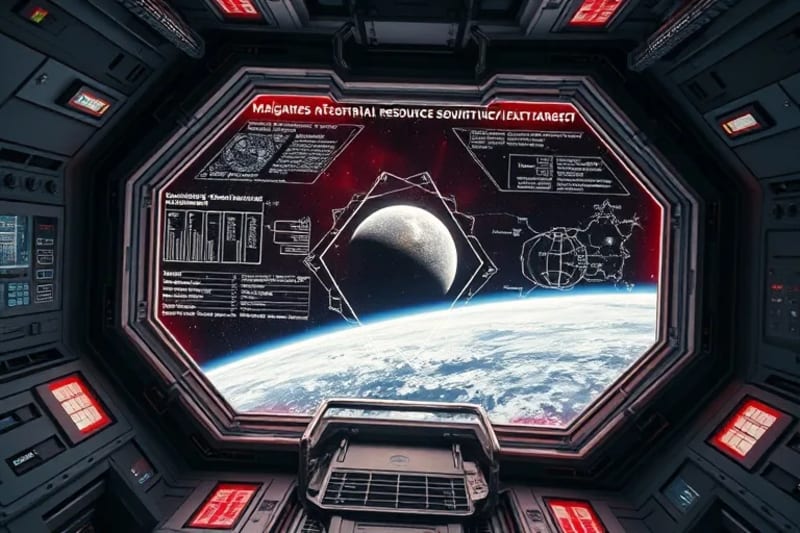
Visualización conceptual de marcos legales y documentos regulatorios proyectados en un entorno espacial futurista.
Environmental concerns include the potential for contamination of pristine celestial environments and the creation of space debris from mining operations. While Earth-based environmental laws are well-established, applying similar protections to extraterrestrial bodies requires new international norms and enforcement mechanisms. The ethical implications also extend to the very nature of humanity's expansion into space. As explored in discussions on Digital Cryptozoology Exploring Online Anomalies Cybersecurity, the ethical considerations of new frontiers are paramount, demanding foresight and careful deliberation.
Furthermore, the dual-use nature of many space technologies means that advancements in resource extraction could also have military applications, raising fears of an arms race in space. Preventing the weaponization of outer space remains a critical objective for international diplomacy, necessitating robust verification and transparency measures. The legal challenges in this domain are as complex as those faced in Colombian Commercial Code: Company Transformation Legal Framework, where established legal principles must adapt to new corporate structures and global operations.
The Future of Space Governance
The future of space law will undoubtedly involve a delicate balance between promoting innovation and ensuring responsible, equitable, and sustainable activities in outer space. International cooperation, rather than unilateral action, will be key to developing a comprehensive and universally accepted legal framework. This may involve revisiting existing treaties, negotiating new protocols, or establishing specialized international bodies to oversee space resource utilization.
The ongoing dialogue within the United Nations Committee on the Peaceful Uses of Outer Space (COPUOS) and other multilateral forums is crucial for forging consensus. As humanity ventures further into the cosmos, the principles of transparency, peaceful resolution of disputes, and the common heritage of mankind must continue to guide our actions. The legal frontier of space is as vast and challenging as space itself, demanding innovative legal thinking and unwavering diplomatic commitment to ensure a harmonious and prosperous future beyond Earth.
Ultimately, the success of humanity's expansion into space hinges not just on technological prowess, but on our ability to establish a legal and ethical framework that upholds shared values and prevents conflict. The new legal frontier demands a global vision, ensuring that the benefits of space exploration and resource utilization are shared by all, fostering a truly inclusive cosmic future.
Related Searches
- International Space Law Treaties
- Outer Space Treaty Resource Ownership
- Artemis Accords Criticism
- Future of Space Mining Regulations
- Space Debris Legal Implications
Source: Hybrid content assisted by AI and human editorial supervision.


Comentarios