
Sustainable Business Models: Circular Economy for Green Startups
Sustainable Business Models: Circular Economy for Green Startups
The concept of a circular economy has emerged as a critical framework for addressing global challenges such as resource depletion, climate change, and waste accumulation. Unlike the traditional linear "take-make-dispose" model, the circular economy aims to keep resources in use for as long as possible, extract the maximum value from them while in use, then recover and regenerate products and materials at the end of each service life. For green startups, embracing circular economy principles is not just an environmental imperative but a strategic opportunity to innovate, reduce costs, and build resilient business models.
This paradigm shift requires a fundamental rethinking of how products are designed, produced, consumed, and managed at their end-of-life. Green startups are uniquely positioned to lead this transition, offering agile solutions and fresh perspectives to established industries. By integrating sustainability into their core business strategy from inception, these ventures can create significant value for both their stakeholders and the planet.
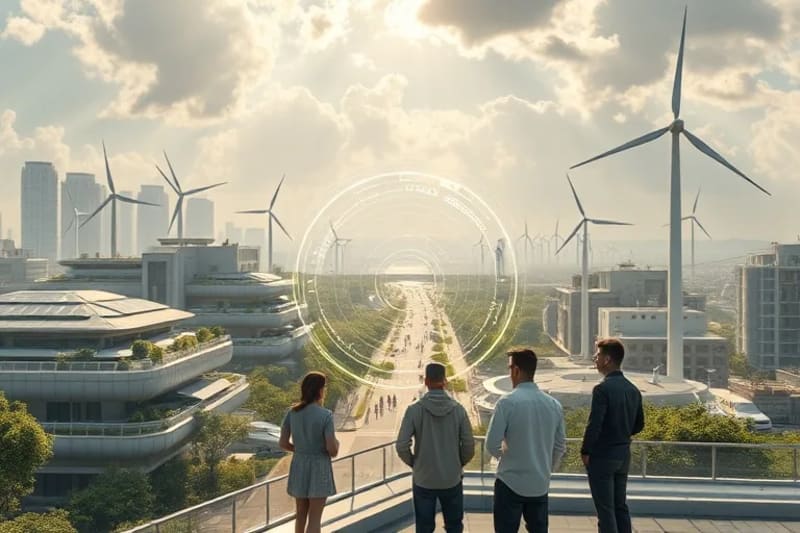
Conceptual representations of urban innovation, green infrastructure, and collaborative efforts driving circular economy solutions.
Table of Contents
- 1. Understanding the Circular Economy
- 2. Core Principles of Circularity
- 3. Key Sustainable Business Models for Startups
- 4. Benefits for Green Startups
- 5. Challenges and Enablers
- 6. Case Studies and Future Outlook
1. Understanding the Circular Economy
The circular economy is an economic system aimed at eliminating waste and the continual use of resources. It is restorative and regenerative by design, contrasting sharply with the linear economy that has dominated industrial practices since the Industrial Revolution. This model emphasizes three core principles: design out waste and pollution, keep products and materials in use, and regenerate natural systems.
It moves beyond simple recycling, advocating for systemic changes across entire value chains. This includes rethinking product design to facilitate easier repair, reuse, and recycling, as well as developing new business models that promote product longevity and resource efficiency. The ultimate goal is to decouple economic growth from finite resource consumption.
The Ellen MacArthur Foundation, a leading proponent of the circular economy, defines it as an industrial system that is restorative or regenerative by intention and design. It replaces the end-of-life concept with restoration, shifts towards the use of renewable energy, eliminates the use of toxic chemicals, and aims for the elimination of waste through the superior design of materials, products, systems, and business models. This holistic approach offers a robust framework for sustainable development.
2. Core Principles of Circularity
At its heart, the circular economy is guided by several foundational principles that provide a roadmap for businesses and policymakers. These principles are interconnected and mutually reinforcing, creating a resilient and sustainable system. Understanding these principles is crucial for any startup aiming to integrate circularity effectively into its operations.
- Design Out Waste and Pollution: This principle emphasizes preventing waste from being created in the first place. It involves designing products, components, and packaging with their end-of-life in mind, ensuring they can be easily disassembled, repaired, reused, or recycled.
- Keep Products and Materials in Use: This focuses on extending the lifespan of products and materials through strategies like maintenance, repair, reuse, redistribution, and remanufacturing. It challenges the notion of disposability and promotes models where products retain their value for longer.
- Regenerate Natural Systems: Beyond minimizing negative impacts, circularity aims to actively improve and restore natural capital. This includes practices like using renewable energy, supporting biodiversity, and returning biological materials to the earth safely.
These principles are often visualized through the "butterfly diagram," which distinguishes between technical and biological cycles. Technical cycles involve managing products and materials that are not biodegradable (e.g., metals, plastics) through reuse, repair, remanufacturing, and recycling. Biological cycles involve biodegradable materials (e.g., food, wood) that can be safely returned to the biosphere through composting or anaerobic digestion, regenerating natural systems.
3. Key Sustainable Business Models for Startups
Green startups can adopt various business models to align with circular economy principles, each offering unique opportunities for value creation and environmental impact. These models move beyond simply selling a product, focusing instead on service, access, and stewardship of resources.

Conceptual artwork illustrating the interconnected stages of a circular product lifecycle, emphasizing resource efficiency.
- Product-as-a-Service (PaaS): Instead of selling products, companies lease them to customers, retaining ownership and responsibility for maintenance, repair, and end-of-life management. This incentivizes durability and ease of repair. Examples include carpet tiles, lighting systems, or even clothing rentals.
- Sharing Platforms: Businesses facilitate the sharing of underutilized assets among multiple users, maximizing their use and reducing the need for new production. This can range from car-sharing services to tool libraries.
- Repair and Maintenance Services: Startups specializing in extending product lifespans through high-quality repair, refurbishment, and maintenance services. This directly combats planned obsolescence and creates local job opportunities.
- Resource Recovery and Recycling: Companies focused on collecting, sorting, processing, and reintroducing waste materials back into the production cycle. This includes advanced recycling technologies for plastics, electronics, and textiles.
- Sustainable Sourcing and Bio-based Materials: Developing and utilizing materials that are renewable, biodegradable, or made from waste streams. This reduces reliance on virgin resources and minimizes environmental impact. For instance, the principles of sustainable fashion heavily rely on such sourcing.
- Digitalization and Data-Driven Circularity: Leveraging technologies like IoT, AI, and blockchain for finance to track products, materials, and waste streams, optimizing circular processes and providing transparency. This can enhance efficiency in reverse logistics and material passports.
Each of these models offers a unique pathway for green startups to contribute to a more sustainable economy while creating viable and profitable businesses. The choice of model often depends on the specific industry, product type, and target market, but all share the common goal of maximizing resource value and minimizing waste.
4. Benefits for Green Startups
Adopting circular economy principles offers a multitude of benefits for green startups, extending beyond environmental stewardship to include economic advantages and enhanced market positioning. These benefits can provide a significant competitive edge in an increasingly resource-constrained and environmentally conscious world.
- Cost Reduction: By reusing materials, remanufacturing products, and optimizing resource use, startups can significantly reduce their raw material costs and waste disposal expenses. This operational efficiency directly impacts profitability.
- Enhanced Brand Reputation and Customer Loyalty: Consumers are increasingly prioritizing sustainability. Green startups with transparent circular practices can build strong brand loyalty and attract a growing segment of environmentally conscious customers.
- Access to New Markets and Revenue Streams: Circular models open up opportunities for new services (e.g., repair, rental), new products (e.g., made from recycled content), and new customer segments. The PaaS model, for example, shifts revenue from one-off sales to recurring subscriptions.
- Increased Resource Security: Reducing reliance on virgin materials and diversifying supply chains through recycled content makes businesses less vulnerable to price volatility and supply chain disruptions of finite resources.
- Innovation and Competitive Differentiation: The constraints of circularity often spark creativity, leading to innovative product designs, process improvements, and unique value propositions that differentiate startups from traditional competitors.
- Regulatory Compliance and Future-Proofing: As governments worldwide implement stricter environmental regulations and promote circularity, startups already aligned with these principles will be better positioned to comply and thrive in the future regulatory landscape.
These advantages collectively contribute to more resilient, profitable, and impactful businesses. For instance, understanding the nuances of privacy policy and data management becomes crucial when implementing sharing economy models, ensuring trust and compliance.
5. Challenges and Enablers
While the circular economy offers immense potential, green startups also face specific challenges in its implementation. However, various enablers can help overcome these hurdles, fostering a supportive ecosystem for circular innovation.

Abstract 3D rendering showcasing a collection of innovative, eco-friendly materials designed for circularity and regeneration.
Challenges:
- Capital Investment: Shifting to circular models often requires upfront investment in new infrastructure, design processes, and reverse logistics capabilities.
- Supply Chain Complexity: Managing reverse logistics, material collection, and quality control for recycled or reused components can be more complex than traditional linear supply chains.
- Consumer Behavior Change: Educating consumers about the benefits of renting, repairing, or buying refurbished products can be a significant hurdle.
- Regulatory and Policy Gaps: Existing regulations may not always support circular practices, and a lack of standardized metrics can hinder progress.
- Technical Expertise: Developing products for durability, repairability, and recyclability requires specialized design and engineering skills.
Enablers:
- Government Support and Incentives: Policies promoting circularity, such as extended producer responsibility (EPR) schemes, grants for circular innovation, and tax breaks for sustainable businesses, can significantly boost startups.
- Technological Advancements: Innovations in material science, digital tracking (e.g., IoT, blockchain), and automation can streamline circular processes and make them more cost-effective.
- Collaborative Ecosystems: Partnerships between startups, established companies, research institutions, and local communities can foster knowledge sharing, resource pooling, and market access.
- Investor Interest: A growing number of impact investors and venture capitalists are specifically looking to fund green and circular startups, providing crucial capital.
- Consumer Demand: Increasing environmental awareness among consumers drives demand for sustainable products and services, creating a fertile market for circular businesses.
6. Case Studies and Future Outlook
Numerous green startups are already demonstrating the viability and benefits of circular business models across various sectors. These examples serve as inspiration and proof of concept for aspiring entrepreneurs.
- Patagonia: A pioneer in the outdoor apparel industry, Patagonia offers repair services, takes back used garments for recycling, and promotes their Worn Wear program for buying and selling used gear, embodying the repair and reuse model.
- Mud Jeans: This Dutch company operates a jeans-leasing model. Customers lease jeans for a monthly fee and can swap them for a new pair after a year, or return them for recycling. Mud Jeans retains ownership, ensuring materials are kept in circulation.
- Terracycle: Specializing in collecting and upcycling hard-to-recycle waste streams, Terracycle partners with brands to create recycling programs for items not typically accepted by municipal systems, demonstrating a robust resource recovery model.
The future of business is undeniably circular. As resource scarcity intensifies and environmental pressures mount, linear models will become increasingly unsustainable and economically unviable. Green startups that proactively embrace circular economy principles are not just contributing to a healthier planet; they are building the resilient, innovative, and profitable businesses of tomorrow. The transition to a fully circular economy will require continued innovation, collaboration, and supportive policy frameworks, but the foundation laid by these pioneering startups is paving the way for a truly sustainable future.
Explore Further: Semantic Navigation
Source: Hybrid content assisted by AI and human editorial supervision.


Comentarios