
Metaverse Law: Jurisdiction, Virtual Property, Legal Challenges
The metaverse, a persistent, interconnected virtual environment, represents the next frontier of digital interaction and, consequently, a burgeoning challenge for existing legal frameworks. As users increasingly engage in economic, social, and creative activities within these immersive digital worlds, traditional legal concepts of jurisdiction, property, and governance are being stretched to their limits. This article delves into the intricate legal landscape of the metaverse, exploring the fundamental issues that arise from its decentralized, global, and often pseudonymous nature.

Precursors, conceptual frameworks, and digital representations that shape the understanding of legal systems in the metaverse.
Fuente visual sujeta a disponibilidad del ecosistema: Wikimedia Commons bajo licencia CC BY-SA 4.0 o renderizado conceptual IA.The vision of the metaverse extends beyond simple virtual reality, encompassing a shared, persistent, and interoperable digital space where users can interact as avatars, own digital assets, and participate in complex economies. This ambitious vision necessitates a robust legal infrastructure to ensure fairness, protect rights, and resolve disputes. Without clear legal guidelines, the metaverse risks becoming a lawless frontier, hindering its potential for widespread adoption and economic growth.
Understanding the legal implications requires a multidisciplinary approach, combining insights from technology, economics, and traditional jurisprudence. The rapid pace of technological innovation often outstrips the legislative process, creating significant regulatory gaps that must be addressed proactively. This exploration aims to shed light on these critical areas, providing a comprehensive overview of the current challenges and potential solutions.
Table of Contents
- Jurisdiction in a Borderless World
- Defining and Protecting Virtual Property Rights
- Intellectual Property in the Metaverse
- Data Privacy and Security Challenges
- Regulatory Gaps and Future Governance Models
- The Future of Metaverse Law
Jurisdiction in a Borderless World
One of the most complex legal challenges in the metaverse is determining jurisdiction. In a physical world, laws are tied to geographical boundaries, but the metaverse transcends these limits. A user in Japan interacting with an avatar from Germany on a server hosted in the United States faces a labyrinth of potential legal systems. This "borderless" nature makes it incredibly difficult to ascertain which country's laws apply when disputes arise, whether they involve virtual asset theft, harassment, or contractual breaches.
Traditional jurisdictional tests, such as physical presence or the location of servers, often fall short in the metaverse. For instance, if a virtual crime occurs, should the law of the victim's residence, the perpetrator's residence, the server's location, or the platform's origin apply? The answer is far from clear, leading to potential conflicts of law and enforcement difficulties. Some propose a "platform-centric" jurisdiction, where the terms of service of the metaverse platform dictate the applicable law, but this approach raises concerns about fairness and potential exploitation.
International cooperation and the development of new legal frameworks are essential to address these jurisdictional ambiguities. Concepts like "digital citizenship" or "metaverse treaties" might emerge to provide clarity. Furthermore, the very nature of decentralized autonomous organizations (DAOs) within the metaverse, which operate without traditional corporate structures, adds another layer of complexity to jurisdictional questions, challenging the established norms of legal entity recognition and liability.
Defining and Protecting Virtual Property Rights
The concept of virtual property, often represented by non-fungible tokens (NFTs), is central to the metaverse economy. Users can buy, sell, and trade digital land, unique avatar skins, virtual art, and other digital assets. While these assets hold real economic value, their legal status as "property" is still evolving. Traditional property law, designed for tangible assets, struggles to fully encompass the unique characteristics of digital ownership, such as immutability, transferability, and the underlying blockchain technology.
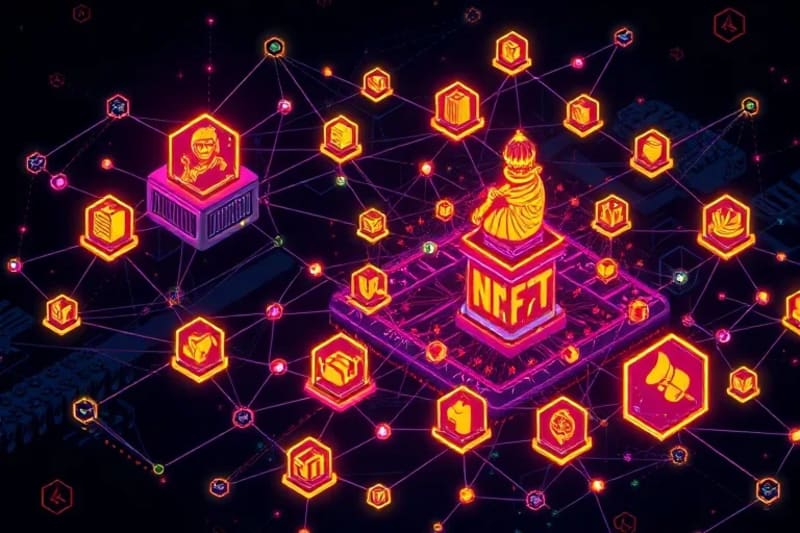
Visualizing the intricate network of virtual assets and their protected status within decentralized systems.
Questions arise regarding the nature of ownership: does owning an NFT grant full property rights, or merely a license to use a digital item? What happens if a metaverse platform shuts down, rendering all virtual assets inaccessible? The legal implications of smart contracts, which automatically execute terms agreed upon by parties, are also crucial. These contracts, often built on blockchain, streamline transactions but also introduce new challenges in dispute resolution if their code contains errors or is exploited. For a deeper understanding of the legal aspects of such technologies, one can explore the Blockchain Contratos Inteligentes México: Aspectos Legales Implementación, which discusses implementation and legal frameworks.
Governments and legal scholars are beginning to consider how to adapt existing property laws or create new ones specifically for digital assets. This includes addressing issues like inheritance of virtual property, taxation of metaverse transactions, and the legal recourse available to owners whose digital assets are stolen or fraudulently transferred. The unique characteristics of blockchain technology, while offering transparency and security, also present challenges when it comes to reversing transactions or identifying parties in anonymous environments.
Intellectual Property in the Metaverse
Intellectual property (IP) rights are paramount in the metaverse, where creativity drives much of the content and value. From user-generated content (UGC) like avatar designs and virtual experiences to branded virtual products, IP infringement is a significant concern. The ease of copying and adapting digital assets makes it challenging to protect copyrights, trademarks, and patents in these environments. Brands are increasingly entering the metaverse, creating virtual storefronts and products, which necessitates robust trademark protection against counterfeiting and unauthorized use.
The application of existing IP laws to virtual creations is often ambiguous. For example, if a user creates a virtual item that resembles a copyrighted physical product, does it constitute infringement? Who is liable: the user, the platform, or both? Platforms often rely on Digital Millennium Copyright Act (DMCA) style takedown notices, but the sheer volume of content and the global nature of the metaverse make enforcement difficult. Furthermore, the concept of "fair use" or "transformative use" in virtual spaces needs clearer definitions.
New strategies are emerging, such as embedding IP rights directly into NFTs through smart contracts, or utilizing blockchain to track provenance and ownership. However, these technological solutions still require legal backing and enforcement mechanisms. The development of clear guidelines for UGC, licensing agreements for virtual assets, and international cooperation on IP enforcement will be crucial for fostering innovation and protecting creators in the metaverse.
Data Privacy and Security Challenges
The immersive nature of the metaverse means that platforms collect vast amounts of user data, including biometric data from VR headsets, behavioral data from interactions, and transactional data from virtual economies. This raises significant data privacy concerns, particularly regarding how this data is collected, stored, used, and shared. Existing privacy regulations like GDPR and CCPA provide some protection, but their applicability to the unique data streams of the metaverse is still being debated.
An abstract representation of the intricate legal challenges posed by the rapid evolution of digital environments.
The potential for targeted advertising, manipulation, and surveillance within these highly personalized environments is immense. Users may not fully understand the extent of data collection or their rights within the metaverse. Furthermore, the security of this data is paramount. Breaches could lead to identity theft, financial loss, or the exposure of highly sensitive personal information. Ensuring robust cybersecurity measures and transparent data governance policies will be critical. For insights into protecting digital environments, refer to Seguridad Hogar Digital: Protegiendo Dispositivos y Redes, which highlights the importance of securing digital interactions.
Anonymity and pseudonymity, often touted as benefits of decentralized platforms, also complicate enforcement of data protection laws. While users may wish to protect their real-world identities, this can hinder accountability when privacy violations or other harms occur. Balancing user privacy with the need for accountability and security remains a significant challenge for metaverse developers and regulators alike. The ethical implications of data usage in virtual worlds are also a growing area of concern, requiring careful consideration and public discourse.
Regulatory Gaps and Future Governance Models
The rapid evolution of the metaverse has created significant regulatory gaps. Existing laws were not designed for persistent, immersive digital worlds with their own economies and social structures. This leads to uncertainty for businesses, users, and regulators. The lack of clear legal frameworks can stifle innovation, deter investment, and leave users vulnerable to harm. Addressing these gaps requires a forward-looking approach that anticipates future developments rather than merely reacting to past issues.
Various governance models are being proposed, ranging from self-regulation by platforms and industry consortia to multilateral international agreements. Hybrid models, combining elements of centralized platform control with decentralized community governance (e.g., DAOs), are also gaining traction. However, each model presents its own set of advantages and disadvantages regarding enforceability, fairness, and democratic representation. The challenge lies in creating a governance structure that is flexible enough to adapt to technological change while providing sufficient legal certainty and protection.
Ethical considerations also play a crucial role in shaping future regulations. Issues such as digital identity, avatar rights, virtual harassment, and the potential for digital addiction require careful thought. The development of Green Software Engineering: Desarrollo Sostenible Tecnológico principles could also extend to the metaverse, ensuring that these digital worlds are built and operated with sustainability and ethical considerations at their core. This includes not only environmental impact but also the societal and psychological well-being of users.
The Future of Metaverse Law
The legal landscape of the metaverse is still in its nascent stages, but its trajectory suggests a future where digital and physical legal systems will increasingly converge. As the metaverse becomes more integrated into daily life, the need for clear, enforceable, and internationally recognized laws will become paramount. This will likely involve a combination of new legislation, adaptation of existing laws, and innovative dispute resolution mechanisms, potentially including specialized metaverse courts or arbitration bodies.
Collaboration between legal experts, technologists, policymakers, and metaverse communities will be essential to build a legal framework that supports innovation while protecting users. The goal is not to stifle the metaverse's potential but to ensure its development is guided by principles of justice, fairness, and respect for rights. The journey to a fully regulated and legally sound metaverse will be long and complex, but it is a necessary step towards realizing its full potential as a transformative digital space.
Ultimately, the success of the metaverse will depend not only on its technological advancements but also on its ability to establish trust and order through effective legal governance. This involves anticipating new forms of digital harm, adapting legal concepts to virtual realities, and fostering a global dialogue to create harmonized legal standards. The challenges are significant, but so are the opportunities for pioneering a new era of digital jurisprudence.
Related Searches
- Preventive Medicine: Strategies for Healthy Living, Wellness, and Longevity
- Global Plastic Crisis: Solutions, Innovations, and Consumer Responsibility
- Underwater Exploration: Technology and Oceanic Discoveries
- Revitalization of Endangered Languages: Technology and Community Strategies
- Social Innovation and Inclusive Models: Creating Shared Value
- Sagittarius: Adventure, Wisdom, and Optimism of the Philosopher
- Mercury Retrograde Communication: Challenges and Opportunities
- Angels Archangels Guides in the Age of Artificial Intelligence
- Zi Wei Dou Shu Purple Star Astrology Basics: A Comprehensive Guide
Source: Hybrid content assisted by AI and human editorial supervision.


Comentarios