
Defensive AI Cybersecurity: Self-Adaptive Threat Protection
Defensive AI Cybersecurity: The Future of Self-Adaptive Threat Protection
In an era where cyber threats evolve with unprecedented speed and sophistication, traditional cybersecurity measures often find themselves one step behind. The landscape of digital warfare is no longer static; it is a dynamic battleground where attackers constantly innovate, creating "mutant threats" that bypass conventional defenses. This escalating arms race necessitates a paradigm shift in how we approach digital protection, leading to the emergence of Defensive Artificial Intelligence (AI) as the vanguard of self-adaptive cybersecurity. This article delves into the core concepts, technologies, applications, and future implications of Defensive AI, exploring its potential to revolutionize our approach to digital safety.

Defensive AI represents a dynamic digital shield, constantly adapting to protect against evolving cyber threats.
Defensive AI refers to the application of artificial intelligence and machine learning techniques to proactively identify, prevent, detect, and respond to cyberattacks. Unlike traditional rule-based security systems, AI-driven defenses are designed to learn from vast datasets, recognize patterns indicative of malicious activity, and adapt their strategies in real-time without explicit human programming. This self-adaptive capability is crucial in combating polymorphic malware, zero-day exploits, and advanced persistent threats (APTs) that continuously alter their signatures and behaviors to evade detection.
The ultimate goal of Defensive AI is to create autonomous and intelligent security systems that can anticipate attacks, neutralize them before they cause significant damage, and continuously improve their defensive posture through ongoing learning. This proactive stance moves beyond merely reacting to known threats, enabling organizations to build more resilient and future-proof digital infrastructures.
Table of Contents
- The Evolution of Cyber Threats and Traditional Defenses
- Core Technologies Powering Defensive AI
- Key Applications of AI in Cybersecurity
- Benefits and Advantages of Self-Adaptive Systems
- Challenges and Ethical Considerations
- The Future Landscape of Defensive AI
The Evolution of Cyber Threats and Traditional Defenses
Cybersecurity has always been a cat-and-mouse game, but the complexity and scale of modern threats have reached unprecedented levels. Early cyberattacks were often simple viruses or worms, easily detectable by signature-based antivirus software. These traditional defenses relied on maintaining vast databases of known malware signatures, blocking anything that matched. However, this approach is inherently reactive; it can only protect against threats that have already been identified and cataloged.
With the advent of advanced malware, ransomware, and state-sponsored cyberespionage, attackers began employing polymorphic and metamorphic techniques to alter their code, rendering signature-based detection ineffective. Zero-day exploits, which leverage previously unknown vulnerabilities, further highlight the limitations of reactive security models. These sophisticated attacks can penetrate defenses undetected, causing significant damage before any countermeasure can be developed and deployed.
The sheer volume of data generated by modern networks and applications also overwhelms human security analysts. Manually sifting through logs and alerts to identify genuine threats amidst a sea of false positives is an impossible task, leading to alert fatigue and missed critical incidents. This context underscores the urgent need for automated, intelligent systems capable of processing vast amounts of information, identifying subtle anomalies, and adapting to new attack vectors in real-time. The rise of transnational cybercrimes further complicates this landscape, demanding sophisticated, globally coordinated defensive strategies.
Core Technologies Powering Defensive AI
Defensive AI is built upon several foundational artificial intelligence and machine learning technologies, each contributing unique capabilities to the overall security posture. Understanding these components is key to appreciating the power and potential of self-adaptive cybersecurity.
- Machine Learning (ML): At its heart, ML enables systems to learn from data without explicit programming. In cybersecurity, this involves training algorithms on datasets of both benign and malicious network traffic, user behaviors, and system logs.
- Supervised Learning: Used for classification tasks, such as identifying known malware or phishing emails, by training on labeled data.
- Unsupervised Learning: Excellent for anomaly detection, where the system identifies deviations from normal behavior without prior labels, crucial for spotting zero-day attacks.
- Reinforcement Learning: Allows AI agents to learn optimal defensive strategies through trial and error, adapting their responses based on the outcomes of previous actions.
- Deep Learning (DL): A subset of ML that uses artificial neural networks with multiple layers to learn complex patterns from large amounts of data. DL is particularly effective in tasks like image recognition (for identifying malicious URLs or visual phishing cues) and natural language processing (for detecting sophisticated social engineering attacks).
- Natural Language Processing (NLP): Enables AI systems to understand, interpret, and generate human language. In cybersecurity, NLP is vital for analyzing threat intelligence reports, identifying suspicious communications, and detecting phishing attempts by analyzing email content and tone.
- Behavioral Analytics: AI-driven systems can establish baselines of normal user and system behavior. Any significant deviation from these baselines can trigger alerts, helping to identify insider threats or compromised accounts.

AI integrates various technologies to form a robust, multi-layered cybersecurity defense.
Key Applications of AI in Cybersecurity
The practical applications of Defensive AI span across various domains of cybersecurity, enhancing capabilities and automating processes that were once manual and error-prone. These applications are transforming how organizations protect their digital assets.
- Advanced Threat Detection: AI excels at identifying subtle indicators of compromise that human analysts might miss. This includes detecting polymorphic malware, fileless attacks, and advanced persistent threats (APTs) by analyzing network traffic, endpoint behavior, and log data for anomalies.
- Anomaly Detection: By establishing baselines of normal system and user behavior, AI can flag any deviations as potential threats. This is particularly effective against insider threats, compromised accounts, and zero-day attacks where no known signature exists.
- Automated Incident Response: Once a threat is detected, AI can initiate automated response actions, such as isolating compromised systems, blocking malicious IP addresses, or rolling back affected configurations. This significantly reduces the time to respond, minimizing potential damage.
- Vulnerability Management: AI can analyze vast amounts of code and system configurations to identify potential vulnerabilities before they are exploited. It can also prioritize vulnerabilities based on their potential impact and likelihood of exploitation, guiding remediation efforts.
- Deception Technologies: AI can power honeypots and deception networks, creating realistic decoys to lure attackers away from critical assets. By observing attacker behavior within these controlled environments, AI can learn new tactics and improve defensive strategies.
- Security Orchestration, Automation, and Response (SOAR): AI integrates with SOAR platforms to automate routine security tasks, orchestrate complex workflows, and provide intelligent insights to security teams, freeing up human analysts to focus on more strategic challenges.
The integration of these applications creates a multi-layered, intelligent defense system that is constantly learning and adapting. This continuous improvement is essential for staying ahead of sophisticated attackers who are also leveraging AI in their offensive strategies. The technical challenges involved in implementing such intelligent environments are significant, but the benefits often outweigh the complexities.
Benefits and Advantages of Self-Adaptive Systems
The adoption of Defensive AI brings a host of benefits that significantly enhance an organization's cybersecurity posture, moving beyond the capabilities of traditional security solutions. These advantages are particularly pronounced in the face of rapidly evolving cyber threats.
- Enhanced Detection Capabilities: AI can identify complex, multi-stage attacks and subtle anomalies that would be missed by human analysts or signature-based systems. This includes detecting zero-day exploits and sophisticated phishing campaigns.
- Faster Response Times: Automated incident response driven by AI can neutralize threats in milliseconds, significantly reducing the window of opportunity for attackers and minimizing potential damage.
- Reduced Human Error and Alert Fatigue: By automating routine tasks and filtering out false positives, AI reduces the burden on security teams, allowing them to focus on critical incidents and strategic planning.
- Scalability: AI systems can process and analyze vast quantities of data from numerous sources simultaneously, making them ideal for large enterprises and complex network infrastructures.
- Proactive Defense: AI's ability to learn and predict future attack vectors enables a more proactive defense strategy, anticipating threats rather than merely reacting to them.
- Continuous Improvement: Self-adaptive AI systems continuously learn from new data and attack patterns, improving their effectiveness over time without constant human intervention.
These benefits collectively contribute to a more resilient and robust cybersecurity framework, capable of withstanding the most advanced and persistent attacks. For industries dealing with sensitive information, such as healthcare, where biohacking device cybersecurity is paramount, AI offers an indispensable layer of protection.
Challenges and Ethical Considerations
Despite its immense potential, the deployment of Defensive AI is not without its challenges and ethical considerations. Addressing these issues is crucial for the responsible and effective integration of AI into cybersecurity strategies.
- Adversarial AI: Attackers can use AI to develop "adversarial attacks" that trick defensive AI systems into misclassifying malicious activity as benign, or vice versa. This requires defensive AI to be robust against such manipulations.
- Data Privacy and Bias: AI systems rely on vast datasets, raising concerns about data privacy and the potential for algorithmic bias. Biased training data can lead to discriminatory outcomes or blind spots in detection.
- Complexity and Explainability: Deep learning models, while powerful, can be "black boxes," making it difficult to understand how they arrive at certain decisions. This lack of explainability can hinder auditing, compliance, and trust in the system.
- Cost and Resource Intensiveness: Developing, deploying, and maintaining sophisticated AI cybersecurity systems requires significant investment in hardware, software, and specialized talent.
- False Positives and Negatives: While AI aims to reduce these, imperfect models can still generate false alarms or, more critically, miss actual threats, leading to a false sense of security.
- Legal and Ethical Frameworks: The autonomous nature of some AI systems raises questions about accountability in the event of an error or a misjudgment. Clear legal and ethical guidelines are needed.
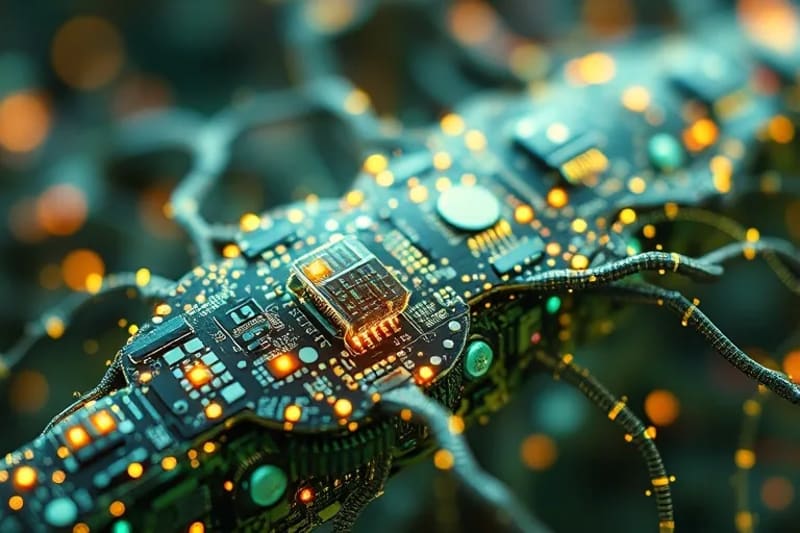
The continuous evolution of AI systems is key to overcoming new cybersecurity challenges.
Navigating these challenges requires a multidisciplinary approach, involving not only technical experts but also ethicists, legal scholars, and policymakers. The future of automation in various sectors, including cybersecurity, hinges on our ability to address these complex issues responsibly.
The Future Landscape of Defensive AI
The trajectory of Defensive AI points towards increasingly autonomous, intelligent, and integrated cybersecurity ecosystems. The future will likely see several key developments shaping this landscape.
- Autonomous Security Agents: AI systems will become more capable of operating independently, making complex decisions and executing responses without human intervention, particularly in fast-paced attack scenarios.
- Predictive and Proactive Defense: Advanced AI will not only detect but also predict potential attacks by analyzing global threat intelligence, geopolitical shifts, and emerging vulnerabilities, enabling truly proactive defense.
- Quantum-Resistant AI: As quantum computing advances, the need for quantum-resistant cryptographic algorithms and AI defenses will become critical to protect against new forms of attack.
- Human-AI Collaboration: Rather than replacing human analysts, AI will augment their capabilities, providing intelligent insights, automating mundane tasks, and allowing humans to focus on strategic decision-making and ethical oversight.
- Federated Learning for Threat Intelligence: Collaborative AI models can share threat intelligence across organizations without exposing sensitive data, creating a more robust, collective defense against global threats.
- Self-Healing Networks: Future networks will be designed with AI-driven self-healing capabilities, automatically detecting and repairing vulnerabilities or compromises without downtime.
The integration of AI into cybersecurity is not merely an upgrade; it is a fundamental transformation. As cyber threats continue to mutate and grow in complexity, Defensive AI offers the most promising path towards a more secure digital future, ensuring that our defenses are always one step ahead of the attackers.
The journey towards fully autonomous and intelligent cybersecurity systems is ongoing, filled with both immense promise and significant hurdles. However, the imperative to protect our digital world from increasingly sophisticated adversaries makes the continued development and responsible deployment of Defensive AI an absolute necessity. It is the cornerstone of future digital resilience.
Explore Further: Related Insights
- Biohacking Device Cybersecurity: Protecting Genome Health Data
- Ambiente Inteligente IA: Desafíos Técnicos | Althox
- Ciberdelitos Transnacionales: Cooperación, Extradición y Jurisdicción | Althox
- Automatización Laboral: Impacto y Futuro del Empleo | Althox
- Innovación Tecnología Respuesta Humanitaria ONGs Desastres | Althox
- Vibrational Manifestation Esoteric Secrets Aligning Law Attraction
- Gamificación Educación: Aprender Jugando Motivar Alumnos | Althox
- Medicina Regenerativa: Futuro Curación Tejidos Órganos | Althox
Source: Hybrid content assisted by AI and human editorial supervision.


Comentarios