
McLuhan Metaverse Legacy: Global Village Immersive Experiences
Marshall McLuhan, the Canadian philosopher of communication theory, was a visionary whose insights into media and technology, articulated decades ago, resonate with startling clarity in our current digital age. His seminal concepts, such as "the medium is the message" and the "Global Village," provide an indispensable framework for understanding the profound societal shifts brought about by new communication technologies. As humanity stands on the precipice of the Metaverse, a persistent, shared, 3D virtual space, McLuhan's legacy offers critical lenses through which to examine its potential impacts, challenges, and transformative power.
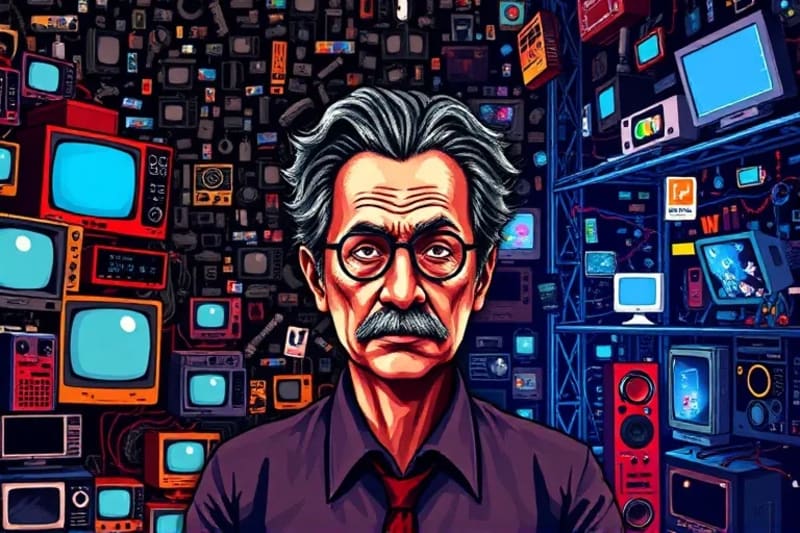
The influential philosopher of media theory, whose ideas laid groundwork for understanding today's digital landscape and its future iterations.
The transition from the early internet to Web3 and the Metaverse represents not merely an upgrade in technology, but a fundamental shift in how humans interact with information, each other, and their perceived reality. McLuhan's work, particularly his focus on the intrinsic nature of media rather than just its content, becomes exceptionally pertinent when considering the immersive, experiential nature of virtual worlds. This article delves into how his theories illuminate the path from the "Global Village" to the complex, multi-layered experiences offered by the Metaverse, offering a crucial perspective for navigating this new frontier.
Table of Contents
- The Medium is the Message: Resonating in Virtual Realities
- From Global Village to Metaverse: A Continuum of Connectivity
- Extensions of Man: Avatars and Digital Selves
- Sensory Overload and Immersion: The Metaverse as a New Sensorium
- Navigating the New Frontier: Challenges and Ethical Considerations
- McLuhan's Enduring Legacy in the Age of Immersive Experiences
The Medium is the Message: Resonating in Virtual Realities
One of McLuhan's most enduring and often misunderstood phrases, "the medium is the message," posits that the form of a medium embeds itself in the message, creating a symbiotic relationship where the medium influences how the message is perceived and understood. It suggests that the inherent characteristics of a communication channel are more significant than the content it conveys. For instance, the experience of reading a book differs fundamentally from watching a film, not just in content, but in the cognitive engagement and sensory input required.
In the context of the Metaverse, this concept gains unprecedented depth. The Metaverse is not just a platform for content; it is a medium that fundamentally alters the nature of interaction and experience. Its immersive, three-dimensional, and persistent nature shapes how information is exchanged, how relationships are formed, and even how identity is constructed. The "message" of a virtual concert, a business meeting in a digital office, or an educational simulation is profoundly influenced by the medium's ability to create a sense of presence and embodiment.
Consider how traditional two-dimensional screens present information versus a fully immersive virtual environment. The flat screen provides a window, while the Metaverse offers a world to inhabit. This shift from observation to participation means the medium itself becomes a primary determinant of meaning and impact. The spatial relationships, the freedom of movement, and the sensory feedback within the Metaverse are all part of its "message," dictating how users perceive reality and engage with digital constructs. This echoes McLuhan's assertion that media are extensions of human senses and faculties, profoundly altering our perception and interaction with the world.
From Global Village to Metaverse: A Continuum of Connectivity
McLuhan's "Global Village" concept, introduced in the 1960s, described how electronic media, particularly television, would shrink the world, making communication instantaneous and connecting people globally, akin to the intimate, interconnected dynamics of a small village. This vision foresaw a world where geographical distances would become less relevant, and shared experiences would foster a new sense of global community. The internet, and subsequently social media, have largely fulfilled this prophecy, enabling real-time communication and cultural exchange across continents.
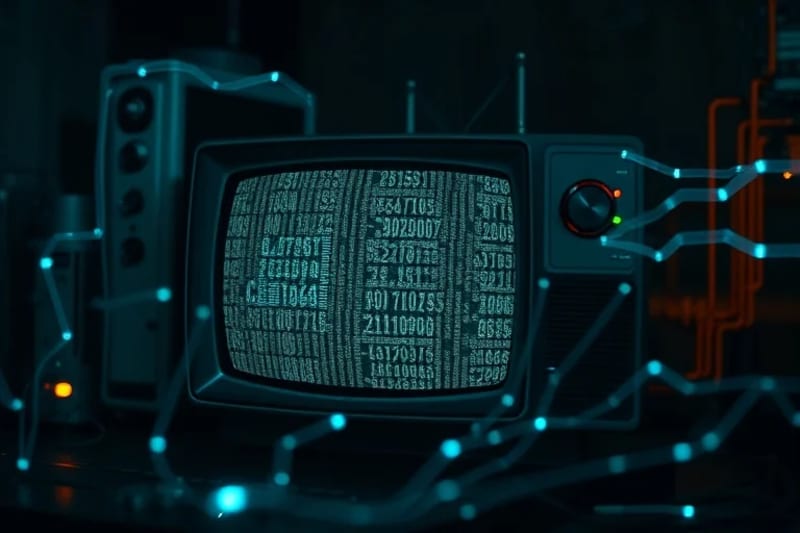
The evolution of media, from traditional broadcasting to the immersive, holographic experiences envisioned by media theorists.
The Metaverse represents the next evolutionary stage of the "Global Village," transforming it from a metaphor of interconnectedness into a literal, shared digital space. While the internet connected us through screens, the Metaverse aims to immerse us within a shared digital realm, fostering a deeper sense of co-presence and shared experience. Users will not just consume content; they will inhabit it, creating a more profound and multi-sensory version of McLuhan's vision. This shift has implications for everything from social interaction to commerce and education.
In this immersive "village," geographical barriers are not just minimized; they are often rendered irrelevant. People from disparate parts of the world can gather in a virtual concert hall, collaborate in a digital workspace, or explore fantastical landscapes together. This creates a new layer of social fabric, where communities can form based on shared interests and virtual proximity, transcending physical limitations. However, it also brings forth new questions about cultural identity, digital citizenship, and the nature of belonging in a perpetually connected virtual world. The concept of the "Global Village" morphs into a series of interconnected, immersive digital hamlets, each with its own rules, cultures, and economies.
Extensions of Man: Avatars and Digital Selves
McLuhan famously stated that "all media are extensions of some human faculty – psychic or physical." A hammer extends the arm, a wheel extends the foot, and electronic media extend our central nervous system globally. In the Metaverse, this concept finds its most literal and profound expression through avatars. Avatars are not just digital representations; they are extensions of our identity, presence, and agency within virtual worlds. They allow us to project ourselves into digital spaces, interact with them, and experience them as embodied beings.
The creation and customization of avatars become a significant aspect of self-expression and identity formation in the Metaverse. Users can craft ideal versions of themselves, explore different personas, or even transcend physical limitations. This digital embodiment extends our physical capabilities and social reach, allowing for interactions that might not be possible in the physical world. For instance, someone with physical limitations can navigate and participate fully in virtual environments through their avatar.
Moreover, the avatar acts as a conduit for our senses and intentions. Through haptic feedback suits and advanced VR headsets, the digital self can feel, see, and hear the virtual environment, blurring the lines between the physical and digital. This extension of self into the digital realm raises fascinating questions about identity, authenticity, and the psychological impact of living a significant portion of one's life through a digital proxy. As we delve deeper into this digital embodiment, understanding the interplay between our physical and virtual selves becomes paramount, a topic McLuhan implicitly addressed decades ago.
Sensory Overload and Immersion: The Metaverse as a New Sensorium
McLuhan was deeply interested in how different media appeal to and reconfigure our senses. He distinguished between "hot" media (like radio or film, which are high-definition and require less audience participation) and "cool" media (like television or comics, which are low-definition and require more active participation to fill in the gaps). The Metaverse, with its multi-sensory immersion, presents a new paradigm that challenges these classifications, offering an unprecedented level of sensory engagement.
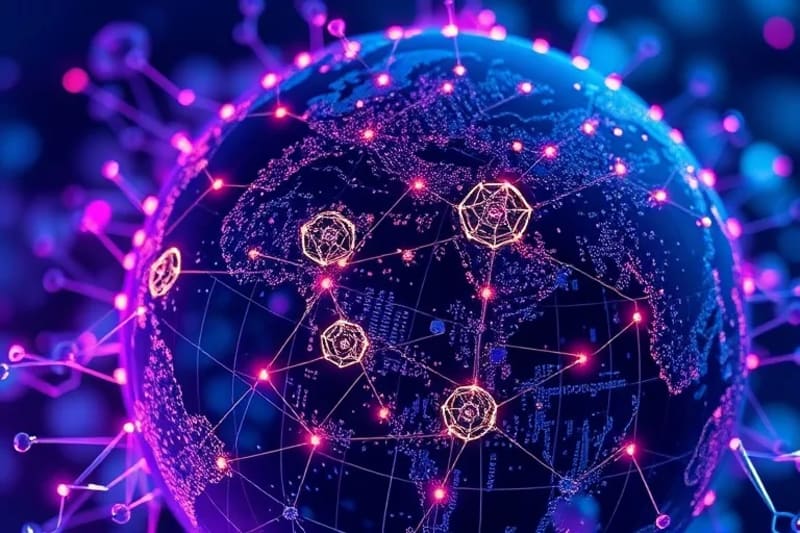
Visualizing the conceptual bridge from the 'Global Village' to the intricate, interconnected experiences of the modern metaverse.
The Metaverse engages sight, sound, and increasingly touch and even smell through advanced peripherals. This creates a rich, often overwhelming, sensory experience that can lead to a profound sense of presence and immersion. Users are not just looking at a screen; they are enveloped by the digital environment. This intense sensory input can alter perception, emotional states, and cognitive processes, making the virtual experience feel as real, if not more real, than physical reality in certain contexts.
The potential for sensory overload is significant. As users navigate complex virtual worlds filled with dynamic stimuli, their brains must process vast amounts of information, potentially leading to cognitive fatigue or desensitization. McLuhan's insights into how media shape our sensory ratios become crucial here. The Metaverse, by prioritizing visual and auditory immersion, might re-sculpt our sensory hierarchy, potentially affecting our perception of the physical world. Understanding these shifts is vital for designing healthy and engaging virtual experiences. For instance, the field of neurotechnologies and brain optimization is already exploring how these digital environments impact cognitive functions.
Navigating the New Frontier: Challenges and Ethical Considerations
While McLuhan was often seen as an optimist regarding technology, his work also provided tools for critical analysis of media's effects. The Metaverse, as a powerful new medium, brings forth a host of ethical and societal challenges that McLuhan's framework can help us anticipate and address. These include issues of digital divide, data privacy, identity theft, virtual property rights, and the potential for addiction or escapism.
The "Global Village" in its Metaverse iteration risks exacerbating existing inequalities if access to immersive technologies remains unevenly distributed. A new form of digital divide could emerge, separating those who can fully participate in these rich virtual economies and social spaces from those who cannot. Furthermore, the vast amounts of personal data generated within the Metaverse, from biometric information to behavioral patterns, raise significant privacy concerns. McLuhan's emphasis on the medium's influence reminds us that the very architecture of these platforms will dictate the ethical landscape.
The blurring of lines between reality and virtuality also poses psychological challenges. As individuals spend more time in highly curated and often gamified virtual environments, questions arise about their ability to distinguish between the two, their mental well-being, and the impact on real-world relationships. McLuhan encouraged media literacy, urging us to understand how media shape us. This call is more urgent than ever in the Metaverse, where the medium's influence is pervasive and deeply personal. As digital landscapes evolve, the need for reskilling and upskilling for new demands, including digital ethics and critical thinking, becomes paramount.
McLuhan's Enduring Legacy in the Age of Immersive Experiences
Marshall McLuhan's theories, once considered radical, have proven remarkably prescient in anticipating the profound societal and individual transformations brought about by electronic media. His work provides a robust theoretical foundation for understanding the emerging Metaverse, not just as a technological advancement, but as a new medium that reshapes human experience, communication, and perception. From the inherent power of the medium itself to the global interconnectedness it fosters and the extensions of self it enables, McLuhan's insights remain invaluable.
As we venture further into the realm of immersive virtual worlds, it is crucial to approach this new frontier with a critical and informed perspective. McLuhan taught us to look beyond the content and examine the medium itself – its structure, its biases, and its effects on our senses and society. By applying his analytical tools, we can better understand the Metaverse's potential to enrich human experience while also being mindful of its challenges and ethical implications. His legacy encourages us to be active participants in shaping our technological future, rather than passive recipients of its influence. Even in fields like digital musicology, the medium's impact on artistic creation and reception is a central theme.
Explore Further
Source: Hybrid content assisted by AI and human editorial supervision.


Comentarios