
Ivan Sutherland: Pioneer Computer Graphics Augmented Reality
Ivan Sutherland is a pivotal figure in the history of computing, often hailed as the "father of computer graphics." His groundbreaking work in the 1960s laid the foundational principles for nearly all modern interactive computing, from graphical user interfaces (GUIs) to virtual and augmented reality. Before Sutherland, computers were largely batch-processing machines, communicating with users through punch cards and printouts. This was a stark contrast to earlier forms of calculation, such as the ancient Greek abacus, which offered a different kind of direct, albeit mechanical, interaction with numbers. His vision transformed this paradigm, introducing the concept of direct manipulation and real-time interaction, making computers accessible and intuitive tools for creativity and problem-solving.
This visionary approach began to materialize with his doctoral thesis project, Sketchpad, at MIT in 1963. Sketchpad was not merely a drawing program; it was a revolutionary system that allowed users to create and manipulate graphical objects directly on a screen using a light pen. This invention fundamentally changed how humans could interact with machines, moving beyond mere data processing to interactive visual communication. Sutherland's contributions extended far beyond Sketchpad, influencing fields from computer-aided design (CAD) to flight simulation and, ultimately, the immersive digital experiences we take for granted today. His foresight into what he termed "The Ultimate Display" also set the stage for the development of virtual reality (VR) and augmented reality (AR), envisioning a future where computers could create worlds indistinguishable from reality.
Table of Contents
- The Dawn of Interactive Computing: Ivan Sutherland's Vision
- Sketchpad: A Revolution in Human-Computer Interaction
- The Ultimate Display: Foreshadowing Virtual and Augmented Reality
- Beyond Sketchpad: Contributions to Graphics and AI
- Sutherland's Enduring Legacy in Modern Technology
- Key Milestones in a Pioneering Career
- The Future Echoes of a Digital Visionary
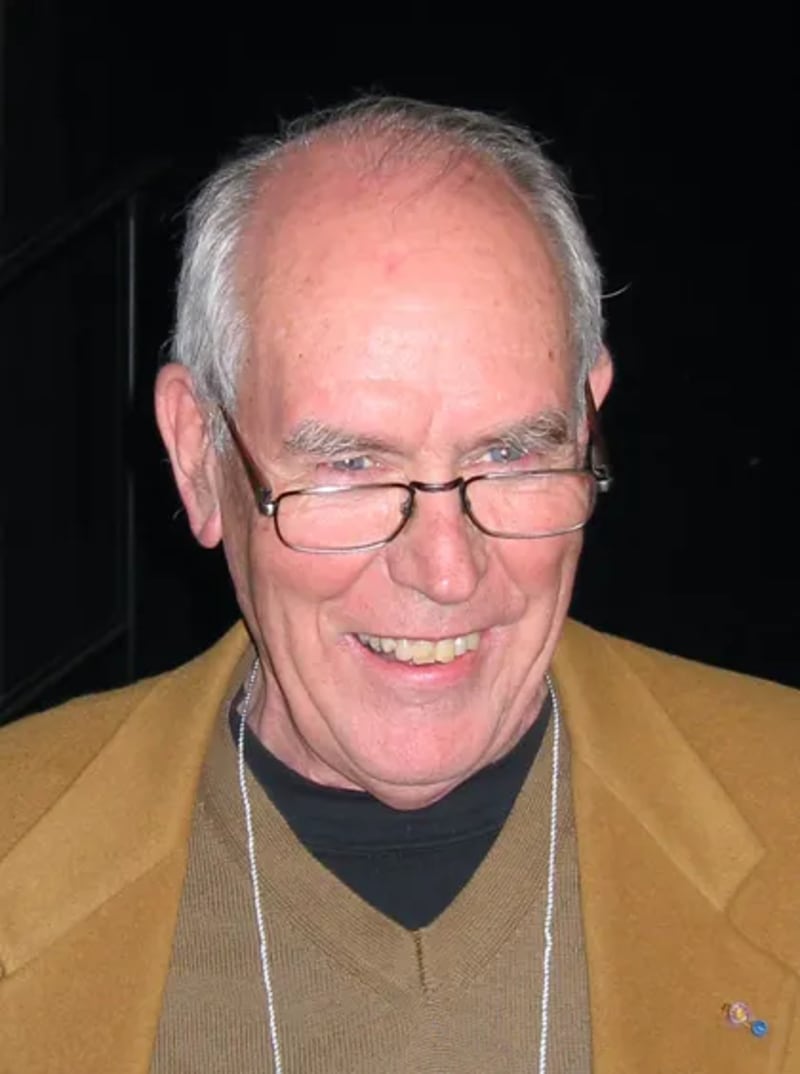
The visionary work of a foundational figure in computing, illustrating the early stages of interactive graphics that transformed digital interfaces.
The Dawn of Interactive Computing: Ivan Sutherland's Vision
The mid-20th century marked a period of rapid evolution in computing, yet the interaction model remained largely one-way. Computers were powerful calculators, but their interface was a barrier to intuitive use. Ivan Sutherland recognized this limitation early in his career, understanding that for computers to truly augment human intellect, they needed to become interactive partners rather than mere processing units. His vision was to bridge the gap between human thought and machine capability through visual communication.
This paradigm shift was not just about making computers easier to use; it was about fundamentally changing their role. Sutherland envisioned a world where designers, engineers, and artists could directly manipulate digital objects, seeing their ideas come to life in real-time on a screen. This concept of direct manipulation, now ubiquitous in every smartphone and computer, was revolutionary at a time when most computer output was still printed on paper. His work laid the philosophical and technical groundwork for a future where humans and machines could collaborate seamlessly, unlocking unprecedented levels of creativity and efficiency.
Sketchpad: A Revolution in Human-Computer Interaction
Sketchpad, officially titled "Sketchpad: A Man-Machine Graphical Communication System," was Ivan Sutherland's Ph.D. thesis at MIT, completed in 1963. This seminal work is widely recognized as the origin of interactive computer graphics and a cornerstone of modern human-computer interaction. Before Sketchpad, creating graphics on a computer was a laborious process involving complex programming and mathematical coordinates. Sutherland's innovation was to enable direct manipulation: users could draw lines, arcs, and circles directly on a cathode ray tube (CRT) display using a light pen. This was a radical departure from previous methods, offering an intuitive and immediate feedback loop.
The power of Sketchpad lay not just in its drawing capabilities but in its underlying data structure. It allowed users to define geometric constraints (e.g., parallel lines, equal lengths, horizontal alignment) that the system would automatically maintain. This meant that if a user moved one part of a drawing, other related parts would adjust accordingly, preserving the defined relationships. This concept, known as "constraint-based drawing," became fundamental to computer-aided design (CAD) systems. Sketchpad also introduced master drawings and instances, enabling users to create multiple copies of an object that would all update if the master was modified. This hierarchical structure was a precursor to object-oriented programming concepts. The impact of Sketchpad was immediate and profound, demonstrating the immense potential of graphical interfaces for engineering, design, and scientific visualization. It proved that computers could be powerful extensions of human thought and creativity, not just number-crunching machines.
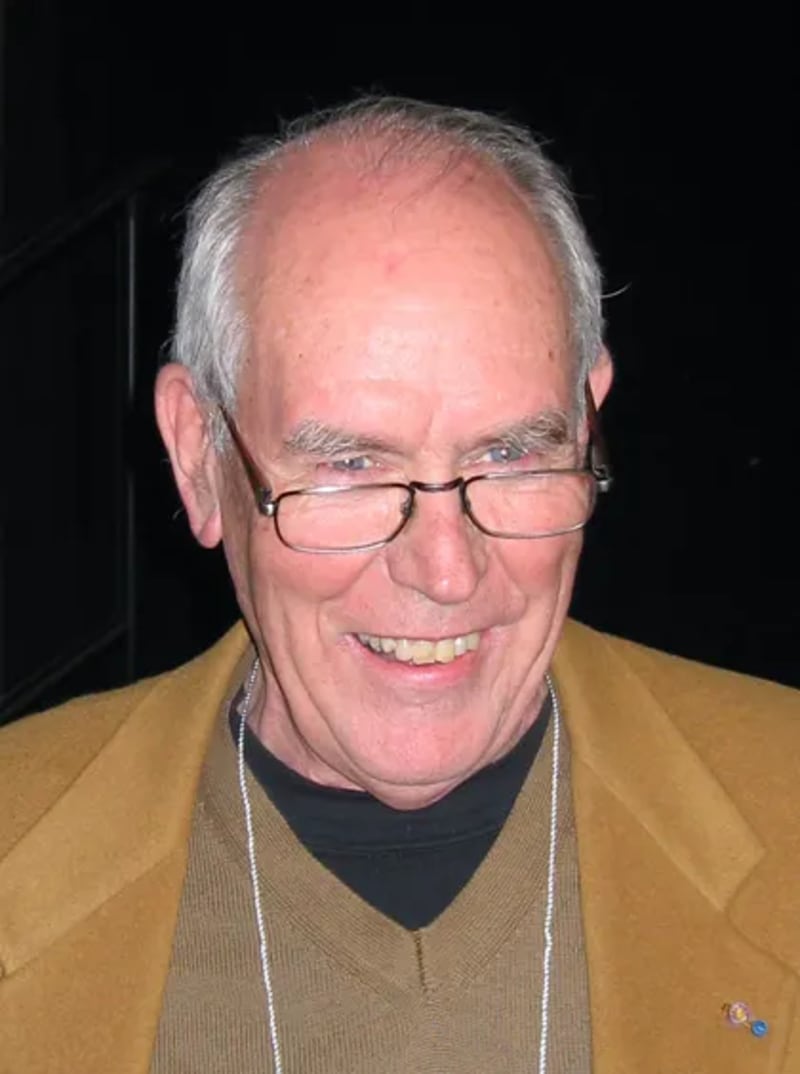
An intricate view of the foundational hardware that enabled a new era of digital creativity and direct manipulation.
The Ultimate Display: Foreshadowing Virtual and Augmented Reality
In 1965, Ivan Sutherland presented a paper titled "The Ultimate Display," which outlined a vision for computer systems that could create virtual worlds so convincing they would be indistinguishable from reality. This paper is considered a foundational text for both virtual reality (VR) and augmented reality (AR). Sutherland envisioned a display that would not only show images but would also allow users to interact with virtual objects as if they were real, providing tactile feedback and even simulating physical presence. He famously stated, "The ultimate display would, of course, be a room within which the computer can control the existence of matter." This prophetic statement captured the essence of immersive computing decades before the technology to achieve it was even conceivable.
Sutherland's conceptualization went beyond mere visual output. He detailed the need for head-mounted displays (HMDs) that would track the user's head movements, allowing them to look around a virtual environment naturally. He also emphasized the importance of three-dimensional graphics, real-time rendering, and the ability to manipulate virtual objects with force feedback. His work at the University of Utah in the late 1960s and early 1970s led to the creation of the first true head-mounted display system, often dubbed the "Sword of Damocles" due to its imposing, ceiling-mounted mechanical tracking arm. This pioneering HMD provided users with a stereoscopic view of simple wireframe graphics, offering a glimpse into the future of immersive digital experiences. While rudimentary by today's standards, this system was a monumental step towards realizing the "ultimate display" and directly influenced generations of VR/AR research and development.
Beyond Sketchpad: Contributions to Graphics and AI
Ivan Sutherland's influence extended far beyond Sketchpad and his early VR experiments. Throughout his career, he made significant contributions to various aspects of computer science, including computer graphics, artificial intelligence, and integrated circuit design. After his groundbreaking work at MIT and Harvard, Sutherland moved to the University of Utah, where he established a highly influential computer graphics program. This program became a hotbed of innovation, attracting brilliant minds who would go on to shape the future of the industry, including Alan Kay (Dynabook, Smalltalk), Edwin Catmull (co-founder of Pixar), and James Blinn (pioneering computer graphics techniques).
At Utah, Sutherland and his team advanced techniques for 3D modeling, rendering, and shading. They explored algorithms for hidden surface removal, texture mapping, and anti-aliasing, all crucial for creating realistic computer-generated imagery. His work also touched upon the early concepts of parallel processing and the design of very-large-scale integration (VLSI) circuits, which are fundamental to modern microprocessors. He co-founded Evans & Sutherland, a company that became a leader in flight simulators and specialized graphics hardware, further demonstrating the practical applications of his research. His interdisciplinary approach, combining mathematics, engineering, and computer science, fostered an environment where complex problems in visual computing could be tackled effectively.
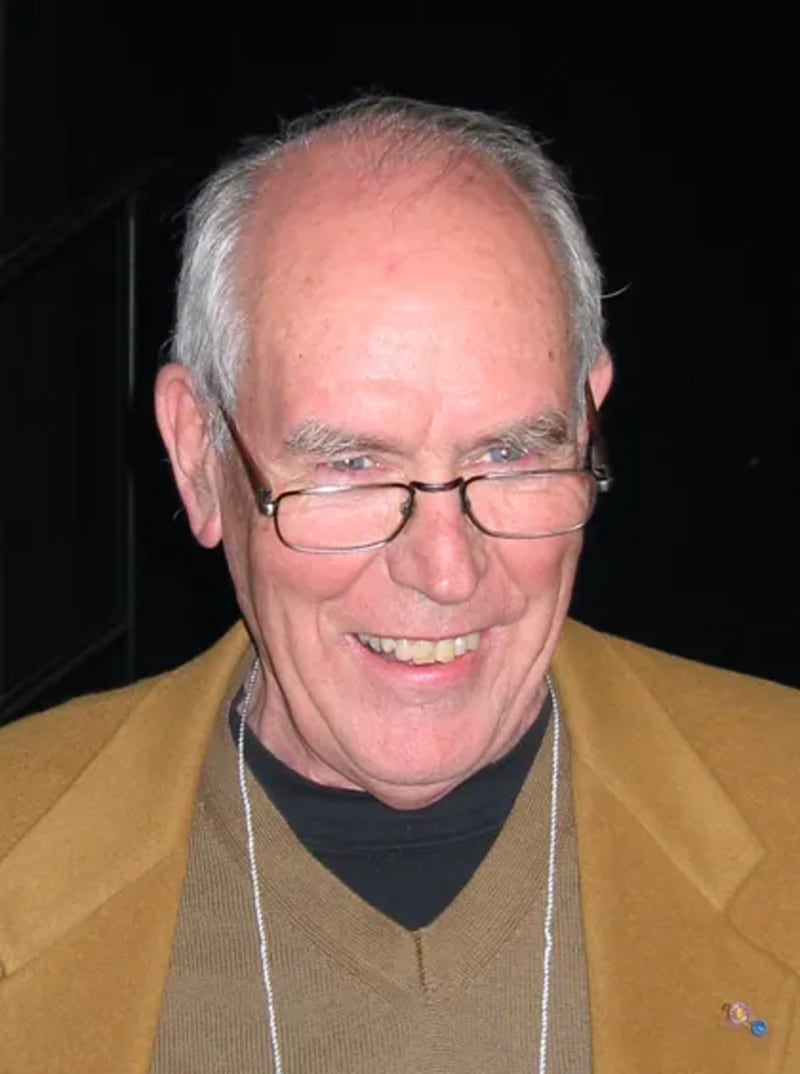
Visualizing the intricate components that laid the groundwork for today's sophisticated virtual and augmented reality systems.
Sutherland's Enduring Legacy in Modern Technology
The enduring legacy of Ivan Sutherland is evident in nearly every aspect of modern digital technology. His pioneering work laid the groundwork for the graphical user interfaces (GUIs) that dominate personal computing today, from Windows and macOS to smartphone operating systems. The direct manipulation paradigm introduced by Sketchpad is fundamental to how we interact with software, making complex tasks intuitive and accessible. Every time a user drags an icon, resizes a window, or draws a shape in a design program, they are benefiting from principles first demonstrated by Sutherland.
Beyond GUIs, Sutherland's vision for immersive displays directly fueled the development of virtual reality and augmented reality. The burgeoning VR/AR industry, with applications ranging from gaming and entertainment to medical training and industrial design, stands on the shoulders of his early experiments and theoretical frameworks. The widespread adoption of these immersive technologies also highlights the importance of addressing societal impacts, such as video game addiction prevention in the digital era. His contributions to 3D graphics algorithms are foundational to the entire computer animation industry, including film and video games. Furthermore, his emphasis on human-computer interaction as a field of study has shaped how designers and engineers approach the usability and accessibility of technology. As digital interactions become more pervasive, understanding principles of digital cyber hygiene becomes increasingly important for secure and effective engagement with these advanced interfaces. His work underscores the idea that computers are not just tools for calculation but powerful extensions of human intellect and creativity, a philosophy that continues to drive innovation in the digital age.
Key Milestones in a Pioneering Career
Ivan Sutherland's career is marked by a series of pivotal achievements that collectively reshaped the landscape of computing. His journey from a visionary student to a leading academic and industry innovator illustrates a relentless pursuit of making computers more intuitive, powerful, and ultimately, more human-centric.
- 1963: Sketchpad Thesis: Completed his Ph.D. at MIT, introducing Sketchpad, the first interactive computer graphics system. This project defined concepts like direct manipulation, object-oriented structures, and constraint-based drawing.
- 1965: "The Ultimate Display" Paper: Published his seminal paper outlining the theoretical foundations for virtual reality and augmented reality, envisioning immersive digital worlds.
- 1966-1968: Harvard University: Served as an Associate Professor, continuing his research in computer graphics.
- 1968: University of Utah: Became a professor, establishing a world-renowned computer graphics program that produced many future leaders in the field. Here, he developed the first head-mounted display (HMD) system.
- 1968: Co-founding Evans & Sutherland: With David C. Evans, he co-founded Evans & Sutherland, a company that became a pioneer in flight simulators, specialized graphics hardware, and real-time 3D rendering.
- 1976-1980: California Institute of Technology (Caltech): Served as Head of the Computer Science Department, focusing on VLSI design and asynchronous systems.
- 1980s-Present: Sutherland, Sproull and Associates: Co-founded a consulting firm, continuing his work on asynchronous circuits and self-timed systems, a critical area for low-power, high-performance computing.
- Numerous Awards: Recipient of the Turing Award (1988), the Kyoto Prize (2012), and the National Medal of Technology (1998), among many others, recognizing his profound impact on computer science.
The Future Echoes of a Digital Visionary
The principles established by Ivan Sutherland continue to resonate deeply in contemporary technological advancements and future trends. As we push the boundaries of artificial intelligence, machine learning, and quantum computing, the need for intuitive human-computer interfaces becomes even more critical. This rapid advancement also brings into focus the challenges of global regulation for quantum AI, ensuring ethical development and deployment. Sutherland's emphasis on direct manipulation and visual feedback remains a guiding principle in the design of complex AI systems, ensuring that these powerful tools are usable and understandable by humans. The ongoing evolution of virtual and augmented reality, from sophisticated gaming platforms to enterprise solutions for remote work and training, directly builds upon his foundational "Ultimate Display" concept.
Furthermore, Sutherland's work on asynchronous circuits and self-timed systems, though less publicly visible than his graphics contributions, is crucial for developing energy-efficient and robust computing architectures. This area of research is increasingly vital as the demand for sustainable and high-performance computing grows. His interdisciplinary approach, blending hardware, software, and human factors, serves as a model for addressing the multifaceted challenges of future technologies. Ultimately, Sutherland taught us that the most powerful computers are those that seamlessly extend human capabilities, allowing us to interact with digital information as naturally as we interact with the physical world. His legacy is not just a historical footnote but a living blueprint for the future of human-computer symbiosis.
Source: Hybrid content assisted by AI and human editorial supervision.


Comentarios