
Flow State Extreme Sports: Neuroscience, Performance
The Flow State in Extreme Sports: Neuroscience, Performance, and Mental Well-being
The concept of "flow state," often described as being "in the zone," represents a peak psychological experience where an individual is fully immersed in an activity, characterized by energized focus, full involvement, and enjoyment in the process. This optimal state of consciousness, first extensively researched by psychologist Mihaly Csikszentmihalyi, is particularly prevalent and profound within the realm of extreme sports. Athletes engaging in activities like free solo climbing, big-wave surfing, or wingsuit flying frequently report entering this state, where time seems to distort, self-consciousness vanishes, and performance reaches unparalleled heights.
Understanding the flow state in extreme sports involves a multidisciplinary approach, integrating insights from psychology, neuroscience, and sports science. This article will delve into the mechanisms behind this elusive yet powerful mental state, exploring its neurobiological underpinnings, its direct impact on athletic performance, and its broader implications for mental well-being. By dissecting the elements that foster flow, we can gain a deeper appreciation for the unique psychological landscape of extreme athletes and potentially apply these principles to other areas of life.

A solitary figure demonstrating intense focus and complete immersion during a challenging extreme sport activity.
Table of Contents
- Defining the Flow State: Csikszentmihalyi's Legacy
- The Neuroscience of Being "In the Zone"
- Why Extreme Sports are a Catalyst for Flow
- Flow and Peak Performance: Unlocking Athletic Potential
- Mental Well-being Benefits Beyond the Thrill
- Practical Strategies for Cultivating Flow
- Ethical Considerations and the Dark Side of Flow
- Conclusion: The Enduring Power of Flow
Defining the Flow State: Csikszentmihalyi's Legacy
The concept of flow was meticulously developed by Hungarian-American psychologist Mihaly Csikszentmihalyi, who dedicated his career to studying optimal human experiences. He observed that people reported their happiest and most fulfilling moments not during passive leisure, but when they were deeply engaged in challenging activities that stretched their skills. This led to his seminal work, "Flow: The Psychology of Optimal Experience," which introduced the scientific community to this powerful psychological phenomenon.
Csikszentmihalyi identified several core characteristics that define the flow state. These elements consistently appear across diverse activities, from playing chess to performing surgery, and are particularly pronounced in high-stakes environments like extreme sports. Understanding these characteristics is crucial for recognizing and intentionally cultivating flow.
- Clear Goals: The individual knows precisely what needs to be done, step by step. In extreme sports, this could be reaching a specific hold, navigating a wave, or executing a complex trick.
- Immediate Feedback: There is a clear and instantaneous indication of how well one is performing. A climber feels the grip, a surfer senses the wave's power, providing continuous adjustments.
- Balance Between Challenge and Skill: The activity is neither too easy (leading to boredom) nor too difficult (leading to anxiety). This delicate equilibrium keeps the individual engaged and motivated.
- Action-Awareness Merging: The individual's actions become automatic and intuitive, blurring the line between the doer and the deed. The athlete becomes one with the environment and the task.
- Elimination of Distractions: All irrelevant stimuli fade into the background, allowing for complete concentration on the task at hand. The mind is fully present, free from worries or external thoughts.
- Loss of Self-Consciousness: The ego dissolves, and concerns about self-image or external judgment disappear. The focus shifts entirely to the activity itself, leading to a sense of liberation.
- Distorted Sense of Time: Hours can feel like minutes, or vice versa, as the individual becomes so engrossed that the perception of time is altered. This often contributes to the feeling of timelessness.
- Autotelic Experience: The activity is intrinsically rewarding; it is done for its own sake, rather than for external rewards. The joy comes from the process itself, making it deeply fulfilling.
These eight components work synergistically to create a state of profound engagement and satisfaction. For extreme athletes, these conditions are often inherent in their chosen disciplines, making them prime candidates for experiencing flow regularly. The inherent risks and demands of extreme sports naturally push individuals to the edge of their capabilities, fostering the perfect environment for this psychological phenomenon to emerge.
The Neuroscience of Being "In the Zone"
Modern neuroscience has begun to unravel the complex brain mechanisms underlying the flow state, providing empirical evidence for Csikszentmihalyi's observations. Research using fMRI and EEG scans has revealed specific patterns of brain activity and neurotransmitter release associated with deep immersion and peak performance. The brain in flow operates differently, optimizing for efficiency and focus.
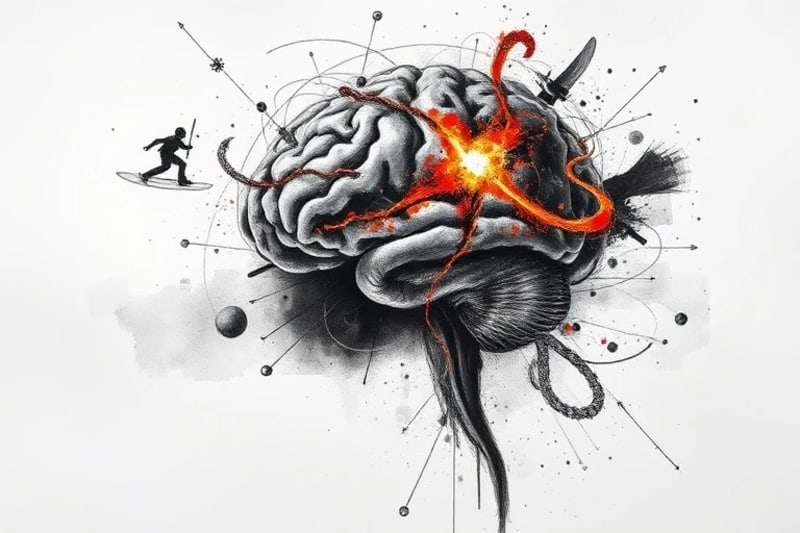
An abstract representation of a human brain with glowing neural pathways, symbolizing enhanced cognitive function during flow.
One of the most significant findings is the temporary deactivation of the prefrontal cortex, a phenomenon known as "transient hypofrontality." This region is responsible for self-monitoring, critical judgment, and complex decision-making. While seemingly counterintuitive for high-risk activities, its temporary suppression allows for intuitive, rapid responses without overthinking or self-doubt. This enables athletes to react instinctually and efficiently to dynamic situations, a critical advantage in extreme sports.
Furthermore, the flow state is associated with a potent cocktail of neurochemicals that enhance mood, focus, and physical capabilities. These include:
- Dopamine: A neurotransmitter linked to motivation, reward, and pleasure. Its release during flow amplifies focus and reinforces the desire to continue the activity, contributing to the autotelic nature of the experience.
- Norepinephrine: This chemical sharpens attention, increases arousal, and improves reaction time. It helps the athlete stay alert and responsive to their environment, crucial for navigating unpredictable conditions.
- Endorphins: Natural painkillers that produce feelings of euphoria and reduce the perception of effort or pain. This allows athletes to push their physical limits with greater comfort and resilience.
- Anandamide: A cannabinoid neurotransmitter that contributes to feelings of well-being, reduces anxiety, and can enhance creative problem-solving. It helps to quiet the inner critic and promote a sense of calm under pressure.
The interplay of these neurochemicals creates an optimal biological state for performance and learning. The brain enters a highly efficient mode, processing information more quickly and effectively, leading to enhanced sensory perception and motor control. This neurochemical symphony explains why athletes often describe feeling superhuman or having heightened senses when in flow.
The brainwave patterns also shift during flow, moving from the alert beta waves of normal consciousness to slower alpha and theta waves. Alpha waves are associated with relaxed alertness and creativity, while theta waves are linked to deep meditation and intuitive insights. This blend of brainwave activity facilitates a state of calm focus, allowing for both heightened awareness and effortless action. The synchronized activity across different brain regions further enhances cognitive processing and motor execution.
Why Extreme Sports are a Catalyst for Flow
Extreme sports, by their very nature, are uniquely structured to induce the flow state. The inherent risks, immediate consequences, and constant demand for precision and adaptation create an environment where all the conditions for flow are not just present, but often amplified. This makes these activities powerful laboratories for studying and experiencing optimal human performance.
Consider the following aspects that make extreme sports particularly conducive to flow:
- High Stakes and Clear Consequences: In activities like BASE jumping or big-wave surfing, mistakes can have severe, even fatal, consequences. This extreme pressure forces absolute focus and eliminates mental wandering, pushing the athlete into the present moment. The clarity of the goal – survival and successful execution – is paramount.
- Immediate and Unambiguous Feedback: The environment itself provides instant feedback. A climber feels the rock, a snowboarder senses the snow, a kayaker reads the rapids. There's no ambiguity; success or failure is immediately apparent, allowing for continuous, real-time adjustments.
- Constant Challenge-Skill Balance: Extreme athletes are continually pushing their boundaries. They seek out challenges that are just beyond their current skill level, forcing them to learn and adapt rapidly. This dynamic balance is the core engine of flow, preventing both boredom and overwhelming anxiety.
- Intense Sensory Input: The raw, unfiltered sensory experiences of extreme sports – the roar of the ocean, the wind rushing past, the feel of rock under fingertips – demand full attention. This rich sensory environment helps to anchor the athlete in the present and block out internal chatter.
- Defined Goals within a Dynamic Environment: While the environment is constantly changing, the immediate goals are often very clear: make the next move, stay upright, navigate the obstacle. This combination of clear micro-goals within a fluid macro-environment is ideal for sustained focus.
These factors create a potent feedback loop where the athlete's actions are directly tied to their survival and success, demanding total engagement. The sheer intensity of these experiences strips away the mundane, leaving only the essential interaction between the individual and the challenge. This intense focus not only enhances performance but also provides a profound sense of purpose and meaning.
Flow and Peak Performance: Unlocking Athletic Potential
The flow state is not merely a pleasant experience; it is a powerful driver of peak performance. For extreme athletes, entering flow can be the difference between success and failure, or even life and death. When in flow, athletes often report performing at levels they didn't know were possible, exhibiting enhanced physical and cognitive capabilities.

A tranquil mountain peak at sunrise, symbolizing the pinnacle of optimal performance and mental well-being.
The neurochemical cascade and brainwave synchronization associated with flow directly translate into tangible performance improvements. Athletes experience:
- Enhanced Reaction Time: The deactivation of the prefrontal cortex allows for faster, more intuitive responses to rapidly changing conditions. There's less cognitive overhead, leading to quicker decision-making.
- Improved Motor Control and Coordination: The seamless integration of action and awareness leads to fluid, precise movements. Athletes feel a heightened sense of control over their bodies and their interaction with the environment.
- Increased Endurance and Reduced Perceived Effort: Endorphins and other neurochemicals can mask fatigue and pain, allowing athletes to sustain high levels of physical exertion for longer periods. The activity feels effortless, despite its demands.
- Superior Problem-Solving and Creativity: The relaxed yet focused state of flow can unlock novel solutions to complex challenges. Athletes can adapt to unforeseen obstacles with innovative maneuvers.
- Reduced Fear and Anxiety: The complete immersion in the task pushes out fear, doubt, and other performance-debilitating emotions. The athlete is fully present, free from the psychological burden of potential failure.
These benefits are not limited to the moment of flow itself. Regular experiences of flow can lead to a phenomenon known as "flow proneness," where individuals become more adept at entering this state. This cultivates a positive feedback loop: the more an athlete experiences flow, the better they perform, and the more likely they are to seek out activities that induce it. This continuous cycle of challenge, skill development, and optimal experience is central to athletic mastery in extreme sports.
Mental Well-being Benefits Beyond the Thrill
While the pursuit of peak performance is a significant motivator, the flow state offers profound benefits for mental well-being that extend far beyond the immediate thrill of extreme sports. Regular engagement in flow-inducing activities can contribute to a more fulfilling, resilient, and psychologically healthy life.
The intrinsic reward of flow, being an autotelic experience, fosters a deep sense of satisfaction and purpose. Unlike external rewards, which can be fleeting, the joy derived from the process itself contributes to sustained happiness and a greater sense of meaning in life. This internal motivation is a powerful antidote to anhedonia and existential dissatisfaction.
Key mental well-being benefits include:
- Stress Reduction: The complete absorption in an activity acts as a powerful distraction from daily stressors and worries. The mind is fully occupied, providing a mental break from anxiety-provoking thoughts.
- Increased Happiness and Life Satisfaction: Flow experiences are often reported as among the happiest moments in life. Regularly achieving this state contributes to overall positive affect and a greater appreciation for one's capabilities.
- Enhanced Self-Esteem and Confidence: Successfully navigating challenging situations while in flow builds a strong sense of competence and self-efficacy. This confidence can then transfer to other areas of life, fostering a more positive self-image.
- Development of Resilience: Extreme sports inherently involve overcoming obstacles and managing risk. The ability to enter flow in these demanding situations helps cultivate mental toughness and resilience, enabling individuals to bounce back from setbacks.
- Mindfulness and Presence: Flow is a state of profound presence, where the individual is fully anchored in the here and now. This cultivated mindfulness can extend beyond the activity, improving attention and reducing rumination in daily life.
- Personal Growth and Self-Actualization: By continually pushing boundaries and experiencing optimal performance, individuals gain a deeper understanding of their potential. Flow facilitates a path towards self-actualization, where one strives to become the best version of themselves.
These psychological benefits highlight that extreme sports are not just about adrenaline, but also about a profound journey of self-discovery and personal growth. The mental discipline required to achieve flow in such demanding environments builds character and provides a unique pathway to psychological flourishing.
Practical Strategies for Cultivating Flow
While extreme sports offer a natural environment for flow, the principles can be applied to many other activities, from creative pursuits to professional tasks. Cultivating flow involves intentionally structuring activities and developing mental habits that foster its emergence. It requires a conscious effort to create the optimal conditions identified by Csikszentmihalyi.
Here are some practical strategies for increasing your chances of entering a flow state:
- Set Clear, Achievable Goals: Break down complex tasks into smaller, manageable steps. Knowing exactly what you need to do provides direction and clarity, reducing mental clutter.
- Match Challenge to Skill Level: Continuously seek activities that are slightly beyond your current abilities. If a task is too easy, increase its complexity. If it's too difficult, break it down further or acquire new skills.
- Eliminate Distractions: Create an environment free from interruptions. Turn off notifications, close unnecessary tabs, and find a quiet space. Minimize both external and internal distractions.
- Develop Intense Focus: Practice mindfulness and concentration exercises. Engage fully in the present moment, paying close attention to sensory details and the task at hand.
- Seek Immediate Feedback: Structure activities so that you receive clear, timely information on your progress. This allows for rapid adjustments and reinforces engagement.
- Embrace the Process: Shift your focus from the outcome to the journey. Find intrinsic enjoyment in the activity itself, rather than solely pursuing external rewards or recognition.
- Cultivate a Positive Mindset: Approach challenges with curiosity and a growth mindset. View obstacles as opportunities for learning and improvement, rather than sources of frustration.
- Take Regular Breaks: While flow involves sustained concentration, strategic breaks can prevent burnout and allow your mind to reset, making it easier to re-enter the state.
By consciously applying these strategies, individuals can increase their "flow proneness" and experience the benefits of optimal engagement more frequently. This deliberate practice transforms ordinary activities into opportunities for profound personal growth and enhanced well-being.
Ethical Considerations and the Dark Side of Flow
While the flow state is overwhelmingly positive, especially in the context of extreme sports, it is important to acknowledge potential ethical considerations and a "dark side" that can emerge if not approached with awareness. The intense allure of flow can sometimes lead to problematic behaviors or unintended consequences.
One primary concern is the potential for addiction to the high-intensity experiences that induce flow. The powerful neurochemical rewards, particularly dopamine, can create a strong craving for more extreme challenges. This can lead individuals to take increasingly reckless risks, potentially ignoring safety protocols or their own limitations in pursuit of the next "flow hit." Distinguishing between healthy challenge-seeking and compulsive risk-taking is crucial.
Another aspect is the potential for social isolation. The deep immersion characteristic of flow can sometimes lead individuals to prioritize their flow-inducing activities over social connections or other responsibilities. While temporary focus is beneficial, chronic withdrawal from social interaction can negatively impact overall well-being and relationships.
Furthermore, the loss of self-consciousness, while liberating, can also lead to a temporary detachment from ethical considerations or the broader impact of one's actions. In extreme sports, this might manifest as pushing boundaries in a way that endangers others or damages the environment, even if unintentionally. A balanced approach requires integrating the pursuit of flow with a strong sense of personal responsibility and ethical awareness.
It is essential for extreme athletes and those who study them to consider:
- Risk Assessment and Management: Ensuring that the pursuit of flow does not override sound judgment and safety measures.
- Self-Awareness and Balance: Recognizing when the desire for flow might be leading to unhealthy patterns or neglecting other life domains.
- Ethical Boundaries: Maintaining a clear understanding of the impact of one's actions on others and the environment, even during peak immersion.
By acknowledging these potential pitfalls, individuals can cultivate a healthier relationship with the flow state, harnessing its immense power for growth and performance without succumbing to its darker manifestations. The goal is not merely to achieve flow, but to integrate it harmoniously into a well-rounded and responsible life.
Conclusion: The Enduring Power of Flow
The flow state, as elucidated by Csikszentmihalyi and further explored by neuroscience, stands as a testament to the human capacity for optimal experience and performance. In the demanding arena of extreme sports, this psychological phenomenon is not just a fleeting moment of exhilaration but a critical component of success, survival, and profound personal growth. Athletes who master the art of entering flow unlock unparalleled levels of focus, skill, and resilience, transforming daunting challenges into opportunities for self-transcendence.
Beyond the spectacular feats of extreme athletes, the principles of flow offer valuable lessons for everyone. By understanding the conditions that foster deep engagement – clear goals, immediate feedback, and a balanced challenge-skill ratio – we can intentionally cultivate more fulfilling experiences in our daily lives, whether in work, hobbies, or personal development. The neurochemical rewards and cognitive benefits associated with flow contribute significantly to mental well-being, fostering happiness, reducing stress, and building confidence.
However, the pursuit of flow must be tempered with self-awareness and ethical consideration. Recognizing the potential for addiction or imbalance ensures that this powerful state remains a tool for positive development rather than a source of reckless behavior. Ultimately, the flow state in extreme sports serves as a vivid illustration of humanity's potential to thrive at the edges of capability, demonstrating how deep immersion and focused action can lead to both peak performance and a richer, more meaningful existence.
Fuente: Contenido híbrido asistido por IAs y supervisión editorial humana.


Comentarios