
Ethical Growth Hacking: Sustainable Strategies Corporate Responsibility
Ethical Growth Hacking: Sustainable Strategies with Corporate Social Responsibility
In the rapidly evolving digital landscape, businesses are constantly seeking innovative ways to achieve rapid growth. The concept of "growth hacking" emerged as a powerful methodology, focusing on quick, experimental, and data-driven strategies to scale user bases and revenue. However, as societal awareness around environmental and social impact intensifies, a new paradigm is gaining traction: ethical growth hacking. This approach integrates core principles of corporate social responsibility (CSR) and sustainability into the very fabric of growth strategies, ensuring that expansion is not only fast but also responsible, equitable, and beneficial for all stakeholders.
Ethical growth hacking moves beyond short-term gains, advocating for a holistic view where business success is inextricably linked to positive societal and environmental contributions. It challenges the traditional growth-at-all-costs mentality, proposing that genuine, long-lasting value creation comes from aligning business objectives with ethical considerations. This article delves into the foundational elements of ethical growth hacking, exploring its principles, strategies, and the profound impact it can have on modern enterprises.

A diverse team harnesses technology to visualize and implement sustainable growth strategies, blending innovation with environmental consciousness.
Table of Contents
- Defining Ethical Growth Hacking
- Core Principles of Ethical Growth
- Sustainable Growth Strategies
- Corporate Social Responsibility in Practice
- Measuring Ethical Impact: ESG Metrics and B Corps
- Challenges and Future Outlook
- Frequently Asked Questions
Defining Ethical Growth Hacking
Ethical growth hacking is a methodology that applies the rapid experimentation and data-driven approach of traditional growth hacking, but with a fundamental commitment to ethical considerations, social impact, and environmental sustainability. It is not merely about avoiding harm, but actively seeking to create positive value for customers, employees, communities, and the planet.
This approach recognizes that a company's long-term viability and brand reputation are increasingly tied to its ethical stance and its contributions to a better world. It involves a strategic shift from purely profit-centric metrics to a broader set of indicators that include social, environmental, and governance (ESG) factors. The goal is to build a loyal customer base and a strong brand identity by demonstrating genuine commitment to responsible practices.
Core Principles of Ethical Growth
At its heart, ethical growth hacking is guided by several core principles that differentiate it from more conventional growth strategies. These principles ensure that every growth initiative is scrutinized not just for its potential ROI, but also for its broader implications.
- Transparency and Honesty: All marketing and product claims must be truthful and verifiable. This includes clear communication about product ingredients, supply chains, data usage, and business practices. Avoiding deceptive patterns or "dark patterns" in user interfaces is paramount.
- User Value and Well-being: Growth strategies should prioritize the genuine needs and well-being of the user. This means creating products and services that truly solve problems, enhance lives, and do not exploit psychological vulnerabilities for engagement. It also involves respecting user privacy and data security.
- Data Privacy and Security: Ethical growth hackers treat user data with the utmost respect, adhering to strict privacy regulations (e.g., GDPR, CCPA) and implementing robust security measures. Data collection should be minimized, anonymized where possible, and used only for stated purposes that benefit the user.
- Inclusivity and Accessibility: Products, services, and marketing campaigns should be designed to be accessible and inclusive for diverse populations, including individuals with disabilities, different cultural backgrounds, and varying socioeconomic statuses.
- Environmental Stewardship: Businesses must consider the environmental footprint of their operations and growth strategies. This includes minimizing waste, reducing energy consumption, sourcing sustainably, and promoting eco-friendly alternatives.
- Fair Labor Practices: Ensuring fair wages, safe working conditions, and ethical treatment for all employees and supply chain workers is a non-negotiable principle. This extends to contractors, freelancers, and international partners.
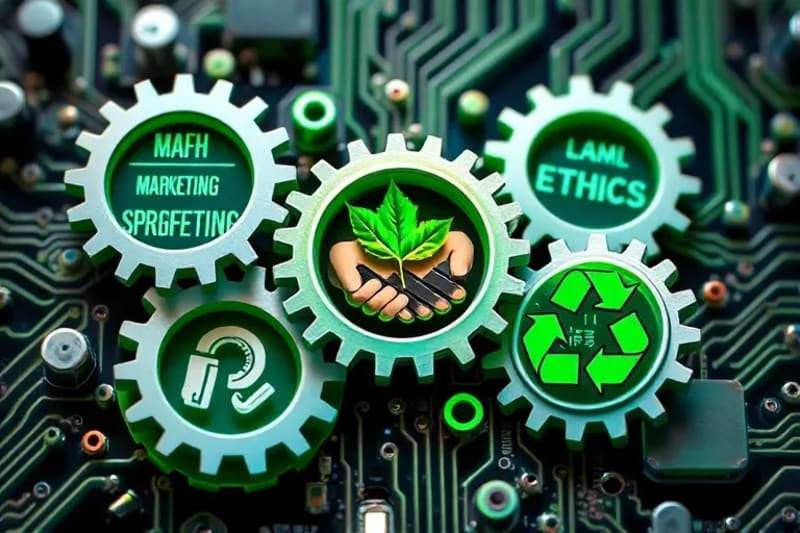
Symbolic representation of how business growth is intricately linked with ethical and sustainable practices.
Sustainable Growth Strategies
Implementing ethical growth hacking requires a shift in the types of strategies employed. Instead of focusing solely on aggressive acquisition tactics, emphasis is placed on building long-term relationships and creating sustainable value. These strategies often overlap with broader sustainability initiatives, fostering a positive feedback loop between business success and social good.
One key area is the adoption of Geopolítica Agua Siglo XXI: Conflictos Oportunidades Negocios. This involves designing products for durability, reusability, and recyclability, minimizing waste and maximizing resource efficiency. For digital products, this translates to optimizing code for energy efficiency, reducing server load, and ensuring data storage is managed responsibly.
Another powerful strategy is impact-driven marketing. This involves highlighting the positive social or environmental impact of a product or service, rather than just its features. Consumers are increasingly drawn to brands that demonstrate a genuine commitment to causes they care about. This can lead to higher engagement, better conversion rates, and increased customer loyalty, proving that doing good can also be good for business.
Furthermore, ethical growth hacking promotes building strong, authentic communities around a brand. By fostering genuine connections and providing real value, businesses can cultivate a loyal customer base that not only advocates for the brand but also contributes to its growth through word-of-mouth and user-generated content. This organic growth is often more sustainable and cost-effective than paid acquisition channels.
Corporate Social Responsibility in Practice
Corporate Social Responsibility (CSR) is the operational framework that underpins ethical growth hacking. It dictates how a company manages its business processes to produce an overall positive impact on society. For ethical growth hackers, CSR is not a separate department but an integrated philosophy that informs every decision, from product development to marketing campaigns.
Practical applications of CSR include rigorous Metaverse Digital Law: Property, Identity, Jurisdiction, ensuring that all suppliers adhere to fair labor practices and environmental standards. This might involve auditing suppliers, choosing local sourcing to reduce carbon footprint, or investing in fair trade certifications. For technology companies, this extends to responsible AI development, ensuring algorithms are fair, unbiased, and transparent.
Employee well-being and development are also critical components. Companies practicing ethical growth understand that a happy, motivated workforce is more productive and innovative. This includes offering competitive benefits, fostering a diverse and inclusive workplace, and providing opportunities for professional growth. Such practices not only improve employee retention but also enhance the company's reputation as a responsible employer, attracting top talent.
Community engagement is another vital aspect. This can range from volunteering programs and charitable donations to developing products or services that directly address societal challenges. By actively contributing to the communities they operate in, businesses can build goodwill, strengthen their social license to operate, and create a positive brand image that resonates with consumers.
Measuring Ethical Impact: ESG Metrics and B Corps
To ensure accountability and demonstrate genuine commitment, ethical growth hacking emphasizes the measurement and reporting of social and environmental performance. This is where Environmental, Social, and Governance (ESG) metrics come into play. ESG factors provide a framework for assessing a company's sustainability and ethical impact, going beyond traditional financial statements.
- Environmental (E): Measures a company's impact on the natural world, including carbon emissions, water usage, waste management, and sustainable sourcing.
- Social (S): Evaluates a company's relationships with its employees, customers, suppliers, and communities. This includes labor practices, data privacy, product safety, and diversity and inclusion initiatives.
- Governance (G): Assesses a company's leadership, executive pay, audits, internal controls, and shareholder rights. It ensures ethical decision-making and transparency at the highest levels.
Many companies are also pursuing B Corp certification, which is a rigorous standard that verifies a company meets high standards of verified performance, accountability, and transparency on factors from employee benefits and charitable giving to supply chain practices and input materials. Achieving B Corp status is a powerful signal of a company's commitment to balancing profit and purpose, and it can significantly enhance brand reputation and attract ethically conscious consumers and investors.

A vibrant, glowing tree rooted in a circuit board, illustrating the symbiotic relationship between technology and sustainable development.
Challenges and Future Outlook
While the benefits of ethical growth hacking are clear, its implementation is not without challenges. One significant hurdle is the potential for "greenwashing" or "ethics-washing," where companies make unsubstantiated claims about their social or environmental impact without genuine commitment. Consumers are increasingly savvy and can quickly detect insincere efforts, leading to reputational damage.
Another challenge is the initial investment required to transition to more sustainable practices. This can include redesigning products, overhauling supply chains, or investing in new technologies. However, these upfront costs often lead to long-term savings and increased competitive advantage. Furthermore, balancing rapid growth with the often slower pace of ethical implementation requires careful strategic planning and a strong commitment from leadership, as discussed in regenerative leadership models.
Despite these challenges, the future of ethical growth hacking appears bright. As regulatory pressures increase and consumer demand for responsible businesses grows, integrating ethics and sustainability into growth strategies will become not just a competitive advantage, but a fundamental requirement for survival. Companies that embrace this approach will be better positioned to attract talent, build customer loyalty, and achieve resilient, long-term success in an increasingly conscious marketplace.
Frequently Asked Questions
Here are some common questions regarding ethical growth hacking and its implications for businesses:
| Question | Answer |
|---|---|
| What is the primary difference between traditional and ethical growth hacking? | Traditional growth hacking prioritizes rapid user acquisition and revenue, often with less emphasis on long-term societal or environmental impact. Ethical growth hacking integrates sustainability and corporate social responsibility into every growth strategy, aiming for beneficial outcomes for all stakeholders. |
| Can ethical growth hacking still achieve rapid business growth? | Yes, absolutely. Ethical growth hacking can lead to sustainable and rapid growth by building stronger brand loyalty, attracting values-aligned customers, enhancing employee morale, and opening new markets for responsible products and services. The growth might be more organic and resilient. |
| How do consumers react to ethical growth hacking efforts? | Consumers increasingly favor brands that demonstrate genuine ethical and sustainable practices. Transparency and authentic commitment can significantly boost brand perception, trust, and purchasing decisions, especially among younger demographics. |
| What are ESG metrics, and why are they important for ethical growth? | ESG stands for Environmental, Social, and Governance. These are non-financial factors used to evaluate a company's sustainability and ethical performance. They are crucial for ethical growth hacking as they provide a measurable framework for accountability and demonstrate a company's commitment beyond just financial returns. |
Fuente: Contenido híbrido asistido por IAs y supervisión editorial humana.


Comentarios