
Circular Economy Business Models Regenerative Future
The linear economic model, characterized by "take-make-dispose," has dominated industrial practices for centuries. This approach, however, has led to significant environmental degradation, resource depletion, and increasing waste generation. In response to these pressing global challenges, the concept of the circular economy has emerged as a transformative paradigm.
The circular economy offers a systemic solution by designing out waste and pollution, keeping products and materials in use, and regenerating natural systems. It represents a fundamental shift in how we produce, consume, and interact with resources, aiming for a regenerative and restorative future. This article explores the core principles, benefits, and various business models driving this essential transition.

A visual representation of the intricate and interconnected systems that define a thriving circular economy, blending natural and technological elements seamlessly.
What is the Circular Economy?
The circular economy is an economic framework that aims to decouple economic growth from the consumption of finite resources. It is built on three core principles: design out waste and pollution, keep products and materials in use, and regenerate natural systems. This contrasts sharply with the traditional linear economy, which follows a "take-make-dispose" pattern, leading to significant environmental impact and resource scarcity.
The concept draws inspiration from natural systems, where there is no waste; everything is a resource for something else. By adopting this regenerative approach, businesses can create value in new ways, reduce their environmental footprint, and enhance their resilience against supply chain shocks. The Ellen MacArthur Foundation has been a leading proponent and articulator of this framework, providing extensive research and practical examples.
Core Principles of the Circular Economy
Understanding the foundational principles is crucial for implementing circular practices effectively. These principles guide the design, production, and consumption phases of products and services, ensuring a holistic approach to sustainability. They emphasize long-term thinking and systemic change rather than incremental improvements.
- Design out Waste and Pollution: This principle focuses on preventing waste and pollution from being created in the first place. It involves rethinking product design, material selection, and production processes to eliminate negative externalities. Products are designed for durability, reparability, and recyclability.
- Keep Products and Materials in Use: Maximizing the lifespan of products and components through maintenance, repair, reuse, remanufacturing, and recycling is central to this principle. It means shifting away from single-use items towards models that preserve the value embedded in materials and products for as long as possible.
- Regenerate Natural Systems: Beyond minimizing harm, the circular economy aims to actively improve and restore natural capital. This includes practices like regenerative agriculture, renewable energy use, and the return of biological materials to the earth in a safe and beneficial way, enhancing biodiversity and ecosystem health.

A conceptual still-life showcasing the aesthetic and functional potential of transforming discarded materials into valuable new objects, embodying the spirit of circularity.
Benefits of Adopting Circular Models
The transition to a circular economy offers a multitude of benefits across environmental, economic, and social dimensions. These advantages extend beyond individual businesses to entire industries and national economies, fostering a more resilient and equitable future. Businesses that embrace circularity often find new avenues for innovation and competitive advantage.
- Environmental Protection: Significantly reduces waste generation, lowers greenhouse gas emissions, and minimizes the extraction of virgin resources. This leads to healthier ecosystems and a more stable climate.
- Economic Resilience: Decreases reliance on volatile raw material markets and creates new revenue streams through product-as-a-service models, repair services, and secondary material markets. It also fosters local job creation.
- Innovation and Competitiveness: Drives innovation in product design, manufacturing processes, and business models. Companies can gain a competitive edge by offering sustainable products and services that meet evolving consumer demands and regulatory pressures.
- Enhanced Customer Relationships: Product-as-a-service models often lead to deeper, longer-term relationships with customers, as companies become responsible for product performance and maintenance throughout its lifecycle.
- Resource Security: By keeping materials in circulation, countries and companies reduce their vulnerability to supply chain disruptions and price fluctuations of finite resources.
For instance, a study by the European Commission estimated that implementing circular economy measures could create 580,000 new jobs in the EU and save businesses €600 billion annually. Such figures highlight the substantial potential for both environmental and economic gains.
Innovative Circular Business Models
The circular economy is not a one-size-fits-all solution but rather a framework that inspires diverse business models. These models rethink traditional value chains, focusing on service, access, and resource efficiency. Here are some prominent examples:
- Product-as-a-Service (PaaS): Instead of selling products, companies lease them to customers, retaining ownership and responsibility for maintenance, repair, and end-of-life management. Examples include lighting-as-a-service, tire-as-a-service, or even clothing rental services.
- Resource Recovery and Recycling: Businesses specialize in collecting, sorting, and processing waste materials to reintroduce them into the production cycle as high-quality secondary raw materials. This includes advanced recycling technologies and urban mining initiatives.
- Repair, Maintenance, and Remanufacturing: These models extend product lifespans by offering services to fix, upgrade, or completely overhaul existing products. Remanufacturing, in particular, involves disassembling products, cleaning, inspecting, and replacing components to bring them back to "as new" condition.
- Sharing Platforms: Digital platforms enable the sharing of underutilized assets (e.g., tools, vehicles, spaces) among multiple users, maximizing their utility and reducing the need for individual ownership. This reduces overall consumption and resource demand.
- Circular Sourcing: Companies prioritize sourcing materials that are renewable, recycled, or upcycled, ensuring that their inputs align with circular principles. This often involves collaborating with suppliers to develop new sustainable materials.
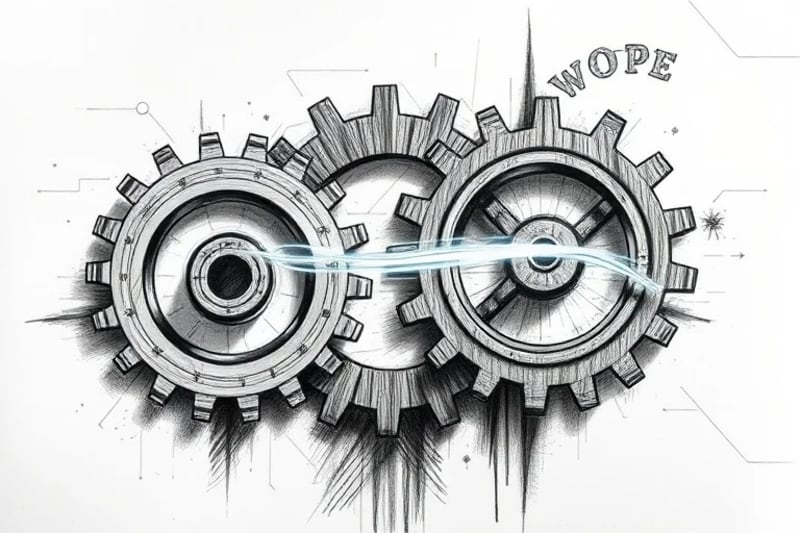
An abstract visualization of continuous material and energy flow within a regenerative system, highlighting the efficiency and interconnectedness of circular processes.
Challenges and Opportunities
While the circular economy presents a compelling vision, its implementation is not without challenges. These include the need for significant initial investment, changes in consumer behavior, and the development of new infrastructure for collection, sorting, and processing. However, these challenges also present substantial opportunities for innovation and new market creation.
One major hurdle is the complexity of supply chains and the global nature of production. Establishing closed-loop systems requires extensive collaboration across different industries and geographical regions. Policy and regulatory frameworks also play a critical role in incentivizing circular practices and penalizing linear ones. For example, extended producer responsibility (EPR) schemes hold manufacturers accountable for the entire lifecycle of their products, encouraging circular design.
Despite these complexities, the opportunities are immense. The circular economy can unlock new value, create green jobs, and foster a more resilient economy less dependent on finite resources. Digital technologies, such as IoT and AI, are crucial enablers, allowing for better tracking of materials, optimizing logistics for collection and reuse, and facilitating product-as-a-service models. For instance, IoT Smart City Cybersecurity applications can help manage waste collection and resource distribution more efficiently.
The Future of Circularity
The momentum towards a circular economy is growing, driven by increasing environmental awareness, regulatory pressures, and the economic advantages it offers. Governments worldwide are developing circular economy roadmaps and policies, while businesses are increasingly integrating circular principles into their core strategies. The future will likely see a greater emphasis on systemic innovation, where entire value chains are redesigned to be circular.
Education and consumer engagement will also be vital in accelerating this transition. As consumers become more aware of the environmental impact of their purchasing decisions, demand for circular products and services will continue to rise. This shift will require a collaborative effort from policymakers, businesses, and individuals to build a truly regenerative economic system that benefits both people and the planet.
Source: Hybrid content assisted by AI and human editorial supervision.


Comentarios