
Augmented Reality Underwater Heritage Conservation: Digital Archaeology
The vast and mysterious underwater world holds an invaluable treasure trove of human history, from ancient shipwrecks to submerged cities. Preserving this underwater heritage is a monumental task, often hampered by challenging environmental conditions, limited visibility, and the sheer scale of the ocean. However, a revolutionary technology is emerging as a game-changer: Augmented Reality (AR). By overlaying digital information onto the real-world view, AR is transforming how marine archaeologists explore, document, and conserve these fragile historical sites, making the invisible visible and the inaccessible understandable.
Augmented Reality, distinct from Virtual Reality (VR), enhances our perception of the physical world by adding layers of digital content. In the context of underwater archaeology, this means divers can see 3D models of artifacts, historical data, or site maps directly in their field of vision, all while observing the actual submerged environment. This not only improves efficiency and accuracy during fieldwork but also opens new avenues for public engagement and scientific analysis. The integration of AR represents a significant leap forward, moving beyond traditional methods to embrace a more interactive and data-rich approach to marine conservation.
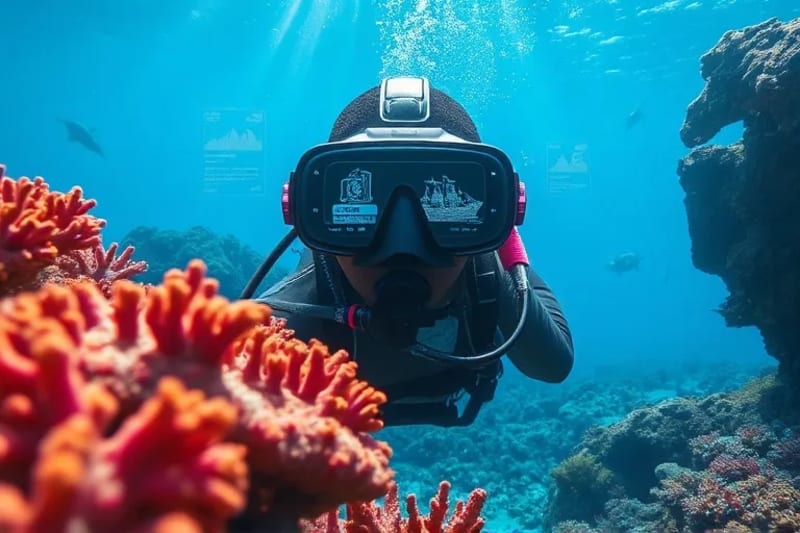
Advanced AR technology allows divers to visualize historical data and 3D models directly within their underwater field of view, transforming marine archaeology.
Table of Contents
- The Dawn of Digital Underwater Exploration
- How Augmented Reality Transforms Marine Archaeology
- Key Applications and Benefits of AR in Underwater Heritage
- Challenges and Future Prospects
- Ethical Considerations and Preservation Standards
The Dawn of Digital Underwater Exploration
Traditional underwater archaeology relies heavily on physical documentation, such as hand-drawn maps, photographs, and video recordings, often under adverse conditions. These methods can be time-consuming, prone to errors, and limited in their ability to capture the full complexity of a site. The introduction of digital tools, including 3D photogrammetry and sonar mapping, has already significantly improved data collection. However, AR takes this a step further by integrating these digital datasets directly into the diver's real-time experience.
Early prototypes of underwater AR systems involved ruggedized tablets or head-up displays integrated into diving masks. These devices allow archaeologists to view pre-loaded 3D models of known artifacts, compare the current state of a site with historical records, or even receive real-time instructions from surface teams. This immediate access to contextual information dramatically reduces the need for frequent surface ascents for consultation and planning, thereby maximizing valuable underwater time and improving safety protocols.
The development of these technologies aligns with the broader field of Extended Reality (XR), which encompasses AR, VR, and Mixed Reality (MR). While VR immerses users in entirely virtual environments, AR augments the real world, making it particularly suitable for fieldwork where interaction with the physical surroundings is crucial. The goal is not to replace the human element but to empower archaeologists with enhanced perception and information processing capabilities, leading to more informed decisions and discoveries.
How Augmented Reality Transforms Marine Archaeology
Augmented Reality offers several transformative benefits for marine archaeology, fundamentally changing how underwater sites are approached and studied. Its ability to provide real-time data visualization and interactive mapping is unparalleled, allowing for a more dynamic and comprehensive understanding of submerged landscapes and artifacts. This technology bridges the gap between the physical reality of the site and the vast amount of digital information available.

The synergy of traditional artifacts and modern digital tools, like AR-enabled tablets, represents the future of archaeological documentation.
One of the primary ways AR transforms the field is through enhanced situational awareness. Divers can navigate complex sites with greater precision, identifying previously mapped features or potential new discoveries with the aid of superimposed digital guides. This is particularly useful in low-visibility conditions or when surveying extensive areas. The ability to instantly cross-reference observations with existing data layers significantly accelerates the survey and documentation process, reducing the need for repetitive tasks.
Moreover, AR facilitates collaborative work. Multiple divers equipped with AR devices can share their real-time perspectives and data, fostering a more integrated and efficient team effort. Surface support teams can also monitor the underwater activities with greater detail, providing targeted guidance and support. This level of interconnectedness is crucial for large-scale projects and for training new archaeologists, as it allows for immediate feedback and shared learning experiences.
Key Applications and Benefits of AR in Underwater Heritage
The practical applications of AR in underwater heritage conservation are diverse and impactful, ranging from direct fieldwork to public outreach. Each application contributes to a more effective and sustainable approach to managing our submerged cultural assets. The benefits extend beyond mere efficiency, touching upon aspects of education, accessibility, and long-term preservation.
- Real-time Site Mapping and Documentation: Divers can generate precise 3D maps and models of sites and artifacts on the fly, comparing them with previous surveys to detect changes or deterioration. This capability is vital for monitoring the condition of fragile sites over time.
- Enhanced Navigation and Orientation: AR displays can provide divers with GPS coordinates, compass headings, and pre-planned routes, ensuring they stay on course and can easily relocate specific points of interest within a sprawling site.
- Virtual Reconstruction and Visualization: For sites where artifacts have been removed or are heavily deteriorated, AR can project virtual reconstructions directly onto the seabed, allowing archaeologists to visualize the original appearance and context of structures or vessels.
- Training and Education: Novice archaeologists can train in realistic virtual environments before entering the water, or receive real-time guidance from experienced mentors via AR overlays during actual dives. This also extends to public education, offering immersive virtual tours of inaccessible sites.
- Public Engagement and Tourism: AR can create interactive experiences for museum visitors or even for tourists at coastal sites, allowing them to "see" what lies beneath the waves or to interact with digital models of recovered artifacts, fostering a deeper connection to history.
These applications not only streamline the archaeological process but also contribute to the long-term conservation of sites by providing detailed, accessible records and raising public awareness. The ability to visualize complex data in an intuitive way makes the often-hidden world of underwater heritage more comprehensible to a wider audience, garnering support for its protection.
Challenges and Future Prospects
Despite its immense potential, the widespread adoption of AR in underwater heritage conservation faces several challenges. The harsh underwater environment presents significant technical hurdles, including water pressure, salinity, and limited light, which can affect the durability and performance of electronic devices. Power consumption is another critical factor, as battery life directly impacts dive duration and operational efficiency. Furthermore, the accuracy of GPS and other positioning systems can be compromised underwater, requiring innovative solutions for precise spatial tracking.

Abstract visualizations help convey the complex digital reconstruction efforts involved in preserving underwater cultural heritage.
The cost of developing and deploying specialized underwater AR equipment is currently high, limiting its accessibility to well-funded institutions. However, as the technology matures and becomes more mainstream, costs are expected to decrease, making it more viable for a broader range of projects. Future developments are likely to focus on improving battery life, enhancing optical clarity and display resolution, and integrating more sophisticated sensors for environmental monitoring and precise object recognition. The convergence with artificial intelligence (AI) could also lead to systems that can autonomously identify and categorize artifacts, further streamlining the archaeological process.
The future prospects for AR in this field are incredibly promising. Imagine fully autonomous underwater vehicles (AUVs) equipped with AR capabilities that can conduct initial surveys, identifying areas of interest and creating detailed preliminary maps for human archaeologists. Or consider advanced haptic feedback systems that allow divers to "feel" the contours of a virtual artifact before physically touching it. These innovations point towards a future where the exploration and conservation of underwater heritage are more efficient, safer, and more comprehensive than ever before.
Ethical Considerations and Preservation Standards
As with any powerful technology, the implementation of Augmented Reality in underwater heritage conservation raises important ethical considerations. The primary concern revolves around ensuring that technology serves as a tool for preservation, not as a means for exploitation or disturbance of fragile sites. It is crucial to maintain strict ethical guidelines to prevent any potential harm to the underwater environment or the historical integrity of the artifacts. This includes adherence to international conventions such as the UNESCO Convention on the Protection of the Underwater Cultural Heritage.
Data integrity and security are also paramount. The vast amounts of digital data collected through AR systems must be managed responsibly, ensuring its accuracy, accessibility for legitimate research, and protection from unauthorized use. Discussions around autonomous cybersecurity and AI ethics are highly relevant here, as advanced systems will increasingly handle sensitive archaeological data. Establishing clear protocols for data ownership, sharing, and long-term archiving is essential to prevent data loss or misuse.
Furthermore, while AR can enhance public engagement, it must be balanced with the need to protect sites from excessive visitation or potential looting. Virtual tours and digital reconstructions can offer a safe and accessible way for the public to experience underwater heritage without physically impacting the sites. The goal is to educate and inspire appreciation, thereby fostering a global community committed to the responsible stewardship of these irreplaceable historical treasures. By carefully navigating these ethical landscapes, AR can truly unlock the full potential of digital archaeology for the benefit of all.
Explore Further: Related Insights
- Extended Reality: Beyond Entertainment with VR and AR
- Resilient City Design for Climate Change: Innovation and Planning
- Autonomous Cybersecurity AI Ethics: Responsible Defensive Automation
- Ecopsicología Astrológica: Sanando Tierra Conexión Carta Natal
- North Node Houses: Karmic Mission, Evolutionary Purpose Birth Chart
Source: Hybrid content assisted by AI and human editorial supervision.


Comentarios