
Purpose Economy: Profitable Business Models Social Impact
Purpose Economy: Profitable Business Models with Genuine Social Impact
The concept of the Purpose Economy has rapidly gained prominence, shifting the traditional paradigm of business from mere profit maximization to a more holistic approach that integrates genuine social and environmental impact. This evolving economic model recognizes that businesses are not just financial entities but also powerful agents of change, capable of addressing pressing global challenges while simultaneously achieving financial success. It represents a fundamental re-evaluation of corporate responsibility and value creation in the 21st century.
In an era marked by increasing consumer awareness, environmental concerns, and social inequalities, companies are finding that a clear, authentic purpose resonates deeply with stakeholders. This includes customers who prefer to support ethical brands, employees seeking meaningful work, and investors looking for sustainable returns. The Purpose Economy is not merely a trend; it is a strategic imperative for long-term resilience and competitive advantage, fostering a new generation of enterprises that prioritize shared value over singular financial gain.
Table of Contents
- Understanding the Purpose Economy: A New Business Paradigm
- Core Principles of Purpose-Driven Business Models
- Benefits of Embracing a Purpose-Driven Approach
- Key Models of Purpose-Driven Businesses
- Challenges and Criticisms in the Purpose Economy
- Implementing a Purpose-Driven Strategy: Steps for Businesses
- The Future of Business: A Purpose-Driven Landscape

The seamless integration of financial objectives and genuine societal contributions defines the core of the purpose-driven business model.
Understanding the Purpose Economy: A New Business Paradigm
The Purpose Economy is fundamentally about businesses operating with a clear, articulated reason for being that extends beyond making money. This purpose serves as the guiding principle for all strategic decisions, product development, operational processes, and stakeholder engagement. It’s about creating value for all stakeholders – customers, employees, communities, and the environment – not just shareholders.
This shift is driven by several factors, including increasing transparency due to digital communication, heightened awareness of global challenges like economic inequality and climate change, and a generational desire for work that contributes positively to the world. Businesses that embrace purpose are often characterized by their commitment to ethical practices, sustainable operations, and a proactive stance on social issues.
Core Principles of Purpose-Driven Business Models
At the heart of the Purpose Economy lie several foundational principles that distinguish purpose-driven organizations from traditional profit-first enterprises. These principles guide their operations and decision-making processes, ensuring that impact is woven into the very fabric of their existence.
- Stakeholder Capitalism: Moving beyond shareholder primacy to consider the interests of all stakeholders, including employees, customers, suppliers, communities, and the environment.
- Integrated Value Creation: Generating both economic and societal value simultaneously, recognizing that these are not mutually exclusive but rather interdependent.
- Long-Term Vision: Prioritizing sustainable growth and impact over short-term financial gains, fostering resilience and adaptability.
- Authenticity and Transparency: Operating with integrity, clearly communicating their purpose, and being transparent about their impact and challenges.
- Impact Measurement: Actively measuring, managing, and reporting on their social and environmental performance alongside financial metrics.
These principles collectively foster a business environment where success is defined not just by financial statements, but by the positive imprint left on the world. They encourage innovation that solves real-world problems and cultivates a culture of responsibility.
Benefits of Embracing a Purpose-Driven Approach
Adopting a purpose-driven model offers a multitude of benefits that extend beyond altruism, directly contributing to a company's bottom line and long-term viability. These advantages are becoming increasingly critical in a competitive global marketplace.
- Enhanced Brand Reputation and Loyalty: Consumers are more likely to trust and remain loyal to brands that demonstrate a commitment to social good. A strong purpose differentiates a company in a crowded market.
- Attraction and Retention of Top Talent: Employees, particularly younger generations, seek work that aligns with their values. Purpose-driven companies report higher employee engagement, lower turnover, and greater ability to attract skilled professionals.
- Increased Innovation and Resilience: Focusing on societal challenges can spur innovation, leading to new products, services, and business models. This adaptability helps companies navigate economic shifts and crises more effectively.
- Access to Capital: Impact investors and ESG (Environmental, Social, and Governance) funds are increasingly directing capital towards purpose-driven businesses, recognizing their lower risk profiles and sustainable growth potential.
- Operational Efficiencies: Commitment to sustainability often leads to reduced waste, lower energy consumption, and optimized supply chains, resulting in cost savings.
These benefits underscore that purpose is not a trade-off for profit but rather a powerful catalyst for it, creating a virtuous cycle of positive impact and financial success.
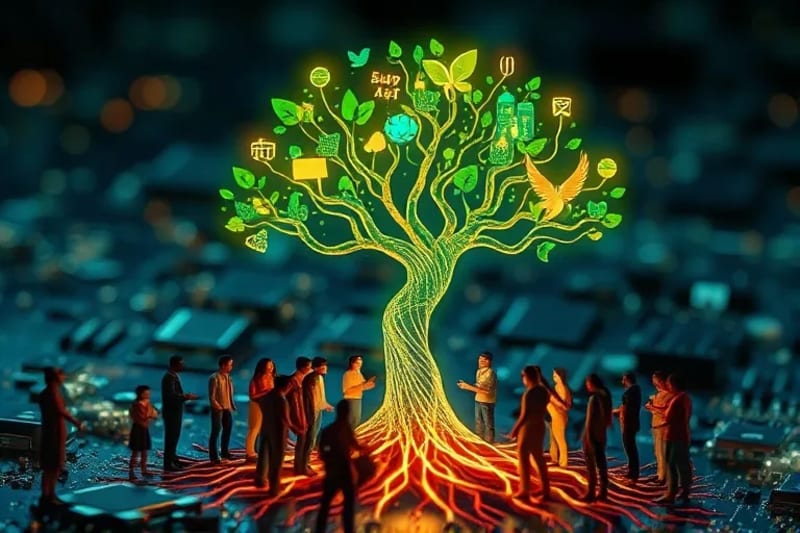
Collective effort and shared vision are crucial for fostering sustainable community development and social impact.
Key Models of Purpose-Driven Businesses
The Purpose Economy manifests through various business models, each with distinct characteristics but united by a common commitment to social and environmental good. Understanding these models is key to appreciating the diversity of purpose-driven enterprise.
| Model Type | Description | Key Characteristics |
|---|---|---|
| Certified B Corporations (B Corps) | Businesses that meet the highest standards of verified social and environmental performance, public transparency, and legal accountability to balance profit and purpose. | Rigorous certification process; legally required to consider impact on all stakeholders; global community. |
| Social Enterprises | Organizations that apply commercial strategies to maximize improvements in human and environmental well-being, rather than maximizing profits for external shareholders. | Primary mission is social/environmental; revenue-generating activities; reinvest profits into mission. |
| Conscious Capitalism | A business philosophy that emphasizes higher purpose, stakeholder orientation, conscious leadership, and conscious culture as pathways to both profit and positive impact. | Focus on purpose, stakeholders, leadership, and culture; voluntary adoption; not a certification. |
| Circular Economy Businesses | Businesses designed to eliminate waste and pollution, circulate products and materials, and regenerate nature, moving away from the traditional linear "take-make-dispose" model. | Focus on resource efficiency, waste reduction, product longevity, and regenerative systems. |
These models provide frameworks for companies to operationalize their purpose, offering different pathways to integrate social and environmental considerations into their core business strategies. Each model encourages a thoughtful approach to business, emphasizing sustainability and responsibility.
Challenges and Criticisms in the Purpose Economy
While the Purpose Economy offers significant promise, it is not without its challenges and criticisms. Navigating these complexities is essential for businesses genuinely committed to making a difference.
- Measuring Impact: Quantifying social and environmental impact accurately and consistently remains a significant hurdle. Developing robust metrics and reporting standards is crucial to demonstrate genuine progress.
- Balancing Profit and Purpose: Striking the right balance between financial viability and social mission can be difficult, especially for startups or businesses operating in highly competitive markets.
- "Purpose Washing" or "Greenwashing": The risk of companies superficially adopting purpose-driven language without genuine commitment, leading to cynicism and erosion of trust. This highlights the importance of ethical practices and transparent reporting.
- Scalability: Scaling purpose-driven models while maintaining their core values and impact can be complex, often requiring innovative approaches to growth and investment.
- Regulatory Environment: The lack of consistent legal frameworks and incentives for purpose-driven businesses across different jurisdictions can create barriers to entry and expansion.
Addressing these challenges requires continuous innovation, collaborative efforts, and a steadfast commitment to authenticity and accountability from businesses, policymakers, and consumers alike.

The intricate balance of environmental sustainability and economic prosperity is central to future-proof business models.
Implementing a Purpose-Driven Strategy: Steps for Businesses
For businesses looking to transition towards a purpose-driven model, a structured approach is essential. This involves a deep introspection into the company's values and a strategic integration of purpose across all operations.
- Define Your Core Purpose: Clearly articulate the "why" behind your business, beyond profit. This purpose should be inspiring, authentic, and relevant to societal needs.
- Integrate Purpose into Strategy: Ensure that your purpose informs your business strategy, product development, marketing, and operational decisions. It should be more than a mission statement; it should be a living guide.
- Engage Stakeholders: Involve employees, customers, suppliers, and community members in your purpose journey. Their input and buy-in are crucial for authenticity and impact.
- Measure and Report Impact: Establish clear metrics to track your social and environmental performance. Regularly report on your progress, challenges, and lessons learned to maintain transparency and accountability.
- Foster a Purpose-Driven Culture: Cultivate an internal culture that reflects your purpose. This includes leadership commitment, employee empowerment, and aligning incentives with purpose-driven goals.
- Seek Certification or Alignment: Consider certifications like B Corp or aligning with principles of Conscious Capitalism to formalize your commitment and gain credibility.
By following these steps, businesses can effectively embed purpose into their DNA, creating lasting value for both their bottom line and the world around them. This proactive approach is key to thriving in the evolving sociocultural future.
The Future of Business: A Purpose-Driven Landscape
The trajectory of the Purpose Economy suggests a future where businesses are increasingly expected to contribute positively to society, not just economically. This expectation is reshaping consumer behavior, investment patterns, and talent acquisition strategies globally. As awareness grows, so too will the demand for authentic, impactful business models.
Governments and regulatory bodies may also begin to implement policies that favor purpose-driven enterprises, further accelerating this shift. The integration of technology, particularly in impact measurement and transparency, will play a crucial role in validating and scaling these models. Ultimately, the Purpose Economy is paving the way for a more equitable, sustainable, and prosperous future for all.
Source: Hybrid content assisted by AI and human editorial supervision.


Comentarios