
Augmented Reality Industry 4.0: Process Optimization Predictive Maintenance
The advent of Industry 4.0 has ushered in an era of unprecedented technological integration, transforming traditional manufacturing and industrial processes. At the heart of this revolution lies the convergence of cyber-physical systems, the Internet of Things (IoT), cloud computing, and artificial intelligence. Among these transformative technologies, Augmented Reality (AR) stands out as a pivotal tool, bridging the gap between the digital and physical worlds to unlock new efficiencies and capabilities.
Augmented Reality, distinct from Virtual Reality (VR), overlays digital information onto the real-world environment, enhancing a user's perception without fully immersing them. In an industrial context, this means workers can view real-time data, instructions, and 3D models directly on their equipment, production lines, or workpieces. This capability is not merely a novelty; it represents a fundamental shift in how tasks are performed, knowledge is transferred, and decisions are made on the factory floor.
The integration of AR within Industry 4.0 ecosystems is driven by the need for greater agility, precision, and data-driven insights. As factories become smarter and more interconnected, the volume and complexity of data generated can be overwhelming. AR provides an intuitive interface to contextualize this data, making it actionable for human operators. This article will delve into the profound impact of AR on process optimization and predictive maintenance, exploring its mechanisms, benefits, and the challenges that lie ahead.
Table of Contents
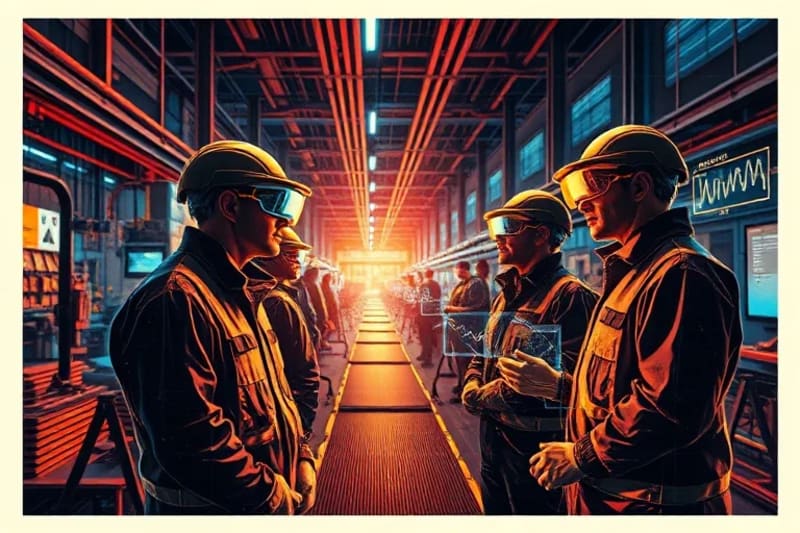
Conceptual representations of advanced industrial environments and the integration of digital information through augmented reality.
1. Understanding Augmented Reality in Industry 4.0
Augmented Reality (AR) refers to technologies that superimpose computer-generated images over a user's view of the real world, thus providing a composite view. Unlike Virtual Reality, which creates an entirely artificial environment, AR maintains the user's connection to their physical surroundings while enriching it with digital content. This distinction is crucial for industrial applications where situational awareness is paramount.
In the context of Industry 4.0, AR is often deployed via smart glasses, tablets, or smartphones, enabling workers to access critical information hands-free or on the go. This information can include anything from assembly instructions and safety protocols to real-time sensor data and remote expert guidance. The core value proposition of AR is its ability to make complex data intuitive and accessible precisely when and where it is needed.
The technological backbone of industrial AR systems typically involves high-resolution displays, advanced tracking sensors (for precise overlay alignment), and robust computing power. These systems are often integrated with enterprise resource planning (ERP) systems, manufacturing execution systems (MES), and IoT platforms to pull dynamic data. This interconnectedness is a defining characteristic of Industry 4.0, where data flows seamlessly between physical assets and digital systems, as highlighted in discussions around Algoritmos Autónomos Ética Desafíos Legales Filosóficos.
2. Process Optimization Through Augmented Reality
Process optimization is a continuous endeavor in industrial settings, aiming to maximize efficiency, reduce waste, and improve output quality. AR contributes significantly to these goals by enhancing human capabilities at various stages of the production lifecycle. One primary application is in assembly and manufacturing, where AR can project step-by-step instructions directly onto the workpiece.
For instance, workers can follow holographic guides for complex assembly tasks, ensuring correct component placement and sequence. This reduces errors, accelerates training for new employees, and decreases reliance on physical manuals. The visual guidance provided by AR minimizes cognitive load and allows for faster, more accurate execution of tasks, even for highly customized products.
- Quality Control: AR systems can overlay digital blueprints or tolerance specifications onto physical products, allowing inspectors to quickly identify deviations or defects. This real-time comparison significantly improves the speed and accuracy of quality checks, preventing faulty products from advancing further down the line.
- Logistics and Warehousing: In warehouses, AR can guide workers to the exact location of items, optimize picking routes, and display inventory information directly on packages. This streamlines order fulfillment and reduces picking errors, leading to faster turnaround times and improved customer satisfaction.
- Training and Skill Development: AR offers immersive and interactive training experiences that simulate real-world scenarios without the risks or costs associated with physical prototypes. New hires can practice complex procedures repeatedly, gaining proficiency faster and more effectively. This is particularly valuable in industries with high turnover or specialized skill requirements.
3. Predictive Maintenance Revolutionized by AR
Predictive maintenance (PdM) is a cornerstone of Industry 4.0, moving beyond reactive or scheduled maintenance to anticipate equipment failures before they occur. This approach relies heavily on data from sensors, IoT devices, and machine learning algorithms to predict when maintenance is needed. AR significantly enhances PdM by providing a visual and interactive layer for maintenance technicians.
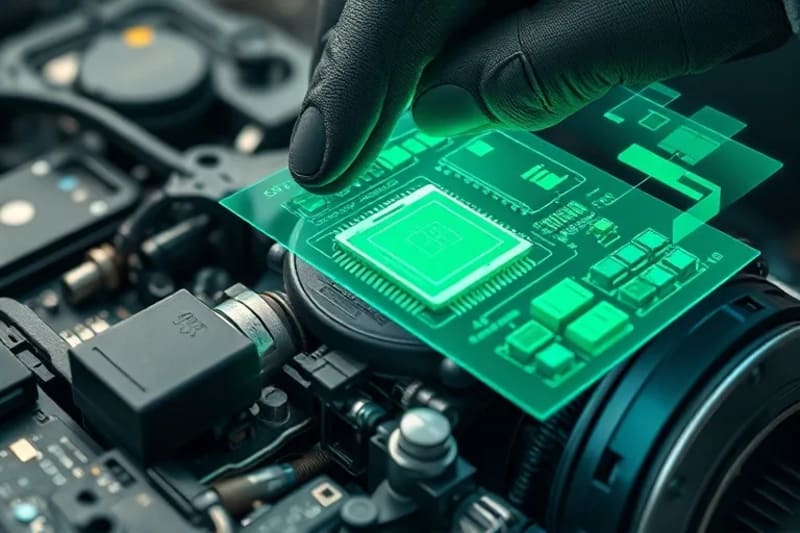
Visualizations of human interaction with augmented digital instructions for precise technical tasks.
When a sensor detects an anomaly, an AR system can immediately highlight the problematic component on a piece of machinery for a technician. It can then display real-time performance metrics, historical data, and step-by-step repair guides directly in their field of view. This eliminates the need to consult physical manuals or separate digital screens, drastically reducing diagnostic and repair times.
Remote assistance is another powerful application of AR in predictive maintenance. A field technician facing an unfamiliar issue can connect with an expert located anywhere in the world. The expert can then see what the technician sees through the AR device's camera and annotate the technician's view with instructions, diagrams, or virtual tools. This capability minimizes downtime and reduces the need for experts to travel, offering a cost-effective solution for complex repairs.
The integration of AR with advanced analytics and Robótica Autónoma: Dilemas Morales y Decisiones Éticas Críticas allows for a more proactive and efficient maintenance strategy. By providing technicians with immediate, contextualized information, AR empowers them to perform complex tasks with greater confidence and accuracy, ultimately extending equipment lifespan and preventing costly breakdowns.
4. Benefits and Advantages of AR in Industry 4.0
The adoption of Augmented Reality in Industry 4.0 yields a multitude of benefits that directly impact operational efficiency, safety, and profitability. These advantages extend across various aspects of industrial operations, from the shop floor to the boardroom.
| Benefit Category | Description |
|---|---|
| Increased Efficiency | Reduces task completion times by providing immediate, contextual information and guidance. Minimizes errors in assembly, inspection, and maintenance. |
| Improved Accuracy | Digital overlays ensure precise execution of tasks, matching physical actions with digital specifications, leading to higher quality output. |
| Enhanced Safety | Workers can receive safety warnings, visualize potential hazards, and follow proper lockout/tagout procedures without diverting attention from their work. |
| Reduced Downtime | Faster diagnostics and repairs through AR-guided maintenance and remote expert assistance minimize equipment downtime, increasing productivity. |
| Accelerated Training | Interactive AR training modules allow new employees to learn complex procedures more quickly and effectively, reducing onboarding time and costs. |
| Cost Savings | Derived from reduced errors, increased efficiency, less downtime, lower travel costs for experts, and optimized resource utilization. |
| Better Data Utilization | AR makes complex IoT and sensor data immediately understandable and actionable for frontline workers, transforming raw data into practical insights. |
These benefits collectively contribute to a more resilient, responsive, and competitive industrial operation. The ability to integrate real-time data with physical tasks empowers workers and optimizes resource allocation, aligning perfectly with the core tenets of Industry 4.0.
5. Challenges and Considerations for AR Implementation
Despite its immense potential, the successful implementation of Augmented Reality in industrial settings is not without its challenges. Organizations must carefully consider several factors to ensure a smooth transition and maximize return on investment.
Conceptual visualizations of data processing and algorithmic intelligence driving industrial efficiency.
- Cost of Hardware and Software: Initial investment in AR headsets, specialized software, and integration with existing systems can be substantial. Organizations need to conduct thorough cost-benefit analyses.
- Integration Complexity: Seamlessly integrating AR solutions with legacy systems (ERP, MES, IoT platforms) requires significant technical expertise and can be a complex undertaking. Data security and privacy, as discussed in Metaverse Digital Law: Property, Identity, Jurisdiction, are also critical concerns.
- User Acceptance and Training: Workers may be resistant to new technologies or find AR devices cumbersome. Proper training, ergonomic design, and demonstrating clear benefits are essential for adoption.
- Data Accuracy and Reliability: The effectiveness of AR largely depends on the accuracy and real-time nature of the data it displays. Ensuring robust data pipelines and reliable sensor networks is crucial.
- Network Infrastructure: Industrial AR applications often require high bandwidth and low-latency connectivity, especially for real-time data streaming and remote assistance. Robust Wi-Fi or 5G infrastructure is often a prerequisite.
- Content Creation: Developing 3D models, interactive instructions, and digital overlays requires specialized skills and tools. Scaling content creation for a wide range of industrial tasks can be challenging.
Addressing these challenges requires a strategic approach, starting with pilot projects, involving end-users in the development process, and investing in continuous training and infrastructure upgrades. Furthermore, adherence to Ciberhigiene: Principios Básicos Personal y Empresarial is vital to protect sensitive industrial data.
6. Future Outlook and Developments
The future of Augmented Reality in Industry 4.0 is bright, with continuous advancements in hardware, software, and integration capabilities. We can expect AR devices to become lighter, more comfortable, and more powerful, offering enhanced visual fidelity and longer battery life. The convergence of AR with other emerging technologies will further amplify its impact.
For instance, the combination of AR with Artificial Intelligence (AI) will enable more intelligent and adaptive guidance systems. AI could analyze a worker's actions in real-time and provide proactive suggestions or corrections through AR overlays. Similarly, the integration of AR with digital twins – virtual replicas of physical assets – will allow for even more sophisticated simulations, predictive analytics, and remote diagnostics.
Furthermore, the development of standardized platforms and open-source tools will likely reduce the complexity and cost of AR content creation, making the technology more accessible to a wider range of businesses. As industries continue to embrace the principles of Industry 4.0, Augmented Reality will undoubtedly play an increasingly central role in optimizing processes, ensuring predictive maintenance, and empowering the workforce for the challenges of tomorrow.
The journey towards a fully augmented industrial landscape is ongoing, but the foundational benefits and transformative potential of AR are already evident. Companies that strategically invest in and implement this technology will be well-positioned to lead in the competitive global marketplace, characterized by efficiency, innovation, and resilience.
Explore Further: Related Insights
Source: Hybrid content assisted by AI and human editorial supervision.


Comentarios