
AI Preventive Medicine: Diagnosis Personalized Longevity
Artificial Intelligence (AI) is rapidly transforming the landscape of healthcare, particularly in the realm of preventive medicine. By leveraging vast datasets and advanced algorithms, AI offers unprecedented capabilities for early disease detection, risk assessment, and the development of highly personalized treatment strategies. This evolution promises not only to enhance the quality of care but also to significantly extend human longevity by proactively addressing health challenges.
The integration of AI into preventive healthcare marks a paradigm shift from reactive treatment to proactive management. Instead of waiting for symptoms to manifest, AI systems can identify subtle patterns and biomarkers that indicate a predisposition to disease long before clinical onset. This capability is crucial for conditions where early intervention can dramatically improve outcomes and even prevent progression.
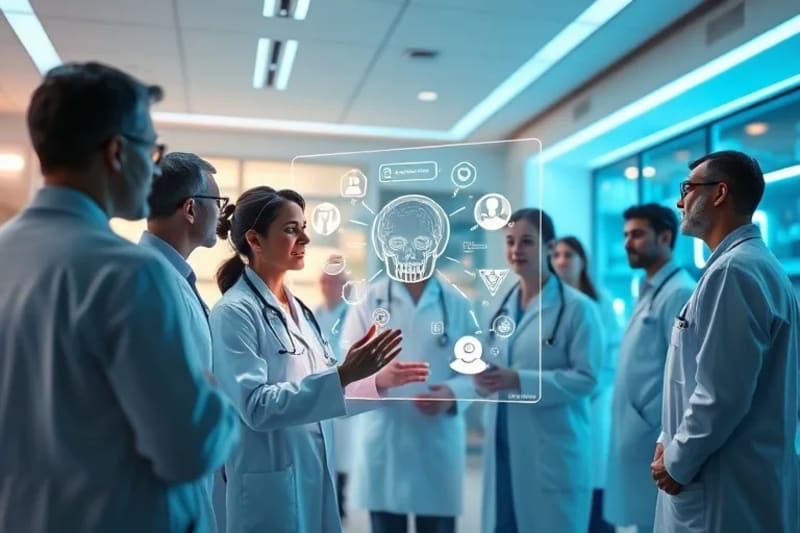
Conceptual representation of AI assisting medical teams in analyzing complex health data.
Table of Contents
- AI for Early Diagnosis and Risk Prediction
- Personalized Treatments and Precision Medicine
- Enhancing Longevity Through AI-Driven Prevention
- Ethical Considerations and Challenges in AI Healthcare
- Future Outlook and Transformative Potential
AI for Early Diagnosis and Risk Prediction
One of the most profound impacts of AI in preventive medicine is its ability to facilitate early diagnosis. Machine learning algorithms can analyze vast amounts of patient data, including electronic health records, genetic information, imaging scans, and even wearable device data, to identify subtle indicators of disease. This capability is particularly valuable for conditions like cancer, cardiovascular diseases, and neurodegenerative disorders, where early detection is critical for effective treatment.
For instance, AI-powered tools can detect anomalies in mammograms or retinal scans that might be missed by the human eye, leading to earlier detection of breast cancer or diabetic retinopathy. In cardiology, AI can predict the risk of heart failure by analyzing heart rate variability, blood pressure trends, and other physiological markers. These predictive models allow clinicians to intervene proactively, implementing lifestyle changes or medical treatments before severe symptoms develop.
The predictive power of AI extends to identifying individuals at high risk for developing chronic conditions. By integrating demographic data, lifestyle factors, and genetic predispositions, AI algorithms can create personalized risk profiles. This enables targeted screening programs and preventive interventions, ensuring that resources are allocated to those who stand to benefit the most. Such approaches are fundamental to a truly preventive healthcare system.
Personalized Treatments and Precision Medicine
Beyond diagnosis, AI is instrumental in ushering in an era of personalized treatments, often referred to as precision medicine. This approach recognizes that each individual is unique and responds differently to treatments. AI algorithms can analyze a patient's genetic makeup, proteomic profile, microbiome data, and even their response to previous medications to recommend the most effective and safest treatment plan.

Abstract visualization of data-driven personalized medicine strategies.
For example, in oncology, AI can help identify specific genetic mutations in a tumor that make it susceptible to certain targeted therapies, avoiding ineffective treatments and reducing adverse side effects. In pharmacology, AI can predict drug interactions and optimal dosages based on an individual's metabolic profile, leading to better therapeutic outcomes. This level of customization was previously unimaginable but is now becoming a reality thanks to AI.
Moreover, AI can assist in developing personalized preventive strategies. This includes tailored dietary recommendations, exercise regimens, and stress management techniques based on an individual's unique health profile and risk factors. Such bespoke advice is far more likely to be adopted and to yield positive results than generic health guidelines. The concept of adaptive leadership in digital health is crucial here, as healthcare providers must continuously adapt to these evolving AI-driven insights.
The application of AI also extends to mental health, where algorithms can analyze speech patterns, social media activity, and other digital footprints to identify early signs of depression, anxiety, or other mental health disorders. This allows for timely intervention and access to support services, preventing conditions from escalating. The insights derived from such analyses can inform highly individualized therapeutic approaches.
Enhancing Longevity Through AI-Driven Prevention
The ultimate goal of preventive medicine is to extend healthy lifespan, and AI is proving to be a powerful ally in this endeavor. By enabling earlier detection and personalized interventions, AI helps manage chronic diseases more effectively, reducing their impact on quality of life and delaying their progression. This directly contributes to increased longevity and improved well-being in later years.
AI's ability to monitor health continuously through wearables and other IoT devices provides real-time insights into an individual's physiological state. This constant feedback loop allows for immediate adjustments to lifestyle or medication, preventing acute events and managing chronic conditions proactively. For example, continuous glucose monitoring combined with AI can help diabetics maintain stable blood sugar levels, significantly reducing the risk of long-term complications.
Furthermore, AI is accelerating research into the fundamental mechanisms of aging. By analyzing genomic, proteomic, and metabolomic data from large populations, AI can identify key pathways and biomarkers associated with healthy aging and longevity. This knowledge can then be translated into novel preventive strategies, including anti-aging therapies and lifestyle recommendations designed to optimize cellular health and delay age-related decline.
3D render illustrating AI's deep dive into cellular biology for longevity research.
Ethical Considerations and Challenges in AI Healthcare
Despite its immense potential, the widespread adoption of AI in preventive medicine also presents significant ethical and practical challenges. Data privacy and security are paramount concerns, as AI systems rely on access to highly sensitive personal health information. Robust regulatory frameworks and advanced cybersecurity measures are essential to protect patient data from breaches and misuse. The intersection of generative AI and cybersecurity threats highlights the critical need for vigilance.
Another challenge lies in ensuring algorithmic fairness and preventing bias. If AI models are trained on biased datasets, they can perpetuate or even amplify existing health disparities, leading to unequal care for different demographic groups. Developers must actively work to create diverse and representative datasets and implement fairness-aware AI algorithms to ensure equitable access to AI-driven preventive care.
The question of accountability also arises: who is responsible when an AI system makes an incorrect diagnosis or recommends a suboptimal treatment? Clear guidelines for liability and the role of human oversight in AI-driven healthcare decisions are needed. Clinicians must be adequately trained to understand, interpret, and critically evaluate AI recommendations, maintaining their central role in patient care.
The cost of implementing and maintaining advanced AI systems in healthcare can also be substantial, raising concerns about accessibility and affordability. Ensuring that these transformative technologies benefit all segments of society, rather than just a privileged few, requires careful policy planning and investment. Discussions around the geopolitics of resources, though different in context, underscore the importance of equitable distribution and access for critical societal advancements.
Future Outlook and Transformative Potential
The future of AI in preventive medicine is incredibly promising. As AI technologies continue to evolve, we can expect even more sophisticated tools for predicting disease, personalizing interventions, and monitoring health. Advances in areas like quantum computing and explainable AI (XAI) will further enhance the accuracy, transparency, and trustworthiness of these systems.
The integration of AI with other emerging technologies, such as nanotechnology and biotechnology, holds the potential for revolutionary breakthroughs. Imagine nanobots patrolling the bloodstream, detecting cancer cells at their earliest stages, or AI-designed personalized vaccines tailored to an individual's immune system. These are not distant fantasies but potential realities being shaped by ongoing research.
Ultimately, AI has the power to fundamentally reshape our approach to health, moving us towards a future where disease is largely preventable, and healthy longevity is the norm. This transformation will require continued collaboration between AI researchers, medical professionals, policymakers, and the public to navigate the complexities and harness the full potential of this groundbreaking technology.
The journey towards this future is ongoing, but the initial steps taken with AI in preventive medicine are already yielding remarkable results, setting the stage for a healthier and longer-living global population. The continuous evolution of digital platforms, including digital culture podcasts, will also play a role in disseminating knowledge and fostering public understanding of these advancements.
Explore Further: Related Insights
- Global Telework Law: Legal & Ethical Challenges Cloud Talent
Understand the complex legal and ethical frameworks governing remote work in a globalized world.
- Sacred Geometry: Universal Patterns & Spiritual Meaning
Discover the profound significance of geometric patterns found in nature, art, and spiritual traditions.
- Augmented Reality Underwater Heritage Conservation: Digital Archaeology
Explore how AR is revolutionizing the preservation and study of submerged cultural heritage sites.
- Inclusive Sports: Athletes with Disabilities in Competitions
Learn about the inspiring journey of athletes with disabilities and their impact on competitive sports.
- Calisthenics: Functional Training, Urban Strength
Uncover the benefits and techniques of calisthenics for functional strength and body mastery.
Source: Hybrid content assisted by AI and human editorial supervision.


Comentarios