
Water Geopolitics: Conflicts, Opportunities, Strategic Businesses
The 21st century has brought the geopolitics of water to the forefront of international relations, transforming it from a mere environmental concern into a critical strategic resource. As populations grow and climate change intensifies, access to clean, potable water is becoming an increasingly scarce commodity, leading to potential conflicts, but also opening unprecedented opportunities for innovation and strategic business development. Understanding the complex interplay between water resources, political power, economic interests, and technological advancements is essential for navigating the future global landscape.
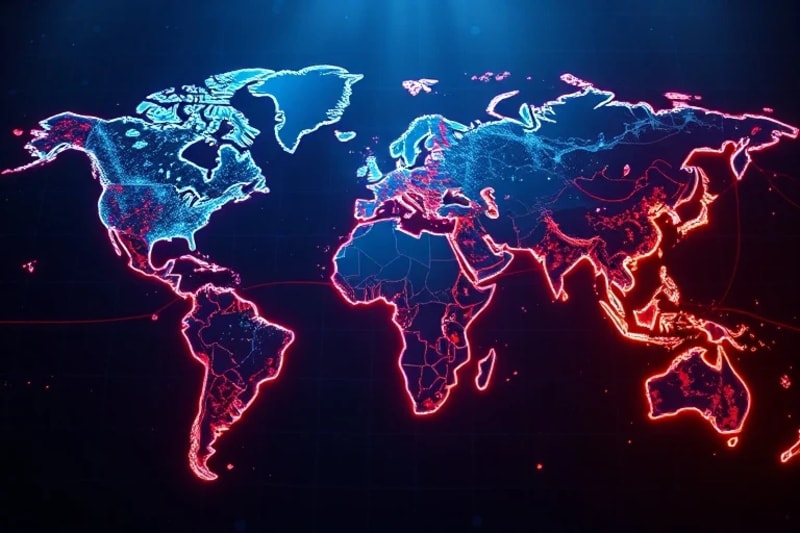
A visual metaphor for the intricate global web of water geopolitics, where resource flows intersect with economic interests and strategic power.
This article delves into the multifaceted dimensions of water geopolitics, examining the drivers of scarcity, the potential for conflict, and the burgeoning sector of water-related businesses. From advanced desalination techniques to smart irrigation systems and water trading markets, new models are emerging to address this global challenge. We will explore how these developments are reshaping international cooperation and competition, highlighting the strategic importance of water in an ever-changing world.
Table of Contents
- The Global Water Crisis: A Looming Threat
- Water as a Strategic Resource and Source of Conflict
- Emerging Business Models in Water Management
- Technological Innovations Driving Water Solutions
- International Cooperation and Governance Challenges
- Investment Opportunities in the Water Sector
The Global Water Crisis: A Looming Threat
The global water crisis is characterized by both physical scarcity and economic scarcity. Physical scarcity occurs when there is insufficient water to meet demand, often exacerbated by climate change, prolonged droughts, and desertification. Economic scarcity, on the other hand, arises from a lack of adequate infrastructure or financial resources to access and distribute available water, even in regions with abundant supplies.
According to the United Nations, billions of people still lack access to safely managed drinking water and sanitation services. This deficit has profound implications for public health, food security, and economic development, particularly in developing nations. The increasing frequency and intensity of extreme weather events further stress existing water systems, making reliable access even more precarious.
Urbanization and industrialization also contribute significantly to the crisis. Rapid growth in cities strains municipal water supplies, while industrial processes often demand vast quantities of water and can lead to pollution. Agriculture, the largest consumer of freshwater globally, faces immense pressure to increase food production with dwindling water resources, prompting a critical need for more efficient irrigation techniques and water-smart farming practices.
Water as a Strategic Resource and Source of Conflict
Water's strategic importance is undeniable, often leading to complex geopolitical dynamics. Transboundary rivers and aquifers, which cross national borders, are particularly susceptible to disputes. Upstream nations can control the flow and quality of water to downstream countries, creating power imbalances and potential flashpoints.
Regions like the Middle East, Central Asia, and parts of Africa are especially vulnerable to water-related tensions. The Nile River, the Jordan River, and the Tigris-Euphrates basin are historical examples where shared water resources have fueled political friction and, in some cases, military posturing. These conflicts highlight the urgent need for robust international agreements and collaborative management strategies to prevent escalation.
Beyond direct conflict, water can be used as a tool of political leverage or even as a weapon. Damming projects, diversion schemes, and pollution can destabilize entire regions, impacting agricultural output, public health, and internal displacement. The economic consequences of such actions can be severe, leading to humanitarian crises and further exacerbating existing social and political fragilities. Addressing these challenges requires not only diplomatic efforts but also innovative approaches to resource management, including the use of advanced analytics and AI for crisis management and predictive modeling.
Emerging Business Models in Water Management
The growing water crisis has spurred the development of innovative business models aimed at sustainable water management. These models span various sectors, from infrastructure development to data analytics and consumer-oriented solutions. Investing in these areas is becoming increasingly attractive for both public and private entities seeking to address global challenges while generating economic returns.
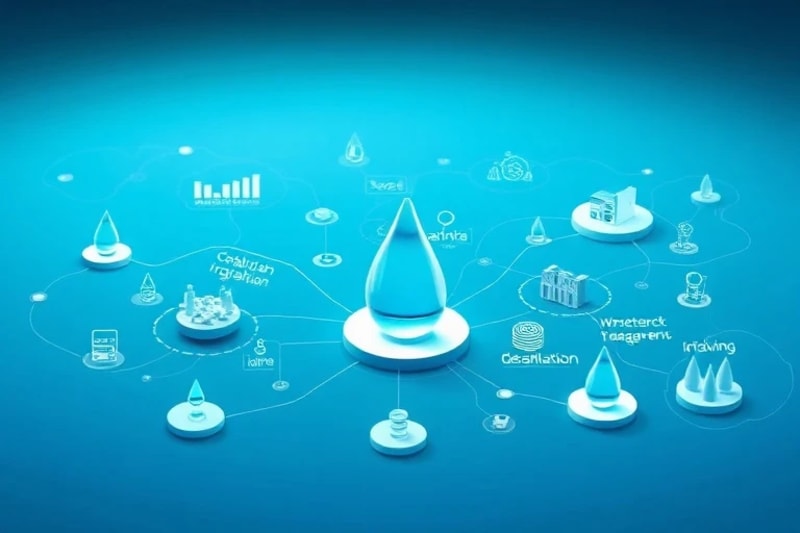
An infographic showcasing various business models designed to address water scarcity and promote sustainable usage globally.
One prominent model involves public-private partnerships (PPPs) for water infrastructure projects. Governments often lack the capital and expertise for large-scale water treatment, distribution, and wastewater management systems. PPPs allow private companies to invest, build, and operate these facilities, often under long-term contracts, ensuring efficiency and leveraging advanced technologies. This approach helps bridge the funding gap and introduces private sector innovation into public services.
Another significant area is the development of water-efficient technologies for agriculture and industry. Companies are offering solutions like precision irrigation, soil moisture sensors, and closed-loop industrial water recycling systems. These technologies not only conserve water but also reduce operational costs for businesses, creating a win-win scenario. The integration of robotics and automation in water infrastructure and agriculture is also transforming efficiency.
Furthermore, the concept of "water as a service" is gaining traction. This model involves companies providing comprehensive water management solutions to clients, including monitoring, treatment, and optimization, rather than just selling equipment. This allows businesses and municipalities to outsource complex water challenges and pay for results, fostering a more sustainable approach to water usage.
Technological Innovations Driving Water Solutions
Technological advancements are crucial in mitigating the global water crisis and fostering new business opportunities. Desalination, once prohibitively expensive, is becoming more cost-effective due to innovations in reverse osmosis membranes and energy recovery systems. Countries like Israel and Saudi Arabia heavily rely on desalination to meet their water needs, showcasing its potential for water-stressed regions globally.
Wastewater treatment and reuse technologies are also evolving rapidly. Advanced filtration systems, biological treatments, and membrane bioreactors can transform municipal and industrial wastewater into high-quality reclaimed water suitable for irrigation, industrial processes, and even potable uses. This circular economy approach to water significantly reduces reliance on freshwater sources and minimizes pollution.
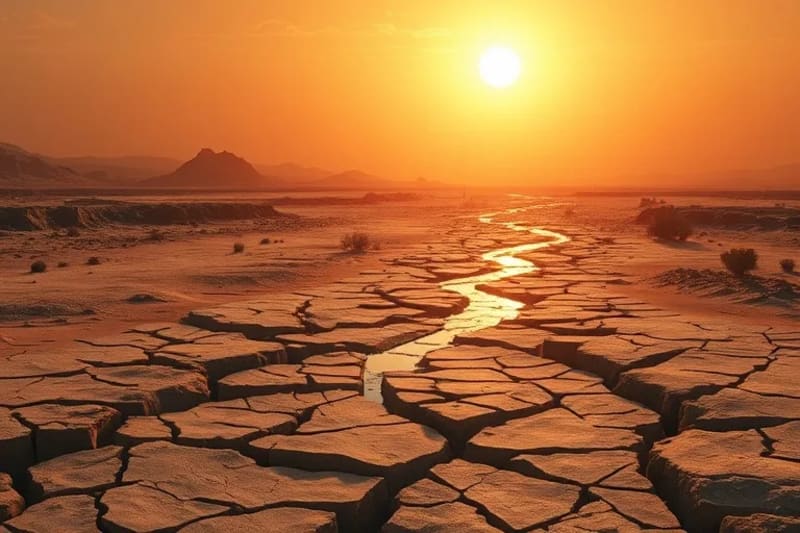
A stark depiction of an arid landscape, representing the critical global challenge of water scarcity and its geopolitical implications.
Digital technologies, including artificial intelligence (AI), sensors, and the Internet of Things (IoT), are revolutionizing water management. Smart water networks can monitor water quality, detect leaks in real-time, and optimize distribution, significantly reducing water loss. Predictive analytics can forecast demand and supply, helping utilities manage resources more effectively. These digital solutions are not only improving efficiency but also creating new markets for data services and specialized software.
International Cooperation and Governance Challenges
While technology offers promising solutions, effective international cooperation and robust governance frameworks are paramount for addressing water geopolitics. Transboundary water agreements, such as those governing the Rhine or the Mekong, demonstrate that shared resources can be managed cooperatively, fostering peace and mutual benefit. However, many regions still lack comprehensive frameworks, leading to unilateral actions and disputes.
The challenge lies in balancing national sovereignty with the shared responsibility for a vital resource. International organizations, NGOs, and scientific bodies play a crucial role in facilitating dialogue, providing technical expertise, and promoting best practices. Diplomacy and conflict resolution mechanisms are essential tools for mediating disputes and building trust among riparian states.
Furthermore, the legal and ethical dimensions of water ownership and access are complex. Debates around water as a human right versus a commodity continue to shape policy discussions. Establishing fair and equitable allocation principles, especially in the face of climate change impacts, requires a deep understanding of hydrological systems, socio-economic factors, and cultural contexts. The concept of digital consciousness and neuro-rights might seem distant, but the ethical implications of managing and potentially privatizing essential resources like water touch upon fundamental human dignity.
Investment Opportunities in the Water Sector
The water sector presents significant investment opportunities for those looking to contribute to sustainable development while achieving financial returns. This market is projected to grow substantially as global demand for water solutions increases. Investors can target various segments, including water infrastructure, treatment technologies, smart water management systems, and water utility companies.
Private equity and venture capital funds are increasingly focusing on water-tech startups developing innovative solutions for purification, conservation, and data analytics. Public markets offer opportunities through specialized exchange-traded funds (ETFs) and individual stocks of established water companies. Moreover, impact investing and green finance mechanisms, such as certified green bonds, provide avenues for investors to support environmentally beneficial water projects.
The long-term nature of water infrastructure projects and the essential demand for water make it a relatively stable investment. However, investors must also consider regulatory risks, environmental factors, and the geopolitical context of specific regions. Due diligence in this sector requires a comprehensive understanding of both technological capabilities and the socio-political landscape.
In conclusion, the geopolitics of water in the 21st century is a complex and evolving field, marked by both challenges and opportunities. While the threat of water scarcity and conflict is real, technological innovation and strategic business models offer pathways toward more sustainable and equitable water management. By fostering international cooperation, investing in cutting-edge solutions, and developing robust governance frameworks, the global community can transform water from a potential source of conflict into a catalyst for peace and prosperity.
Related Searches
- Water Security Global Challenges
- Sustainable Water Management Solutions
- Water Technology Investment Opportunities
- Transboundary Water Disputes Resolution
- Climate Change Impact on Water Resources
- Water Conservation Strategies Business
Source: Hybrid content assisted by AI and human editorial supervision.


Comentarios