
Neuro-rights AI Ethics: Digital Consciousness Safeguards
The rapid evolution of Artificial Intelligence (AI), particularly in its generative forms, presents humanity with unprecedented opportunities and profound ethical dilemmas. As AI systems become increasingly sophisticated, capable of mimicking human thought, creativity, and even emotional expression, questions arise about the fundamental rights of individuals in a digitally augmented world. This article delves into the emerging concept of neuro-rights and the ethical considerations surrounding generative AI, exploring how we can safeguard digital consciousness and human creativity in this new era.
The intersection of neuroscience, AI, and digital ethics demands a proactive approach to prevent potential harms and ensure that technological progress aligns with human values and dignity. Understanding these complex issues is crucial for policymakers, developers, and the public alike, as we collectively shape the future of human-AI interaction.
Table of Contents
- Understanding Neuro-rights: A New Frontier in Human Rights
- The Rise of Generative AI: Capabilities and Concerns
- Digital Consciousness: Defining the Self in the AI Age
- Protecting Human Creativity from AI Influence
- Ethical Frameworks for AI: Navigating the Moral Landscape
- Legal Challenges and the Path Forward for Neuro-rights
- The Future of Neuro-rights: Collaboration and Global Governance
Understanding Neuro-rights: A New Frontier in Human Rights
Neuro-rights are a set of emerging human rights designed to protect the human brain and its activity from potential misuse and manipulation by neurotechnology and artificial intelligence. These rights aim to safeguard the fundamental aspects of human identity, autonomy, and mental privacy in an era where technology can increasingly access, influence, and even alter our neural processes.
The concept gained prominence as advancements in brain-computer interfaces (BCIs), neuroimaging, and AI-driven neuro-technologies began to blur the lines between human thought and digital processing. Experts argue that existing human rights frameworks, while foundational, may not adequately address the unique challenges posed by these technologies, necessitating a new legal and ethical paradigm.
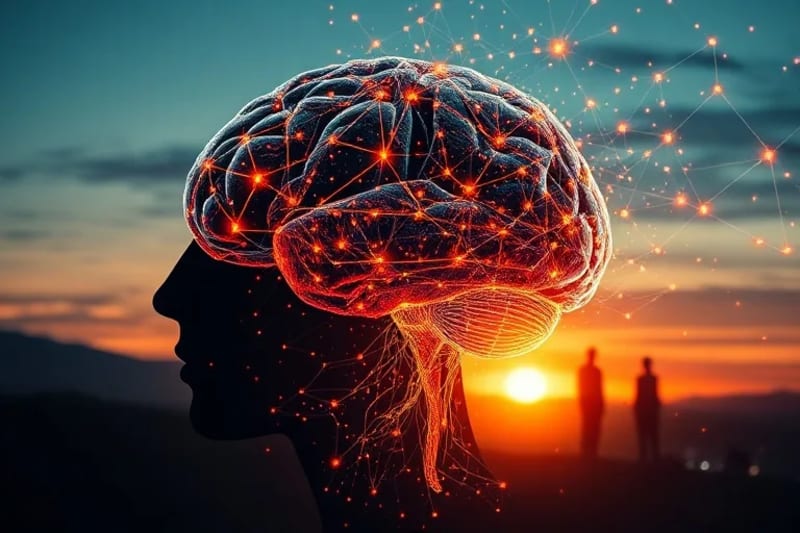 Exploring the intricate connections between neural networks, digital data, and human identity, this visualization underscores the critical need for ethical boundaries in the age of advanced AI.
This image is a conceptual AI render, illustrating the complex interplay of technology and human consciousness, designed to provoke thought on digital ethics.
Key proposed neuro-rights often include the right to mental privacy, cognitive liberty, mental integrity, and psychological continuity. These rights seek to ensure that individuals retain control over their own minds, thoughts, and emotional states, free from unauthorized interference or manipulation.
- Right to Mental Privacy: Protection against unauthorized access to brain data.
- Right to Cognitive Liberty: Freedom to make one's own choices, independent of neurotechnological manipulation.
- Right to Mental Integrity: Protection from unauthorized alteration of mental processes.
- Right to Psychological Continuity: Preservation of one's personal identity and sense of self.
The Rise of Generative AI: Capabilities and Concerns
Generative AI refers to algorithms capable of producing new content, such as text, images, audio, and even code, that is often indistinguishable from human-created work. Technologies like large language models (LLMs) and generative adversarial networks (GANs) have rapidly advanced, demonstrating an ability to learn patterns from vast datasets and then generate novel outputs.
While these capabilities offer immense potential for innovation in fields like art, design, and scientific research, they also introduce significant ethical and societal concerns. The ability of AI to create realistic "deepfakes," generate persuasive but false narratives, or even mimic individual artistic styles raises questions about authenticity, intellectual property, and the potential for manipulation.
 The delicate interplay between human ingenuity and artificial intelligence, as depicted through the fusion of neural networks and creative tools, highlights the evolving landscape of artistic expression.
This digital painting, a product of creative AI interpretation, explores the symbiotic relationship between human touch and digital innovation.
The ethical implications extend to the potential for AI to influence human decision-making, shape public opinion, and even erode trust in information. As generative AI becomes more pervasive, understanding its mechanisms and establishing robust ethical guidelines becomes paramount. This also touches upon the broader discussion of Ethical AI in Preventive Medicine for Personalized Longevity, where similar concerns about data privacy and individual autonomy are central.
Digital Consciousness: Defining the Self in the AI Age
The concept of "digital consciousness" refers to the idea that an individual's thoughts, memories, and even personality traits can be digitized, stored, or even replicated within a digital realm. While still largely theoretical, advancements in neurotechnology and AI bring this concept closer to reality, raising profound philosophical and ethical questions about what it means to be human.
If our neural patterns can be read, interpreted, or even influenced by external digital systems, where does the boundary of the individual self lie? Neuro-rights aim to protect this intrinsic sense of self and mental autonomy from being compromised by technology. This includes safeguarding against unintended psychological impacts, such as identity confusion or the erosion of free will, which could arise from deep integration with AI systems.
The debate around digital consciousness also intersects with discussions on the nature of sentience in AI. While current generative AI models do not possess consciousness in the human sense, their ability to produce complex, contextually relevant, and even emotionally resonant outputs prompts further examination of their potential long-term impact on human self-perception and mental well-being. The implications for Financial Deepfakes: Predictive Cybersecurity and Quantum Threats also highlight how digital manipulation can affect trust and reality.
Protecting Human Creativity from AI Influence
Generative AI has become a powerful tool for artistic creation, capable of generating music, visual art, literature, and more. While this can democratize creation and inspire new forms of expression, it also poses challenges to the traditional understanding of human creativity and intellectual property. Questions arise about authorship, originality, and the economic value of human-made art when AI can produce similar or even superior works.
One primary concern is the potential for AI-generated content to dilute the perceived value of human creativity. If AI can generate endless variations of art, music, or writing, will human artists struggle to differentiate their work or command fair compensation? This necessitates new legal frameworks for intellectual property that account for AI's role in the creative process.
 An abstract depiction of a secure digital architecture, illustrating the fundamental need for robust ethical guidelines and legal structures to protect digital consciousness and neuro-rights.
This 3D render, conceived by AI, symbolizes the protective frameworks essential for navigating the ethical complexities of advanced technology.
Furthermore, the use of copyrighted human works to train AI models without explicit consent or compensation raises significant legal and ethical questions. Ensuring that human creators are recognized and fairly rewarded for their contributions, even when their work informs AI development, is a critical aspect of protecting creativity in the digital age.
Ethical Frameworks for AI: Navigating the Moral Landscape
Developing robust ethical frameworks is essential for guiding the responsible development and deployment of generative AI and neurotechnology. These frameworks must address issues of transparency, accountability, fairness, and human oversight. They should ensure that AI systems are designed and used in ways that respect human rights and societal values.
Key principles for ethical AI often include:
- Human-Centric Design: Prioritizing human well-being, autonomy, and dignity in AI development.
- Transparency and Explainability: Ensuring that AI decisions and processes are understandable and auditable.
- Fairness and Non-discrimination: Preventing biases and ensuring equitable treatment by AI systems.
- Accountability: Establishing clear responsibilities for the impacts of AI systems.
- Safety and Robustness: Designing AI systems to be reliable, secure, and resilient to manipulation.
These principles are crucial not only for neuro-rights but also for broader applications of AI, such as in Decentralized Finance and Sustainability: Driving Green Investment, where ethical considerations around data use and algorithmic fairness are equally important. International collaboration is vital to establish global standards and prevent a fragmented approach to AI ethics.
Legal Challenges and the Path Forward for Neuro-rights
Translating ethical principles into enforceable legal frameworks presents significant challenges. Existing laws often struggle to keep pace with rapid technological advancements, and the abstract nature of concepts like "mental privacy" or "cognitive liberty" requires careful legal definition and interpretation. Countries like Chile have already taken steps to amend their constitution to include neuro-rights, signaling a global trend towards recognizing these new protections.
The legal landscape for generative AI is equally complex, particularly concerning intellectual property, liability for AI-generated content, and the regulation of AI's use in sensitive areas. For instance, determining who is liable when an AI system generates harmful or infringing content remains an open legal question. Similarly, the use of AI in justice systems, as seen in the discussion around AI Judge Algorithm: Legal, Ethical, and Predictive Justice, highlights the need for robust legal oversight.
Chilean Constitutional Amendment (2021):
Article 19, No. 1, paragraph one, is amended as follows:
"The law shall protect the integrity and mental activity of the brain, as well as the information contained therein, from any intervention or manipulation, with due respect for the development of scientific and technological research."
This amendment explicitly recognizes the protection of mental integrity and brain activity as a fundamental right, setting a precedent for other nations to consider similar legislative measures.
International cooperation is crucial for developing harmonized legal standards that can effectively address the global nature of AI and neurotechnology. This includes establishing clear guidelines for data governance, cross-border data transfer, and the enforcement of neuro-rights across different jurisdictions.
The Future of Neuro-rights: Collaboration and Global Governance
The future of neuro-rights and ethical generative AI will depend heavily on sustained collaboration among scientists, ethicists, legal experts, policymakers, and the public. Open dialogue and interdisciplinary research are essential to anticipate future challenges and develop proactive solutions. This collaborative approach can foster innovation while ensuring that human values remain at the forefront of technological advancement.
Establishing international bodies or conventions dedicated to AI ethics and neuro-rights could provide a platform for global governance, setting common standards and best practices. These efforts would aim to prevent a "race to the bottom" in terms of ethical safeguards and ensure that all individuals, regardless of their location, benefit from robust protections.
Ultimately, safeguarding digital consciousness and human creativity in the age of generative AI is not merely a technical or legal challenge; it is a societal imperative. By embracing a forward-thinking, ethical, and rights-based approach, humanity can harness the transformative power of AI while preserving the essence of what it means to be human.
Explore Our Content Ecosystem
- Extreme Sports: Risks, Benefits, and Adrenaline | Althox
- Abarracar: Definition, Uses, and Military Context | Althox
- Black or White Michael Jackson: A Hymn to Global Unity | Althox
- Colombian Commercial Code: Repealed Articles Arbitration | Althox
- Bee Biology: Pollination, Ecology, and Conservation | Althox
- Templar Legacy: Myths, Wealth, and Medieval Influence
- Antivirus E-Box Community: Origin, Impact, and Evolution | Althox
- Michael Jackson: Motown to Global Megastar, Musical Legacy
- Smooth Criminal Lean: Engineering, Dance, Visual Effects | Althox
- Sports Biotechnology: Genetic Editing, 3D Bioprinting Fitness
- Music Impact on Brain: Neuroscience, Emotion, Learning | Althox
- Retrograde Planets Natal: Karmic Lessons Growth | AstroFuturo
- Stelliums Natal Chart: Energy Concentration and Life Focus | AstroFuturo
- Astrology, Natal Chart: Complete Definition | AstroFuturo
- Ecumenical Prophecies: Convergences, End Times, Spiritual Unity
- Generative AI Art: Divine Dreams or Digital Patterns?
- Holy Scapular History Meaning Marian Promises Devotion | Profecías de la Virgen
- Zodiac Myths: Esoteric Symbolism, Celestial Archetypes Explained
- Guided Meditation Planetary Transits Inner Harmony Cosmic Cycles
- Astrocartography Lines: Interpreting Planetary Crossings for Relocation Guide | StarPluto
Source: Hybrid content assisted by AI and human editorial supervision.


Comentarios