
Space mining: geopolitical impact, sovereignty, resources, legal frontiers
The dawn of the 21st century has heralded an unprecedented era of space exploration, moving beyond scientific curiosity into the realm of economic exploitation. Among the most compelling and potentially transformative ventures is space mining, the extraction of valuable materials from asteroids, the Moon, and other celestial bodies. This endeavor promises to unlock vast reserves of resources crucial for advanced technology, sustainable space colonization, and even Earth-bound industries.
However, the prospect of harvesting extraterrestrial riches is not merely an engineering challenge; it is a geopolitical powder keg. The race for space resources introduces profound questions about sovereignty, international law, economic dominance, and the very definition of humanity's future beyond Earth. As private companies and national space agencies accelerate their plans, the need for robust legal frameworks and diplomatic solutions becomes increasingly urgent to prevent potential conflicts and ensure equitable access.
Table of Contents
- The Allure of Extraterrestrial Resources
- Geopolitical Implications: A New Scramble for Resources
- Sovereignty in Space: The Outer Space Treaty and Its Limits
- New Legal Frontiers: Crafting the Rules for the Cosmos
- Economic Drivers: Startups and the Commercialization of Space
- Challenges and Ethical Considerations
- The Future Landscape: Cooperation or Conflict?
The Allure of Extraterrestrial Resources
The primary driver behind space mining is the immense value of the resources available beyond Earth. These include a wide array of materials, each with significant implications for technology and industry.

A visionary depiction of humanity's ambitious venture into asteroid mining, illustrating the technological prowess and strategic importance of extraterrestrial resource acquisition in the vast cosmic landscape.
Conceptual rendering generated by advanced AI, reflecting potential future scenarios in space resource utilization under various international frameworks.- Water Ice: Found in abundance on the Moon's poles and within certain asteroids, water ice is perhaps the most valuable resource. It can be used for life support, but more critically, it can be split into hydrogen and oxygen to produce rocket fuel. This makes it an essential enabler for deep-space missions and a potential game-changer for in-situ resource utilization (ISRU), reducing the cost and complexity of space travel.
- Platinum Group Metals (PGMs): Asteroids, particularly M-type (metallic) asteroids, are believed to contain vast quantities of PGMs such as platinum, palladium, and rhodium. These metals are critical components in catalysts, electronics, and medical devices, and their terrestrial supply is limited and concentrated in a few nations, leading to price volatility and geopolitical leverage.
- Rare Earth Elements (REEs): Essential for modern electronics, electric vehicles, and renewable energy technologies, REEs are also found in extraterrestrial bodies. Securing an alternative supply could mitigate current geopolitical dependencies and drive technological innovation.
- Construction Materials: Lunar regolith and asteroidal rocks can be processed into materials for building habitats, radiation shielding, and infrastructure in space, fostering self-sufficiency for off-world settlements.
The sheer scale of these resources dwarfs terrestrial reserves. For instance, a single asteroid could contain more platinum than has ever been mined on Earth. This potential for boundless wealth and strategic independence fuels the growing interest and investment in space mining technologies.
Geopolitical Implications: A New Scramble for Resources
The historical precedent of resource rushes on Earth offers a stark warning: the pursuit of valuable materials often leads to competition, conflict, and shifts in global power dynamics. Space mining is unlikely to be an exception, potentially ushering in a new era of geopolitical maneuvering.
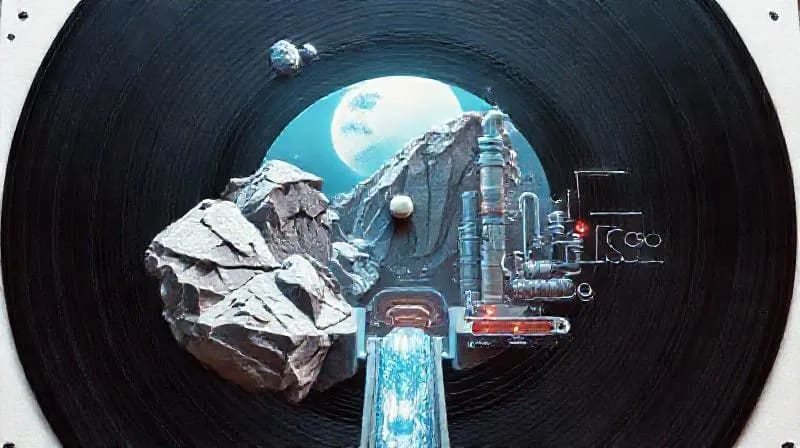
An intricate conceptual visualization detailing the diverse and valuable resources awaiting extraction from celestial bodies, highlighting their potential impact on future industries.
Artistic interpretation of space resource distribution, based on scientific hypotheses and projected technological capabilities, licensed for educational use.- Resource Nationalism in Space: Nations with advanced space capabilities may seek to claim or control prime mining locations, leading to disputes over access and ownership. This could mirror historical territorial claims on Earth, but in a far more complex and legally ambiguous environment.
- Economic Power Shifts: Countries or corporations that successfully establish space mining operations could gain immense economic leverage. Control over critical resources like PGMs or space-based fuel could reshape global supply chains and economic hierarchies. This could lead to new forms of economic dependency or dominance.
- Security Concerns: The infrastructure required for space mining – including orbital facilities, transportation systems, and processing plants – could become strategic assets. Protecting these assets might lead to the militarization of space, raising concerns about space warfare and the weaponization of orbital capabilities.
- Technological Divide: Only a handful of nations currently possess the technological prowess and financial capital to undertake space mining. This could exacerbate existing inequalities, creating a "space-faring elite" and leaving developing nations further behind, potentially fueling resentment and calls for more equitable access.
The competition for these resources is already evident in the rapid advancements made by various national space programs and private ventures. Understanding the dynamics of interplanetary travel and resource logistics is crucial for any nation aiming to be a player in this new frontier, as explored in articles like Astrodynamics Interplanetary Travel: Routes, Challenges, AI.
Sovereignty in Space: The Outer Space Treaty and Its Limits
The foundational document governing activities in space is the 1967 Outer Space Treaty (OST). While visionary for its time, it presents significant ambiguities when applied to space mining.
Key provisions of the OST include:
- Non-Appropriation Principle (Article II): "Outer space, including the Moon and other celestial bodies, is not subject to national appropriation by claim of sovereignty, by means of use or occupation, or by any other means." This clearly prohibits nations from claiming celestial bodies as their territory.
- Common Heritage of Mankind (Implied): While not explicitly stated, the spirit of the treaty suggests that space should be explored and used for the benefit of all countries.
- Freedom of Exploration and Use (Article I): "The exploration and use of outer space, including the Moon and other celestial bodies, shall be carried out for the benefit and in the interests of all countries, irrespective of their degree of economic or scientific development, and shall be the province of all mankind."
The critical loophole arises when distinguishing between claiming territory and extracting resources. Does extracting minerals constitute "appropriation"? Many argue that while a nation cannot claim the Moon, a private company (under national jurisdiction) might be able to extract and own the resources it mines, much like fishing in international waters. However, this interpretation is highly contentious and lacks universal consensus.
New Legal Frontiers: Crafting the Rules for the Cosmos
The ambiguities of the OST have led to a patchwork of national legislation and international proposals, none of which have achieved global acceptance.
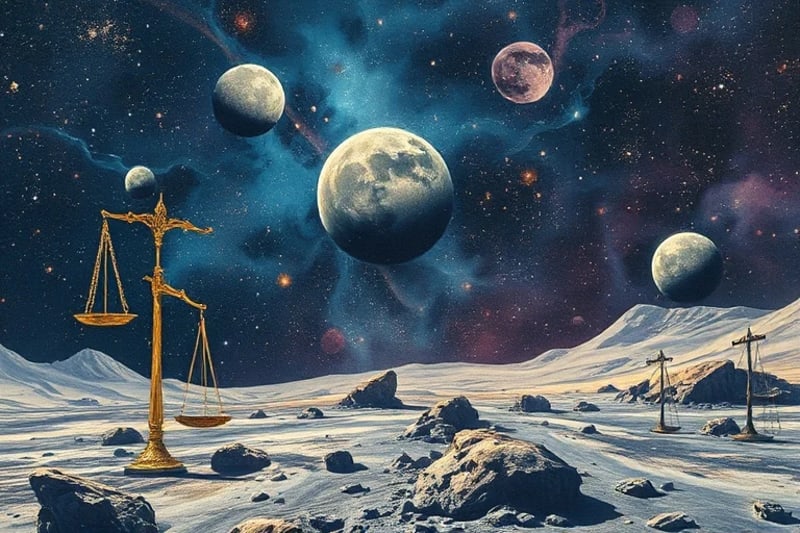
An abstract representation of the intricate legal challenges and sovereignty debates that arise as humanity extends its reach to exploit extraterrestrial resources.
Conceptual artwork exploring the intersection of cosmic exploration and evolving legal frameworks, available under a creative commons license.- National Legislation: Countries like the United States (SPACE Act of 2015) and Luxembourg have passed laws granting their citizens the right to own resources extracted from space. These laws assert that while no one can own a celestial body, the resources extracted from it can be owned. This approach is seen by some as a necessary step to encourage private investment, but by others as a unilateral assertion that undermines international cooperation.
- The Moon Agreement (1979): This treaty attempts to declare the Moon and its natural resources as the "common heritage of mankind" and calls for an international regime to govern their exploitation. However, it has been ratified by very few space-faring nations, rendering it largely ineffective.
- Artemis Accords: Led by the United States, these bilateral agreements aim to establish a common set of principles for lunar exploration and resource utilization. While promoting transparency and peaceful cooperation, critics argue they may create a bloc of like-minded nations, potentially excluding others and further fragmenting international space law.
The lack of a universally accepted legal framework creates significant uncertainty for investors and operators. It also risks fostering a "wild west" scenario where powerful actors dictate terms, potentially leading to disputes that could escalate beyond diplomatic channels. The need for a global, multilateral consensus on space resource governance is paramount to ensure stability and equitable participation. This legal vacuum also extends to other complex domains, such as the legal framework around critical infrastructure and emerging threats, as discussed in Quantum Cybersecurity Critical Infrastructure Post-Quantum Threats.
Economic Drivers: Startups and the Commercialization of Space
The commercial space sector is a significant driver behind the push for space mining. A new generation of startups, backed by venture capital and visionary entrepreneurs, is actively developing technologies and business models for extraterrestrial resource extraction.
- Innovation and Investment: These startups are pioneering novel robotic mining techniques, advanced propulsion systems, and in-space manufacturing processes. Their agility and focus on specific niches allow for rapid innovation, attracting substantial private investment that complements government funding.
- Reduced Costs: The commercial sector aims to drastically reduce the cost of accessing space and operating there. Reusable rockets, smaller satellites, and standardized components are making space more accessible, paving the way for economically viable mining operations.
- New Business Models: Companies are exploring various revenue streams, from selling water ice as propellant to orbital fuel depots, to bringing rare metals back to Earth, or even providing construction materials for lunar bases. The focus on in-space utilization (ISRU) is particularly strong, as it can drastically reduce the cost of further space exploration and settlement.
- Public-Private Partnerships: Governments are increasingly collaborating with private companies, providing contracts, technical support, and regulatory frameworks to foster the growth of the space mining industry. This synergy is crucial for overcoming the immense technical and financial hurdles involved.
The entrepreneurial spirit in space mining reflects a broader trend of commercialization across various high-tech sectors, where innovative startups are disrupting traditional industries and creating entirely new markets. This drive for commercial viability is essential for transforming space mining from a theoretical concept into a tangible reality.
Challenges and Ethical Considerations
Beyond the geopolitical and legal complexities, space mining faces significant technical, economic, and ethical challenges.
- Technical Hurdles: Developing reliable, autonomous mining robots capable of operating in extreme space environments, refining materials in zero-gravity, and transporting them efficiently are monumental engineering tasks.
- Economic Viability: The immense upfront investment, coupled with the high risks and long timelines, means profitability is not guaranteed. The market for space-mined resources, especially those returned to Earth, needs to be carefully assessed to avoid disrupting existing terrestrial markets.
- Environmental Impact: While space is vast, the long-term environmental impact of large-scale mining operations on celestial bodies is unknown. Concerns include space debris generation, altering planetary environments, and potential contamination.
- Ethical Concerns: Questions arise about who benefits from these resources, the potential for exploitation, and the preservation of celestial environments for scientific or cultural value. Should certain celestial bodies be protected from exploitation due to their unique scientific significance or potential for harboring extraterrestrial life?
These challenges necessitate a multidisciplinary approach, combining scientific research, engineering innovation, economic modeling, and ethical deliberation to ensure that space mining proceeds responsibly and sustainably.
The Future Landscape: Cooperation or Conflict?
The future of space mining hinges on whether humanity can forge a path of cooperation rather than competition. A globally accepted framework for space resource utilization is essential to prevent a chaotic scramble that could extend geopolitical rivalries into the cosmos.
Such a framework should address:
- Clear rules for resource extraction and ownership.
- Mechanisms for dispute resolution.
- Provisions for equitable benefit-sharing, especially for non-spacefaring nations.
- Environmental protection guidelines for celestial bodies.
- Safety standards to prevent accidents and debris.
The geopolitical implications of space mining are profound and far-reaching. How nations and private entities navigate these uncharted waters will define not only the future of space exploration but also the balance of power and prosperity on Earth. The decisions made today will shape humanity's destiny among the stars.
Explore More Content
- Dark Matter Dark Energy Cosmology Philosophical Implications
- Blockchain Sustainability Global Food Supply Chains
- Western Astrology: Advanced Predictive Techniques
- Central Banks: Evolution, Role, Global Stability
- Media Communication: Role in the Post-Truth Era
Source: Hybrid content assisted by AI and human editorial supervision.


Comentarios