
Astrodynamics Interplanetary Travel AI Space Conquest
Astrodynamics and Interplanetary Travel: Routes, Challenges, and AI's Role in Space Conquest
Humanity's ambition to explore the cosmos has always been tempered by the immense distances and complex physics governing celestial mechanics. Interplanetary travel, once the realm of science fiction, is steadily becoming a tangible reality, driven by advancements in propulsion, materials science, and computational power. At the heart of this endeavor lies astrodynamics, the science of spacecraft trajectories and orbital motion, which provides the fundamental framework for navigating the solar system.
This field, a specialized branch of celestial mechanics, is crucial for designing missions that can efficiently reach other planets, moons, and even asteroids. However, the journey is fraught with challenges, from the harsh radiation environment of space to the need for self-sustaining life support systems. As we push the boundaries of exploration, artificial intelligence (AI) is emerging as an indispensable tool, transforming how we plan, execute, and adapt to the unpredictable nature of deep space missions.
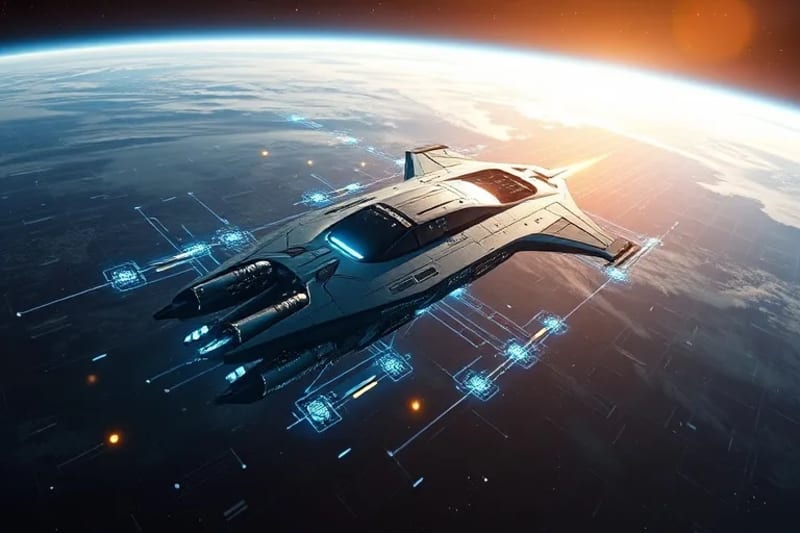
Navigating the cosmic ocean requires a profound understanding of celestial mechanics and the integration of advanced computational intelligence. This conceptual visualization captures the essence of a spacecraft's intricate path through the stars, guided by sophisticated AI algorithms.
This conceptual image, a cinematic rendering, reflects the complex interplay of human ingenuity and artificial intelligence in charting new courses across the vastness of space, often drawing inspiration from publicly available scientific visualizations.Table of Contents
- Foundations of Astrodynamics: The Science of Space Navigation
- Interplanetary Routes and Trajectories: Charting the Course
- Challenges of Deep Space Travel: Overcoming the Cosmic Frontier
- The Role of AI in Space Conquest: Intelligent Automation and Discovery
- Future Prospects and Ethical Considerations: The Next Era of Exploration
Foundations of Astrodynamics: The Science of Space Navigation
Astrodynamics is the study of orbital mechanics, focusing on the motion of artificial satellites and spacecraft under the influence of gravitational and non-gravitational forces. It builds upon the principles of classical mechanics, particularly Newton's laws of motion and universal gravitation, to predict and control the paths of objects in space. Understanding these principles is paramount for mission design, ensuring that spacecraft can be launched, maneuvered, and ultimately reach their intended destinations with precision.
Key concepts in astrodynamics include orbital elements, which describe the shape, size, and orientation of an orbit; orbital maneuvers, such as Hohmann transfers and gravity assists, used to change a spacecraft's trajectory; and perturbation analysis, which accounts for deviations from ideal two-body motion caused by factors like atmospheric drag, solar radiation pressure, and the gravitational pull of other celestial bodies. Accurate calculations are vital, as even minor errors can lead to significant deviations over vast cosmic distances.
The mathematical models employed in astrodynamics are highly sophisticated, often requiring iterative numerical methods to solve complex differential equations. These models allow engineers to simulate various mission scenarios, optimize fuel consumption, and plan for contingencies. The continuous refinement of these models, coupled with real-time data from spacecraft, enables dynamic adjustments to trajectories, ensuring mission success. This foundational science underpins every aspect of our journey beyond Earth.
Interplanetary Routes and Trajectories: Charting the Course
Interplanetary travel is not a straight line; it involves a carefully orchestrated dance with gravity and orbital mechanics. The most energy-efficient method for transferring between two circular orbits in the same plane is often the Hohmann transfer orbit. This elliptical trajectory uses two engine burns: one to leave the initial orbit and another to enter the target orbit, minimizing fuel expenditure but often maximizing travel time.
For more complex or faster missions, spacecraft frequently employ gravity assist maneuvers, also known as planetary swing-bys. These techniques use the gravitational pull of a planet or moon to alter a spacecraft's speed and direction without expending propellant. By carefully timing an approach, a spacecraft can "steal" or "give up" orbital energy from a celestial body, slingshotting it towards its next destination. This method was famously used by the Voyager probes to explore the outer solar system.
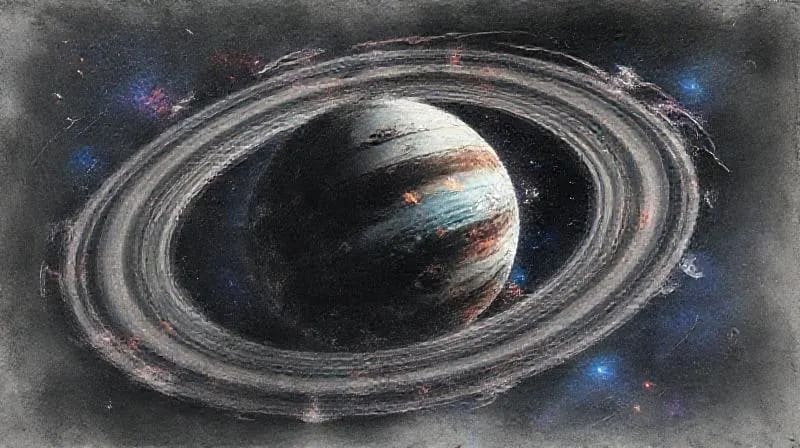
The intricate ballet of gravity assist maneuvers, where planetary bodies are harnessed to accelerate or redirect spacecraft, is a cornerstone of efficient interplanetary travel.
This digital painting, illustrating complex orbital mechanics, is a conceptual representation of how celestial forces are leveraged in space missions, often inspired by scientific diagrams and simulations.Beyond these established methods, researchers are continuously exploring advanced propulsion systems, such as ion thrusters and nuclear propulsion, to reduce travel times and increase payload capacity. These technologies promise to open up new possibilities for human exploration, making destinations like Mars and beyond more accessible. The optimization of these routes often relies on advanced computational models, making AI an invaluable asset.
Challenges of Deep Space Travel: Overcoming the Cosmic Frontier
Interplanetary travel presents a myriad of formidable challenges that must be overcome for successful and sustainable missions. One of the most significant is radiation exposure. Beyond Earth's protective magnetosphere, astronauts are subjected to harmful cosmic rays and solar particle events, which can cause acute radiation sickness, increase cancer risk, and damage electronic systems. Developing effective shielding and predictive warning systems is critical for crew safety.
Propulsion is another major hurdle. Current chemical rockets, while powerful, are inefficient for long-duration missions due to their high fuel consumption. Advanced propulsion systems, such as electric propulsion or future concepts like fusion rockets, are necessary to achieve faster travel times and carry larger payloads. The development of these technologies is a key focus for space agencies worldwide.
Life support systems for human missions must be robust, reliable, and capable of operating autonomously for extended periods. This includes managing air quality, water recycling, waste disposal, and food production in a closed-loop environment. The psychological impact of isolation and confinement on long-duration space crews also requires careful consideration and mitigation strategies. Furthermore, ensuring the security of these complex systems against potential threats is paramount, a field where AI predictive cybersecurity plays an increasingly important role.
The Role of AI in Space Conquest: Intelligent Automation and Discovery
Artificial intelligence is rapidly becoming an indispensable tool in every phase of space exploration, from mission planning to autonomous operations. In navigation and trajectory optimization, AI algorithms can process vast amounts of data to identify the most efficient and safest routes, constantly adapting to changing celestial conditions. This capability is crucial for complex maneuvers and long-duration missions where human intervention might be delayed by communication lags.
AI also plays a vital role in autonomous spacecraft operations. Intelligent systems can monitor spacecraft health, detect anomalies, and perform self-repairs or reconfigurations without ground control intervention. This autonomy is critical for missions to distant planets, where light-speed communication delays can render real-time human control impossible. For instance, AI-powered systems can manage power consumption, thermal control, and even conduct scientific experiments independently.
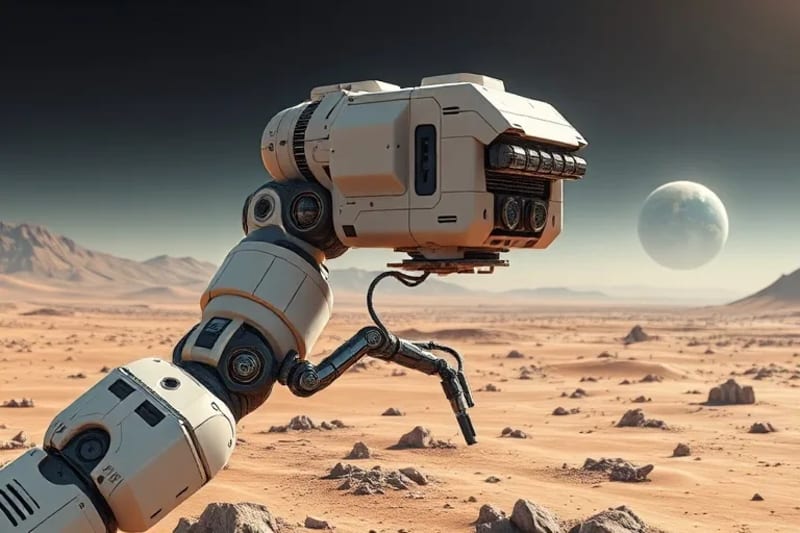
Autonomous robotic systems, powered by advanced AI, are fundamental to the maintenance and expansion of human presence in the challenging environments beyond Earth.
This 3D render depicts the critical function of robotic maintenance in space, a testament to the evolving capabilities of artificial intelligence in supporting long-duration missions.Furthermore, AI excels in data analysis and scientific discovery. Spacecraft generate enormous volumes of data from various instruments, far more than human scientists can process manually. AI algorithms can quickly identify patterns, classify celestial objects, and even detect potential signs of life or geological activity, accelerating the pace of scientific breakthroughs. The principles of asymmetric cryptography are also essential for securing the vast amounts of sensitive data transmitted from these distant probes.
The implementation of AI also extends to edge computing on spacecraft, allowing for real-time processing of data closer to the source, reducing reliance on constant communication with Earth. This decentralized approach is vital for rapid decision-making in dynamic space environments. For more insights into this, explore the topic of Edge Computing and its applications.
Future Prospects and Ethical Considerations: The Next Era of Exploration
Looking ahead, the synergy between astrodynamics and AI promises to unlock unprecedented capabilities in space exploration. Future missions may involve swarms of autonomous probes collaboratively exploring planetary surfaces, AI-designed habitats that adapt to their environment, and even interstellar travel concepts guided by highly advanced intelligent systems. The development of explainable AI will be crucial to ensure transparency and trust in autonomous decision-making for critical space operations.
However, this technological leap also brings ethical considerations to the forefront. The increasing autonomy of AI in space raises questions about accountability, decision-making in unforeseen circumstances, and the potential for unintended consequences. Ensuring that AI systems are designed with robust ethical frameworks and human oversight, particularly in scenarios involving potential contact with extraterrestrial life or resource utilization, is paramount.
The conquest of space is not merely a technological race but a profound human endeavor that requires careful planning, scientific rigor, and a deep sense of responsibility. As we venture further into the cosmos, astrodynamics will continue to be our compass, and AI, our intelligent co-pilot, guiding humanity towards new frontiers of discovery and understanding.
Explore More About Space and Technology
5G Networks Impact on Urban Industrial IoT: A Complete Guide
Blockchain Circular Economy: Sustainable Supply Chain Success
Virtual Reality Addictions: Therapeutic Successes and Challenges
Source: Hybrid content assisted by AI and human editorial supervision.


Comentarios