
Remote Work Cybersecurity: Future Challenges & Solutions
The global shift towards remote work, accelerated by recent world events, has fundamentally reshaped how businesses operate and how individuals approach their careers. What was once a niche benefit has become a mainstream model, offering unprecedented flexibility, access to global talent pools, and reduced operational costs. However, this transformation also introduces a complex array of cybersecurity challenges that organizations must navigate to protect their digital assets and maintain operational integrity.
As the boundaries between corporate networks and personal spaces blur, the traditional perimeter-based security models become increasingly inadequate. This article delves into the evolving landscape of remote work, exploring the new cybersecurity threats it presents and the innovative solutions emerging to build a resilient and secure digital future. We will cover everything from expanded attack surfaces to advanced protective measures, ensuring a comprehensive understanding for both individuals and organizations.
Table of Contents
- The New Landscape of Remote Work: Beyond the Office Walls
- Emerging Cybersecurity Challenges in a Distributed World
- Innovative Solutions and Best Practices for Remote Security
- Regulatory and Compliance Landscape in a Borderless Workforce
- The Human Element: Building a Security-Aware Culture
- Future Outlook: AI, Quantum, and Autonomous Security

Exploring the intricate web of secure digital workspaces and advanced technological integrations that define the future of remote operations.
This conceptual visualization is an AI-generated render, illustrating the potential of secure, interconnected remote work environments.The New Landscape of Remote Work: Beyond the Office Walls
The evolution of remote work has moved beyond simple work-from-home policies to embrace more sophisticated models like hybrid work, where employees split their time between the office and remote locations, and fully distributed teams operating across different time zones and geographies. This flexibility has become a significant factor in employee satisfaction and retention, pushing companies to adapt their infrastructure and culture.
Key characteristics of this new landscape include an increased reliance on cloud-based applications and services, widespread use of personal devices (Bring Your Own Device - BYOD), and a greater need for seamless collaboration tools. While these advancements boost productivity and efficiency, they simultaneously expand the potential attack surface for cyber threats, making robust security measures more critical than ever.
Emerging Cybersecurity Challenges in a Distributed World
The distributed nature of remote work introduces unique vulnerabilities that traditional security frameworks were not designed to handle. Understanding these challenges is the first step toward building effective defenses.
- Expanded Attack Surface: Every home network, personal device, and public Wi-Fi connection used by an employee becomes a potential entry point for attackers. These environments often lack the enterprise-grade security controls found in corporate offices.
- Phishing and Social Engineering: Remote workers, often isolated from direct IT support, can be more susceptible to sophisticated phishing attacks, business email compromise (BEC), and other social engineering tactics designed to steal credentials or deploy malware.
- Data Privacy and Compliance: With data traversing various networks and devices, ensuring compliance with regulations like GDPR or CCPA becomes more complex. Data residency and cross-border data transfer issues are magnified.
- Insider Threats: While often unintentional, insider threats (e.g., misconfigurations, accidental data exposure) can be exacerbated in a remote setting due to less direct oversight and potential burnout leading to errors. Malicious insider threats also pose a significant risk.
- Shadow IT: Employees may use unauthorized software or services to perform their tasks, creating unmanaged vulnerabilities and data silos outside the organization's security purview.
- Vulnerable Endpoints: Personal laptops, smartphones, and tablets used for work may not have the latest security patches, robust antivirus software, or proper configurations, making them easy targets for exploitation. This highlights the importance of comprehensive mobile cybersecurity practices.

An abstract depiction of the complex and often chaotic nature of cybersecurity threats targeting distributed workforces.
Conceptual art generated by AI, illustrating the multifaceted challenges in securing remote operations.Innovative Solutions and Best Practices for Remote Security
Addressing these challenges requires a proactive and multi-layered approach, leveraging cutting-edge technologies and robust security practices.
- Zero Trust Architecture (ZTA): This paradigm shifts from the traditional "trust but verify" to "never trust, always verify." Every user, device, and application must be authenticated and authorized before gaining access to resources, regardless of their location. This minimizes the impact of a breach by segmenting access.
- Multi-Factor Authentication (MFA) and Biometrics: Implementing MFA across all corporate accounts significantly reduces the risk of credential theft. Biometric authentication adds another layer of security, making it harder for unauthorized users to gain access.
- Endpoint Detection and Response (EDR): EDR solutions monitor endpoints (laptops, desktops, mobile devices) for suspicious activity, allowing for rapid detection, investigation, and response to threats. This is crucial for devices operating outside the traditional network perimeter.
- Secure Access Service Edge (SASE): SASE converges network security functions (like firewalls, secure web gateways, zero-trust network access) with wide area network (WAN) capabilities into a single, cloud-native service. It provides secure and optimized access for remote users from any location.
- Employee Training and Awareness: Regular, engaging cybersecurity training is paramount. Employees need to understand common threats, recognize phishing attempts, practice good password hygiene, and know how to report suspicious activities. This is a continuous process, not a one-time event.
- AI and Machine Learning in Threat Detection: AI and ML algorithms can analyze vast amounts of data to identify anomalies, predict potential threats, and automate responses faster than human analysts. This includes detecting sophisticated malware, unusual login patterns, and data exfiltration attempts. The ethical implications of such advanced systems are also a growing concern, as explored in discussions around AI content regulation.
Regulatory and Compliance Landscape in a Borderless Workforce
Operating with a globally distributed workforce introduces significant complexities regarding data privacy and regulatory compliance. Organizations must navigate a patchwork of international laws, each with its own requirements for data handling, storage, and transfer.
For instance, the European Union's General Data Protection Regulation (GDPR) imposes strict rules on how personal data of EU citizens is collected, processed, and stored, regardless of where the company is based. Similarly, the California Consumer Privacy Act (CCPA) and its successor, the California Privacy Rights Act (CPRA), set high standards for data protection in the United States. Other regions have their own specific regulations, such as Brazil's LGPD or India's PDPB.
To ensure compliance, companies must implement robust data governance frameworks, conduct regular data mapping, establish clear data retention policies, and ensure all third-party vendors also adhere to necessary standards. This often involves legal counsel and specialized compliance officers to stay abreast of evolving legislation and avoid hefty fines and reputational damage.
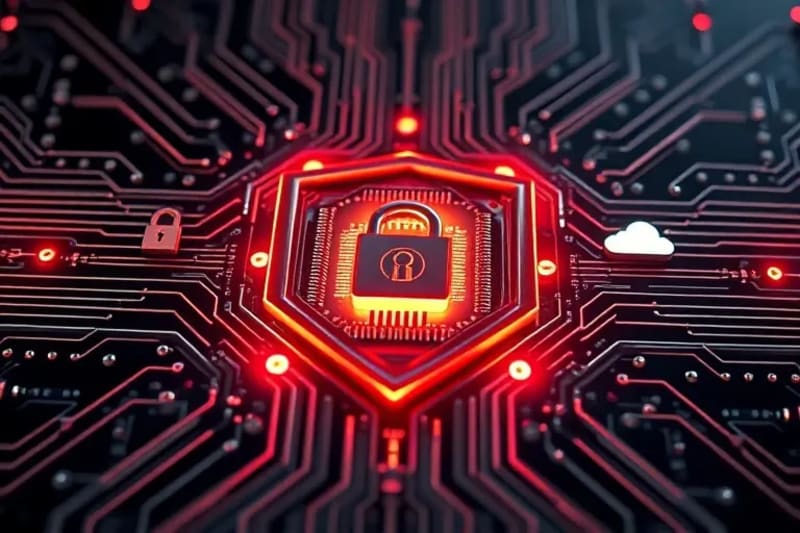
A visual representation of integrated cybersecurity solutions working in harmony to protect critical digital assets.
AI-generated 3D conceptual art illustrating the layered approach to digital security.The Human Element: Building a Security-Aware Culture
Technology alone cannot solve all cybersecurity challenges. The human element remains both the strongest and weakest link in the security chain. Cultivating a strong security-aware culture is essential for any organization with remote workers.
This involves more than just periodic training; it requires continuous reinforcement, clear communication channels for reporting incidents, and fostering an environment where employees feel comfortable asking questions and admitting mistakes without fear of reprisal. Gamification of security training, regular simulated phishing exercises, and accessible security policies can significantly improve employee engagement and retention of best practices.
Furthermore, the well-being of security teams themselves is critical. The constant pressure of defending against sophisticated threats can lead to burnout. Organizations must prioritize mental health support, adequate staffing, and professional development for their cybersecurity professionals to ensure they remain effective and resilient.
Future Outlook: AI, Quantum, and Autonomous Security
The future of remote work cybersecurity will be shaped by rapidly advancing technologies. Artificial intelligence and machine learning will continue to play a pivotal role, moving beyond threat detection to proactive threat hunting, automated incident response, and even predictive security analytics. We might see AI-driven autonomous security systems capable of defending networks with minimal human intervention.
Quantum computing presents both a significant threat and a potential solution. While quantum computers could theoretically break many current encryption standards, quantum cryptography offers new, virtually unhackable methods for securing communications. Organizations need to start preparing for the post-quantum era by exploring quantum-resistant algorithms and understanding how quantum algorithms might impact their security posture.
Additionally, the integration of blockchain for secure identity management, distributed ledger technology for immutable audit trails, and advanced biometrics will further enhance the security landscape. The focus will shift towards hyper-personalized security, adapting to individual user behavior and context in real-time, making security both more robust and less intrusive.
Explore More on Digital Security and Innovation
The journey towards a fully secure remote work environment is ongoing, requiring continuous adaptation and innovation. Deepen your understanding of related topics that shape our digital future:
- Cosmic Sociology: AI Ethics & Digital Collective Consciousness: Consider the societal implications of AI and digital interconnectedness, a crucial backdrop for understanding security in a hyper-connected world.
By staying informed and implementing advanced strategies, organizations can harness the benefits of remote work while effectively mitigating its inherent cybersecurity risks.
Source: Hybrid content assisted by AI and human editorial supervision.


Comentarios