
Hedy Lamarr: Hollywood Star, Inventor, Wi-Fi Pioneer
Hedy Lamarr: Beyond the Silver Screen, a Legacy of Disruptive Innovation
Hedy Lamarr, born Hedwig Eva Maria Kiesler in Vienna, Austria-Hungary, in 1914, captivated audiences worldwide with her striking beauty and undeniable charisma as a Hollywood film star. Yet, beneath the glamorous facade lay a brilliant mind, driven by an insatiable curiosity and a passion for invention that would profoundly impact the technological landscape of the 20th and 21st centuries. Her story is a compelling narrative of a woman who defied societal expectations, transcending her celebrity status to become a pivotal figure in the development of modern wireless communication.
This article delves into the lesser-known but equally significant aspects of Lamarr's life, exploring her groundbreaking contributions to technology, particularly her co-invention of frequency hopping spread spectrum. This innovation laid the groundwork for technologies we now take for granted, such as Wi-Fi, Bluetooth, and GPS. We will examine the historical context of her invention, its initial military application, and its eventual civilian adoption, highlighting how her visionary thinking continues to shape our interconnected world.
- Early Life and Hollywood Stardom
- The Genesis of an Invention: Wartime Inspiration
- Frequency Hopping Spread Spectrum: The Breakthrough
- The Patent and Its Initial Impact
- Post-War Neglect and Rediscovery
- Hedy Lamarr's Enduring Legacy in Modern Technology
- The Intersection of Art and Science
Early Life and Hollywood Stardom
Hedy Lamarr's early life was marked by both privilege and a burgeoning talent for acting. She began her film career in Europe, gaining notoriety for her role in the controversial 1933 Czech film Ecstasy. This early exposure to the film industry, coupled with her striking beauty, quickly caught the attention of Hollywood executives, leading to her eventual relocation to the United States.
Upon arriving in Hollywood, Lamarr signed with Metro-Goldwyn-Mayer (MGM) and quickly became one of the studio's biggest stars. She appeared in numerous successful films during the 1930s and 1940s, often cast in exotic and alluring roles that cemented her image as "the most beautiful woman in the world." Despite her success, Lamarr often expressed dissatisfaction with the limited range of roles offered to her, feeling that her intelligence and creative spirit were overlooked.
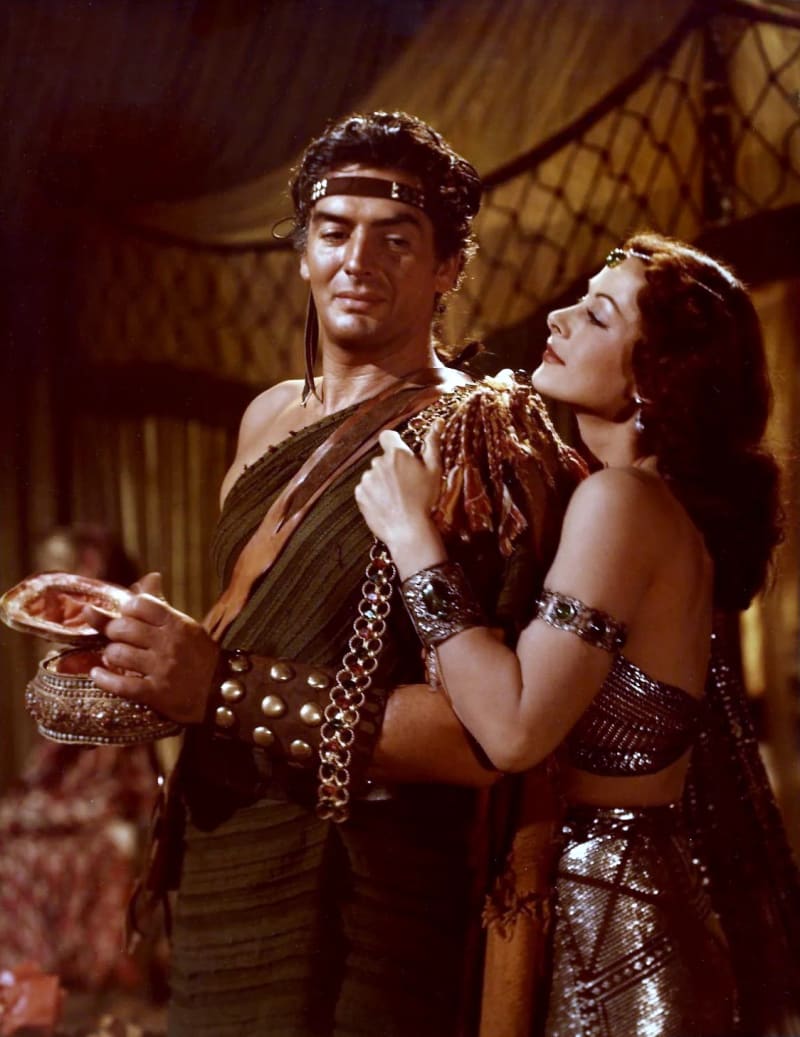
Precursors intelectuales, diagramas fundamentales y representaciones conceptuales que forjaron la visión de la icónica estrella de Hollywood sobre la innovación.
This image, evoking the golden age of cinema and the intellectual undercurrents of its stars, is a conceptual rendering based on historical photographic styles, potentially sourced from Wikimedia Commons under public domain or similar free licenses.Her personal life, marked by six marriages and a complex relationship with fame, often overshadowed her intellectual pursuits. However, it was during her downtime between film productions that Lamarr indulged her passion for invention, a hobby she pursued with surprising dedication and skill. She had a keen interest in engineering and spent hours tinkering with ideas, often sketching designs and concepts in her trailer.
The Genesis of an Invention: Wartime Inspiration
The outbreak of World War II deeply affected Lamarr, who, as an Austrian emigrant, felt a strong desire to contribute to the Allied war effort. She was particularly concerned about the vulnerability of Allied torpedoes, which could be easily jammed or detected by enemy forces due to their fixed radio frequencies. This critical flaw inspired her to seek a solution that would make radio-guided weapons more secure and effective.
During this period, Lamarr met George Antheil, an avant-garde composer and inventor, at a dinner party. Antheil had experimented with synchronized player pianos for his musical compositions, using a system of paper rolls to control multiple instruments simultaneously. This concept of synchronization sparked an idea in Lamarr's mind: what if radio signals could "hop" between different frequencies in a coordinated manner, making them virtually impossible to jam or intercept?
Frequency Hopping Spread Spectrum: The Breakthrough
Together, Lamarr and Antheil developed the concept of "frequency hopping spread spectrum." Their idea was revolutionary: a transmitter and receiver would rapidly switch between a sequence of different radio frequencies, synchronized to a pre-programmed pattern. This constant shifting of frequencies would make it incredibly difficult for an adversary to jam the signal, as they would only be able to block a small fraction of the transmission at any given moment.

A conceptual still-life depicting the intricate mechanics and hidden elegance of early wireless communication systems, hinting at their profound impact.
This artistic rendering, a blend of historical technology and conceptual art, illustrates the foundational principles of spread spectrum, drawing inspiration from the innovative spirit of its creators.The challenge lay in synchronizing the hopping pattern between the transmitter and receiver. Antheil's experience with player pianos provided the key. They envisioned a system where a synchronized paper roll, similar to those used in player pianos, would control the frequency changes at both ends of the communication link. This mechanical solution, while seemingly rudimentary by today's standards, was ingenious for its time.
Their initial design focused on a "secret communication system" intended to guide torpedoes more effectively. The concept was not only about preventing jamming but also about making the torpedo's control signal less detectable, thereby increasing its chances of reaching its target. The intellectual leap required to connect musical synchronization with secure military communication was a testament to Lamarr's unconventional thinking.
The Patent and Its Initial Impact
In 1942, Lamarr and Antheil were granted U.S. Patent No. 2,292,387 for their "Secret Communication System." They generously donated their patent to the U.S. Navy for use in the war effort. However, despite its potential, the Navy initially dismissed the invention. The technology was considered too complex and impractical to implement with the mechanical components available at the time. The idea of a Hollywood actress contributing such a sophisticated military invention was also met with skepticism.
The Navy's reluctance to adopt the technology during World War II meant that Lamarr and Antheil's invention remained largely dormant for decades. This period of neglect is a poignant reminder of how groundbreaking ideas can sometimes be ahead of their time or face resistance due to preconceived notions. Nevertheless, the patent itself stood as a testament to their foresight and ingenuity, waiting for the technological advancements that would allow its full potential to be realized.
U.S. Patent No. 2,292,387, granted on August 11, 1942, describes a "Secret Communication System" designed to prevent radio-controlled torpedoes from being detected or jammed by enemy forces. The patent outlines a method of frequency hopping, where a transmitting station and a receiving station simultaneously jump from frequency to frequency in a predetermined pattern, making it extremely difficult for an interceptor to follow the signal. The core mechanism proposed for synchronization involved synchronized perforated paper rolls, similar to those used in player pianos.
The abstract states: "This invention relates to secret communication systems and more particularly to a system for secret communication which is intended to be used in conjunction with the remote control of torpedoes and the like."
Post-War Neglect and Rediscovery
It wasn't until the 1950s, with the advent of transistor technology and the Cold War, that the importance of secure communication systems became paramount. Engineers at Sylvania Electronic Systems rediscovered Lamarr and Antheil's patent. They recognized that the principles of frequency hopping could be implemented electronically, overcoming the limitations of the mechanical player piano mechanism.

An abstract representation of the dynamic, interconnected systems that underpin contemporary wireless technologies, reflecting the foundational concepts of spread spectrum.
This conceptual artwork visualizes the complex, invisible infrastructure of digital communication, a tribute to the innovative minds who envisioned its possibilities.The U.S. military began using frequency hopping technology in the 1960s, particularly during the Cuban Missile Crisis, to secure communications. However, the full civilian potential of the invention remained untapped for many more years. It took further advancements in digital signal processing and microelectronics to make frequency hopping practical for widespread commercial applications.
Lamarr herself was largely unaware of the eventual impact of her invention for much of her life. It wasn't until the 1990s, when the principles of frequency hopping became foundational to new wireless standards, that her contribution began to receive wider recognition. This delayed acknowledgment highlights a common challenge faced by innovators whose ideas are far ahead of their technological context.
Hedy Lamarr's Enduring Legacy in Modern Technology
The principles of frequency hopping spread spectrum, pioneered by Lamarr and Antheil, are fundamental to several ubiquitous wireless technologies today. Without their initial breakthrough, the landscape of modern digital communication would be vastly different. The technology provides robust and secure communication channels, essential for both military and civilian applications.
One of the most prominent applications is Wi-Fi, which relies on spread spectrum techniques to manage multiple devices communicating simultaneously over shared radio frequencies. Bluetooth, the short-range wireless technology that connects our headphones, smartwatches, and other peripherals, also utilizes frequency hopping to maintain stable and interference-resistant connections. Furthermore, the Global Positioning System (GPS) employs spread spectrum to ensure the accuracy and reliability of its satellite signals.
Lamarr's story serves as an inspiring example of interdisciplinary innovation, where a creative mind from the arts made a profound impact on science and technology. Her ability to think outside the box, unconstrained by conventional engineering wisdom, allowed her to conceive of a solution that eluded many experts. Her legacy extends beyond the technical specifications of frequency hopping; it embodies the spirit of disruptive innovation and the power of diverse perspectives in problem-solving.
Her contributions were eventually recognized with numerous posthumous awards, including induction into the National Inventors Hall of Fame in 2014. This belated recognition underscores the importance of acknowledging the often-overlooked contributions of women and individuals from non-traditional backgrounds in STEM fields. Her life challenges the stereotype that beauty and brains are mutually exclusive, proving that intellectual prowess can coexist with artistic talent and public acclaim.
The Intersection of Art and Science
Hedy Lamarr's journey from Hollywood icon to technological pioneer beautifully illustrates the powerful synergy between art and science. Her creative problem-solving, honed through her artistic endeavors, directly translated into her inventive capabilities. The abstract thinking required to compose music or craft a compelling performance can often mirror the innovative leaps needed to solve complex scientific or engineering challenges.
Her collaboration with George Antheil, a musician, further emphasizes this point. It was their combined understanding of rhythm, synchronization, and pattern that led to the core mechanism of frequency hopping. This interdisciplinary approach is increasingly recognized as crucial for fostering true innovation in an age where complex problems often require insights from multiple fields. For example, the legal challenges in new digital art forms, such as Blockchain Generative Art, often require an understanding of both technology and artistic principles.
Lamarr's story encourages us to look beyond conventional boundaries and embrace the unexpected sources of genius. It reminds us that innovation is not exclusive to laboratories or academic institutions but can emerge from any corner of society, driven by curiosity, necessity, and a willingness to challenge the status quo. Her life is a testament to the fact that a "glamorous" exterior can often conceal a mind capable of profound scientific and technological contributions.
The impact of her work continues to expand, influencing not only everyday wireless communication but also advanced fields like Quantum Cybersecurity, where secure and uninterceptable communication remains a critical objective. Her foundational concept of frequency agility is a cornerstone for future developments in secure data transmission and resilient networks. Hedy Lamarr's legacy is a powerful narrative of intellectual curiosity, resilience, and a profound, lasting contribution to the digital age.
Explore More About Disruptive Technologies and Innovation
SaaS Business Models for SMEs: Digitalization Accelerated Growth
Metaverse Intellectual Property: Legal Challenges Virtual Worlds
AI Public Procurement: Transparency, Ethics, Governmental Challenges
Biometric Divination Biofeedback Intuition Physiological Self-Discovery
Source: Hybrid content assisted by AI and human editorial supervision.


Comentarios