
Water Geopolitics Conflicts Opportunities Strategic Businesses
The 21st century has unequivocally positioned water as a central pillar of global geopolitics, transforming it from a mere natural resource into a strategic asset. As populations burgeon and climate change intensifies, the availability and equitable distribution of freshwater have become critical determinants of national security, economic stability, and social well-being. This shift necessitates a profound understanding of the intricate dynamics surrounding water, encompassing potential conflicts, burgeoning opportunities, and the strategic business models emerging to address this global challenge.
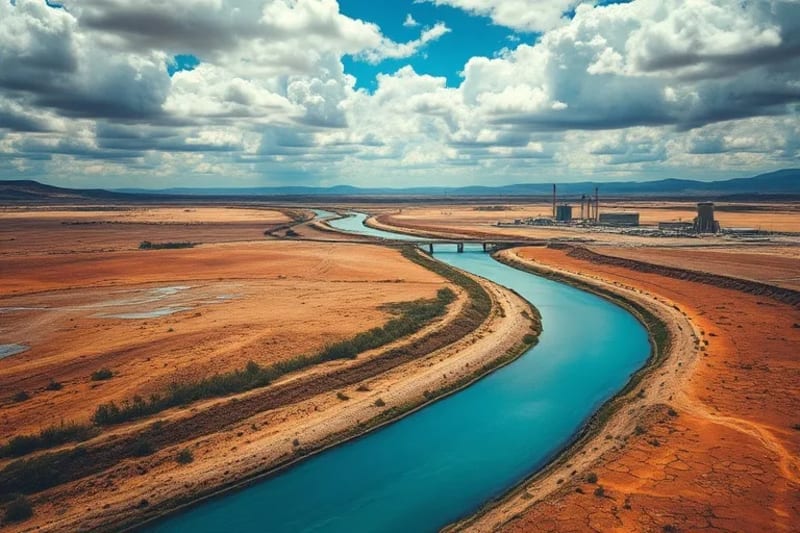
Precursors to conflict, strategic infrastructure, and conceptual representations that define the geopolitics of water in the 21st century.
Fuente visual sujeta a disponibilidad del ecosistema: Wikimedia Commons bajo licencia CC BY-SA 4.0 o renderizado conceptual IA.The increasing demand for water, driven by agricultural expansion, industrial growth, and urbanization, often clashes with finite supplies, especially in transboundary river basins. This delicate balance creates a fertile ground for disputes between nations, highlighting the urgent need for robust international cooperation and innovative solutions. Understanding these complex interactions is paramount for policymakers, investors, and communities alike to navigate the challenges and harness the potential that water presents.
This article delves into the multifaceted aspects of water geopolitics, exploring the historical context, current flashpoints, and the economic opportunities that arise from the imperative to manage this precious resource sustainably. We will examine the role of technology, policy, and private sector engagement in shaping the future of water security. The goal is to provide an educational and informed perspective on a topic that will increasingly define the global landscape.
Table of Contents
- The Scarcity Paradox: A Global Challenge
- Water as a Catalyst for Conflict
- International Governance and Cooperation
- Strategic Business Models in Water Management
- Investment Opportunities in the Water Sector
- Ethical Considerations and Sustainable Practices
- Conclusion: Navigating the Future of Water
The Scarcity Paradox: A Global Challenge
Despite water covering approximately 71% of the Earth's surface, only a tiny fraction—about 2.5%—is freshwater, and most of that is locked in glaciers and ice caps. This leaves a minuscule portion readily available for human consumption, agriculture, and industry. The paradox lies in the abundance of water globally versus the severe localized scarcity experienced by billions, exacerbated by climate change, pollution, and inefficient management practices.
Regions like the Middle East, North Africa, and parts of Asia and sub-Saharan Africa face extreme water stress, where demand far outstrips renewable supply. This imbalance is not merely a matter of geography; it is a complex interplay of demographic shifts, economic development, and environmental degradation. The implications range from food insecurity and forced migration to public health crises, underscoring water's foundational role in human society.
Understanding the drivers of this scarcity is crucial for developing effective mitigation and adaptation strategies. Rapid urbanization places immense pressure on existing water infrastructure, while industrial activities often lead to contamination, rendering available water unusable. Agricultural practices, which account for roughly 70% of global freshwater withdrawals, frequently employ inefficient irrigation methods, further depleting vital reserves.
Water as a Catalyst for Conflict
Historically, water has been a source of both cooperation and contention. In the 21st century, as scarcity deepens, the potential for water-related conflicts has escalated significantly. These conflicts can manifest in various forms, from diplomatic disputes over shared river resources to armed clashes over access to vital water points.
Prominent examples include the Nile River basin, where Ethiopia's Grand Ethiopian Renaissance Dam has created tensions with downstream nations like Egypt and Sudan. Similarly, the Jordan River basin has long been a flashpoint in the Israeli-Palestinian conflict, with water rights deeply intertwined with political sovereignty. The Mekong River, shared by several Southeast Asian nations, faces challenges from upstream dam construction, impacting downstream ecosystems and livelihoods.
These disputes highlight the absence of universally accepted international water laws and robust enforcement mechanisms. While numerous treaties and agreements exist, their effectiveness often hinges on political will and the power dynamics between riparian states. The weaponization of water, where access is deliberately restricted or infrastructure targeted during conflicts, represents a grave humanitarian concern and a serious threat to regional stability.
International Governance and Cooperation
Addressing water-related conflicts and ensuring sustainable management requires robust international governance frameworks and enhanced cooperation. The United Nations Watercourses Convention of 1997 provides a legal framework for the use of international watercourses, emphasizing equitable and reasonable utilization, and the obligation not to cause significant harm. However, its ratification remains incomplete, limiting its global impact.
Regional organizations and bilateral agreements play a crucial role in fostering cooperation. Initiatives like the Nile Basin Initiative or the Indus Waters Treaty demonstrate that shared water resources can be managed cooperatively, even between historically adversarial nations. These platforms facilitate dialogue, data sharing, and joint project development, transforming potential flashpoints into arenas for collaboration.
Moreover, the involvement of non-state actors, including NGOs, academic institutions, and private companies, is increasingly vital. These entities often bring technical expertise, innovative solutions, and financial resources to the table, complementing governmental efforts. The challenge lies in scaling up these successful models and ensuring their long-term sustainability across diverse geopolitical contexts.

Advanced technologies and strategic business models are crucial for modern water management.
Strategic Business Models in Water Management
The imperative to secure water resources has opened significant avenues for strategic business models, transforming the water sector into a dynamic area for innovation and investment. These models are not just about providing water but about optimizing its use, treating it, and distributing it efficiently. One key area is water infrastructure development, which includes the construction and maintenance of desalination plants, advanced purification systems, and smart water grids.
Desalination, particularly reverse osmosis, is becoming increasingly viable for coastal regions facing severe freshwater shortages, despite its energy intensity. Companies specializing in these technologies are seeing substantial growth, driven by government contracts and private investment. Similarly, advanced purification techniques, including membrane filtration and UV sterilization, are crucial for making contaminated water safe for various uses.
Smart water grids, leveraging technologies like the Internet of Things (IoT) and Artificial Intelligence (AI), are revolutionizing water distribution. These systems monitor water flow, detect leaks, and optimize pressure in real-time, significantly reducing water loss and improving efficiency. The integration of such advanced technologies is akin to the process optimization seen in Augmented Reality Manufacturing 4.0, where digital tools enhance physical processes.
Private sector involvement, often through public-private partnerships (PPPs), is also expanding. These partnerships bring capital, expertise, and efficiency to water projects that might otherwise be stalled by public funding limitations. While controversial in some circles due to concerns about privatization of essential services, well-regulated PPPs can deliver significant benefits in terms of infrastructure development and service delivery.
Another emerging, albeit contentious, business model involves water trading and markets. In regions with established water rights, the ability to buy and sell water allocations can incentivize efficient use and reallocate resources to areas of highest demand. This approach, while complex and requiring careful regulation, introduces market mechanisms to water management, similar to the conceptual frameworks discussed in Virtual Economies and Metaverse Models, where new forms of value exchange are explored.
Finally, sustainable agriculture and water-efficient practices represent a massive business opportunity. Companies developing drought-resistant crops, precision irrigation systems (e.g., drip irrigation, smart sprinklers), and water recycling solutions for agriculture are poised for substantial growth. These innovations are critical for reducing agriculture's water footprint and enhancing food security globally.
Investment Opportunities in the Water Sector
The global water crisis, while a significant challenge, simultaneously presents compelling investment opportunities across various segments of the water sector. Investors are increasingly recognizing water as a "blue gold," a vital asset with growing demand and finite supply. This recognition is driving capital towards companies and projects focused on water innovation and sustainability.
Key investment areas include:
- Water Technology Companies: Firms specializing in desalination, advanced filtration, wastewater treatment, and smart monitoring systems. These companies are at the forefront of providing scalable solutions to water scarcity and pollution.
- Infrastructure Development: Investment in the construction and upgrading of water pipelines, reservoirs, pumping stations, and treatment plants. This is often facilitated through government bonds, infrastructure funds, and PPPs.
- Water Utilities: Publicly traded water utility companies offer stable, long-term investment prospects, as water supply is a non-discretionary service.
- Agricultural Water Efficiency: Companies developing and implementing technologies for precision agriculture, efficient irrigation, and water recycling in farming.
- Water Quality Monitoring and Testing: Businesses providing services and equipment for ensuring water safety and compliance with environmental regulations.
- Water Conservation Solutions: Innovations in leak detection, rainwater harvesting, and greywater recycling for both municipal and industrial applications. These efforts are often supported by technologies similar to those used in Augmented Reality for Ecosystem Conservation, enhancing monitoring and educational outreach.
For individuals interested in managing their wealth, understanding these sectors can be as crucial as personal finance strategies like those for saving and investing for financial freedom. The water sector offers both defensive characteristics due to its essential nature and growth potential driven by global demand and technological advancement. Ethical investing, focusing on companies with strong environmental, social, and governance (ESG) credentials, is particularly relevant in this domain.

The profound impact of water on urban development, agriculture, and global ecosystems.
Ethical Considerations and Sustainable Practices
While the economic opportunities in the water sector are vast, they must be pursued with a strong commitment to ethical considerations and sustainable practices. Water is a human right, and any business model or policy must prioritize equitable access, especially for vulnerable populations. The commodification of water, if not carefully regulated, can exacerbate inequalities and lead to social unrest.
Sustainable water management extends beyond technological fixes; it requires a holistic approach that integrates ecological principles, social equity, and economic viability. This includes protecting natural water sources, restoring degraded ecosystems, and promoting water conservation at all levels—individual, community, and industrial. The concept of "water stewardship," where businesses and communities take responsibility for sustainable water use, is gaining traction.
Furthermore, transparency and accountability are paramount in water governance and business operations. Stakeholder engagement, including local communities, indigenous groups, and environmental advocates, is essential to ensure that water projects are socially acceptable and environmentally sound. Ignoring these ethical dimensions can lead to backlash, project failures, and long-term reputational damage.
The United Nations General Assembly explicitly recognized the human right to water and sanitation on 28 July 2010. Resolution 64/292 affirms that "the right to safe and clean drinking water and sanitation is a human right that is essential for the full enjoyment of life and all human rights."
This recognition underscores the ethical imperative to ensure that all water-related policies and business practices contribute to, rather than detract from, this fundamental right.
Investing in water infrastructure and technology must also consider the long-term environmental impacts. For instance, while desalination provides freshwater, the brine discharge must be managed carefully to avoid harming marine ecosystems. Similarly, large-scale dam projects, while offering water storage and hydropower, can alter river flows, impact biodiversity, and displace communities. A balanced approach, guided by scientific research and ethical principles, is indispensable.
Conclusion: Navigating the Future of Water
The geopolitics of water in the 21st century is a complex tapestry woven from threads of scarcity, conflict, cooperation, and innovation. Water is no longer just a local issue but a global strategic resource, influencing international relations, economic development, and human security. The challenges are immense, demanding urgent and coordinated action from governments, international organizations, the private sector, and civil society.
The emergence of strategic business models focused on water management, infrastructure, and technology offers a beacon of hope. These models, ranging from advanced desalination to smart water grids and sustainable agricultural practices, demonstrate that economic growth and environmental stewardship can go hand in hand. However, their success hinges on adhering to ethical principles, ensuring equitable access, and prioritizing long-term sustainability over short-term gains.
Ultimately, navigating the future of water will require a blend of technological prowess, diplomatic skill, and a profound commitment to shared responsibility. By fostering collaboration, embracing innovation, and upholding the human right to water, the global community can transform potential conflicts into opportunities for peace, prosperity, and a sustainable future for all.
Explore More on Global Challenges and Innovation
Deepen your understanding of critical global issues and technological advancements:
- Mental Health in Adolescents: Digital Disorder Prevention
- Personal Finance: Save, Invest, Financial Freedom
- Augmented Reality Manufacturing 4.0: Process Optimization
- Quantum Cybersecurity: Critical Infrastructure Protection
- Virtual Economies in the Metaverse: Models and Regulation
- Augmented Reality for Ecosystem Conservation
- Hedy Lamarr: Hollywood Star, Wi-Fi Inventor
- Alan Turing: AI Consciousness, Can Machines Think?
- Saturn Transit: Lessons, Structure, and Lasting Growth
- Snake 2026 Chinese Horoscope: Deep Love Connections
- Family Healing Prayer: Breaking Generational Bonds
- Past Life Regression & Natal Chart: Self-Discovery Healing
Source: Hybrid content assisted by AI and human editorial supervision.


Comentarios